
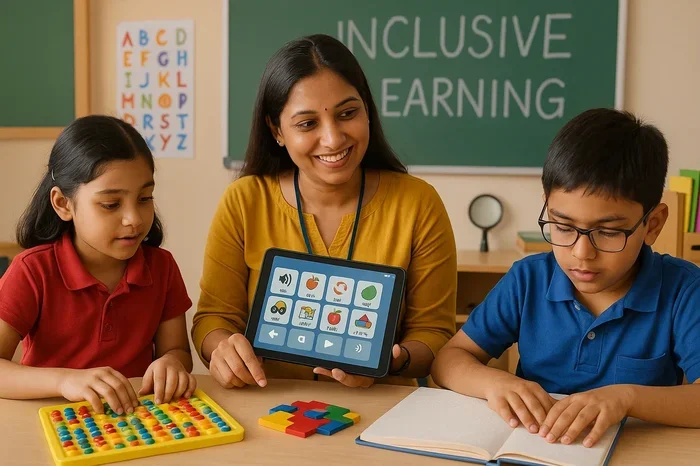
Special education services are tailored programs and supports designed to help children with disabilities succeed in school. These services ensure every student receives a free and appropriate public education through individualized plans, related therapies, and specialized instruction. Understanding these services empowers parents and educators to advocate for inclusive learning environments that truly make a difference.
Every child deserves a fair shot at learning and growing. Special education services exist to make that promise real for kids who face unique challenges in the classroom. These services are not just extra help — they are legally protected rights designed to level the playing field.
Whether your child has a learning disability, a physical challenge, or a developmental delay, understanding special education services can open doors you did not even know existed. This guide breaks everything down in plain language so you know exactly what to expect, how to get started, and why these programs matter so much.
Teachers and educators often rely on creative tools to reach every student. For instance, using similes for education can make complex ideas feel relatable and easier to grasp. Similarly, metaphors for education help paint vivid pictures that stick with young minds. These language tools are especially powerful in special education settings, where finding the right way to communicate can be a game-changer.
Key Takeaways
- Special education services provide individualized support to children with disabilities, ensuring they receive a fair and meaningful education.
- The IEP process is the backbone of special education, creating a personalized roadmap for each student’s unique needs.
- Eligibility is determined through formal evaluations that assess a child’s specific disability and its impact on learning.
- Related services like speech therapy and occupational therapy play a vital role in addressing barriers beyond academics.
- Advocacy matters — parents and educators working together lead to the best outcomes for children with special needs.
- Early intervention can change a child’s trajectory, making it essential to identify and address learning challenges as soon as possible.
- Inclusive classrooms benefit all students, not just those receiving special education services.
📑 Table of Contents
What Exactly Are Special Education Services?
Special education services refer to specially designed instruction and support for children who have disabilities that affect their ability to learn. These services are provided at no cost to families and are backed by federal law. The goal is simple but powerful — every child should have access to a meaningful education.
Special education is not a single program or one-size-fits-all classroom. It is a broad umbrella that covers many types of support. Some children need extra time on tests. Others need one-on-one help from a trained specialist. And some benefit from assistive technology or modified curriculum.
Who Provides Special Education Services?
A team of professionals works together to deliver special education services. This team may include:
- Special education teachers who are trained to adapt lessons for different learning styles
- Psychologists and counselors who assess emotional and behavioral needs
- Speech-language pathologists who help with communication challenges
- Occupational therapists who support fine motor and daily living skills
- Physical therapists who address mobility and gross motor needs
- Paraprofessionals and aides who provide in-class support
All of these professionals collaborate to create a support system around the child. They work with parents, general education teachers, and administrators to ensure nothing falls through the cracks.
Who Qualifies for Special Education Services?
Not every child who struggles in school automatically qualifies for special education services. There is a specific process in place to determine eligibility. This process is designed to be fair, thorough, and focused on the individual child.
The Evaluation Process
The first step is a formal evaluation. This is not a simple quiz or screening. It is a comprehensive assessment that looks at how the child learns, thinks, communicates, and behaves. Schools cannot move forward without written permission from the parents.
During the evaluation, professionals look for disabilities that fall under the categories recognized by the Individuals with Disabilities Education Act (IDEA). Some common categories include:
- Specific Learning Disability (SLD) — such as dyslexia or dyscalculia
- Autism Spectrum Disorder
- Speech or Language Impairment
- Emotional Disturbance
- Intellectual Disability
- Orthopedic Impairment
- Traumatic Brain Injury
- Visual or Hearing Impairment
- Other Health Impairments — such as ADHD or epilepsy
Each category has specific criteria that must be met. The evaluation results determine whether a child qualifies and what kind of support they need. If the school determines the child does not qualify, parents have the right to request an independent evaluation at their own expense.
The Difference Between an IEP and a 504 Plan
People often confuse IEPs and 504 plans, but they serve different purposes. An IEP is a detailed, legally binding document that provides specialized instruction and related services. A 504 plan offers accommodations but does not include specialized teaching.
Here is a quick comparison:
| Feature | IEP | 504 Plan |
|---|---|---|
| Legal Basis | IDEA | Section 504 of the Rehabilitation Act |
| Specialized Instruction | Yes | No |
| Related Services | Yes (speech therapy, OT, etc.) | May include accommodations only |
| Annual Review | Required | Recommended |
| Eligibility | Specific disability categories | Any disability that limits a major life activity |
| Funding | Federal and state funds | School district funds |
Both plans aim to support the child, but an IEP provides a deeper level of intervention. Understanding this distinction is one of the most important steps parents can take when navigating special education services.
The IEP Process Explained
The Individualized Education Program (IEP) is the heart of special education. It is a written document that outlines exactly what a child needs to succeed. Think of it as a custom blueprint for learning.
What Goes Into an IEP?
A well-crafted IEP includes several key components:
- Present levels of performance — a snapshot of where the child is right now academically and socially
- Annual goals — specific, measurable targets the child will work toward over the year
- Special education services and supports — the exact services the child will receive
- Accommodations and modifications — changes that help the child access the curriculum
- Progress reporting — how and when parents will receive updates on their child’s growth
- Transition planning — for older students, a roadmap for life after high school
The IEP team meets at least once a year to review and update the plan. Parents are equal members of this team, and their input carries real weight. If you ever feel your child’s IEP is not working, you have the right to request an amendment or even file a formal complaint.
Quick Tips for IEP Meetings
IEP meetings can feel overwhelming, especially for first-time parents. Here are a few tips to help you feel prepared and confident:
- Bring a notebook and write down questions before the meeting.
- Invite someone you trust — a family member, friend, or advocate — for support.
- Ask for clarification whenever a term or suggestion is unclear.
- Remember you are the expert on your child. No one knows them better than you do.
- Take your time. You do not have to sign anything on the spot.
When educators use language that resonates, it can transform how parents engage with the process. There are many idioms for education that capture the spirit of teamwork and growth, and using them can make IEP conversations feel more collaborative and less intimidating.
Why Special Education Services Matter
The impact of special education services goes far beyond the classroom. These programs shape a child’s self-esteem, social skills, and future opportunities. Without proper support, many children with disabilities would struggle to keep up, feel isolated, or lose motivation entirely.
Building Confidence and Independence
When a child receives the right support, something powerful happens — they start to believe in themselves. Special education services help kids discover their strengths and develop strategies to manage their challenges. Over time, this builds real independence.
A child who once struggled to read might discover a love for storytelling with the right accommodations. A student who felt lost in a crowded classroom might thrive with one-on-one instruction. These small victories add up to life-changing confidence.
Creating Inclusive Communities
Inclusive classrooms benefit everyone. When children with and without disabilities learn side by side, they develop empathy, understanding, and respect. Special education services make this inclusion possible by ensuring every child can participate meaningfully.
Research consistently shows that inclusive education improves outcomes for all students. General education students in inclusive classrooms often show greater academic engagement and stronger social skills. It is a win-win situation that strengthens entire school communities.
Opening Doors to the Future
Special education services do not stop at graduation. Transition planning helps students prepare for college, vocational training, or the workforce. This forward-looking approach ensures that young adults with disabilities have real options for their futures.
Many adults with disabilities credit their success to the special education services they received as children. Those early supports gave them the tools, confidence, and self-advocacy skills they needed to thrive. Investing in these services today is investing in a more inclusive and capable tomorrow.
It is worth noting how deeply personal these services can be. There are countless idioms for someone special that reflect the profound difference these programs make in a child’s life. Every success story is a reminder of why this work matters so much.
How to Advocate for Special Education Services
Advocacy is one of the most valuable skills a parent or educator can develop. Knowing your rights and your child’s rights makes all the difference when navigating the world of special education services.
Know Your Rights
Two federal laws protect children with disabilities in the United States:
- IDEA (Individuals with Disabilities Education Act) — guarantees a free appropriate public education and ensures individualized support through an IEP
- Section 504 of the Rehabilitation Act — prohibits discrimination based on disability and ensures access to accommodations
These laws are not suggestions. They are legal rights. Understanding them gives parents real power when working with schools. If a school refuses to evaluate your child or denies services, you can file a complaint with your state’s education department.
Build Strong Relationships with Your School
Advocacy does not mean confrontation. In fact, the most effective advocates build positive relationships with teachers, counselors, and administrators. Here is how:
- Communicate regularly — do not wait for problems to arise
- Keep records — save emails, meeting notes, and evaluation reports
- Be respectful but firm — you can advocate strongly while staying collaborative
- Know your child’s data — be familiar with test scores, progress reports, and IEP goals
- Connect with other parents — support groups can provide advice, resources, and encouragement
When to Seek Outside Help
Sometimes, despite your best efforts, the school may not provide the services your child needs. In these situations, you have options:
- Request an independent educational evaluation (IEE) — an outside assessment that the school must consider
- File a state complaint — your state’s education agency can investigate
- Request mediation — a neutral third party helps resolve disputes
- Consult a special education attorney — for serious disagreements, legal guidance can be invaluable
Remember, seeking help is not a sign of weakness. It is a sign that you are committed to your child’s well-being. The path through special education services can be complex, but you never have to walk it alone.
Common Mistakes to Avoid
Navigating special education services is not always straightforward. Here are some common pitfalls that parents and educators should watch out for:
- Assuming the school will handle everything. Parents play a critical role. Stay involved and informed.
- Skipping IEP meetings. Every meeting matters. Your presence and input shape the plan.
- Accepting vague goals. IEP goals should be specific, measurable, and time-bound. If they are not, push for clarity.
- Waiting too long to seek help. Early intervention makes a significant difference. Do not delay evaluations if you have concerns.
- Comparing your child to others. Progress looks different for every child. Focus on your child’s individual growth.
Conclusion
Special education services are more than a list of programs and paperwork. They are a lifeline for millions of children who learn differently. These services provide the tools, support, and encouragement that help kids reach their full potential.
From evaluations and IEPs to related services and transition planning, every piece of the process serves a purpose. The goal is simple — to give every child the opportunity to learn, grow, and thrive in a world that needs them.
Whether you are a parent just starting this journey or an educator looking to deepen your understanding, remember that special education services work best when everyone collaborates. Use the knowledge in this guide to ask better questions, build stronger plans, and make a real difference in a child’s life. The work you do today shapes the future of tomorrow.
Frequently Asked Questions
What age range do special education services cover?
Special education services are available from birth through age 21 in most states. Early intervention programs serve infants and toddlers, while school-based services cover children and young adults through high school graduation or age 21, whichever comes first.
Can a child receive special education services in a regular classroom?
Yes. The law requires that children with disabilities be educated in the least restrictive environment whenever possible. This means they should be in general education classrooms with appropriate supports before being placed in more restrictive settings.
How long does the evaluation process take?
Schools typically have 60 days from written parental consent to complete the evaluation. However, timelines vary by state. If the process is taking too long, parents have the right to request a written timeline and follow up with the school district.
What if my child’s IEP is not working?
You can request an IEP meeting at any time to discuss concerns and make changes. You also have the right to request mediation or file a state complaint. Do not wait until the annual review — your child’s progress cannot wait.
Are special education services only for academic struggles?
No. Special education services address a wide range of needs, including behavioral, emotional, social, communication, and physical challenges. Related services like counseling, speech therapy, and occupational therapy support areas beyond academics.
Do special education services follow a child to a new school?
Yes. When a child moves to a new school district or state, the receiving school must provide comparable services until a new IEP is developed or the existing one is adopted. This ensures continuity of support during transitions.


