
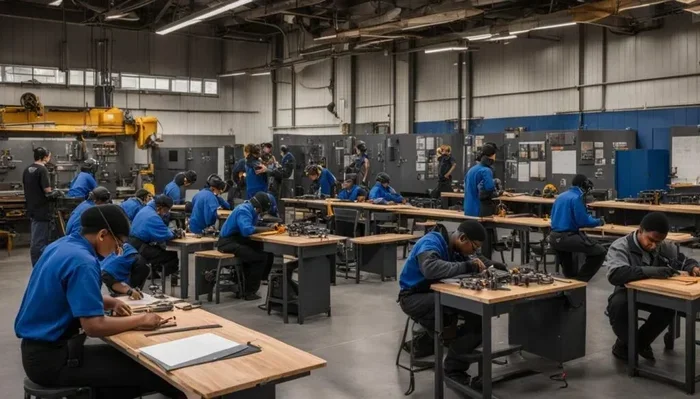
Trade school is a post-secondary education level that focuses on hands-on career training in skilled trades. It typically awards a diploma, certificate, or associate degree upon completion. Trade school programs usually take 6 months to 2 years, making them a fast path to a stable career.
Key Takeaways
- Trade school is post-secondary education: It sits above high school and offers career-focused training in skilled trades.
- Programs are short: Most trade school courses take between 6 months and 2 years to complete.
- You earn a diploma or certificate: Trade school awards a trade school diploma or a vocational certificate, not a bachelor’s degree.
- Hands-on learning is the core: Unlike traditional college, trade school emphasizes practical, real-world skills.
- Trade careers are in high demand: Skilled trades like plumbing, electrical work, and welding offer strong job prospects.
- Cost is lower than college: Trade school tuition is generally much more affordable than a four-year university.
- Anyone can enroll: Trade school has flexible entry requirements and welcomes diverse learners.
📑 Table of Contents
What Exactly Is a Trade School?
A trade school is a type of educational institution that trains students for specific careers in skilled trades. Think of it as a place where you learn a real, hands-on skill that you can use to get a job right away. Instead of spending four years in a classroom reading textbooks, you spend most of your time actually doing the work.
Trade schools go by many names. Some people call them vocational schools, technical institutes, or career colleges. No matter what you call them, the goal is the same: to prepare you for a specific job in a skilled trade. These trade programs cover a wide range of fields, from construction and manufacturing to healthcare and technology.
Now, you might wonder how trade school fits into the bigger picture of education. It is not the same as a traditional four-year college. And it is not the same as high school either. Trade school education is its own distinct level. It sits right after high school in the education ladder. Think of it as a bridge between basic schooling and a full career.
Many people use the phrase vocational education when talking about trade schools. This term covers all forms of career-focused training. Whether you are looking at trade certifications, diploma programs, or short-term courses, they all fall under this umbrella. The key idea is simple: learn a skill, practice it, and use it to build a career.
Trade schools have been around for a long time. They have always played a vital role in our economy. Without skilled tradespeople, our buildings would not get built, our cars would not get fixed, and our hospitals would not function properly. Trade careers are essential, and trade schools are the place that trains the people who fill these roles.
What Level of Education Is Trade School?
Trade school is considered post-secondary education. This means it comes after high school. It is not a part of elementary, middle, or high school. Instead, it is a level of education that you choose after finishing your secondary education.
Let us break this down clearly. Here is how different education levels stack up:
- Primary Education: Elementary and middle school (grades K-8).
- Secondary Education: High school (grades 9-12).
- Post-Secondary Education: This includes trade school, community college, and university.
So, where does trade school land? It is firmly in the post-secondary category. But it is not the same as a four-year university. Trade school is its own path. It is shorter, more practical, and directly tied to a specific job.
What You Get After Completing Trade School
When you finish a trade school program, you do not get a bachelor’s degree. Instead, you earn one of the following:
- Diploma: A trade school diploma shows you completed a full training program in a specific trade.
- Certificate: A trade certification proves you have the skills needed for a particular job.
- Associate Degree: Some trade schools offer two-year associate degrees in applied sciences or technical fields.
Each of these credentials holds real value. Employers in skilled trades respect them because they prove you can actually do the work. A trade school diploma tells a hiring manager that you are ready to hit the ground running.
Is Trade School Considered Higher Education?
This is a common question, and the answer is yes and no. Higher education typically refers to any education beyond high school. By that definition, trade school is higher education. However, many people use “higher education” to mean university-level study. In that narrower sense, trade school is a different beast.
The best way to think about it is this: trade school is a post-secondary education option that focuses on career readiness. It is not about liberal arts or general knowledge. It is about building real, marketable skills that employers need right now.
Who Can Attend Trade School?
One of the great things about trade school enrollment is that almost anyone can do it. You do not need a perfect GPA. You do not need to take the SAT or ACT. And you do not need to spend four years studying subjects you may never use.
Here is who typically attends trade school:
- High school graduates: People who want to jump straight into a career without a four-year degree.
- Career changers: Adults who want to switch to a more hands-on, stable profession.
- Military veterans: Service members transitioning to civilian careers in skilled trades.
- Young adults: People in their 20s who want practical training without years of classroom time.
Trade schools welcome people from all walks of life. The trade school requirements are generally straightforward. Most programs require a high school diploma or a GED equivalent. Some programs may have additional prerequisites, like basic math or reading skills. But overall, the barrier to entry is much lower than a traditional university.
Age is not a barrier either. You can enroll in trade school at 18, 30, 45, or even 60. Many trade schools have students of all ages in the same classroom. This creates a rich learning environment where everyone brings different life experiences to the table.
Trade School vs. Traditional College
It is important to understand how trade school compares to a traditional college experience. They are two very different paths, and both have their own strengths.
Duration and Time Commitment
Trade school programs are short. Most take between 6 months and 2 years. A traditional college degree takes 4 years at a minimum. That is a huge difference. If you want to start earning quickly, trade school has a clear advantage.
Cost of Education
Trade school cost is generally much lower than a four-year university. The average trade school program costs between $1,000 and $15,000 total. A university degree can cost $30,000 to over $100,000. This is a massive difference that affects your financial future for years to come.
Learning Style
Trade school uses hands-on learning as its core method. You work with real tools, real equipment, and real materials. Traditional college relies more on lectures, reading, and written exams. Neither approach is better. They just serve different learning styles and career goals.
Job Readiness
This is where trade school really shines. When you graduate, you already have real experience. You have practiced your skills under the guidance of experienced instructors. A university graduate may need additional training or internships to be job-ready. A trade school graduate often walks into a job on day one.
Earning Potential
People with trade certifications can earn very competitive salaries. Skilled trades like electricians, plumbers, and HVAC technicians are in high demand. Many trade professionals earn salaries that rival or even exceed those of some four-year degree holders.
| Factor | Trade School | Traditional College |
|---|---|---|
| Duration | 6 months to 2 years | 4 years (bachelor’s degree) |
| Cost | $1,000 to $15,000 | $30,000 to $100,000+ |
| Focus | Practical, hands-on skills | Academic and theoretical knowledge |
| Credential Earned | Diploma, certificate, or associate degree | Bachelor’s degree |
| Job Readiness | High from day one | May require additional training |
| Career Paths | Skilled trades, technical roles | Wide range of professions |
As you can see, both paths have real value. The right choice depends on your goals, your learning style, and your career aspirations. Trade school is an excellent option for anyone who wants a direct path to a stable, well-paying career.
Popular Trade School Programs
Trade schools offer a wide variety of career training programs. Here are some of the most popular options:
Electrical Trades
Electricians are always in demand. A trade school program in electrical work teaches you how to wire buildings, install electrical systems, and follow safety codes. After completing your training, you can start an apprenticeship or jump into the workforce.
Plumbing and HVAC
Plumbers and HVAC technicians keep our homes and businesses comfortable and functional. These skilled trades require hands-on training, and trade schools provide exactly that. You learn how to install, repair, and maintain systems that people rely on every day.
Welding and Metalwork
Welding is a trade that touches nearly every industry. From construction to manufacturing to shipbuilding, skilled welders are essential. Vocational training in welding gives you the precision and technique needed to excel in this field.
Automotive Technology
Cars and trucks are complex machines. Automotive technology programs teach you how to diagnose, repair, and maintain vehicles. With modern cars packed with computers and sensors, this trade requires both mechanical skill and technical knowledge.
Healthcare Support
Not all trade careers involve heavy machinery. Healthcare support roles like medical assisting, dental hygiene, and pharmacy technology are also popular trade school programs. These careers combine hands-on skills with the rewarding experience of helping people.
How to Choose the Right Trade School
Not all trade schools are the same. Choosing the right one matters. Here are some tips to help you make the best decision:
- Check accreditation: Make sure the school is accredited by a recognized body. This ensures your trade certification will be respected by employers.
- Look at job placement rates: A good trade school tracks how many graduates find jobs in their field.
- Visit the campus: See the facilities and meet the instructors. A hands-on trade program needs real equipment and experienced teachers.
- Ask about financial aid: Many trade schools offer scholarships, grants, and payment plans.
- Read reviews: Talk to alumni. Their experiences can tell you a lot about the quality of the program.
Take your time with this decision. Choosing the right trade school can set you up for a fulfilling career for decades to come. Do your research, ask questions, and trust your instincts.
The Value of Trade Education in Today’s World
We live in a world that often pushes the idea that a four-year degree is the only path to success. But that is simply not true. Vocational education and trade training offer a legitimate, respected, and rewarding path to a great career.
Skilled tradespeople are the backbone of our economy. They build our homes, maintain our infrastructure, keep our healthcare systems running, and ensure our technology works. Without them, our society would grind to a halt.
Unfortunately, there is a growing shortage of skilled workers in many trades. This shortage creates huge opportunities for people who are willing to train. If you are considering a career in a skilled trade, now is a great time to explore your options.
Think about it this way: while many college graduates struggle to find jobs in their field, trade professionals often have multiple job offers before they even finish their training. Trade school jobs are stable, well-paying, and deeply satisfying. There is real pride in building something with your own hands and knowing your work matters.
Education comes in many forms. A traditional university degree is valuable, but it is not the only valuable form of learning. Career education through trade schools gives people the skills, confidence, and credentials they need to thrive in the real world.
So, to answer the question directly: trade school is a post-secondary education level that provides focused, practical training for specific careers. It is a respected, valuable, and smart choice for anyone who wants a direct path to a successful career in the skilled trades.
Conclusion
Trade school is a post-secondary education option that offers focused, hands-on training for skilled careers. It is a distinct level of education that sits above high school and below a four-year university. Trade programs are shorter, more affordable, and directly tied to real jobs in the workforce.
Whether you are a recent high school graduate, a career changer, or someone looking for a fresh start, trade school can be the perfect fit. It provides the practical skills, industry-recognized credentials, and real-world experience that employers value. Vocational training opens doors to stable, well-paying careers that make a real difference in the world.
Do not let anyone tell you that trade school is a lesser choice. It is a smart, practical, and respected path to a successful future. If you are ready to roll up your sleeves and build a career you can be proud of, trade school might just be the best decision you ever make.
Explore your options. Visit a local trade school. Talk to instructors. Ask questions. The world of career education is waiting for you, and it might just change your life.
Frequently Asked Questions
Is trade school considered higher education?
Yes, trade school is a form of post-secondary education. It comes after high school and provides career-focused training. While it is different from a traditional university, it is a respected level of education that leads to real careers.
How long does it take to complete trade school?
Most trade school programs take between 6 months and 2 years to complete. The length depends on the specific trade and the type of credential you are pursuing. Some short-term certificate programs can be finished in just a few months.
Can you get a degree from trade school?
Yes, some trade schools offer associate degrees in applied sciences or technical fields. Most programs, however, award a diploma or a trade certification. These credentials are recognized by employers in skilled trades.
Is trade school cheaper than traditional college?
Generally, yes. Trade school tuition is much lower than a four-year university. The total cost of a trade program typically ranges from $1,000 to $15,000, compared to tens of thousands for a college degree.
What jobs can you get after trade school?
Trade school graduates can pursue careers in electrical work, plumbing, HVAC, welding, automotive repair, healthcare support, and many more skilled trades. These jobs are in high demand and offer strong earning potential.
Do you need a high school diploma to attend trade school?
Most trade schools require a high school diploma or GED equivalent. Some programs may have additional basic skill requirements, but overall, the entry requirements are flexible and accessible to many learners.


