
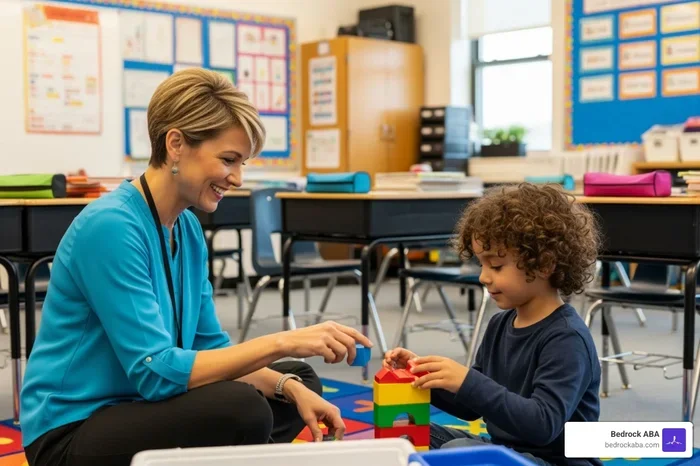
BCBA stands for Board Certified Behavior Analyst, a credentialed professional who applies behavior analysis principles in educational settings. Understanding what is BCBA in education helps parents, teachers, and school administrators see how these specialists improve student outcomes. A BCBA uses data-driven strategies to support students with behavioral challenges and learning differences.
When you hear the term BCBA in education, it can raise a lot of questions. What exactly does this professional do? How does a BCBA make a difference in a school setting? And why are more and more schools looking to hire one?
The answer starts with understanding the role of a Board Certified Behavior Analyst. These professionals bring science-backed strategies into classrooms. They help students who struggle with behavior, learning, and social skills. In this article, we will walk you through everything you need to know about what is BCBA in education. You will learn what they do, how they help students, and why their work matters so much.
Whether you are a parent, a teacher, or a school leader, this guide will give you clear and practical insights. Let us dive in and explore the world of BCBA professionals in education.
Key Takeaways
- Point 1: A BCBA is a certified professional who uses applied behavior analysis to support students in schools
- Point 2: BCBA professionals work closely with teachers, parents, and IEP teams to create personalized behavior plans
- Point 3: Schools that hire BCBA specialists often see better learning outcomes and improved classroom behavior
- Point 4: Becoming a BCBA requires specific education, training, and a national certification exam
- Point 5: BCBA roles in education are growing fast as schools recognize the value of behavior analysis
📑 Table of Contents
What Is BCBA in Education and What Do They Do?
A BCBA stands for Board Certified Behavior Analyst. This is a graduate-level certification given by the Behavior Analyst Certification Board, also known as BACB. A person who earns this credential has completed specific coursework, supervised experience, and a rigorous exam.
So what does a BCBA actually do in a school? These professionals use the principles of applied behavior analysis, or ABA, to understand and improve student behavior. They look at why a student acts a certain way. Then they design strategies to help that student succeed.
Core Responsibilities of a BCBA in Schools
BCBA professionals carry out several important tasks every day. Here are the main ones:
- Behavioral Assessments: They observe students and gather data to understand the root causes of behavior.
- Creating Behavior Plans: They write individualized plans that target specific behavioral goals for each student.
- Training Teachers and Staff: They coach school staff on how to use effective behavior strategies in the classroom.
- Working with IEP Teams: They collaborate with special education teams to align behavior goals with academic plans.
- Data Collection and Analysis: They track student progress and adjust strategies based on real results.
Each of these tasks plays a big role in helping students thrive. A BCBA does not just react to problems. They use proactive, evidence-based methods to prevent issues before they start.
Why Behavior Analysis Matters in Education
Behavior analysis is not just about stopping bad behavior. It is about understanding the whole picture. When a student acts out, there is usually a reason. Maybe they are overwhelmed. Maybe they lack the skills to communicate their needs. A BCBA digs deep to find those reasons.
This approach is especially helpful for students with autism spectrum disorder, ADHD, and other developmental disabilities. These students often need extra support to navigate the school day. A BCBA provides that support in a structured and measurable way.
When schools use behavior analysis, they create a more inclusive environment. All students benefit when classrooms are designed with clear expectations and positive reinforcement.
How BCBA Professionals Work in Schools
You might wonder how a BCBA actually fits into the school day. The answer is that they work in many different ways. Their role is flexible and adapts to the needs of each school.
Direct Student Support
In some cases, a BCBA works directly with students. They run one-on-one sessions or small group activities. These sessions focus on building specific skills like communication, self-regulation, and social interaction.
For example, a BCBA might work with a student who has difficulty staying seated during class. They would first assess what triggers the behavior. Then they would teach the student replacement skills. Over time, the student learns to manage their own behavior more effectively.
Consultation and Collaboration
More often, a BCBA acts as a consultant. They do not work with students every single day. Instead, they guide teachers and staff on how to handle behavioral challenges. This model is common in schools that want to build internal capacity.
Think of it this way. A BCBA is like a coach for the teaching team. They show teachers how to use positive reinforcement, how to set up the classroom for success, and how to respond to challenging moments. The goal is to give teachers the tools they need to manage behavior on their own.
Parent and Family Engagement
BCBA professionals also work closely with families. They hold meetings, share progress reports, and train parents on strategies they can use at home. This partnership is essential because behavior does not stop at the school door.
When parents and BCBA specialists work together, students get consistent support across all settings. This consistency leads to faster progress and better long-term outcomes.
Clear communication is the backbone of this work. In fact, much like the expressions found in idioms for education, the language BCBA professionals use must be precise and meaningful to reach every stakeholder effectively.
What Makes BCBA Different from Other Education Roles?
There are many professionals who work in schools to support students. It is easy to get confused about how a BCBA fits in. Let us look at how this role compares to others.
| Role | Focus Area | Training Level | Primary Function |
|---|---|---|---|
| BCBA | Behavior Analysis | Master’s Degree + Certification | Designs and oversees behavior intervention plans |
| School Psychologist | Mental Health and Assessment | Specialist or Doctoral Degree | Conducts psychological evaluations and counseling |
| Special Education Teacher | Academic Instruction | Bachelor’s Degree + Certification | Delivers tailored academic lessons |
| Speech-Language Pathologist | Communication Skills | Master’s Degree + Certification | Addresses speech and language delays |
| Occupational Therapist | Motor and Sensory Skills | Master’s Degree + Certification | Improves daily living and motor skills |
As you can see from the table above, each role plays a unique part. The BCBA focus is specifically on behavior. While a school psychologist may look at emotional and cognitive factors, the BCBA zeroes in on observable behavior and the environmental factors that shape it.
What is BCBA in education compared to a special education teacher? A special education teacher delivers academic content. A BCBA builds the behavioral foundation that makes learning possible. The two roles work hand in hand to support the whole student.
Similarly, when BCBA professionals and school psychologists collaborate, they create a powerful support system. Each brings a different expertise to the table, and together they serve students far better than either could alone.
The Impact of BCBA on Student Learning Outcomes
Research shows that schools with BCBA support see real improvements. Students display fewer behavioral problems. Teachers feel more confident in managing their classrooms. And parents report higher satisfaction with their child’s school experience.
Measurable Results
One of the strongest advantages of having a BCBA in education is the focus on data. Every strategy is tracked and measured. This means schools can see what works and what does not. There is no guesswork involved.
Here are some common outcomes that schools report after bringing in a BCBA:
- Reduced office referrals: Fewer students are sent to the office for behavioral issues.
- Improved attendance rates: Students who feel supported are more likely to come to school.
- Better academic performance: When behavior improves, learning naturally follows.
- Stronger teacher morale: Teachers feel more equipped and less stressed.
- Increased parent satisfaction: Families see real progress and feel more connected to the school.
Real-World Examples
Let us look at a couple of real-world scenarios. In one elementary school, a BCBA noticed that several students were struggling with transitions between activities. The BCBA collected data and found that the transitions were too unstructured. They designed a visual schedule and a brief reinforcement routine. Within weeks, transition times dropped by 40 percent.
In another case, a middle school brought in a BCBA to address rising suspension rates. The BCBA trained teachers in de-escalation techniques and helped them build positive relationships with at-risk students. Suspension rates dropped by over half in one academic year.
These examples show that BCBA professionals do not just work with theory. They deliver practical, results-driven support that changes lives.
How to Become a BCBA in Education
If you are interested in this career path, you might be wondering what it takes to become a BCBA. The journey requires dedication, but it is very rewarding.
Education Requirements
The first step is earning a master’s degree in behavior analysis, special education, psychology, or a related field. The program must be approved by the Behavior Analyst Certification Board. This ensures that you receive the right training.
During your graduate studies, you will take courses in topics like:
- Applied behavior analysis
- Behavioral assessment techniques
- Ethics in behavior analysis
- Data analysis and research methods
- Autism spectrum disorder and other developmental conditions
Supervised Experience
After completing your coursework, you must finish a supervised fieldwork period. This typically involves 1,500 to 2,000 hours of hands-on experience working under a qualified BCBA supervisor. During this time, you apply what you have learned in real settings.
The Certification Exam
The final step is passing the BCBA certification exam. This exam tests your knowledge of behavior analysis principles and your ability to apply them in practical situations. Once you pass, you earn the official BCBA credential.
After certification, BCBA professionals must complete continuing education credits every year. This keeps their skills sharp and ensures they stay up to date with the latest research and best practices.
Many BCBA professionals in education also pursue additional training in areas like positive behavior interventions and supports, or PBIS. This extra knowledge makes them even more effective in school environments.
Quick Tips for Aspiring BCBAs
- Start by volunteering or interning in a school or clinic to gain early exposure.
- Choose a graduate program that is verified by the BACB.
- Build strong relationships with supervising BCBAs during your fieldwork.
- Stay current with the latest ABA research through journals and conferences.
- Network with other professionals in the field to learn about job opportunities.
Common Mistakes Schools Make When Working with a BCBA
Even when schools hire a BCBA, they can still make mistakes that limit the impact. Here are some common pitfalls to avoid.
Treating the BCBA as an Outsider
One of the biggest mistakes is not fully integrating the BCBA into the school team. When a BCBA is treated as a temporary fix rather than a long-term partner, their impact is limited. Schools should include the BCBA in planning, meetings, and decision-making from day one.
Ignoring Data Collection
BCBA work is built on data. If a school does not commit to consistent data collection, the BCBA cannot make informed decisions. Everyone on the team must be willing to track and share behavioral data.
Expecting Quick Fixes
Behavior change takes time. Some schools expect instant results and lose patience when progress is slow. A good BCBA will set realistic timelines and explain the process clearly from the start.
It is also worth noting that effective communication in education settings often mirrors the structured and expressive techniques found in metaphors for education. When BCBA professionals use vivid, clear comparisons to explain behavior strategies, they help teachers and parents grasp complex concepts much faster.
Not Involving Parents Enough
Parent involvement is critical. Schools that keep families out of the process miss a valuable opportunity. A BCBA can bridge the gap between home and school, but only if parents are included in meetings and given the tools to support their child.
Overlooking Teacher Training
BCBA strategies only work when teachers know how to use them. If a school hires a BCBA but does not invest in training teachers, the strategies will not stick. Professional development for staff is a must.
Clear and consistent language is also key. When BCBA professionals explain their methods using familiar, descriptive comparisons, much like similes for education help clarify complex ideas, everyone on the team stays aligned and motivated.
Conclusion
Understanding what is BCBA in education opens the door to better support for students, teachers, and families. Board Certified Behavior Analysts bring science, data, and compassion into schools every single day. Their work creates lasting change for students who need it most.
Whether you are a parent exploring options for your child or a school leader looking to improve behavior support, a BCBA can make a real difference. The field is growing, the research is strong, and the results speak for themselves.
If you want to learn more about how behavior analysis shapes learning environments, start by exploring the resources available through professional organizations and educational networks. The more you know about what is BCBA in education, the better equipped you will be to advocate for the support that students deserve.
Take the first step today. Reach out to a local BCBA, attend a workshop, or simply start a conversation at your school. Small actions lead to big changes in the lives of students.
Frequently Asked Questions
What does BCBA stand for in education?
BCBA stands for Board Certified Behavior Analyst. In education, this professional uses applied behavior analysis to assess and improve student behavior. They work with teachers, parents, and IEP teams to create supportive learning environments.
How is a BCBA different from a school counselor?
A school counselor focuses on a wide range of student well-being topics, including academic and social-emotional support. A BCBA specializes specifically in behavior analysis and uses data-driven methods to address behavioral challenges. The two roles complement each other but have different training and focus areas.
Can a BCBA work with students who do not have autism?
Yes, absolutely. While BCBAs are often associated with autism support, they work with all types of students. They help students with ADHD, anxiety, emotional disturbances, and behavioral challenges that are not tied to a specific diagnosis. Their methods benefit any student who needs behavioral support.
How long does it take to become a BCBA?
Typically, it takes about six to eight years after high school. This includes completing a bachelor’s degree, a master’s degree in a relevant field, supervised fieldwork hours, and passing the certification exam. The timeline can vary based on individual circumstances and program requirements.
Do all schools need a BCBA?
Not every school needs a full-time BCBA, but most schools can benefit from having access to one. Schools with high rates of behavioral issues, large numbers of students with IEPs, or a focus on inclusive education often find the greatest value in having a BCBA on staff or as a consultant.
What training do BCBA professionals receive beyond certification?
BCBA professionals must complete continuing education credits each year to maintain their certification. Many also pursue additional training in areas like positive behavior interventions, trauma-informed practices, and specific disabilities. This ongoing learning keeps their skills current and effective.


