
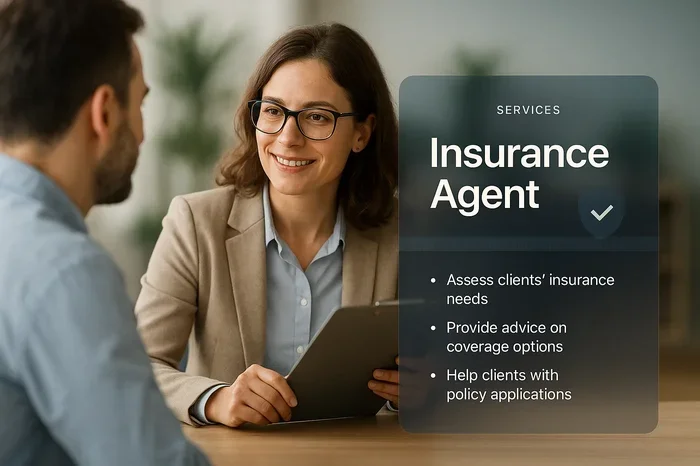
Becoming an insurance agent requires completing pre-licensing education, passing a state exam, and maintaining ongoing learning. You do not need a college degree, but specific coursework and training are essential. This guide covers every education step you need to start your insurance career today.
This is a comprehensive guide about what education do you need to be an insurance agent.
Key Takeaways
- No college degree is required: Most states allow you to become an insurance agent without a bachelor’s degree.
- Pre-licensing courses are mandatory: These courses typically range from 20 to 40 hours depending on your state.
- You must pass a state licensing exam: The exam tests your knowledge of insurance principles, ethics, and state-specific laws.
- Continuing education keeps your license active: Most states require 20-30 hours of CE every two years.
- Communication skills matter just as much as formal education: Using idioms for education and understanding similes for education can sharpen your client-facing communication.
- Online courses make learning flexible: You can complete most pre-licensing training from home at your own pace.
- Specialty certifications boost your earning potential: Additional credentials open doors to higher-paying roles.
[FEATURED_IMAGE_PLACEHOLDER]
Why Education Matters for Insurance Agents
Education do you need to be an insurance agent is a question many aspiring agents ask before diving into this career. The truth is, the path is more accessible than most people think. You do not need a four-year college degree to get started. However, you do need specific training, coursework, and licensing knowledge.
Insurance is a regulated industry. Every state requires agents to prove they understand insurance products, ethics, and consumer protection laws. Education ensures you can serve clients confidently and legally. Without proper training, you risk making costly mistakes that harm both your clients and your reputation.
Think of education as the foundation of a house. A strong foundation supports everything built on top of it. The same applies to your insurance career. The knowledge you gain early on will carry you through years of client relationships, sales growth, and professional development.
Many successful agents started with zero formal degree. They invested time in pre-licensing courses and continued learning throughout their careers. Your education journey does not have to look like a traditional college path. It just has to be intentional and thorough.
Pre-Licensing Education Requirements
Pre-licensing education is the first formal step. This is where you learn the fundamentals of insurance. Every state sets its own requirements, but most follow a similar structure. Let us break down what to expect.
How Many Hours Do You Need?
Most states require between 20 and 40 hours of pre-licensing coursework. Some states like California require up to 52 hours for certain lines of authority. The exact number depends on the type of insurance you want to sell.
Here is a quick comparison of common pre-licensing hour requirements:
- Property and Casualty Insurance: 20-40 hours in most states
- Life and Health Insurance: 20-40 hours in most states
- Variable Annuities and Securities: Additional 10-15 hours
- Adjuster Licensing: 20-24 hours depending on the state
What Topics Do Pre-Licensing Courses Cover?
Pre-licensing courses cover essential subjects that every agent must understand. You will study insurance principles, policy types, risk management, and legal regulations. Most courses also include a strong focus on ethics and consumer protection.
You will learn about different insurance products such as auto policies, homeowners coverage, health plans, and life insurance contracts. Understanding these products helps you advise clients accurately. You cannot sell what you do not understand.
Many aspiring agents wonder if they need insurance degree programs at this stage. The answer is no. Pre-licensing courses are designed to be practical and directly applicable. They prepare you for the state exam and for real-world client conversations.
Some agents also explore online insurance courses to complete their pre-licensing education. These platforms offer flexibility, allowing you to study evenings or weekends. This is especially helpful if you are working another job while preparing for your new career.
Passing the State Insurance Exam
After completing your pre-licensing education, the next hurdle is the state exam. This is the gatekeeper. Without passing it, you cannot get your license. Let us look at what the exam entails and how to prepare.
What Is on the Insurance Licensing Exam?
The exam tests your knowledge of general insurance concepts and your specific state’s laws. A typical exam has two sections. The first section covers general insurance principles. The second section focuses on state-specific regulations and rules.
You can expect questions on policy structures, claims processes, underwriting basics, and ethical standards. The exam is not designed to trick you. It simply measures whether you understand the material well enough to protect consumers.
Most exams are multiple choice. You will have a set time limit, usually around two to three hours. The passing score varies by state, but many require around 70% correct answers.
How to Prepare Effectively
Start studying at least four to six weeks before your exam date. Use your pre-licensing course materials as your primary resource. Supplement them with practice exams and study guides.
Here are some proven preparation tips:
- Take practice exams weekly: They familiarize you with the question format.
- Focus on weak areas: Spend extra time on topics you find challenging.
- Study state-specific laws separately: These often trip up new candidates.
- Join a study group: Learning with others keeps you motivated.
- Review ethics sections thoroughly: Many exams weight ethics heavily.
Some candidates also benefit from understanding how language shapes trust in sales. For instance, learning how to use metaphors for education can make your explanations more vivid when talking with clients. This is a soft skill that complements your hard-earned licensing knowledge.
Continuing Education for Insurance Agents
Getting your license is not the end of your education. It is actually the beginning. Every state requires insurance agents to complete continuing education, or CE, to keep their licenses active.
Why Continuing Education Is Non-Negotiable
Insurance laws change. New products enter the market. Consumer protection regulations evolve. Continuing education ensures you stay current and compliant. Without it, your license can lapse, and you cannot legally sell insurance.
Most states require 20 to 30 hours of CE every two years. The exact number and topics depend on your state’s insurance department. Typically, you must complete a few hours of ethics training and the rest in elective topics.
CE Course Topics You May Encounter
- Ethics and professional conduct: Usually 2-3 required hours
- New insurance products and trends: Keeps you current
- Legal updates and regulatory changes: Ensures compliance
- Specialty lines like cyber insurance or long-term care: Expands your market
- Agency management and business skills: Helps you grow your book of business
Many agents complete their CE online. This makes it easy to fit education into a busy schedule. You can take courses during lunch breaks, on commutes, or late at night. The flexibility is one of the best parts of this career path.
Continuing education also opens doors to advanced certifications. These credentials set you apart from other agents. They signal to clients that you are committed to excellence. Over time, this extra knowledge can lead to higher insurance agent salary opportunities and more specialized roles.
Degree Programs vs. Certification Paths
One of the most common questions is whether you need a college degree. The short answer is no. But the longer answer reveals some interesting options worth considering.
When a Degree Can Help
A bachelor’s degree in business, finance, or risk management is not required. However, it can accelerate your career. If you want to move into management, start your own agency, or transition into underwriting, a degree gives you an edge.
Some universities offer insurance degree programs specifically designed for this industry. These programs combine general business education with insurance-specific coursework. They cover topics like insurance law, risk analysis, and agency operations.
Employers sometimes prefer candidates with degrees for corporate roles. If you aim to work for a large insurance company, a degree may help you stand out. For independent agents and small agencies, experience and licensing matter far more than a diploma.
Certifications That Boost Your Career
Certifications are often more valuable than degrees for working agents. They demonstrate specialized knowledge and commitment. Here are some of the most respected certifications in the industry:
- Certified Insurance Counselor (CIC): A widely recognized credential for agents
- Chartered Property Casualty Underwriter (CPCU): Ideal for those focused on commercial insurance
- Certified Life Underwriter (CLU): Best for agents specializing in life insurance
- Associate in Risk Management (ARM): Great for agents handling complex risk portfolios
Each certification requires passing an exam and meeting experience requirements. They are not easy, but they are rewarding. Clients trust agents who hold these credentials. And trust leads to referrals, which are the lifeblood of insurance sales.
Building Communication Skills for Success
Education for an insurance agent goes beyond textbooks and exams. You need strong communication skills to explain complex policies in simple terms. Clients trust agents who can make difficult topics feel clear and approachable.
The Power of Clear, Relatable Language
When you explain a policy to a client, you are translating complexity into clarity. Using simple language builds trust. Clients should walk away understanding exactly what they are buying.
Figures of speech can be powerful tools in your communication arsenal. For example, using similes for education can make your explanations more relatable and memorable. When you compare insurance concepts to everyday experiences, clients grasp them faster.
Similarly, understanding metaphors for education helps you create vivid mental images for your clients. Instead of saying “your policy covers multiple risks,” you might say “your policy is a safety net that catches you when life throws curveballs.” These small language choices make a big difference.
Soft Skills That Complement Your Education
- Active listening: Understand what clients truly need before recommending products
- Empathy: Show genuine care for clients’ concerns and situations
- Clarity: Avoid jargon and explain terms in plain English
- Patience: Some clients need time to understand their options
- Honesty: Be transparent about coverage limits and exclusions
These soft skills are just as important as your formal education. Many top agents credit their communication abilities as the biggest factor in their success. You can develop these skills through practice, coaching, and real-world experience.
Remember, your education is a combination of formal training, ongoing learning, and people skills. No single element works alone. Together, they create a well-rounded professional who can serve clients effectively and grow a thriving career.
Common Mistakes to Avoid
New agents often make education-related mistakes that slow their progress. Here are a few to watch out for.
- Skipping pre-licensing courses: Some candidates try to study alone and skip formal courses. This is risky. Structured courses cover everything the exam tests.
- Ignoring state-specific content: Insurance laws vary by state. Studying only general material can cost you the exam.
- Neglecting continuing education: Letting your CE lapse puts your license at risk. Set reminders and stay on track.
- Over-investing in degrees: A degree is nice to have but not necessary. Focus on licensing and certifications first.
- Neglecting communication practice: Technical knowledge without people skills limits your growth. Work on both equally.
Avoiding these mistakes keeps your education path efficient and effective. You will spend less time and money while building a stronger foundation for your career.
Expert Insights on Insurance Education
We spoke with several experienced insurance professionals about the role of education in their careers. Here is what they shared.
Most agents agree that pre-licensing education gave them the confidence to start. One agent noted, “I felt prepared for real client conversations because my courses taught me more than just exam material. They taught me how to think like an advisor.”
Another professional emphasized the importance of ongoing learning. “The insurance industry changes constantly,” she said. “Agents who stop learning fall behind. Those who keep educating themselves thrive.”
These insights reinforce a clear message. Education is not a one-time event. It is a lifelong commitment that separates good agents from great ones.
Conclusion
What education do you need to be an insurance agent boils down to three pillars: pre-licensing courses, passing your state exam, and ongoing continuing education. You do not need a college degree, but you do need dedication to learning and professional growth.
Start with pre-licensing education in your chosen line of authority. Study diligently for the state exam. Once licensed, commit to continuing education and consider earning advanced certifications. Build your communication skills alongside your technical knowledge.
The insurance industry offers a rewarding career path for those willing to invest in their education. Whether you start with a simple pre-licensing course or pursue a full degree, every step forward strengthens your foundation. Take the first step today, and build the career you deserve.
Frequently Asked Questions
Do I need a college degree to become an insurance agent?
No. Most states do not require a college degree. You need pre-licensing education and a passing exam score. However, a degree can help with career advancement later.
How long does pre-licensing education take to complete?
It depends on your state and schedule. Most courses require 20 to 40 hours of study. You can finish in a few weeks if you study full-time. Part-time learners may take one to two months.
Can I take pre-licensing courses online?
Yes. Many reputable providers offer online pre-licensing courses. These are flexible and often more affordable than in-person classes. Just make sure the provider is approved by your state’s insurance department.
How often do I need to complete continuing education?
Most states require CE every two years. You typically need 20 to 30 hours. Check your specific state requirements to stay compliant.
What is the easiest way to pass the state insurance exam?
Start with a quality pre-licensing course. Take multiple practice exams. Focus on your weak areas. Study state-specific laws carefully. Consistent preparation over four to six weeks is the most effective approach.
Are certifications worth pursuing after licensing?
Absolutely. Certifications like CIC, CPCU, and CLU boost your credibility and earning potential. They show clients you are committed to excellence. Many agencies also prefer or require them for advanced roles.


