
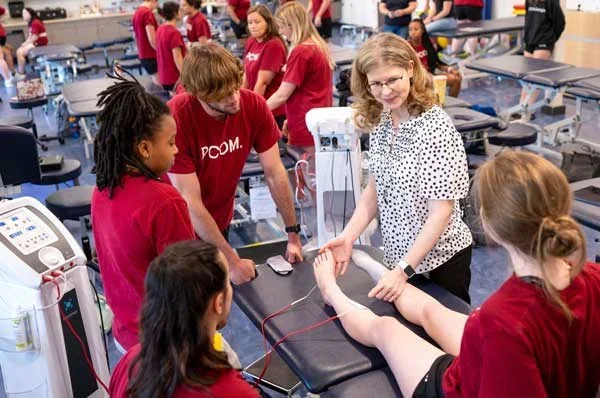
Becoming a physical therapist requires extensive education and hands-on training. You need a bachelor’s degree, followed by a Doctor of Physical Therapy (DPT) degree from an accredited program. After completing your physical therapist education, you must pass a state licensing exam to practice.
Key Takeaways
- Bachelor’s Degree: A four-year undergraduate degree is the first step toward a physical therapy career.
- DPT Degree Required: You must earn a Doctor of Physical Therapy degree from an accredited program.
- Licensing Is Mandatory: Every state requires PTs to pass the NPTE and meet specific criteria.
- Clinical Experience Matters: Hands-on clinical rotations are a core part of your training.
- Continuing Education: Physical therapists must keep learning throughout their careers to stay licensed.
- Specialization Options: You can pursue board certification in areas like orthopedics or pediatrics after earning your DPT.
- Total Timeline: Expect 7 to 8 years of education and training before becoming a licensed PT.
📑 Table of Contents
- How Much Education Do You Need to Be a Physical Therapist
- Understanding the Educational Pathway
- Licensing and Certification Requirements
- How Long Does It All Take?
- Is Physical Therapy School Worth It?
- Common Mistakes to Avoid
- Quick Tips for Aspiring Physical Therapists
- Expert Insights on Physical Therapist Education
- Physical Therapist Education vs. Other Healthcare Professions
- Continuing Education for Licensed Physical Therapists
- The Future of Physical Therapist Education
- Conclusion
How Much Education Do You Need to Be a Physical Therapist
Have you ever wondered what it takes to become a physical therapist? The path to this rewarding healthcare career requires a strong commitment to learning. Physical therapist education is not a short journey. It involves years of classroom study, hands-on practice, and rigorous exams. If you are considering this profession, you need to know exactly what lies ahead.
The short answer is that you need a lot of schooling. Most physical therapists spend about seven to eight years in education after high school. This includes a four-year undergraduate degree and a three-year doctoral program. The education to be a physical therapist is demanding but incredibly fulfilling. It prepares you to help people recover from injuries, manage chronic pain, and improve their quality of life.
The healthcare field values professionals who are well-trained and knowledgeable. Physical therapy is no exception. The physical therapist career path starts with a solid foundation in science and health. From there, you move into specialized doctoral-level training. This structured path ensures that every licensed PT can deliver safe and effective care to patients. Let us walk through each step of this journey in detail.
Understanding the Educational Pathway
The journey to becoming a physical therapist follows a clear and structured pathway. Each stage builds on the last. You cannot skip steps or rush through the process. Here is what the full physical therapist education requirements look like.
Step 1: Earn a Bachelor’s Degree
Your first stop is a four-year undergraduate program. Most aspiring PTs choose a degree in biology, kinesiology, exercise science, or health sciences. These fields give you a strong background in human anatomy, physiology, and movement science.
During your bachelor’s degree, you will need to complete prerequisite courses. These typically include classes in anatomy, chemistry, physics, and statistics. Maintaining a strong GPA is important because physical therapy school admissions are competitive. Most DPT programs look for a GPA of 3.0 or higher, though many successful applicants have much higher.
Some universities now offer combined or “3+3” programs. These let you complete both your undergraduate and doctoral coursework in a streamlined way. However, not every school offers these tracks. You should research your options early.
Step 2: Pass the Graduate Record Examination (GRE)
Before applying to DPT programs, you must take the GRE. This standardized test measures your verbal reasoning, quantitative reasoning, and analytical writing skills. Your GRE score, along with your GPA and experience, plays a big role in admissions decisions.
Preparing for the GRE takes time and effort. Many students study for several months before their test date. Free resources and prep courses are widely available online. A strong GRE score can make your application stand out.
Step 3: Complete a Doctor of Physical Therapy (DPT) Program
This is the most important part of your physical therapist education. A DPT program typically takes three years to complete. These programs are offered at accredited universities across the country. You will dive deep into topics like biomechanics, neuroscience, pharmacology, and clinical reasoning.
Your coursework will cover both classroom and lab-based learning. You will study how the human body moves, heals, and adapts. You will also learn about different patient populations, from children to older adults. The DPT program is designed to make you a competent and confident practitioner.
Step 4: Complete Clinical Rotations
Hands-on training is a huge part of your DPT journey. During clinical rotations, you will work directly with patients under the supervision of licensed physical therapists. These rotations happen in hospitals, outpatient clinics, rehabilitation centers, and other settings.
Clinical experience gives you real-world skills that no classroom can fully replicate. You will learn how to assess patients, create treatment plans, and track progress. These rotations also help you figure out which areas of physical therapy interest you most. Many students discover their passion for a specific specialty during this time.
Licensing and Certification Requirements
Completing your DPT degree is not the final step. To practice as a physical therapist, you must earn a license in the state where you want to work. Licensing ensures that every PT meets the minimum standards for patient safety and professional competence.
The National Physical Therapy Examination (NPTE)
All states require you to pass the NPTE. This exam is administered by the Federation of State Boards of Physical Therapy (FSBPT). It tests your knowledge of clinical sciences and your ability to apply that knowledge in practice.
The NPTE is a computer-based exam with multiple-choice questions. You will be tested on areas like musculoskeletal care, cardiovascular and pulmonary systems, and neuromuscular rehabilitation. Passing this exam is a critical milestone in your PT licensure journey.
State-Specific Requirements
Beyond the NPTE, each state has its own additional requirements. Some states require a jurisprudence exam, which tests your knowledge of state-specific laws and regulations. Others may require background checks or specific coursework.
You should always check with your state’s physical therapy board for the most current requirements. Rules can change, and staying informed will save you time and stress. State licensing exam preparation should start well before you graduate from your DPT program.
What About Board Certification?
After you become a licensed physical therapist, you may choose to pursue board certification. The American Board of Physical Therapy Specialties (ABPTS) offers certification in several areas. These include orthopedics, neurology, sports physical therapy, pediatrics, and geriatrics.
Board certification is not required to practice. However, it demonstrates advanced expertise in a specific area. It can also open doors to better job opportunities and higher pay. Many employers value board-certified therapists because it shows a deep commitment to the profession.
How Long Does It All Take?
Let us talk about the timeline. How many years of school does it really take? The answer depends on your starting point and your goals.
For most students, the total journey looks like this:
- 4 years for a bachelor’s degree
- 3 years for a DPT program
- Additional time for clinical rotations, which are built into the DPT program
- Optional: 1 to 3 years for a residency or fellowship if you want to specialize
So the minimum timeline is about 7 years after high school. If you pursue a residency or fellowship, it can take 8 to 11 years total. The physical therapist career path is long, but every year of training prepares you to provide excellent patient care.
Some people ask if you can become a PT faster. The answer is no. The accredited DPT program is the only pathway to licensure in the United States. There are no shortcuts. The length of the training reflects the complexity and importance of the work physical therapists do.
Is Physical Therapy School Worth It?
This is a question many prospective students ask. The answer depends on your goals, interests, and financial situation. Let us look at both sides.
Physical therapy is a growing field. The Bureau of Labor Statistics projects strong job growth for PTs in the coming years. An aging population, increased awareness of rehabilitation, and a focus on preventive care all drive this demand. The healthcare education investment pays off in job security and career satisfaction.
However, physical therapy school is expensive. Tuition at DPT programs can range from $40,000 to over $200,000 for the full program. Many students rely on federal loans, scholarships, and grants to finance their education. It is important to research financial aid options early and plan accordingly.
Despite the cost, most physical therapists report high job satisfaction. They love helping people regain mobility and independence. The professional doctorate degree gives you the skills and credibility to make a real difference in people’s lives.
Common Mistakes to Avoid
As you plan your journey into physical therapy, watch out for these common pitfalls.
- Waiting too long to start prerequisite courses. These classes can be tough, and falling behind will delay your application timeline.
- Ignoring clinical experience. Many DPT programs require or strongly prefer applicants with hands-on experience in a PT setting. Start volunteering or shadowing early.
- Underestimating the GRE. A weak GRE score can hurt your chances, even if your grades are strong. Give yourself plenty of time to prepare.
- Skipping research on state requirements. Each state has different rules. What you need in one state may differ from another.
- Forgetting about continuing education. Once you are licensed, you must complete ongoing learning to maintain your credentials.
Avoiding these mistakes will keep your path to becoming a physical therapist smooth and focused. Think of it this way. Just as similes for education help students compare and understand learning concepts, understanding each step of the PT education journey helps you stay on track and avoid unnecessary detours. Similarly, knowing the right idioms for education can make you feel more confident in academic settings, and learning metaphors for education helps you see the bigger picture of how each phase of training connects to your ultimate career goal.
Quick Tips for Aspiring Physical Therapists
- Start volunteering in physical therapy clinics as early as possible.
- Build relationships with professors who can write strong recommendation letters.
- Stay organized with application deadlines. Most DPT programs use the PTCAS system.
- Focus on your science courses. Anatomy, physiology, and biology are the foundation of PT education.
- Consider shadowing a licensed PT to get a realistic view of the profession.
- Join pre-physical therapy student organizations on your campus.
- Keep your resume updated with healthcare-related experience throughout college.
Expert Insights on Physical Therapist Education
We spoke with several licensed physical therapists about their educational journeys. Their advice offers valuable perspective for anyone considering this career.
Dr. Sarah Mitchell, DPT: “The education to be a physical therapist is rigorous, but it is also deeply rewarding. Every clinical rotation taught me something I still use every day in practice.”
James Rivera, PT, DPT: “Do not rush through your prerequisites. Build a strong foundation in the sciences. Your DPT program will build on that knowledge in ways you cannot imagine.”
Dr. Lisa Chen, Board-Certified Orthopedic Specialist: “After you earn your DPT and pass the NPTE, the learning does not stop. Continuing education keeps you current with the latest research and techniques. It is a lifelong commitment.”
These insights highlight a key truth. The physical therapist education requirements are designed to produce highly skilled and compassionate clinicians. The training is intense, but it prepares you for a career that truly matters.
Physical Therapist Education vs. Other Healthcare Professions
How does the education required for physical therapy compare to other healthcare careers? Here is a quick look at the differences.
| Profession | Degree Required | Typical Years of Education | Licensing Exam |
|---|---|---|---|
| Physical Therapist | Doctor of Physical Therapy (DPT) | 7 to 8 years | NPTE |
| Occupational Therapist | Master’s or Doctoral Degree | 6 to 8 years | |
| Speech-Language Pathologist | Master’s Degree | 6 years | PRAXIS |
| Registered Nurse | Bachelor of Science in Nursing | 4 years | NCLEX-RN |
| Physician Assistant | Master’s Degree | 6 to 7 years | PANCE |
As you can see, physical therapy education falls on the longer end of the spectrum. But it is shorter than becoming a physician. The professional doctorate in physical therapy strikes a balance between depth of training and practical career readiness.
Continuing Education for Licensed Physical Therapists
Your education does not end when you get your license. Every state requires physical therapists to complete continuing education (CE) courses to maintain their licensure. The number of CE hours varies by state, but most require between 15 and 30 hours per year.
CE courses cover a wide range of topics. You might take classes on new treatment techniques, updated research findings, or practice management skills. Many of these courses are available online, making it easier to stay current while working full time.
Continuing education keeps you competent and confident. It also opens doors to new specialties and advanced certifications. Think of it as an investment in your long-term career. The more you learn, the better you can serve your patients.
The Future of Physical Therapist Education
The field of physical therapy is constantly evolving. New research, technologies, and treatment methods are reshaping how PTs train and practice. As a result, physical therapist education programs are also adapting.
Many DPT programs are now integrating more technology-based learning. Virtual reality simulations, telehealth training, and data-driven patient assessment tools are becoming part of the curriculum. These innovations prepare students for the modern healthcare landscape.
There is also a growing emphasis on interprofessional education. This means PT students learn alongside students from other healthcare fields, such as nursing, medicine, and occupational therapy. Collaboration is key to delivering high-quality patient care, and modern education reflects that reality.
If you are just starting to explore this career, now is an exciting time to enter the field. The physical therapist education system is becoming more innovative, more collaborative, and more focused on real-world outcomes.
Conclusion
So, how much education do you need to be a physical therapist? The answer is clear. You need a bachelor’s degree and a Doctor of Physical Therapy degree from an accredited program. You must pass the NPTE and meet your state’s licensing requirements. The journey takes about seven to eight years, but it prepares you for a meaningful and stable career in healthcare.
The education to be a physical therapist is challenging, but it is also deeply rewarding. You will gain the knowledge and skills to help people move better, live better, and feel better. If you are passionate about healthcare and enjoy working with people, this career path is well worth the investment.
Start planning early. Focus on your science courses, gain clinical experience, and stay committed to your goals. The path to becoming a physical therapist is long, but every step brings you closer to a career that makes a real difference in people’s lives.
Frequently Asked Questions
What is the minimum education required to become a physical therapist?
You need a Doctor of Physical Therapy (DPT) degree from an accredited program. Before entering a DPT program, you must complete a bachelor’s degree with prerequisite science courses. In total, expect at least seven years of education after high school.
Can I become a physical therapist with a master’s degree?
No. As of 2020, all new physical therapists in the United States must hold a DPT degree. Master’s-level programs in physical therapy are no longer available for new students. The DPT is now the standard physical therapist education requirement.
How long does physical therapy school take?
A DPT program typically takes three years to complete. Combined with a four-year bachelor’s degree, the total education timeline is about seven to eight years. Some students also complete a one- to three-year residency or fellowship for specialization.
Do I need to pass an exam to become a licensed physical therapist?
Yes. You must pass the National Physical Therapy Examination (NPTE) administered by the FSBPT. Most states also have additional requirements, such as a jurisprudence exam or background check. Check your state’s board for specific details.
What subjects should I study in college to prepare for physical therapy school?
Focus on science-heavy courses like anatomy, physiology, biology, chemistry, and physics. Statistics and psychology are also commonly required. Strong grades in these courses will strengthen your DPT program application.
Is physical therapy a good career choice in terms of job growth?
Yes. The Bureau of Labor Statistics projects strong growth for physical therapists through the next decade. An aging population and increased focus on rehabilitation and preventive care are driving demand. The physical therapist career path offers excellent job security and satisfaction.
=== META DATA ===
SEO Title: How Much Education Do You Need to Be a Physical Therapist
Meta Title: How Much Education to Be a Physical Therapist
URL Slug: education-required-physical-therapist


