
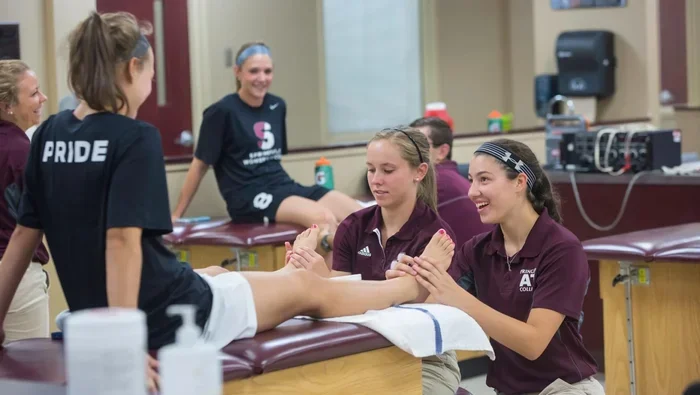
To become an athletic trainer, you need a bachelor’s degree in athletic training or a related field, followed by state licensure and national certification through the Board of Certification (BOC). Most programs include hands-on clinical rotations in sports medicine settings. Advanced roles may require a master’s degree and ongoing continuing education to maintain your credentials.
Key Takeaways
- Bachelor’s Degree Required: A bachelor’s in athletic training or exercise science is the minimum education needed to enter the field.
- Certification Is Mandatory: Passing the BOC exam is required to practice as a certified athletic trainer in most states.
- Clinical Experience Matters: Hands-on clinical rotations give you real-world skills in injury prevention and rehabilitation.
- Master’s Degree Opens Doors: Many athletic trainers pursue a master’s for advanced roles and higher earning potential.
- State Licensure Varies: Each state has its own requirements, so always check local regulations before starting your career.
- Continuing Education Keeps You Current: Staying updated with the latest sports medicine research is essential for long-term success.
📑 Table of Contents
- What Education Do You Need to Be an Athletic Trainer
- Why Education Matters in Athletic Training
- Degree Options for Aspiring Athletic Trainers
- Certification and Licensure Requirements
- What You Learn in an Athletic Training Program
- Career Paths and Opportunities
- Common Mistakes to Avoid When Planning Your Education
- Quick Tips for Success in Athletic Training School
- Expert Insights on Athletic Training Education
- How Athletic Training Education Compares to Related Fields
- Final Thoughts on Athletic Training Education
What Education Do You Need to Be an Athletic Trainer
Have you ever wondered what it takes to work alongside athletes and help them recover from injuries? The path to becoming an athletic trainer starts with the right education. Understanding what education do you need to be an athletic trainer is the first big step toward a rewarding career in sports medicine. This guide breaks down every degree, certification, and training requirement so you know exactly what to expect.
Being an athletic trainer is not just about taping ankles. It involves injury prevention, emergency care, clinical diagnosis, and rehabilitation. You need a solid foundation in anatomy, physiology, and kinesiology. The right educational path gives you the knowledge and hands-on skills to make a real difference in athletes’ lives. Let’s dive into what you need to get started.
Why Education Matters in Athletic Training
Education is the backbone of any healthcare career, and athletic training is no different. You cannot simply love sports and jump into this profession. Proper training ensures you can handle serious medical situations on the field, in the training room, and in clinical settings.
Building a Strong Knowledge Base
When you study athletic training, you learn about human anatomy, biomechanics, and exercise physiology. These subjects teach you how the body moves and why injuries happen. You also study nutrition, psychology, and emergency care. All of this knowledge comes together to prepare you for real-world scenarios.
Think about it this way. You would not want a doctor who skipped medical school, right? The same logic applies to athletic training. A strong educational foundation builds confidence and competence. It also earns trust from athletes, coaches, and healthcare teams.
Meeting Industry Standards
The athletic training profession has clear standards set by the National Athletic Trainers’ Association (NATA). These standards require specific education from accredited programs. Employers look for graduates from programs approved by the Commission on Accreditation of Athletic Training Education (CAATE). Choosing an accredited program ensures you meet industry expectations and are eligible for certification.
Many people confuse athletic trainers with personal trainers. They are very different roles. Personal trainers focus on fitness and exercise programming. Athletic trainers, on the other hand, are healthcare professionals who prevent, diagnose, and treat muscle and bone injuries. The education required for each role reflects this difference significantly.
Degree Options for Aspiring Athletic Trainers
Choosing the right degree is one of the most important decisions you will make. Here are the main educational paths available for those pursuing a career in athletic training.
Bachelor’s Degree in Athletic Training
A bachelor’s degree is the minimum requirement to become a certified athletic trainer. Most programs take four years to complete. You will take classes in anatomy, physiology, biomechanics, and sports medicine. Labs and hands-on practice are a big part of the curriculum.
During your undergraduate studies, you will also complete clinical rotations. These rotations place you in real settings like high school sports teams, college athletic departments, and orthopedic clinics. Clinical experience is invaluable because it lets you apply what you learn in the classroom to actual patient care.
Some students choose a related bachelor’s degree, such as exercise science or kinesiology. While these degrees provide a good foundation, they may not meet all the requirements for the BOC exam. Always check with your program advisor to make sure your chosen degree path qualifies you for certification.
Master’s Degree in Athletic Training
Many athletic trainers go on to earn a master’s degree after completing their bachelor’s. A master’s program typically takes two additional years. It offers advanced coursework in sports medicine, pathology, and leadership. Some programs also allow you to specialize in areas like pediatric athletic training or occupational health.
Why pursue a master’s degree? Higher-level positions often require it. Colleges and universities, professional sports teams, and hospital systems prefer candidates with advanced degrees. A master’s also increases your earning potential and opens doors to teaching and research roles.
Additionally, the Board of Certification now requires all incoming athletic trainers to hold a master’s degree from an accredited program. This change took effect in 2022. If you are just starting your journey, plan for graduate-level education from the beginning.
Related Degrees to Consider
If a dedicated athletic training program is not available in your area, consider related fields. Exercise science, kinesiology, and sports medicine are excellent alternatives. These programs cover similar content and can prepare you for graduate-level athletic training studies.
Some students also pair their athletic training degree with a second major or minor in nutrition, psychology, or public health. These combinations make you a more well-rounded professional and give you an edge in the job market. Think about what interests you most and build your education around those passions.
Certification and Licensure Requirements
Education alone is not enough. You must also earn certification and, in most cases, state licensure to practice as an athletic trainer. Here is how the process works.
The Board of Certification (BOC) Exam
The BOC exam is the national certification exam for athletic trainers. You must pass this exam to become a certified athletic trainer. The test covers five major content areas: injury prevention, clinical evaluation, immediate care, treatment and rehabilitation, and organizational health care.
To sit for the BOC exam, you need to graduate from a CAATE-accredited program. Your degree program prepares you for the exam through rigorous coursework and hands-on training. Most students start studying for the BOC exam during their final year of school.
Passing the BOC exam is a big deal. It proves you have the knowledge and skills to provide competent care to athletes and active individuals. Many employers require BOC certification as a condition of hiring.
State Licensure
Most states require athletic trainers to hold a license. Licensure requirements vary by state, but they typically include graduating from an accredited program and passing the BOC exam. Some states also require a background check or additional exams.
It is important to research the specific requirements in the state where you plan to work. Staying informed about state regulations saves you time and prevents surprises later in your career. You can find state-specific information through the NATA website or your state’s licensing board.
Maintaining Your Credentials
Certification and licensure are not one-time achievements. You must earn continuing education units (CEUs) to keep them active. The BOC requires athletic trainers to complete continuing education every three years. This ensures you stay current with the latest research and best practices in sports medicine.
Continuing education can come from conferences, workshops, online courses, and academic programs. Many employers also offer tuition reimbursement for further education. Investing in ongoing learning benefits both your career and the athletes you serve.
What You Learn in an Athletic Training Program
A quality athletic training program covers a wide range of subjects. Here is a look at what you can expect to study throughout your education.
- Anatomy and Physiology: Learn the structure and function of the human body. This is the foundation of all athletic training knowledge.
- Biomechanics: Study how forces affect the body during movement. This helps you understand injury mechanisms and prevention strategies.
- Exercise Physiology: Explore how the body responds and adapts to physical activity. This knowledge is essential for designing rehabilitation programs.
- Sports Nutrition: Understand how diet affects performance, recovery, and overall health. Nutrition plays a big role in injury prevention.
- Injury Prevention and Assessment: Learn screening techniques and evaluation methods to identify injuries early.
- Emergency Care: Gain skills in first aid, CPR, and managing acute injuries on the field.
- Rehabilitation Techniques: Study therapeutic exercises, modalities, and progressive return-to-play protocols.
- Healthcare Administration: Learn about budgeting, policy development, and managing athletic training facilities.
These courses build a comprehensive skill set. You will graduate ready to handle the demands of the job in schools, clinics, hospitals, and sports organizations.
Career Paths and Opportunities
Once you complete your education and earn your credentials, many career paths open up. Let’s explore some of the most common options.
High School and College Athletic Training
Many athletic trainers work in educational settings. High school athletic trainers are often the first responders for student-athlete injuries. They manage day-to-day care, run preseason conditioning programs, and coordinate with physicians.
College athletic trainers work with varsity teams and often have access to more resources. These positions offer competitive salaries and the chance to work with elite-level athletes. They also come with summers off, which is a nice perk for many professionals.
Professional Sports
Working with professional sports teams is a dream for many athletic trainers. Professional settings offer high salaries and access to cutting-edge sports medicine technology. However, these positions are highly competitive and often require advanced degrees and years of experience.
Clinical and Hospital Settings
Athletic trainers are increasingly finding roles in hospitals and outpatient clinics. These settings focus on orthopedic rehabilitation and sports medicine. You might work with patients of all ages, from weekend warriors to post-surgical patients. Clinical roles offer stable hours and a different pace than the sports field.
Corporate and Industrial Athletic Training
Some athletic trainers work in corporate wellness programs or industrial settings. They help employees stay healthy and safe on the job. This is a growing field that values injury prevention and ergonomic assessments. It is a great option if you prefer a non-traditional sports environment.
Common Mistakes to Avoid When Planning Your Education
Planning your education for a career in athletic training can be tricky. Here are some common mistakes to watch out for.
- Choosing a non-accredited program. Always verify that your program is CAATE-accredited. Without accreditation, you may not be eligible for the BOC exam.
- Skipping clinical rotations. Hands-on experience is essential. Do not choose a program just because it looks easy. Seek programs with strong clinical placements.
- Ignoring state requirements. Research the licensure rules in your target state early. Requirements can differ significantly from one state to another.
- Underestimating the importance of continuing education. Your learning does not stop after graduation. Plan for lifelong education from day one.
- Confusing athletic training with physical therapy. These are related but distinct professions. Athletic trainers focus on prevention and immediate care, while physical therapists often focus on long-term rehabilitation. Both require different educational paths.
Avoiding these pitfalls keeps you on track. Education is an investment in your future, so make every choice count.
Quick Tips for Success in Athletic Training School
Here are some practical tips to help you thrive during your athletic training education.
- Stay organized. You will juggle coursework, labs, and clinical rotations. A good planner is your best friend.
- Build relationships with mentors. Connect with professors and clinical instructors. They can guide your career and open doors to opportunities.
- Practice hands-on skills outside of class. Tape ankles, practice taping techniques, and study anatomy models regularly.
- Join professional organizations. Groups like NATA offer networking, resources, and job boards for students.
- Read current research. Stay up to date with the latest sports medicine journals. Knowledge gives you an edge in interviews and on the job.
- Take care of your own health. Athletic training students often work long hours. Prioritize sleep, nutrition, and stress management.
These tips may seem simple, but they make a big difference. Small habits build great careers over time.
Expert Insights on Athletic Training Education
We spoke with several certified athletic trainers about their educational journeys. Here is what they had to say.
“The clinical rotations were the most valuable part of my education. I learned more in those three months than in an entire semester of lectures.” — Sarah M., ATC, who works with a Division I college basketball team.
“I wish I had started researching state requirements earlier. It would have saved me a lot of time and stress when I was ready to apply for jobs.” — James T., ATC, a high school athletic trainer in Texas.
“Pursuing my master’s degree was one of the best decisions I ever made. It opened up opportunities I never thought I would have access to.” — Dr. Lisa R., ATC, who now teaches at a university.
These insights show that education shapes your entire career trajectory. The effort you put into learning today pays off for years to come.
How Athletic Training Education Compares to Related Fields
Curious how athletic training education stacks up against other healthcare professions? Here is a quick comparison.
| Profession | Minimum Degree | Certification Required | Typical Program Length |
|---|---|---|---|
| Athletic Trainer | Master’s (as of 2022) | BOC Exam | 4-6 years |
| Physical Therapist | Doctorate (DPT) | State Licensure | 7+ years |
| Personal Trainer | High School Diploma | Various (e.g., NASM, ACE) | 6 months – 2 years |
| Exercise Physiologist | Bachelor’s | Optional (ACSM) | 4 years |
As you can see, athletic training falls somewhere in the middle. It requires more education than personal training but less than physical therapy. This makes it an attractive option for those who want a healthcare career without the extended schooling of a doctorate.
Much like learning similes for education helps students express ideas more clearly, earning the right credentials helps athletic trainers communicate their expertise with confidence. Similarly, understanding metaphors for education enriches how professionals explain complex concepts to athletes and clients. The same applies to idioms for education, which deepen the language skills needed in teaching and clinical settings. And when you give back to the community through education and mentorship, you are essentially using metaphors for thank you to express gratitude and inspire the next generation of trainers.
Each educational path has its own value. The key is choosing the one that aligns with your goals and passions.
Final Thoughts on Athletic Training Education
The education you need to be an athletic trainer is challenging but incredibly rewarding. It starts with choosing the right degree program, continues through hands-on clinical experience, and extends well beyond graduation with certification and continuing education. Every step builds the knowledge and skills you need to succeed.
If you are passionate about sports and helping people recover from injuries, this career path could be a perfect fit. Start by researching accredited programs in your area. Reach out to advisors, shadow a working athletic trainer, and take time to understand what the profession truly demands.
The journey requires dedication, but the payoff is worth it. You will gain the ability to make a real impact on athletes’ lives every single day. That is something no other career can easily replicate.
Take the first step today. Explore programs, talk to professionals, and start building the foundation for your future in athletic training. Your education is your greatest tool, and the right knowledge will set you apart in this exciting and growing field.
Frequently Asked Questions
What degree do you need to become an athletic trainer?
You need at least a bachelor’s degree in athletic training or a related field. However, since 2022, the Board of Certification requires a master’s degree from a CAATE-accredited program. Many aspiring athletic trainers plan for a master’s from the start to stay competitive in the job market.
How long does it take to become an athletic trainer?
It typically takes four years to earn a bachelor’s degree and an additional two years for a master’s degree, totaling six years of education. Clinical rotations and exam preparation may extend this timeline slightly. Some students also complete internships or residencies that add extra months of hands-on training.
Is certification required to work as an athletic trainer?
Yes, most states require both national certification through the Board of Certification and state licensure. The BOC exam is the standard national certification. Without it, you cannot legally practice as an athletic trainer in the majority of U.S. states.
Can I work as an athletic trainer with a degree in exercise science?
A degree in exercise science provides a solid foundation, but it may not meet all the requirements for the BOC exam. You may need to complete additional coursework or a post-professional program. Always verify that your specific degree path qualifies you for certification before enrolling.
What is the difference between an athletic trainer and a physical therapist?
Athletic trainers focus on injury prevention, immediate care, and rehabilitation in sports settings. Physical therapists diagnose and treat a broader range of conditions, often in clinical settings. Athletic trainers typically need a master’s degree, while physical therapists need a doctorate. Their education, scope of practice, and work environments differ significantly.
Do athletic trainers need to complete continuing education?
Yes, the BOC requires athletic trainers to earn continuing education units every three years to maintain their certification. This ensures professionals stay current with the latest research and techniques. Many employers also require ongoing education as a condition of employment.
=== CONCLUSION ===
What education do you need to be an athletic trainer comes down to a clear path: earn a master’s degree from an accredited program, pass the BOC exam, and obtain state licensure. Along the way, you will gain hands-on clinical experience and build a deep understanding of sports medicine. The journey is demanding, but it prepares you for a meaningful career that keeps athletes safe and helps them perform at their best.
Start planning your education today. Research accredited programs, connect with professionals in the field, and commit to lifelong learning. The right education will set you up for success as a certified athletic trainer. Your future in sports medicine starts now.


