
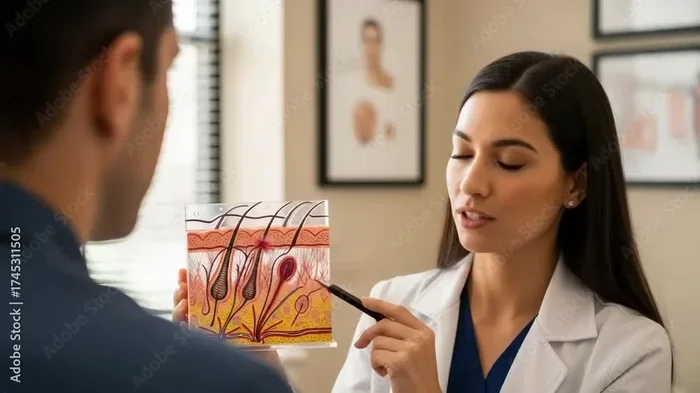
Becoming a dermatologist requires years of dedicated education, including a bachelor’s degree, medical school, a competitive residency, and board certification. This guide walks you through every step of the dermatologist education path, from pre-med requirements to subspecialty training. If you are passionate about skin health and patient care, here is everything you need to know.
Have you ever wondered what it takes to become a dermatologist? The answer is a lot of hard work, dedication, and education. Becoming a dermatologist is one of the most rewarding healthcare career paths you can choose. It also happens to be one of the longest. From the moment you step into college to the day you earn your board certification, the journey is intense but incredibly fulfilling.
Many people think medical education ends after four years of school. That could not be further from the truth. After medical school comes residency, and for dermatology, that means years of hands-on dermatology training. But do not let that scare you away. If you love skin conditions, enjoy patient care, and want to make a real difference, this career is worth every hour of study. Think of it this way: education is not always a walk in the park, but the payoff is enormous.
In this article, we break down every single step of the dermatologist education path. You will learn about undergraduate requirements, medical school, residency, licensing, and beyond. Whether you are a high school student dreaming of this career or someone considering a career change, this guide has you covered. Let us dive in.
Key Takeaways
- Long Road: Expect 12 or more years of education and training after high school to become a licensed dermatologist.
- Undergraduate Matters: A strong pre-med foundation with biology, chemistry, and physics sets you up for success.
- Medical School Is Key: Two years of classroom learning and two years of clinical rotations build your core skills.
- Residency Is Competitive: Dermatology residency is one of the most sought-after and competitive specialties in medicine.
- Board Certification: Passing the board exams proves your expertise and boosts your career opportunities.
- Fellowships Exist: Subspecialties like pediatric dermatology or cosmetic dermatology require additional training beyond residency.
- Lifelong Learning: Continuing education keeps you current with new treatments, technologies, and skin cancer research.
📑 Table of Contents
- What Does a Dermatologist Do?
- The Undergraduate Path: Building Your Foundation
- Medical School: The Core of Your Education
- Dermatology Residency: Where the Real Training Begins
- Licensing and Board Certification
- Fellowship and Subspecialties: Going Deeper
- How Long Does It All Take?
- Is Becoming a Dermatologist Worth It?
- Common Mistakes to Avoid on This Path
- Quick Tips for Aspiring Dermatologists
- Final Thoughts on Dermatologist Education
What Does a Dermatologist Do?
Before we talk about education, it helps to understand the job itself. A dermatologist is a medical doctor who specializes in conditions affecting the skin, hair, and nails. They diagnose and treat everything from acne and eczema to skin cancer and melanoma. Some dermatologists focus on medical cases, while others lean into cosmetic dermatology, helping patients with aging, scars, or appearance-related concerns.
Medical vs. Cosmetic Dermatology
Not all dermatologists do the same work. Medical dermatology focuses on health-related skin issues. Think psoriasis, dermatitis, infections, and skin cancer screenings. Cosmetic dermatology deals with procedures like Botox, chemical peels, laser treatments, and dermal fillers. Many dermatologists do both, but some choose to specialize in one area. This choice often shapes the kind of fellowship training they pursue later on.
Why Skin Health Matters
Your skin is the largest organ in your body. It protects you from infection, regulates temperature, and reflects your overall health. Dermatologists play a vital role in patient care because they catch early signs of serious conditions. A dermatologist might spot skin cancer during a routine checkup and save a life. That is why thorough dermatology training is so important.
The Undergraduate Path: Building Your Foundation
The first real step on your journey is earning a bachelor’s degree. Most aspiring dermatologists choose a pre-med track or a science-heavy major like biology, chemistry, or biochemistry. This is where you build the knowledge base you will need for medical school. Your undergraduate degree typically takes four years to complete.
Key Courses to Focus On
Not all college courses are created equal when it comes to preparing for a healthcare career. Here are the classes you should prioritize:
- Biology: Understand living organisms, cells, and human anatomy.
- General Chemistry: Learn the building blocks of matter and chemical reactions.
- Organic Chemistry: This course is notoriously tough but essential for medical school admission.
- Physics: Many medical schools require this as a prerequisite.
- Biochemistry: A growing favorite among pre-med students.
- English and Communication: Yes, doctors need to write and speak well too.
Getting Ready for the MCAT
The MCAT, or Medical College Admission Test, is a standardized exam that every medical school applicant must take. It tests your knowledge of natural sciences, critical thinking, and problem-solving. You should start preparing months in advance. Your score on the MCAT plays a huge role in which medical school you can attend. Think of studying for the MCAT as being like learning a new language — it takes time, repetition, and patience.
Gain Relevant Experience
Medical schools love applicants who have real-world experience. Look for volunteer work at hospitals, clinics, or research labs. Shadowing a practicing dermatologist is also a fantastic idea. It gives you a glimpse into the day-to-day work and shows admissions committees that you are serious about this healthcare career.
Medical School: The Core of Your Education
Once you get accepted into medical school, you are in for four intense years. Medical school is where you go from a general science student to a trained physician. The first two years focus on classroom and lab work. The last two years shift to clinical rotations, where you work directly with patients under supervision.
Years One and Two: Classroom Learning
The first half of medical school covers foundational subjects. You will study anatomy, physiology, pharmacology, pathology, and microbiology. These courses give you a deep understanding of how the human body works and what goes wrong when disease strikes. For a future dermatologist, courses in dermatology and immunology are especially valuable.
Some students find that medical education in the first two years feels like building blocks of a career, stacking one concept on top of another until the picture becomes clear. That is exactly what happens. Each course connects to the next, and soon you see the full picture of human health.
Years Three and Four: Clinical Rotations
During clinical rotations, you rotate through different medical specialties. You will spend time in internal medicine, surgery, pediatrics, obstetrics, and psychiatry. Most medical schools also offer a dermatology rotation, which is your chance to get hands-on experience in the field. This is where you confirm whether dermatology is truly the right fit for you.
During rotations, you work alongside residents and attending physicians. You see real patients, take medical histories, and help with diagnoses. These experiences are invaluable. They teach you not just medicine, but also how to communicate with patients and work as part of a team.
USMLE Steps 1 and 2
Throughout medical school, you must pass a series of licensing exams called the USMLE (United States Medical Licensing Examination). Step 1 is typically taken after your second year and tests your understanding of basic sciences. Step 2 is taken during your fourth year and focuses on clinical knowledge and patient care. Strong scores on these exams are critical for matching into a dermatology residency.
Dermatology Residency: Where the Real Training Begins
After medical school, you enter a dermatology residency. This is a postgraduate training program where you specialize in dermatology. A dermatology residency typically lasts four years and is one of the most competitive specialties to match into. Not everyone who applies gets in, so your medical school performance, research, and letters of recommendation all matter.
What Happens During Residency?
During your dermatology residency, you will:
- See thousands of patients with various skin conditions
- Perform skin biopsies and learn dermatopathology
- Gain experience in medical, surgical, and cosmetic dermatology
- Work alongside experienced dermatologists and other specialists
- Attend lectures, conferences, and journal clubs
Residency is demanding. You will work long hours, but you will also learn more in those four years than you ever thought possible. The hands-on experience is what turns a medical graduate into a skilled dermatologist. It is the bridge between textbook knowledge and real-world patient care.
The Match Process
Getting into a dermatology residency involves the National Resident Matching Program, commonly known as “The Match.” You apply to programs, interview, and then rank your choices. Programs rank you too. A computer algorithm matches you to a program. Because dermatology is so competitive, you need strong grades, research experience, and solid relationships with mentors who can write powerful letters of recommendation.
Think of the match process as requiring the persistence of a person who never gives up. Rejection is common, and even the best applicants may face setbacks. But those who stay committed eventually find the right fit.
Licensing and Board Certification
Once you complete your residency, you are ready to earn your medical license. To practice as a dermatologist, you must pass the USMLE Step 3 exam and meet your state’s specific licensing requirements. Each state has its own board, so the exact process can vary slightly depending on where you plan to work.
Why Licensing Matters
A medical license proves that you have met the minimum standards to practice medicine safely. Without it, you cannot treat patients independently. It is a legal requirement in every state, and maintaining your license requires ongoing continuing education throughout your career.
Board Certification: The Gold Standard
After licensing, many dermatologists choose to become board certified through the American Board of Dermatology (ABD). Board certification is not required to practice, but it is highly respected and often preferred by patients and employers. To earn it, you must pass a rigorous exam that covers the full scope of dermatology.
Board certification demonstrates your commitment to excellence. It shows patients that you have gone above and beyond the minimum requirements. For dermatology training, this certification is the gold standard and a major career booster.
Fellowship and Subspecialties: Going Deeper
Not all dermatologists stop after residency. Some pursue a fellowship, which is additional training in a specific area of dermatology. Fellowships typically last one to two years and allow you to develop deep expertise in a focused niche.
Popular Dermatology Subspecialties
Here are some of the most common fellowship options:
- Pediatric Dermatology: Focuses on skin conditions in infants, children, and adolescents.
- Dermatopathology: Combines dermatology with pathology to diagnose skin diseases at the cellular level.
- Cosmetic Dermatology: Specializes in aesthetic procedures like fillers, lasers, and rejuvenation treatments.
- Mohs Surgery: A specialized surgical technique for removing skin cancer with precision.
- Immunodermatology: Treats autoimmune conditions that affect the skin.
Choosing a subspecialty depends on your interests and career goals. If you love working with children, pediatric dermatology might be your calling. If you are drawn to precision surgery, Mohs training could be the perfect fit. Each path requires additional medical education beyond the standard residency.
How Long Does It All Take?
Let us put the timeline in perspective. Here is a typical breakdown of the education needed to become a dermatologist:
- Undergraduate Degree: 4 years
- Medical School: 4 years
- Dermatology Residency: 4 years
- Fellowship (optional): 1 to 2 years
In total, you are looking at 12 to 14 years of education and training after high school. That is a long journey, but every step builds on the last. By the time you finish, you have the skills and knowledge to make a real impact on people’s lives.
Is Becoming a Dermatologist Worth It?
Absolutely. Dermatology consistently ranks among the highest-paying medical specialties. Dermatologists enjoy excellent work-life balance compared to many other doctors. The demand for skin care continues to grow as the population ages and awareness of skin cancer increases. Plus, there is something deeply satisfying about helping patients feel confident in their own skin.
The healthcare career path of a dermatologist offers both financial rewards and personal fulfillment. If you are willing to put in the years of dermatology training, the destination is well worth the journey.
Common Mistakes to Avoid on This Path
Here are a few pitfalls that aspiring dermatologists should watch out for:
- Ignoring Research Opportunities: Medical schools and residency programs value research experience. Do not skip this.
- Neglecting Clinical Skills: Book smarts matter, but so does your ability to communicate with patients and work in a team.
- Waiting Too Long to Prepare for the MCAT: Start studying early and give yourself plenty of time.
- Skipping Dermatology Rotations: Even if they are optional, take every chance to gain exposure to the field.
- Underestimating the Competition: Dermatology residency is highly competitive. Have a backup plan and apply broadly.
Quick Tips for Aspiring Dermatologists
Here are some practical tips to keep in mind as you navigate this path:
- Start building relationships with mentors early in college.
- Join pre-med clubs and attend networking events.
- Stay organized with a study schedule for the MCAT and USMLE exams.
- Seek out research projects related to skin biology or skin cancer.
- Volunteer at dermatology clinics or free health screenings.
- Stay curious and never stop learning. Continuing education is a lifelong requirement in medicine.
The journey to becoming a dermatologist is long, but it is also filled with incredible learning opportunities. Every exam you pass, every patient you meet, and every procedure you perform brings you closer to your goal. Keep your eyes on the prize and remember why you started.
Final Thoughts on Dermatologist Education
So, what education do you need to become a dermatologist? The short answer is a lot of it — but every year is meaningful. From your undergraduate degree through medical school, residency, and beyond, each step shapes you into a skilled and compassionate physician. The road is challenging, but the reward of helping patients with skin conditions and contributing to patient care makes it all worthwhile.
If you have the passion and the persistence, nothing should stop you from pursuing this healthcare career. Start strong in college, ace the MCAT, crush medical school, and match into a top dermatology residency. The world of dermatology is waiting for you.
Frequently Asked Questions
What is the shortest path to becoming a dermatologist?
The minimum path takes 12 years after high school: four years of undergraduate study, four years of medical school, and four years of dermatology residency. There is no shortcut, but every step is essential for building the expertise needed to treat patients safely and effectively.
Can I become a dermatologist without a bachelor’s degree?
No. All medical schools in the United States require applicants to hold a bachelor’s degree before enrolling. While there is no specific required major, you must complete pre-med prerequisite courses in biology, chemistry, physics, and English.
Is dermatology residency harder to match into than other specialties?
Yes, dermatology residency is one of the most competitive specialties. It consistently has a high match rate for top applicants, which means you need strong grades, research experience, and excellent letters of recommendation to stand out.
Do dermatologists need to complete a fellowship?
No, a fellowship is optional. It is additional training beyond the four-year residency. Some dermatologists choose to pursue fellowships in areas like pediatric dermatology, cosmetic dermatology, or dermatopathology to develop specialized skills.
How much does a dermatologist earn after completing all this education?
Dermatologists are among the highest-paid medical professionals, with average salaries often exceeding $350,000 per year. Compensation varies based on location, subspecialty, and whether the practice includes cosmetic procedures.
What is the role of continuing education in a dermatologist’s career?
Continuing education is mandatory for maintaining both your medical license and board certification. Dermatology is a rapidly evolving field, with new treatments, technologies, and research emerging regularly. Staying current ensures you provide the best possible patient care throughout your career.


