
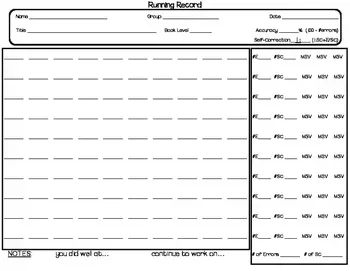
A running record is a powerful assessment tool used by teachers to track how well a student reads aloud. It captures accuracy, fluency, and reading behaviors in real time. This method helps educators understand each student’s reading level and plan targeted instruction. Running records are simple to use yet incredibly insightful for literacy development.
A running record is one of the most practical tools a teacher can use in the classroom. It gives you a window into how a child processes text while reading. You get to see exactly what goes right and what goes wrong in real time. If you have ever wondered how to truly understand a student’s reading level, this is your answer.
In education, assessment drives instruction. You cannot teach what you do not measure. A running record fills that gap beautifully. It is informal, flexible, and deeply informative. Whether you work with early readers or struggling older students, this tool adapts to your needs. Let us dive into everything you need to know about running records and why they matter so much in literacy development.
Key Takeaways
- A running record is a detailed observation tool: It tracks every error, self-correction, and reading behavior a student shows while reading aloud.
- It measures more than just accuracy: Teachers assess fluency, self-monitoring, and reading strategies too.
- Running records guide instructional decisions: They help teachers group students, select texts, and plan reading intervention.
- The process is quick and flexible: A single session takes just 10 to 15 minutes and can be done with any text.
- They support formative assessment: Unlike standardized tests, running records give immediate, actionable feedback.
- They build stronger teacher-student relationships: Regular use helps teachers know each learner deeply.
📑 Table of Contents
- What Is a Running Record in Education?
- How Does a Running Record Work?
- Why Running Records Matter in Education
- How to Conduct a Running Record Effectively
- Common Mistakes Teachers Make with Running Records
- Running Records vs. Other Reading Assessments
- Tips for Getting Started with Running Records
- Expert Insights on Running Records
- Final Thoughts on Running Records in Education
What Is a Running Record in Education?
A running record is a live, moment-by-moment documentation of a student reading aloud. The teacher listens carefully and marks every word on a copy of the text. You note correct reads, errors, self-corrections, and skipped words. Think of it as a detailed map of a student’s reading behaviors.
This method was developed by Marie Clay, a renowned early literacy researcher. Her work showed that reading is not just about getting words right. It is about how a child thinks while reading. A running record captures that thinking process. It reveals the strategies a student uses or ignores.
What Does a Running Record Track?
When you take a running record, you are watching for several things at once. Here is what you track:
- Accuracy: How many words does the student read correctly?
- Self-corrections: Does the student notice and fix their own mistakes?
- Errors: What types of mistakes does the student make? Substitutions? Skips? Reversals?
- Fluency: How smoothly does the student read? Is there appropriate phrasing?
- Meaning-making: Does the student monitor for sense? Do they stop when something does not sound right?
- Use of cues: Does the student rely on picture clues, sentence structure, or letter sounds?
Each of these elements tells you something different. Together, they paint a full picture of a student’s reading ability. This is why so many educators rely on running records for formative assessment.
How Does a Running Record Work?
The process of taking a running record is straightforward. You do not need expensive materials or special training. Here is how it works step by step.
Step 1: Choose a Text
Pick a book or passage that is at the student’s reading level. The text should be unfamiliar but not frustrating. A good rule of thumb is that the student should know about 90 to 94 percent of the words. This is often called the instructional level.
Step 2: Prepare Your Copy
Make a copy of the text for yourself. You will use this to mark the student’s reading. Some teachers use special coding systems. Others simply write notes in the margins. Find a method that works for you and stay consistent.
Step 3: Listen and Mark
Ask the student to read aloud. As they read, follow along on your copy. Mark correct reads with a check mark. Note errors with a slash. Circle self-corrections. Write down any reading strategies you notice. Pay attention to body language and facial expressions too.
Step 4: Analyze the Data
After the student finishes, review your marks. Calculate the accuracy rate. Look for patterns in errors. Ask yourself questions like: Is the student relying too much on pictures? Are they skipping difficult words? Do they self-monitor their reading?
This analysis is where the real magic happens. It tells you exactly what to teach next.
Why Running Records Matter in Education
If you have ever felt unsure about how to group your students for reading instruction, a running record can help. It gives you evidence, not guesses. Here is why this tool is so valuable in the classroom.
It Reveals the “Why” Behind Reading Errors
Standardized tests tell you what a student got wrong. A running record tells you why. Did the student skip a word because it was too long? Did they substitute a similar-looking word? Understanding the reason helps you address the root cause. This kind of error analysis is gold for teachers.
It Supports Differentiated Instruction
Every student reads differently. A running record helps you see those differences clearly. You can group students by reading behaviors rather than just by level. This makes your guided reading sessions more effective and your reading intervention more targeted.
It Tracks Growth Over Time
One running record is useful. A series of them is powerful. When you compare records taken weeks or months apart, you see real progress. Students can see it too. This builds confidence and motivation in young literacy development.
It Strengthens Your Teaching
Taking running records makes you a more observant teacher. You start to notice patterns across your whole class. You become better at choosing texts that challenge without overwhelming. Your instructional decisions become sharper and more confident.
Teachers who use running records regularly often say they feel more connected to their students’ learning. It is one of those rare tools that is both practical and deeply meaningful.
How to Conduct a Running Record Effectively
Knowing the steps is one thing. Doing it well is another. Here are some practical tips to make your running records more effective.
Keep It Short and Focused
A running record session should last about 10 to 15 minutes. Young students lose focus quickly. Pick a text that is long enough to gather useful data but short enough to keep the student engaged. Two to three pages is usually perfect.
Create a Comfortable Environment
Find a quiet spot away from distractions. Sit beside the student, not across from them. Make the experience feel like a conversation, not a test. When students feel safe, they read more naturally. This gives you more accurate data.
Use Consistent Coding
Develop a coding system and stick with it. You might use a check mark for correct reads, a slash for errors, and an arrow for self-corrections. Whatever system you choose, be consistent. This makes your analysis faster and more reliable.
Record Your Observations
Beyond the coding, jot down notes about what you observe. Does the student sound bored? Excited? Frustrated? These reading behaviors matter just as much as the words on the page. They tell you about engagement and confidence.
Follow Up with Meaningful Feedback
After the running record, share your observations with the student. Praise what they did well. Discuss one or two areas for growth. Keep it positive and forward-looking. This feedback loop is what turns data into literacy development.
Common Mistakes Teachers Make with Running Records
Even experienced teachers can fall into traps when using running records. Here are some common mistakes to avoid.
Rushing the Process
It is tempting to speed through a running record to get it done. But rushing leads to inaccurate notes. Take your time. Listen carefully. The quality of your record depends on your attention to detail.
Focusing Only on Accuracy
A high accuracy rate does not always mean strong reading comprehension. Some students read words perfectly but understand nothing. A running record should include notes about whether the student makes sense of the text. Ask the student to retell the story afterward.
Using the Same Text Every Time
Variety matters. If you always use the same type of text, you miss important information. Rotate between fiction, nonfiction, poetry, and other genres. This gives you a fuller view of each student’s reading strategies.
Neglecting to Compare Records Over Time
A single running record is a snapshot. A collection of records is a movie. Make it a habit to revisit old records. Look for trends, growth, and plateaus. This is where formative assessment truly shines.
Forgetting to Involve the Student
Running records are not just for teachers. When students understand their own reading behaviors, they become active participants in their growth. Share the data with them. Celebrate progress. Set goals together.
Running Records vs. Other Reading Assessments
There are many ways to assess reading fluency and comprehension. How do running records compare to other methods?
- Running records are informal and ongoing. They give you real-time insight into reading behaviors.
- Standardized tests provide norm-referenced data but lack the depth of a running record.
- Benchmark assessments are periodic and broad. Running records are frequent and detailed.
- Running records require teacher judgment and observation, which makes them more personal and responsive.
Think of running records as your daily compass for reading instruction. They complement other assessments rather than replacing them. Together, they create a complete picture of each student’s literacy journey.
Tips for Getting Started with Running Records
If you are new to running records, here are some tips to help you begin with confidence.
- Start with one student: Pick a student you want to know better. Take a running record this week.
- Use a simple coding system: Keep it easy at first. You can always refine your method later.
- Schedule regular sessions: Set a recurring time each week. Consistency is key to seeing growth.
- Collaborate with colleagues: Share your running records with other teachers. Different perspectives reveal new insights.
- Stay patient: Like any skill, taking accurate running records takes practice. Give yourself grace as you learn.
The beauty of running records is that they meet you where you are. You do not need to be an expert to start. You just need to be willing to listen closely and observe carefully.
Expert Insights on Running Records
Literacy experts have long championed running records as a cornerstone of effective reading assessment. Marie Clay herself emphasized that teachers must watch and listen to children read. She believed that understanding a child’s reading behaviors is the foundation of good teaching.
Modern researchers echo this view. Studies show that teachers who use running records regularly make more informed instructional decisions. They group students more effectively. They choose texts that better match student needs. And their students show stronger reading progress over time.
One thing experts agree on: running records work best when they are part of a larger literacy assessment framework. They are not a standalone solution. But combined with comprehension checks, fluency measures, and student self-assessments, they become incredibly powerful.
Remember that taking a running record is not just about collecting data. It is about building a relationship with each student. When you sit beside a child and listen to them read, you are showing them that their growth matters. That alone is worth the effort.
Final Thoughts on Running Records in Education
A running record is more than an assessment tool. It is a lens into a child’s mind as they navigate the world of print. It helps you see what they understand, where they struggle, and how they think. For any teacher committed to literacy development, this tool is indispensable.
Whether you are a new teacher building your assessment toolkit or a seasoned educator looking to refine your practice, running records deserve a place in your routine. They are simple, flexible, and deeply informative. They turn reading instruction from guesswork into a science backed by observation.
Start small. Take one running record this week. Notice what you learn. Let that insight guide your reading instruction tomorrow. Over time, you will see the impact not just in data but in the confidence and joy your students bring to their reading.
If you want to explore more ways to support literacy development, check out our resources on similes for education and metaphors for education. These tools can add creative depth to your classroom instruction. You might also find value in our guide on idioms for education, which helps students build rich language skills alongside their reading abilities.
Every running record you take is an investment in a student’s future. The insights you gain today shape the readers of tomorrow. Make them count.
Frequently Asked Questions
How long does it take to take a running record?
A typical running record session takes about 10 to 15 minutes. The actual reading time depends on the length of the text. Analyzing your notes and calculating accuracy rates may add a few more minutes. But overall, it is a quick and efficient assessment method.
What is the difference between a running record and a miscue analysis?
A running record is a broader tool that tracks all of a student’s reading behaviors, including accuracy and self-corrections. A miscue analysis focuses specifically on the types of errors a student makes. Many teachers use both together for a fuller picture of reading fluency and comprehension.
How often should I take a running record?
This depends on your students and your goals. For students in reading intervention, weekly records are helpful. For on-level readers, every two to three weeks may be enough. The key is consistency. Regular running records give you the best data for tracking student progress.
Can running records be used with older students?
Absolutely. While running records are often associated with early readers, they work for older students too. The texts just need to be age-appropriate. A running record can reveal reading behaviors in intermediate and middle school students that standardized tests often miss.
Do I need special training to take a running record?
No special training is required to start. The basics are simple to learn. However, deeper analysis of reading behaviors benefits from professional development. Many schools offer workshops on running records and guided reading techniques. Even a short training can boost your confidence and accuracy.
What should I do after I analyze a running record?
Use your findings to plan targeted instruction. Group students by reading behaviors. Select texts that match their needs. Teach specific reading strategies based on the errors you observed. Share your insights with the student and set goals together. This is where the real value of running records comes alive in literacy development.
=== CONCLUSION ===
A running record is one of the most practical and powerful tools in any educator’s toolkit. It gives you real-time insight into how a student reads, thinks, and grows. From tracking reading fluency to informing reading intervention, the benefits are clear and lasting. The process is simple enough for any teacher to start and rich enough to support years of instructional planning.
When you commit to using running records regularly, you transform your assessment practice. You move from general observations to specific, actionable insights. Your students benefit from more targeted instruction, better-matched texts, and a teacher who truly understands their reading journey.
So grab a text, sit beside a student, and start listening. That single running record could change everything you know about how a child reads. And that is a step every educator can feel good about.


