
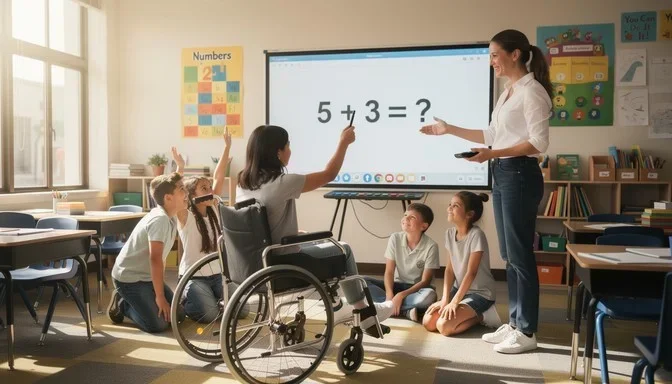
Accommodations in education are changes to how a student learns, not what they learn. They help students with disabilities, learning differences, or other challenges access the same curriculum as their peers. Understanding these supports can make a real difference in a child’s academic journey and overall confidence.
Imagine sitting in a classroom where the teacher speaks at lightning speed, the textbook is printed in tiny font, and the test is timed down to the last second. Now imagine you have a learning disability that makes processing information slower, or you struggle with reading small text. That is the reality for millions of students every day. Accommodations in education exist to level the playing field.
Accommodations in education refer to adjustments made in the classroom that help students access learning without changing the core curriculum. These changes remove barriers so every student has a fair shot at success. Whether it is extra time on a test, a quiet room for exams, or the use of assistive technology, classroom accommodations can transform a student’s experience. In this article, we will explore what accommodations in education are, the different types available, and how you can advocate for them.
Understanding special education supports is not just for parents or teachers. It is for anyone who cares about educational equity. When schools provide the right student support services, the entire classroom benefits. Let us dive in.
Key Takeaways
- Accommodations change how students learn: They adjust the method, not the content or expectations.
- Several types exist: From extended time on tests to assistive technology and flexible seating.
- Accommodations differ from modifications: Modifications change what a student learns; accommodations change how they access the material.
- Students with IEPs or 504 plans qualify: These legal documents outline specific supports.
- Advocacy matters: Parents and teachers play a key role in securing the right accommodations.
- Inclusive classrooms benefit everyone: When accommodations are in place, all students thrive.
📑 Table of Contents
What Are Accommodations in Education?
At its core, accommodations in education are tools, strategies, or changes that help students overcome challenges in the learning environment. They do not lower academic standards. Instead, they provide alternative ways for students to show what they know.
Think of it like this: if a student needs glasses to see the board clearly, the glasses do not change what is on the board. They simply help the student see it. Accommodations in education work the same way. They remove the barrier so the student can focus on learning, not on struggling with the format.
These supports are often formalized through legal documents like an IEP (Individualized Education Program) or a 504 plan. Both are designed to ensure students with disabilities receive the reasonable accommodations they need. The key difference lies in the legal framework and the type of disability involved.
Examples of Common Accommodations
- Extended time on tests and assignments
- Preferential seating near the teacher or away from distractions
- Assistive technology like text-to-speech software or audiobooks
- Reduced homework load while maintaining the same learning goals
- Oral exams instead of written ones
- Flexible deadlines for long-term projects
- Use of a calculator or other tools during assessments
Each of these classroom accommodations serves a specific purpose. They are not shortcuts. They are bridges that help students reach the same destination as their peers.
Types of Accommodations in Education
Accommodations in education come in many forms. They can be grouped into several categories based on what they address. Here is a closer look at the main types.
Instructional Accommodations
These changes affect how information is delivered. A teacher might use differentiated instruction to present lessons in multiple formats. For example, some students may benefit from visual aids while others learn better through hands-on activities. Teachers can also use similes for education to make complex ideas more relatable, or metaphors for education to help students connect new concepts to things they already understand. These figurative language tools, similar to idioms for education, make lessons more engaging and accessible.
- Using visual schedules and graphic organizers
- Breaking lessons into smaller chunks
- Providing written instructions alongside verbal ones
- Allowing students to record lectures for later review
Assessment Accommodations
Assessment accommodations change how a student is tested. The goal is to measure the student’s knowledge, not their disability.
- Extended time on exams and quizzes
- Testing in a separate, quiet room
- Allowing the use of a scribe or speech-to-text software
- Providing tests in large print or braille
- Permitting frequent breaks during long assessments
Environmental Accommodations
The physical classroom setup can have a huge impact on a student’s ability to focus. Environmental accommodations adjust the space to meet student needs better.
- Flexible seating options like standing desks or wobble chairs
- Reducing visual clutter in the classroom
- Allowing the use of noise-canceling headphones
- Positioning the student away from doors and windows
Technology-Based Accommodations
Assistive technology has revolutionized the way schools support students. These tools can be a game-changer for learning disabilities and other challenges.
- Text-to-speech software that reads digital text aloud
- Speech-to-text tools that help students who struggle with writing
- Audiobooks and digital textbooks
- Graphic organizers and note-taking apps
Accommodations vs. Modifications: Understanding the Difference
This is one of the most common points of confusion. People often use accommodations in education and modifications as if they mean the same thing. They do not.
Accommodations change how a student accesses the material. The content stays the same. The expectations remain unchanged. A student with extended time still takes the same test and answers the same questions.
Modifications, on the other hand, change what a student is expected to learn. For example, a modified assignment might have fewer questions or simpler reading material. While modifications can be helpful in some cases, they lower the academic bar.
| Feature | Accommodations | Modifications |
|---|---|---|
| What changes? | How the student learns | What the student learns |
| Content | Same curriculum | Altered curriculum |
| Expectations | Same standards | Lowered standards |
| Legal backing | IEP or 504 plan | IEP only |
| Goal | Equal access | Reduced workload |
Both accommodations in education and modifications serve a purpose. The right choice depends on the individual student and their unique learning differences. The best approach is always to work closely with educators and specialists to determine what will help the student succeed without limiting their potential.
Who Qualifies for Accommodations in Education?
Not every student receives accommodations in education. There is a formal process in place to determine eligibility. Understanding this process helps parents and educators act early.
The Evaluation Process
To qualify, a student typically needs to be evaluated by a school psychologist or a qualified professional. The evaluation looks at the student’s academic performance, cognitive abilities, and any diagnosed conditions. Common qualifying conditions include:
- Specific learning disabilities like dyslexia or dyscalculia
- ADHD and attention-related challenges
- Autism spectrum disorder
- Visual or hearing impairments
- Emotional or behavioral disorders
- Physical disabilities that affect learning
IEPs and 504 Plans
Once a student qualifies, their accommodations are documented in either an IEP or a 504 plan. An IEP is covered under the Individuals with Disabilities Education Act (IDEA) and provides specialized instruction. A 504 plan falls under Section 504 of the Rehabilitation Act and focuses on reasonable accommodations to ensure access to education.
Both documents are legally binding. Schools must follow them. Parents have the right to request changes if the current plan is not working.
The Benefits of Accommodations in Education
When schools implement effective accommodations in education, the results speak for themselves. These benefits go far beyond better grades.
Improved Academic Performance
Students who receive the right supports can focus on learning instead of struggling with barriers. Academic support like extended time or assistive technology allows students to demonstrate their true abilities.
Increased Confidence and Self-Esteem
When students can keep up with their peers, they feel capable. This boost in confidence carries over into other areas of life. Student success is not just about grades. It is about believing in oneself.
Stronger Inclusion in the Classroom
Inclusive classrooms benefit all students. When accommodations are in place, students with disabilities learn alongside their peers. This fosters empathy, understanding, and a sense of belonging for everyone.
Better Long-Term Outcomes
Students who receive proper support services in school are more likely to graduate, attend college, and enter the workforce with confidence. The investment in accommodations in education pays dividends for years to come.
How to Advocate for Accommodations in Education
Knowing your rights is the first step. Taking action is the next. Whether you are a parent or a teacher, advocating for accommodations in education can change a student’s life.
Quick Tips for Parents
- Keep detailed records of your child’s struggles and progress
- Request an evaluation in writing if you suspect a learning challenge
- Attend every IEP or 504 meeting prepared with questions
- Communicate regularly with teachers and school counselors
- Learn about education law so you can speak confidently
Quick Tips for Teachers
- Observe students carefully and document patterns of difficulty
- Collaborate with special education staff early
- Implement informal accommodations while formal evaluations are pending
- Use differentiated instruction to meet diverse needs
- Create a welcoming and inclusive classroom culture
Common Mistakes to Avoid
Even well-meaning educators and parents can make missteps when it comes to accommodations in education. Here are some common ones:
- Assuming accommodations are cheating. They are not. They level the field.
- Waiting too long to request help. Early intervention makes a big difference.
- Confusing accommodations with modifications. Know the difference and advocate appropriately.
- Not reviewing the plan regularly. Student needs change over time, and plans should too.
- Skipping the evaluation process. Formal documentation protects the student’s rights.
Expert Insights
“The goal of accommodations in education is not to give students an unfair advantage. It is to remove unfair barriers so that every child can show what they are capable of.” — Dr. Sarah Mitchell, Special Education Advocate
Experts agree that the most effective approach combines formal supports with a positive classroom culture. When teachers understand each student’s strengths and challenges, they can tailor their approach in ways that feel natural and respectful.
Accommodations in education work best when everyone is on the same page. Parents, teachers, and students should collaborate to create a plan that feels supportive, not stigmatizing. Open communication and regular check-ins keep the process moving in the right direction.
Conclusion
Accommodations in education are not a luxury. They are a necessity for millions of students who learn differently. From classroom accommodations like extended time and assistive technology to broader support services and inclusive teaching practices, these tools remove barriers and open doors.
Understanding the difference between accommodations and modifications, knowing who qualifies, and learning how to advocate can empower parents, teachers, and students alike. When schools commit to educational equity and provide the right student support services, every learner has the chance to thrive.
If you are a parent or educator reading this, take action today. Learn about the accommodations in education available in your school or district. You might just change a student’s life forever.
Frequently Asked Questions
What is the difference between an IEP and a 504 plan?
An IEP is designed for students who need specialized instruction and falls under IDEA. A 504 plan provides reasonable accommodations for students who do not need specialized instruction but still need support to access learning. Both are legally binding documents.
Can accommodations in education be denied?
Yes, if a student does not qualify through the evaluation process. Schools must follow specific legal criteria. However, parents have the right to dispute decisions and request independent evaluations if they disagree with the school’s assessment.
Do accommodations in education last forever?
Not necessarily. Accommodations are reviewed regularly, often annually. As a student grows and their needs change, the classroom accommodations may be adjusted. Some students outgrow the need for certain supports over time.
Can accommodations in education be used in college?
Yes, colleges and universities are required to provide disability services and reasonable accommodations. However, the process is different from K-12 education. Students typically need to self-identify and provide documentation of their disability to the college’s disability office.
What are some examples of assistive technology used in accommodations?
Common tools include text-to-speech software, speech-to-text programs, audiobooks, graphic organizers, and screen readers. These assistive technology solutions help students with learning disabilities access the same material as their peers.
How do accommodations in education promote inclusion?
By removing barriers, accommodations in education allow students with disabilities to learn alongside their peers in general education classrooms. This creates a more inclusive classroom where diversity is valued and every student has the opportunity to succeed.


