
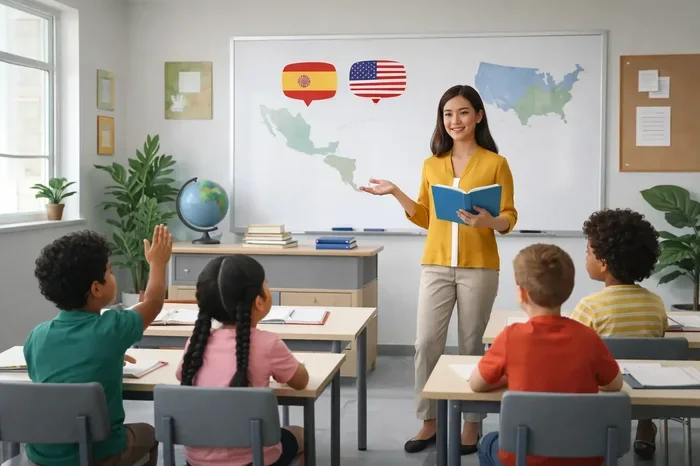
Dual language education is a teaching approach where students learn in two languages, building fluency and academic skills in both. This model boosts cognitive growth, cultural awareness, and long-term career opportunities. It gives students a powerful edge in a connected world.
Have you ever wondered how some kids grow up speaking two languages like it’s second nature? The secret often starts in the classroom. Dual language education is a teaching approach that helps students learn academic content in two languages at the same time. It’s not just about picking up new words. It’s about building a whole new way of thinking.
More schools across the country are adopting dual language programs because the results speak for themselves. Students become bilingual, biliterate, and culturally aware. They walk into a world that values cross-cultural communication and multilingual skills. If you’ve been curious about what this model looks like and why it matters, you’re in the right place. Let’s break it all down.
Key Takeaways
- Dual language education teaches students in two languages, helping them become fluent in both.
- It offers real cognitive benefits like better problem-solving and sharper memory.
- Students gain cultural awareness and stronger communication skills across communities.
- Two-way immersion and other models make dual language learning flexible and accessible.
- Research shows bilingual students often outperform peers in academic achievement.
- Starting early in dual language programs leads to faster language acquisition and proficiency.
- Parents and educators can support dual language growth at home and in the classroom.
📑 Table of Contents
What Is Dual Language Education?
Dual language education is a form of bilingual education where instruction happens in two languages. Typically, one language is the student’s native language and the other is a second language like English or Spanish. The goal is full language proficiency in both by the time students finish elementary or middle school.
Unlike traditional language classes where you study grammar rules from a textbook, dual language immersion uses both languages to teach real subjects. You might learn math in Spanish and science in English. This hands-on approach makes language acquisition feel natural. Students don’t just memorize vocabulary. They use it every day in meaningful ways.
How Does It Work in Practice?
Most dual language programs follow a set ratio. In the early grades, the native language might take up 80 or 90 percent of instruction. The second language starts small and grows each year. By upper elementary, the split often reaches 50-50.
Here’s a simple example. A first grader whose first language is Spanish might spend most of the day learning in Spanish. Over time, English instruction increases. By fourth grade, that same student could be splitting time evenly. The result? Strong skills in both languages without sacrificing any academic content.
Teachers in these programs are trained in language development strategies. They use visuals, gestures, and real objects to bridge understanding. This makes the classroom a safe space for English learners and bilingual students alike.
Why Is Dual Language Education Important?
The importance of dual language education goes far beyond the classroom. In a global economy, knowing more than one language opens doors. But the benefits aren’t just practical. They reach into how our brains work and how we connect with others.
Building Real-World Language Skills
When students learn through language immersion, they develop skills they can use every day. They can order food, read signs, and hold conversations in two languages. This kind of language proficiency stays with them for life.
Think about it this way. A child who grows up in a dual language classroom can talk to grandparents in one language and friends in another. That kind of flexibility builds confidence. It also strengthens family bonds, especially for heritage language speakers who want to keep their roots alive.
Boosting Cognitive Growth
Research shows that bilingual students have better problem-solving skills. They can switch between tasks more easily. Their cognitive benefits include stronger memory, sharper focus, and greater mental flexibility.
Learning two languages at once forces the brain to work harder in the best way possible. It’s like a workout for your mind. Students in dual language programs often show improved academic achievement not just in language arts but in math and science too.
Creating Cultural Awareness
Language and culture go hand in hand. When students learn a second language, they also learn about the people who speak it. They gain cultural awareness and respect for different ways of life.
This matters more than ever. Our communities are diverse. Kids who understand multiple cultures grow into adults who communicate with empathy. They become bridges between groups. That kind of cross-cultural communication skill is priceless.
For students who use educational idioms in their daily speech, dual language programs add another layer of richness. They learn expressions and sayings that reflect both cultures.
Types of Dual Language Program Models
Not all dual language programs look the same. Schools design them based on student needs and community goals. Here are the most common models you’ll find.
Two-Way Immersion
This model mixes native English speakers with English learners in the same classroom. Both groups learn from each other. The instruction splits between two languages, usually 50-50. This is one of the most popular models because it creates a natural language exchange.
Students in two-way immersion often develop strong bonds across language groups. They see each other as equals. That shared experience builds respect and friendship from a young age.
One-Way Developmental
In a one-way model, most students share the same native language. The goal is to develop full bilingualism and biliteracy in that group. This model is common in communities where one language dominates.
Teachers focus on strengthening the native language while building the second language. Students don’t lose their first language. They grow it alongside a new one.
90/10 and 50/50 Models
These names refer to the instructional model and how time is split between languages.
- 90/10 Model: The native language gets 90 percent of instruction in early grades. The second language starts at 10 percent and grows each year.
- 50/50 Model: Both languages share equal time from the start. This model often begins in kindergarten and stays balanced throughout.
Both models work well. The choice depends on the school’s goals and the community’s language dominance patterns.
The Benefits of Dual Language Education
The advantages of dual language education go deep. Let’s look at the biggest reasons parents and educators choose this path.
Stronger Academic Performance
Studies show that bilingual students often match or beat their peers on standardized tests. They don’t fall behind in any subject. In fact, many dual language programs produce students who outperform monolingual classmates by middle school.
This happens because learning two languages strengthens language skills like reading, writing, and analysis. Those skills transfer to every subject.
Better Career Opportunities
The world needs people who can speak more than one language. Bilingual professionals are in high demand in healthcare, education, business, and government. Starting language learning early gives students a head start.
Employers value multilingual education because it shows adaptability and cultural sensitivity. A student who has spent years in a dual language program brings real-world skills to any job.
Greater Empathy and Open-Mindedness
Students who learn in two languages see the world from more than one angle. They become more understanding and patient. This emotional growth is one of the most overlooked benefits of bilingualism.
When kids realize that different languages carry different worldviews, they become curious instead of judgmental. That mindset serves them well in every area of life.
Challenges and How to Overcome Them
Dual language education isn’t without its hurdles. But every challenge has a solution. Here’s what schools and families face.
Finding Qualified Teachers
Not every teacher is trained in bilingual instruction. Finding educators who can teach in two languages with confidence takes effort. Schools can partner with universities to build a pipeline of qualified dual language teachers.
Professional development matters too. Even experienced teachers need training in language acquisition methods and instructional models that work for diverse learners.
Keeping Parent Involvement Strong
Some parents worry that learning two languages will confuse their child. This is a common myth. In reality, language learning at a young age boosts brain development. Schools can host workshops to share this message and give parents tools to support language development at home.
Simple steps help. Parents can read bedtime stories in the native language. They can watch shows in the second language. They can celebrate both cultures openly.
Balancing Language Time
Deciding how much time to spend in each language is tricky. Too much focus on one language can slow progress in the other. Schools use data and assessments to adjust the instructional model and keep both languages growing.
How to Support Dual Language Learning at Home
Parents play a huge role in dual language education. You don’t need to be fluent in both languages to help. Here are some practical tips.
- Read together every day in both languages. Picture books work great for young kids.
- Use music and songs to build language skills naturally. Kids remember lyrics easily.
- Watch shows and videos in the second language. Subtitles can help bridge understanding.
- Talk about both cultures at home. Share stories, food, and traditions from each language background.
- Encourage without pressure. Celebrate small wins like learning a new word or phrase.
When home and school work together, language immersion becomes even more powerful. Students feel supported in both languages and grow confident in their abilities.
Key Takeaways
- Dual language education teaches students in two languages, building fluency and academic skills in both.
- It offers real cognitive benefits like better problem-solving and sharper memory.
- Students gain cultural awareness and stronger communication skills across communities.
- Two-way immersion and other models make dual language learning flexible and accessible.
- Research shows bilingual students often outperform peers in academic achievement.
- Starting early in dual language programs leads to faster language acquisition and proficiency.
- Parents and educators can support dual language growth at home and in the classroom.
Conclusion
Dual language education is one of the most powerful tools we have for preparing students for the future. It builds real language skills, strengthens the brain, and connects kids to different cultures. Whether your child is a native English speaker or an English learner, dual language programs offer something truly special.
The world is getting smaller. People from different backgrounds work, live, and learn together more every day. Kids who grow up with bilingualism and multilingual education are ready for that reality. They have the skills, the empathy, and the confidence to thrive.
If you’re a parent, teacher, or school leader, now is the time to explore dual language education. The investment pays off in ways that last a lifetime. Start small, stay consistent, and watch your students grow into bilingual, biliterate global citizens.
For more ways to enrich language learning, check out our guides on similes for education and metaphors for education. These tools add creative depth to any language development journey.
Frequently Asked Questions
What age is best to start dual language education?
Most experts agree that the earlier, the better. Children as young as four or five can begin dual language programs. Young brains are wired to pick up new sounds and patterns quickly. Starting early leads to stronger language proficiency over time.
Will learning two languages confuse my child?
No, this is a common myth. Research shows that bilingual students actually benefit cognitively from learning two languages. They may mix languages at first, but that’s normal and temporary. Over time, they become skilled at switching between languages on their own.
What subjects are taught in dual language classrooms?
All core subjects are taught in both languages. That includes math, science, reading, and social studies. The instructional model determines which language is used for which subject at any given time. The goal is full academic learning in both languages.
Do I need to speak a second language at home for my child to succeed?
Not at all. Many families in dual language programs speak only one language at home. Schools provide the second language environment. Parents can still support learning through books, music, and cultural activities in the target language.
How long does it take for a child to become fluent in a second language?
It varies by child and program. Most dual language programs aim for full bilingualism within five to seven years. Consistent exposure and practice are key. Students who stay in the program through elementary school see the best results.
Are dual language programs available in public schools?
Yes, many public school districts now offer dual language programs. The availability depends on your location and community demand. You can check with your local school district or search online for bilingual education options near you.


