
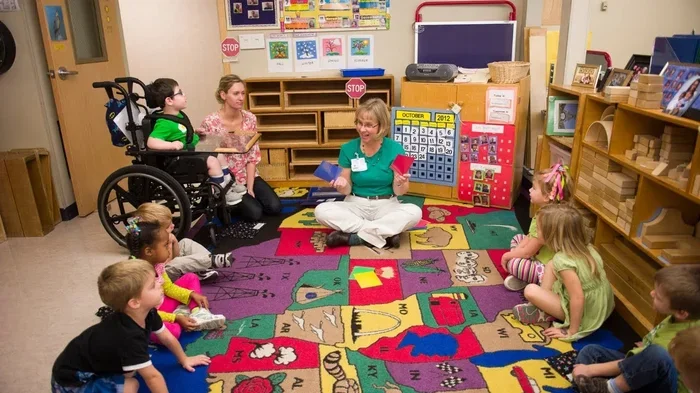
Early childhood special education provides tailored learning support for young children who experience developmental delays or disabilities. It focuses on building essential skills during the most critical window of brain development, typically from birth through age five. With the right early intervention, children can make meaningful progress and thrive in school and beyond.
Every child deserves the best possible start in life. Early childhood special education makes that possible for millions of young learners who face developmental challenges. This specialized field focuses on identifying and supporting children from birth through age five who need extra help to grow and learn.
If you are a parent, caregiver, or educator, understanding what early childhood special education offers can change a child’s future. In this guide, we will walk through everything you need to know. We will cover what it is, who qualifies, how it works, and why starting early makes such a big difference.
Key Takeaways
- Early identification matters: Catching developmental delays early leads to significantly better outcomes for young children.
- Individualized plans are key: Every child receives a customized program through an IEP or IFSP that addresses their unique needs.
- It covers more than academics: Speech, motor skills, social-emotional growth, and behavior are all part of the support.
- Parents play a vital role: Families are active partners in the special education journey and advocacy process.
- It sets the foundation for lifelong learning: Quality early intervention reduces the need for extra support later in school.
- Services are legally protected: Federal law guarantees free and appropriate public education for eligible children.
📑 Table of Contents
- What Is Early Childhood Special Education?
- Who Qualifies for Early Childhood Special Education Services?
- Key Components of an Effective Early Childhood Special Education Program
- How Early Intervention Changes Lives
- Common Myths and Misconceptions
- How to Get Started with Early Childhood Special Education
- Conclusion
What Is Early Childhood Special Education?
Early childhood special education is a set of specialized services designed for young children who experience delays in their development. These delays can affect how a child learns, communicates, moves, or interacts with others. The goal is simple but powerful: give every child the support they need during the most important years of growth.
Think of a child’s early years like building a house. The first few years create the foundation. If that foundation has cracks, the whole structure can struggle later. Early childhood special education steps in to strengthen that foundation before problems grow bigger.
This type of education is not just about sitting in a classroom. It involves therapists, teachers, and families working together. They focus on real-world skills like talking, walking, playing with others, and managing emotions. Early intervention in these years has been proven to produce lasting results.
Who Provides These Services?
A team of professionals usually delivers early childhood special education. This team might include:
- Special education teachers trained in child development
- Speech-language pathologists who help with communication
- Occupational therapists who work on fine motor skills
- Physical therapists who support movement and coordination
- Behavioral specialists who address social-emotional needs
- Psychologists who assess overall development
All of these professionals collaborate to create a plan that fits each child like a glove. No two children are alike, and neither are their special education services.
Who Qualifies for Early Childhood Special Education Services?
Not every child needs early childhood special education. But for those who do, getting the right support at the right time is everything. So how does a child qualify?
First, a child must be between birth and age five. Then, they must show a delay in one or more areas of development. These areas include:
- Communication and language — the child may not be speaking, understanding words, or using gestures as expected.
- Physical development and motor skills — delays in crawling, walking, or using hands for精细 tasks.
- Cognitive development — trouble learning, solving problems, or understanding cause and effect.
- Social-emotional growth — difficulty bonding with caregivers, managing emotions, or interacting with peers.
- Adaptive behavior — challenges with daily routines like eating, dressing, or toileting.
The Evaluation Process
Getting started usually begins with a referral. A parent, doctor, or childcare provider can request an educational assessment. A team then evaluates the child using play-based and standardized tools. The process is thorough but not scary. It is designed to understand the whole child.
Once the evaluation is complete, the team meets with the family to share results. If the child qualifies, they develop a plan. In the United States, this plan is often called an Individualized Family Service Plan, or IFSP, for children under three. For children ages three to five, it becomes an Individualized Education Program, or IEP. Both are powerful tools that guide the child’s learning journey.
Key Components of an Effective Early Childhood Special Education Program
Not all programs are created equal. A high-quality early childhood special education program includes several key ingredients. Let us break them down.
Individualized Learning Plans
Every child learns differently. A one-size-fits-all approach simply does not work in special needs education. That is why each program starts with a personalized plan. This plan spells out exactly what the child needs, what goals to work toward, and how progress will be measured.
The plan is not set in stone. Teams review and adjust it regularly. If a child is making great progress, the goals might shift upward. If something is not working, the team tries a new approach. Flexibility is at the heart of good early childhood special education.
Inclusive Learning Environments
Research strongly supports inclusive settings. When children with and without disabilities learn together, everyone benefits. Children develop empathy, patience, and a deeper understanding of diversity. They also build friendships that last a lifetime.
Inclusive classrooms are designed to be welcoming and accessible. Teachers use different teaching methods to reach every learner. Least restrictive environment is a legal principle that says children should learn alongside their peers whenever possible.
Family-Centered Support
Parents are a child’s first and most important teachers. That is why early childhood special education puts families at the center of everything. Programs provide training, resources, and guidance so parents can support learning at home every single day.
When families are involved, children do better. Period. Parent advocacy is a crucial part of the process. Families who feel informed and empowered can make the best decisions for their child.
Transition Planning
As children grow, their needs change. Transition planning helps children move smoothly from one stage to the next. This might mean moving from early intervention services to a preschool program, or from preschool to kindergarten. Good planning prevents gaps in support and keeps progress on track.
Think of transition planning like a bridge. It connects one phase of learning to the next. Without a strong bridge, children can fall behind. With a well-built bridge, they keep moving forward with confidence.
How Early Intervention Changes Lives
The evidence is clear. Early intervention in the early childhood years produces remarkable outcomes. Let us look at why this window of time is so powerful.
During the first five years of life, a child’s brain develops faster than at any other time. Neural connections form at an incredible rate. When we provide targeted support during this period, we can shape the architecture of the brain itself. This is not an exaggeration — it is neuroscience.
Children who receive quality early childhood special education are more likely to:
- Reach developmental milestones on time or close to it
- Develop stronger language and communication skills
- Build positive relationships with peers and adults
- Perform better academically in later school years
- Need fewer intensive services as they grow older
- Develop higher self-esteem and independence
One of the most exciting things about early intervention is how it builds on a child’s natural curiosity. Young children learn through play, exploration, and interaction. Skilled special education services harness that natural drive and channel it toward growth.
A Real-World Example
Imagine a three-year-old who is not yet speaking. Through early childhood special education, this child works with a speech therapist twice a week. The therapist uses games, songs, and picture cards to encourage communication. At the same time, the parents learn strategies to use at home during mealtime, bath time, and bedtime.
Within six months, the child starts putting two words together. By age four, the child is speaking in short sentences and thriving in an inclusive preschool. This is not a rare story. It happens every day because of the power of early support.
As the saying goes, a journey of a thousand miles begins with a single step. The same is true for a child’s educational journey. Early childhood special education helps take that first step with confidence and care.
Language development plays a huge role in a child’s overall growth. If you want to explore how language shapes learning, check out our guide on Idioms For Education. Understanding figurative language can be a fun way to boost communication skills in young learners.
Common Myths and Misconceptions
There is a lot of confusion around early childhood special education. Let us clear up some of the most common myths.
Myth 1: Special Education Means a Separate Classroom
Many people assume that children in special education spend their entire day away from other kids. In reality, most early childhood special education programs are inclusive. Children spend significant time learning alongside their typical peers. Separation only happens when it is truly necessary for specific therapies.
Myth 2: Labels Hold Children Back
Some parents worry that a diagnosis or label will define their child. The truth is, identifying a need is the first step toward meeting it. Without a clear understanding of what a child faces, it is much harder to provide the right help. A label opens doors to services, support, and understanding.
Myth 3: You Have to Wait Until Preschool
Another common misconception is that you cannot get help until a child reaches a certain age. In fact, early intervention can begin at birth. Infants and toddlers can receive services through programs like Part C of the Individuals with Disabilities Education Act. Waiting only means missing valuable time when the brain is most receptive to learning.
Myth 4: Special Education Is Only for Academic Struggles
Early childhood special education covers far more than reading and math. It addresses speech, motor skills, behavior, social skills, and daily living activities. The whole child is the focus, not just academics.
For more on how language and expressions shape a child’s world, explore our collection of Similes For Education. These figures of speech can make learning fun and memorable for young minds.
How to Get Started with Early Childhood Special Education
If you think your child might benefit from early childhood special education, the best first step is to reach out. Here is a simple roadmap to help you get started.
- Observe and document your concerns. Keep notes on what you notice. Are there specific delays or behaviors that worry you?
- Talk to your pediatrician. Share your observations with your child’s doctor. They can refer you for a developmental screening.
- Contact your local early intervention program. In the U.S., every state has an early intervention system for children under three. You can also reach out to your school district for children ages three to five.
- Request an evaluation. This is a formal process that determines whether your child qualifies for services.
- Participate in developing the IFSP or IEP. Your input as a parent is essential. Ask questions, share your goals, and stay involved.
- Follow through and stay consistent. Regular sessions and home practice make a huge difference in outcomes.
Remember, you are your child’s strongest advocate. Trust your instincts. If something feels off, seek answers. Early childhood special education is there to help, and you do not have to navigate this journey alone.
Figurative language can be a wonderful tool for building communication in young children. If you are interested in using creative language to support development, our article on Metaphors For Education offers great ideas for making learning vivid and engaging.
Conclusion
Early childhood special education is one of the most impactful investments we can make in a child’s future. It gives young learners the tools, support, and confidence they need to grow, learn, and succeed. From individualized plans to inclusive classrooms, from family involvement to skilled professionals, every piece of this system works together to lift children up.
The early years are a once-in-a-lifetime window of opportunity. When we use it well, the results are extraordinary. Children who receive quality early childhood special education go on to do better in school, build stronger relationships, and lead more independent lives.
If you are a parent wondering whether your child might need extra support, take that first step today. Talk to a professional, ask questions, and explore what is available. Every child has unique gifts. Early childhood special education helps make sure those gifts are never left undiscovered.
Language is a cornerstone of early development. To dive deeper into how we use everyday expressions to teach and connect, visit our page on Similes For Someone Special. You might find fresh inspiration for supporting your child’s communication journey.
Frequently Asked Questions
What age range does early childhood special education cover?
Early childhood special education typically serves children from birth through age five. In the United States, services for children under three are often provided through state early intervention programs, while children ages three to five are served through public school systems. The exact age range can vary slightly by state, but the focus remains on the critical early years of development.
How is early childhood special education different from regular preschool?
Regular preschool follows a general curriculum for all children. Early childhood special education tailors every aspect of learning to meet the specific needs of a child with developmental delays or disabilities. This includes individualized goals, specialized therapies, smaller group sizes, and trained professionals who understand child development challenges.
Is early childhood special education free?
Yes. Under federal law, particularly the Individuals with Disabilities Education Act (IDEA), special education services for eligible children are provided at no cost to families. This includes evaluations, individualized plans, therapies, and any necessary accommodations. Public schools and early intervention programs are required to offer these services free of charge.
What does an IEP look like for a young child?
An IEP for a young child focuses on functional, real-world goals rather than purely academic ones. It might include targets for speech and language, motor skills, social interaction, or self-care. The IEP is developed by a team that includes the parents, teachers, therapists, and school administrators. It is reviewed and updated at least once a year to reflect the child’s progress.
Can a child receive early childhood special education at home?
Yes. Many early intervention programs offer services in the home, especially for children under three. Home-based services allow therapists and teachers to work with the child in a familiar and comfortable environment. They also coach parents on how to support learning throughout the day. This approach is often highly effective for very young children.
What happens when a child ages out of early childhood special education?
When a child turns five or enters kindergarten, the special education services transition from early childhood programs to the school-age system. This is where transition planning becomes essential. The team works to ensure the child’s needs continue to be met, whether through an IEP in kindergarten, accommodations, or other support structures. Planning ahead prevents any disruption in services.


