
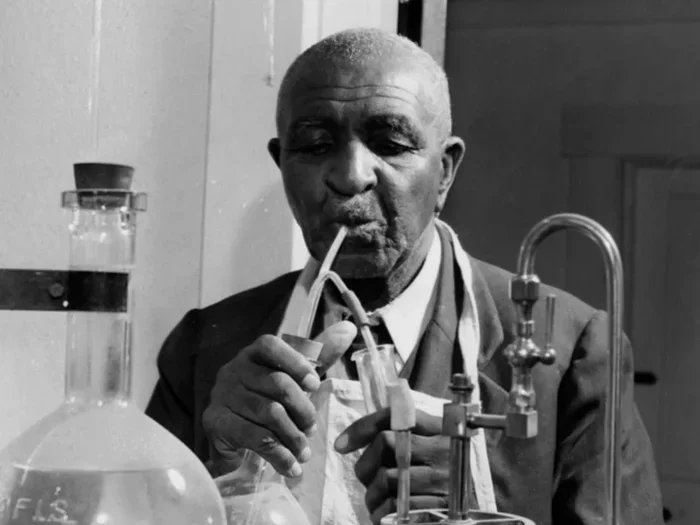
George Washington Carver education journey is one of the most remarkable stories in American history. Despite facing severe racial barriers, Carver pursued knowledge relentlessly and became a pioneering scientist and educator. His dedication to agricultural education and innovative research transformed farming practices and inspired generations of learners worldwide.
George Washington Carver education story is nothing short of extraordinary. Born into slavery in the 1860s, he defied every odds stacked against him. He went from being a sickly child with no access to schooling to becoming one of the most celebrated scientists in American history.
His journey through education was filled with rejection, hardship, and determination. Yet, he never gave up. Today, we look at how George Washington Carver education and achievements changed the world. His story is a powerful reminder that learning knows no boundaries.
Carver’s approach to agricultural science was ahead of his time. He believed that education could lift entire communities out of poverty. His teaching methods were creative and deeply personal. He often compared learning to growing a garden — you need patience, the right conditions, and steady care. In fact, his use of similes for education in the classroom helped students grasp complex ideas with ease.
Key Takeaways
- Overcame Extreme Odds: Carver fought through slavery, poverty, and racial discrimination to earn multiple degrees.
- Tuskegee Institute Legacy: He spent decades teaching and conducting research at Tuskegee, shaping agricultural education.
- Revolutionary Crop Research: His work with peanuts, sweet potatoes, and soybeans changed Southern farming forever.
- Creative Teaching Philosophy: Carver used hands-on, practical methods that made education accessible to all students.
- Environmental Pioneer: He championed sustainable farming and soil conservation long before they became mainstream.
- Inspiration for All: His life proves that education and perseverance can overcome any obstacle.
📑 Table of Contents
- Early Life and the Hunger for Learning
- The Long Road to Formal Education
- Joining Tuskegee Institute
- Groundbreaking Research and Achievements
- Overcoming Racial Barriers in Education
- Lessons from George Washington Carver’s Education Journey
- George Washington Carver’s Lasting Impact on Education
- Conclusion
Early Life and the Hunger for Learning
George Washington Carver was born around 1864 in Diamond, Missouri. His exact birth date remains unknown, which itself tells a story of the times. He was born into slavery on the Moses Carver plantation. Even as a young child, Carver showed a deep curiosity about the world around him.
After the Civil War, Carver and his brother Jim were freed. But freedom did not mean access to education. In those days, Black children were often denied the chance to learn. Schools for African American children were scarce, especially in rural Missouri.
A Child Driven by Curiosity
Young George loved to explore nature. He would collect plants, rocks, and soil samples. He observed how things grew and changed with the seasons. This natural curiosity became the foundation of his future education and career.
He once said that he could learn something new every day if he paid attention. That mindset drove him forward. When a nearby school accepted Black children, George walked several miles just to attend classes. He was determined to learn, no matter what.
His thirst for knowledge was so strong that it reminded many educators of a metaphor for education — a seed planted in difficult soil that still managed to bloom. Carver’s early experiences shaped his belief that education was the most powerful tool a person could have.
The Long Road to Formal Education
Carver’s path to formal schooling was not easy. He faced rejection after rejection. Many schools turned him away because of his race. But he kept moving forward. Each “no” only made him more determined to find a “yes.”
High School and Beyond
Carver eventually earned his high school diploma from Minneapolis High School in Kansas. This was a huge achievement for someone who had been denied basic schooling as a child. He applied to several colleges, hoping to study science.
First, he was accepted at Highland University in Kansas. But when he arrived, the school refused to admit him once they saw he was Black. This was a painful blow. Yet, Carver did not let it stop him.
He then found his way to Simpson College in Iowa. There, he studied art and music. He was the first Black student to attend Simpson. His teachers recognized his talent and encouraged him to keep going.
Eventually, Carver transferred to Iowa State Agricultural College. This was a turning point in his education journey. He earned a bachelor’s degree in agricultural science in 1894. In 1896, he became one of the first Black Americans to earn a master’s degree from the same institution.
Joining Tuskegee Institute
In 1896, Booker T. Washington invited Carver to lead the agricultural department at Tuskegee Institute in Alabama. Carver accepted the challenge. He would spend the next 47 years at Tuskegee, shaping education and research for thousands of students.
A New Beginning at Tuskegee
Tuskegee Institute was a school for African Americans in the Deep South. Resources were limited. Many students came from poor farming families. Carver understood their struggles because he had faced similar hardships.
He believed that practical education could change lives. Instead of just lecturing, he taught students by doing. He set up labs and gardens where students could get their hands dirty. He wanted them to understand soil, plants, and farming from the ground up.
Carver’s teaching philosophy was simple but powerful. He believed that education should be useful. Students needed skills they could apply right away. His approach was ahead of its time and is still studied by educators today.
Some educators describe his method as using idioms for education — familiar phrases and comparisons that make tough concepts easier to understand. Carver had a gift for breaking down complex science into simple, memorable lessons.
Revolutionizing Agricultural Education
At Tuskegee, Carver developed programs that taught farmers how to improve their soil. He showed them how growing different crops could restore nutrients to the land. His education programs reached both students and local communities.
He created bulletins — simple guides filled with practical advice. These bulletins covered topics like crop rotation, composting, and alternative uses for common plants. Farmers across the South relied on his guidance.
Carver also traveled extensively. He held workshops and demonstrations for farmers who had never attended school. He believed that education should not be limited to classrooms. Real learning happens everywhere.
Groundbreaking Research and Achievements
Carver’s education gave him the tools to make incredible discoveries. His research focused on crops that poor farmers could grow easily. Peanuts, sweet potatoes, and soybeans became his main focus.
The Peanut Revolution
Carver discovered hundreds of uses for the peanut. He developed recipes, oils, dyes, and plastics from this humble legume. His work helped Southern farmers diversify their crops and improve their income.
He reportedly developed over 300 products from peanuts alone. These included:
– Peanut butter (though he did not invent it, he popularized many peanut-based foods)
– Cooking oils and margarine
– Soap and cosmetics
– Paints and dyes
– Wood stains and polishes
Sweet Potato Innovations
Carver also explored the sweet potato’s potential. He created over 100 products from it. These included:
– Flour and starch
– Molasses and syrup
– Vinegar and coffee substitutes
– Rubber and adhesives
His research gave farmers practical alternatives during tough economic times. He showed that education and science could solve real-world problems.
Championing Sustainable Farming
Carver was a pioneer in sustainable agriculture. He taught farmers to avoid depleting their soil through monoculture. His education programs promoted crop rotation and natural fertilizers.
He understood that the land was a precious resource. His message was simple: take care of the soil, and the soil will take care of you. This philosophy is more relevant today than ever before.
Overcoming Racial Barriers in Education
Carver’s life was a testament to the power of perseverance. He faced racism at every turn. Yet, he never let discrimination define his path.
Breaking Color Barriers
As a Black man in the late 1800s and early 1900s, Carver had to fight for every opportunity. He was denied admission to colleges. He was refused housing and meals because of his race. But he kept pushing forward.
His education achievements opened doors that had been firmly shut. He proved that talent and hard work matter more than skin color. His success challenged the racist beliefs of his time.
Carver’s story is an inspiration to anyone who has been told they cannot achieve their dreams. He showed the world that education is the great equalizer.
A Legacy of Empowerment
Carver’s impact extends far beyond his scientific discoveries. He inspired countless young people to pursue education despite obstacles. His life is a living example of what educational empowerment can achieve.
Today, he is celebrated as a symbol of hope and determination. Schools, scholarships, and programs bear his name. His legacy continues to motivate new generations of learners and scientists.
Lessons from George Washington Carver’s Education Journey
There is so much we can learn from Carver’s story. His life teaches us valuable lessons about education, perseverance, and the human spirit.
1. Never Stop Learning
Carver believed that learning was a lifelong journey. He continued studying and experimenting well into his later years. Education does not end with a diploma. It is a habit you carry with you every day.
2. Turn Obstacles into Opportunities
Every time Carver was rejected, he found another way. He turned setbacks into stepping stones. This mindset is essential for anyone pursuing education or any goal in life.
3. Make Education Practical
Carver’s teaching methods were hands-on and relevant. He believed that education should serve real needs. When you learn by doing, the knowledge sticks with you longer.
4. Give Back to Your Community
Carver dedicated his life to helping others. He used his knowledge to uplift farming communities. True education is not just about personal success — it is about lifting others up.
5. Stay Curious
Carver’s curiosity drove everything he did. He asked questions, explored, and experimented. Curiosity is the spark that ignites the fire of education.
George Washington Carver’s Lasting Impact on Education
Carver’s influence on education and science continues to grow. His research laid the groundwork for modern agricultural practices. His teaching methods inspired future educators to think creatively.
He showed the world that education can transform lives — no matter where you come from or what challenges you face. His story is a powerful example of what is possible when passion meets determination.
Today, many schools teach Carver’s story as part of their STEM education curriculum. His life demonstrates that science, technology, engineering, and math are not just subjects — they are tools for changing the world.
His legacy reminds us that every child deserves access to quality education. Every student deserves a chance to explore their potential. Carver’s journey proves that when we invest in education, we invest in the future.
Conclusion
The story of George Washington Carver education and achievements is one of the most inspiring tales in American history. From slavery to scientific greatness, Carver’s journey shows us the true power of learning. He used his education to help farmers, create new products, and uplift entire communities.
His teaching methods, research, and philosophy continue to influence education today. He proved that curiosity, hard work, and determination can overcome any barrier. Carver’s legacy is not just in what he discovered — it is in how he changed the way we think about learning.
Let his story inspire you to pursue your own education with passion and persistence. The world needs more learners like George Washington Carver. His journey reminds us that no dream is too big when you have the courage to chase it.
Frequently Asked Questions
What was George Washington Carver’s education background?
Carver was born into slavery and had no access to formal schooling as a child. He walked miles to attend school and eventually earned a bachelor’s and master’s degree in agricultural science from Iowa State Agricultural College, becoming one of the first Black Americans to achieve this.
Where did George Washington Carver teach?
Carver spent 47 years at Tuskegee Institute in Alabama, where he led the agricultural department and taught students practical farming methods and scientific research techniques.
What did George Washington Carver invent?
Carver developed over 300 products from peanuts and more than 100 products from sweet potatoes. These included dyes, paints, cosmetics, cooking oils, and wood stains that helped Southern farmers diversify their crops and income.
How did George Washington Carver overcome racial barriers in education?
Despite being denied admission to multiple colleges and facing constant discrimination, Carver persevered. He found institutions that accepted him and used his education to break barriers and inspire future generations of Black scientists and scholars.
What was George Washington Carver’s teaching philosophy?
Carver believed in hands-on, practical education. He taught students by doing rather than just lecturing. He created labs, gardens, and workshops to make learning relevant and accessible to all students, especially those from poor farming communities.
Why is George Washington Carver important to education today?
Carver’s life demonstrates that education can overcome any obstacle. His legacy inspires STEM education programs and reminds us that every student deserves access to quality learning opportunities regardless of their background or circumstances.
=== INTERNAL LINKS USED ===
Internal links used: 3 of 3


