
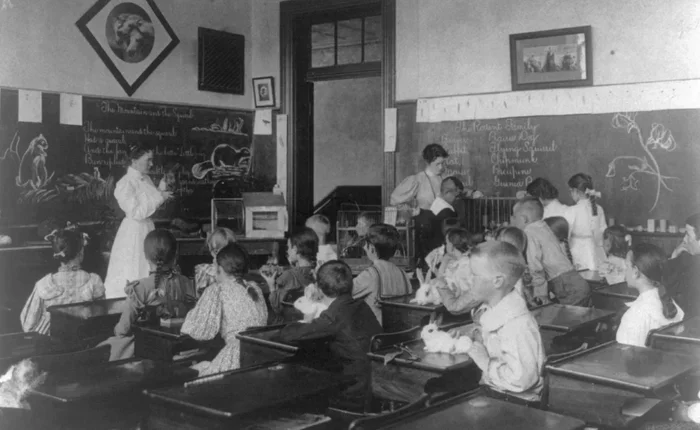
Who made education? The answer spans thousands of years, from ancient philosophers to modern reformers. Education has evolved dramatically, shaping societies and economies worldwide. In this article, you will learn about the key figures and movements that built the education system we rely on today.
Key Takeaways
- Ancient civilizations laid the foundation for formal education systems we use today.
- Key historical figures like Confucius, Plato, and Horace Mann played pivotal roles in shaping education.
- Modern education reform has expanded access to learning for billions of people worldwide.
- The digital age is transforming how we learn and who provides education.
- Understanding education history helps us appreciate the value of learning and knowledge transfer.
- Education systems vary widely across cultures but share common goals of empowering individuals.
📑 Table of Contents
- Who Made Education and Why It Matters
- The Ancient Roots of Education
- Education in Ancient China and India
- The Middle Ages and the Rise of Universities
- Modern Education: The Great Reformers
- How Education Shapes Our World Today
- Common Mistakes in Understanding Education History
- Quick Tips for Understanding Education’s Evolution
- Expert Insights on the Future of Education
- Conclusion
Who Made Education and Why It Matters
Have you ever wondered who made education? It is a question that takes us on a journey through thousands of years of human history. Education did not just appear one day. It grew slowly, shaped by thinkers, leaders, and everyday people who believed in the power of learning.
The story of who made education is really the story of humanity itself. From ancient temples to modern classrooms, the drive to teach and learn has been at the heart of every great civilization. Today, education shapes our world in ways that are both obvious and subtle. It affects how we think, work, and connect with others.
In this article, we will explore the fascinating history of education. We will look at the key figures, the big ideas, and the turning points that created the education system we know today. Whether you are a student, a teacher, or just curious, this journey through education history will give you a new appreciation for learning.
The Ancient Roots of Education
Long before there were schools, people taught each other. Ancient education started as simple knowledge transfer. Parents showed children how to hunt, farm, and survive. But as societies grew more complex, so did the need for structured learning.
Education in Ancient Mesopotamia
One of the earliest known learning institutions appeared in ancient Mesopotamia around 3500 BCE. Scribes ran schools called “tablet houses.” Young students learned to write on clay tablets. They studied math, law, and literature. These schools were exclusive, serving mostly the children of wealthy families.
The education system in Mesopotamia was the first step toward formal learning. It showed that organized instruction could preserve and spread knowledge across generations. This idea would echo through every major civilization that followed.
Ancient Egypt and the Role of Scribes
In ancient Egypt, scribes held a special place in society. They were the educated elite. Formal education in Egypt focused heavily on reading, writing, and mathematics. Young scribes trained for years in temples and royal courts.
Egyptian education was practical. It served the needs of the state. Scribes tracked grain supplies, recorded laws, and managed construction projects. Without them, the great pyramids might never have been built. This shows how education shapes our world even in the earliest societies.
Ancient Greece: The Birth of Philosophical Education
Ancient Greece gave us some of the most famous thinkers in education history. Socrates, Plato, and Aristotle all believed that learning was essential for a good life.
Plato founded the Academy in Athens around 387 BCE. It is often called the first learning institution in the Western world. The Academy taught philosophy, math, and science. It attracted students from across the Greek world.
Aristotle, a student of Plato, later founded the Lyceum. He believed in hands-on learning and observation. His methods were ahead of their time. They remind us of modern learning methods that emphasize experience and critical thinking.
These Greek thinkers set the stage for educational development in Europe and beyond. Their ideas about reason, logic, and inquiry still influence how we teach and learn today.
Education in Ancient China and India
While Greece was building its philosophical schools, other parts of the world were creating their own powerful education systems.
Confucius and Chinese Education
Confucius, born in 551 BCE in China, is one of the most influential figures in education history. He believed that education was the key to a moral and just society. His teachings emphasized self-discipline, respect for elders, and lifelong learning.
Confucius taught anyone who wanted to learn, regardless of their background. This was revolutionary for his time. His ideas shaped Chinese education for over two thousand years. Today, his influence can still be seen in academic institutions across East Asia.
When we think about who made education, Confucius must be near the top of the list. His vision of education as a tool for personal and social improvement remains powerful.
The Gurukul System in India
In ancient India, the Gurukul system was a traditional form of formal education. Students lived with their teachers, or gurus, and learned a wide range of subjects. These included Vedas, mathematics, philosophy, and warfare.
The Gurukul system was holistic. It focused on the whole person, not just the mind. Students learned discipline, respect, and self-reliance. This approach to knowledge transfer was deeply personal and effective.
The Gurukul system shows us that education systems can take many forms. What matters most is the commitment to passing on wisdom and skills to the next generation.
The Middle Ages and the Rise of Universities
After the fall of the Roman Empire, much of Europe entered a period of decline. But education did not disappear. Monasteries and churches became centers of learning. Monks copied ancient texts and taught young boys to read and write.
The Birth of Medieval Universities
The first true universities appeared in the 11th and 12th centuries. The University of Bologna, founded in 1088, is often considered the oldest in the Western world. The University of Oxford followed shortly after, around 1096.
These medieval universities were very different from today’s schools. They focused on theology, law, and medicine. But they introduced the idea of organized, degree-granting academic institutions. This was a huge step forward in educational development.
The medieval university model spread across Europe. It laid the groundwork for the modern education system. Without these early institutions, higher education as we know it might not exist.
The Role of Islamic Scholars
While Europe was building its first universities, the Islamic world was flourishing in learning. Scholars in Baghdad, Cordoba, and Cairo made major advances in science, math, and medicine.
The House of Wisdom in Baghdad was a famous learning institution. It attracted thinkers from across the Muslim world and beyond. These scholars preserved and expanded upon the knowledge of ancient Greece and Rome.
Islamic scholars made education accessible to a wider range of people. Many schools were open to both men and women. This inclusive approach was remarkable for the time and shows the diversity of education history.
Modern Education: The Great Reformers
The modern education system owes a lot to visionary reformers who believed that learning should be available to everyone. Let us look at some of the key figures who changed the face of education.
Horace Mann and Public Education in America
Horace Mann, often called the “Father of American Public Education,” was a driving force behind free, universal schooling in the 1800s. He believed that education was the great equalizer. Every child, regardless of background, deserved a chance to learn.
Mann worked tirelessly to create public schools across Massachusetts. His efforts inspired other states to follow. Today, public education is a cornerstone of American society. Mann’s legacy shows us how one person can truly change who made education accessible to the masses.
Maria Montessori and Child-Centered Learning
Maria Montessori was an Italian physician and educator who developed a revolutionary approach to teaching. She believed that children learn best when they are free to explore and discover at their own pace.
The Montessori method emphasizes hands-on learning, independence, and respect for the child. It has spread to schools around the world. Montessori’s ideas challenged the rigid, one-size-fits-all model of formal education. They remind us that learning methods should adapt to the needs of each student.
John Dewey and Progressive Education
John Dewey was an American philosopher and educator who argued that education should be tied to real-life experience. He believed that schools should prepare students to be active, engaged citizens.
Dewey’s ideas were radical for his time. He pushed back against rote memorization and passive learning. Instead, he championed critical thinking, collaboration, and problem-solving. His influence can be seen in many modern curriculum development approaches.
How Education Shapes Our World Today
Today, education shapes our world in profound ways. It influences economies, cultures, and individual lives. Let us explore some of the most important ways education impacts our global society.
Education and Economic Growth
Countries with strong education systems tend to have stronger economies. Education builds human capital. It equips people with the skills they need to innovate, create jobs, and drive growth.
Think about the tech industry. Companies like Apple, Google, and Amazon were built by people who benefited from access to education. Their innovations have transformed entire economies and created millions of jobs worldwide.
Education and Social Mobility
Education remains one of the most powerful tools for social mobility. It gives people the opportunity to rise above their circumstances. A good education can open doors that might otherwise stay closed.
However, access to quality education is still unequal in many parts of the world. Millions of children, especially girls and those in poverty, still lack basic learning opportunities. This inequality is one of the biggest challenges facing our global society today.
The Digital Revolution in Education
The internet has changed education in ways that would have seemed magical just a few decades ago. Online courses, virtual classrooms, and educational apps have made learning more accessible than ever before.
Platforms like Khan Academy and Coursera allow anyone with an internet connection to learn from world-class instructors. This democratization of knowledge transfer is reshaping the global education system.
But the digital revolution also brings challenges. Not everyone has equal access to technology. The digital divide remains a significant barrier to educational access for many communities.
Common Mistakes in Understanding Education History
When we explore who made education, it is easy to make some common mistakes. Let us clear a few of them up.
- Mistake 1: Thinking education was only created by one person or one culture. In reality, it was a collective effort across many civilizations.
- Mistake 2: Assuming ancient education looked like modern schooling. Early learning institutions were very different from today’s schools.
- Mistake 3: Ignoring the role of women and marginalized groups in education history. Many unsung heroes contributed to the growth of learning.
- Mistake 4: Believing that education has always been universally accessible. For most of history, formal education was limited to the elite.
Quick Tips for Understanding Education’s Evolution
Here are some quick tips to help you grasp the big picture of education history:
- Start with the basics. Learn about ancient civilizations and their approaches to teaching and learning.
- Follow the key figures. Study the lives and ideas of major education reformers like Confucius, Mann, and Montessori.
- Compare systems. Look at how different cultures have built their own unique education systems.
- Think about the present. Consider how today’s education system is shaped by past developments.
- Stay curious. The story of education is still being written. New ideas and innovations are always emerging.
Expert Insights on the Future of Education
Experts in the field of educational development agree that the future of learning will be shaped by technology, equity, and creativity. Artificial intelligence is already being used to personalize learning experiences for students around the world.
Many educators believe that the education system of the future will be more flexible and student-centered. The rigid, factory-model classroom may give way to more adaptive and inclusive approaches. As one expert put it, “The best education systems are those that empower every learner to reach their full potential.”
Understanding who made education helps us appreciate where we are today and inspires us to imagine where we can go next. The story of education is not finished. It is a story that each of us continues to write.
Conclusion
The story of who made education is a story of human ingenuity, passion, and perseverance. From ancient scribes to modern reformers, countless individuals and cultures have contributed to the education system we rely on today. Education has evolved from exclusive temples and schools to a global force that shapes economies, societies, and individual lives.
As we look to the future, the lessons of education history remind us of what is possible. When we invest in learning, we invest in people. And when we invest in people, we invest in a better world. The next chapter of education is being written right now. And it belongs to all of us.
If you want to dive deeper into related topics, check out our articles on similes for education, metaphors for education, and idioms for education. These resources offer great ways to explore the language and culture of learning in fun and creative ways.
Frequently Asked Questions
Who is considered the founder of modern education?
Horace Mann is often called the “Father of American Public Education.” He championed free, universal schooling and helped create the modern education system in the United States.
When did formal education begin?
Formal education dates back to ancient civilizations like Mesopotamia and Egypt, around 3500 BCE. These early learning institutions focused on training scribes and preserving knowledge.
How has education changed over time?
Education has evolved from exclusive, elite-focused systems to inclusive, public institutions. The education system has expanded access, diversified learning methods, and embraced technology in the digital age.
Why is understanding education history important?
Knowing who made education helps us appreciate the value of learning and understand how education shapes our world today. It also helps us identify areas where educational access can be improved.
What role did Confucius play in education?
Confucius was a pioneering educator who believed in the power of learning for personal and social improvement. His teachings influenced education systems in China and across East Asia for over two millennia.
How is technology changing education today?
Technology is making education more accessible than ever through online courses, virtual classrooms, and AI-powered learning tools. The digital revolution is reshaping how knowledge is transferred and curriculum development is approached worldwide.


