
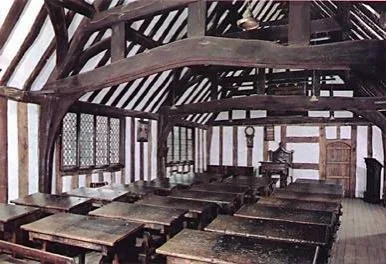
Shakespeare’s education was rooted in the grammar school system of Elizabethan England, where he studied Latin, rhetoric, and classical literature at the Stratford grammar school known as King’s New School. His educational background of Shakespeare played a major role in shaping his literary genius, even though he never attended university. Understanding his Shakespeare schooling helps us appreciate how a young man from a small town became one of history’s greatest writers.
Key Takeaways
- Shakespeare attended King’s New School in Stratford-upon-Avon: A free grammar school that focused on Latin, classical texts, and rhetoric.
- His education was typical for Elizabethan boys: The Tudor education system emphasized memorization, recitation, and classical learning.
- Shakespeare never went to university: Despite his lack of formal higher education, his self-directed learning fueled his genius.
- His schooling directly influenced his writing: Latin classics, rhetoric, and verse composition shaped his plays and poems.
- Shakespeare’s learning extended beyond school: He was a lifelong reader and observer who drew from real-world experiences.
- His education proves talent can thrive without elite schooling: Shakespeare’s journey inspires anyone who loves learning.
📑 Table of Contents
What Education Did Shakespeare Have: A Complete Look
So, what education did Shakespeare have? This question has fascinated historians, students, and book lovers for centuries. William Shakespeare grew up in a small town called Stratford-upon-Avon. He did not come from a wealthy or powerful family. Yet he went on to write some of the most famous works in human history. His Shakespeare schooling and Shakespeare’s learning journey tell a remarkable story.
The truth is, Shakespeare’s education was shaped by the world around him. He attended a local grammar school. He studied Latin, classical texts, and the art of rhetoric. He never stepped foot in a university. But that did not stop him. His educational background of Shakespeare shows us that great minds can rise from humble beginnings. Let us walk through every detail of his Elizabethan education and see how it all came together.
Understanding what education did Shakespeare have also helps us understand his writing. His plays are full of classical references. His characters speak in verse. His use of similes and metaphors shows deep literary training. If you want to explore how Shakespeare used these tools, check out our guides on similes for education, metaphors for education, and idioms for education. They will give you a whole new way to read his work.
Early Life and Schooling in Stratford
William Shakespeare was born in 1564 in Stratford-upon-Avon, England. His father, John Shakespeare, was a glove maker and a town official. His mother, Mary Arden, came from a farming family. The family was comfortable but not rich. Young William grew up in a bustling market town. Life in Stratford-upon-Avon gave him a front-row seat to human nature. He watched merchants, farmers, lawyers, and nobles. All of these people later appeared in his plays.
Boys in Elizabethan England usually started school at age five or seven. The Tudor education system was strict but effective. Children learned to read, write, and speak Latin. They memorized long passages. They practiced verse composition and public speaking. This was the standard Elizabethan era schooling for boys of Shakespeare’s social class.
The Stratford Grammar School
Shakespeare most likely attended the King’s New School in Stratford. This was a free grammar school funded by the local council. It was open to boys regardless of their family’s income. The school followed a national curriculum set by royal decree. Every grammar school in England taught the same core subjects. This ensured a level of consistency in grammar school education across the country.
The school day was long. Students arrived early and stayed late. Classes ran six days a week, with only short holidays. The school year was divided into terms based on religious holidays. Teachers were strict. Discipline was harsh by modern standards. But the system produced literate, articulate young men. And Shakespeare was one of them.
A Typical Day at King’s New School
Imagine waking up at dawn in Elizabethan school life. You walk to the schoolroom, which is a single large hall. There are no desks like we have today. Students stand or sit on benches. The teacher stands at the front and leads lessons. The atmosphere is loud and disciplined.
Here is what a typical day looked like:
- Early morning: Students recited prayers and psalms.
- Morning lessons: Latin grammar and vocabulary drills.
- Midday: A short break for food and rest.
- Afternoon lessons: Rhetoric, reading classical texts, and writing exercises.
- Late afternoon: Memorization and recitation practice.
Students spent years mastering Latin. They read works by Ovid, Virgil, and Cicero. They learned to translate between Latin and English. This heavy focus on classical languages gave Shakespeare’s education a strong foundation. It also gave him the vocabulary and style that later appeared in his plays.
What Shakespeare Learned at School
The grammar school curriculum in Elizabethan England was intense. It was designed to produce educated men who could serve in government, law, or the church. Let us look at the key subjects Shakespeare would have studied.
Latin Language and Literature
Latin was the heart of Elizabethan education. Students spent years learning Latin grammar rules. They memorized declensions and conjugations. They translated passages from Latin authors. Shakespeare would have read works by famous Roman writers. These texts shaped his understanding of story structure, character, and emotion.
Many of Shakespeare’s plays draw directly from Latin and Greek sources. His knowledge of classical literature was deep. It came from years of daily study at the grammar school. This classical education set him apart from many of his contemporaries.
Rhetoric and Public Speaking
Rhetoric was a major subject in Tudor schools. It taught students how to persuade, argue, and speak beautifully. Shakespeare’s dialogue is full of rhetorical tricks. His characters give powerful speeches. They use repetition, contrast, and emotional appeal. All of these skills were trained in the grammar school classroom.
Students practiced speaking in front of the class. They gave formal speeches and debated topics. This training in public speaking helped Shakespeare write dialogue that feels alive. His characters sound like real people speaking in real moments.
Reading and Writing in Shakespeare’s Time
Reading and writing in Shakespeare’s time was not just about letters on a page. It was about understanding the world. Students read history, moral tales, and religious texts. They practiced writing essays and poems. The goal was to create well-rounded thinkers.
Shakespeare’s reading went far beyond school assignments. He was a voracious reader throughout his life. He borrowed ideas from many sources. He combined them in new and creative ways. This shows that Shakespeare’s learning did not stop when he left school.
Verse Composition and Poetry
Grammar school students learned to write in verse. They practiced verse composition using meters and rhyme schemes. Shakespeare would have written Latin verses as a student. He likely wrote English poems as well. This early training in poetry gave him the tools to create his famous sonnets and plays.
The rhythm and meter of Shakespeare’s writing are remarkable. His use of iambic pentameter feels natural and musical. This skill did not come from talent alone. It came from years of disciplined practice at school.
How Education Shaped His Writing
Now that we know what education did Shakespeare have, let us see how it shaped his work. His schooling gave him more than just knowledge. It gave him a way of thinking. It gave him a love of language. And it gave him the tools to become a master storyteller.
The Connection Between School and Plays
Shakespeare’s plays are full of references to classical education. Characters quote Latin and Greek. They use rhetorical devices learned in school. The structure of his plots follows classical models. Even his literary training shows through in every scene.
For example, many of his history plays follow the style of ancient Roman historians. His comedies use the structure of classical Roman comedy. His tragedies draw on Greek dramatic traditions. All of these influences came from his grammar school education.
Shakespeare’s Use of Literary Devices
Shakespeare was a master of literary devices. He used similes to compare things in vivid ways. He used metaphors to create deeper meaning. He used idioms to make his dialogue feel natural and alive. His command of these tools came from years of study.
If you want to dive deeper into how Shakespeare used these techniques, our articles on similes for education and metaphors for education offer great insights. They show how these devices work and why they matter in writing and learning.
Education and Character Development
Shakespeare’s characters are some of the most complex in literature. Hamlet thinks deeply. Portia speaks with intelligence and wit. Viola shows courage and cleverness. These characters feel real because Shakespeare understood human nature. His education in 16th century England taught him to observe and analyze people.
His school training in rhetoric helped him give each character a unique voice. A king speaks differently from a fool. A lover speaks differently from a warrior. Shakespeare understood this because he studied it in school. His playwright education was built on a strong foundation of language and logic.
Did Shakespeare Go to University?
Here is one of the biggest mysteries in literary history. Did Shakespeare attend university? The answer is almost certainly no. There is no record of him enrolling at Oxford or Cambridge. Many writers of his time went to university. Shakespeare did not.
This fact surprises many people. We often assume that great writers need elite education. But Shakespeare proves otherwise. His Tudor education system gave him enough to build a brilliant career. His self-directed reading filled in the gaps. His life experiences added depth and truth to his work.
Some scholars believe Shakespeare may have worked as a schoolteacher before moving to London. This would have given him even more exposure to education and young minds. It might have helped him understand the world of students and teachers that appears in many of his plays.
The Self-Educated Genius
Shakespeare’s story is one of the best examples of self-education in history. He had access to books. He had a sharp mind. And he had a burning curiosity. He read widely and deeply. He observed the world around him. He turned all of this into art.
His educational background of Shakespeare reminds us that formal schooling is just one path to knowledge. Real learning happens everywhere. It happens in libraries. It happens in theaters. It happens in conversations with friends. Shakespeare’s journey shows us the power of lifelong learning.
Common Myths About Shakespeare’s Education
There are many myths about what education did Shakespeare have. Let us clear up a few of the most common ones.
Myth 1: Shakespeare Was Uneducated
This is simply not true. Shakespeare attended a grammar school. He studied Latin, rhetoric, and classical literature. His writing shows a deep and broad education. He may not have gone to university, but he was far from uneducated.
Myth 2: Only University Graduates Could Write Great Literature
Shakespeare is proof that this is false. Many great writers throughout history did not attend university. Talent, curiosity, and hard work matter more than degrees. Shakespeare’s story is a powerful reminder of this truth.
Myth 3: Shakespeare’s Education Had No Impact on His Work
The opposite is true. His schooling shaped everything. His vocabulary, his structure, his themes, his characters, and his language all reflect his education. To ignore his schooling is to ignore a key part of understanding his genius.
Key Takeaways
- Shakespeare attended King’s New School in Stratford: A free grammar school that focused on Latin, classical texts, and rhetoric.
- His education was typical for Elizabethan boys: The Tudor education system emphasized memorization, recitation, and classical learning.
- Shakespeare never went to university: Despite his lack of formal higher education, his self-directed learning fueled his genius.
- His schooling directly influenced his writing: Latin classics, rhetoric, and verse composition shaped his plays and poems.
- Shakespeare’s learning extended beyond school: He was a lifelong reader and observer who drew from real-world experiences.
- His education proves talent can thrive without elite schooling: Shakespeare’s journey inspires anyone who loves learning.
Conclusion
So, what education did Shakespeare have? He had a solid grammar school education in Stratford-upon-Avon. He studied Latin, rhetoric, and classical literature. He never went to university. But his Shakespeare schooling gave him everything he needed. It gave him language, logic, and a love of stories.
His educational background of Shakespeare shows us that greatness does not require privilege. It requires curiosity, discipline, and passion. Shakespeare’s journey from a small-town grammar school student to the greatest writer in the English language is truly inspiring.
His Elizabethan education and Shakespeare’s learning continue to teach us valuable lessons today. We can all learn from his example. Read widely. Observe carefully. Practice constantly. And never stop being curious. That is the real education of Shakespeare.
If you want to explore more about how education and language connect, be sure to check out our resources on idioms for education. They are a perfect companion to understanding the rich language world that Shakespeare inhabited and mastered.
Frequently Asked Questions
Where did Shakespeare go to school?
Shakespeare most likely attended King’s New School in Stratford-upon-Avon. This was a free grammar school that taught Latin, rhetoric, and classical literature. It was the standard grammar school education for boys in Elizabethan England.
Did Shakespeare go to university?
No, there is no evidence that Shakespeare attended university. Many writers of his time did, but Shakespeare did not. His Shakespeare schooling at the grammar school was enough to fuel his extraordinary career.
What subjects did Shakespeare study in school?
Shakespeare studied Latin grammar, classical literature, rhetoric, public speaking, and verse composition. These subjects were part of the standard Elizabethan education for boys in grammar schools during the Tudor period.
How did Shakespeare’s education influence his writing?
His education gave him a deep knowledge of classical texts, a strong command of language, and skills in rhetoric and persuasion. His literary training is visible in every play and poem he wrote.
Was Shakespeare’s education unusual for his time?
Not really. His education was typical for a boy of his social class in 16th century England. What was unusual was how far he took his Shakespeare’s learning beyond the classroom through self-education and life experience.
Can we learn anything from Shakespeare’s educational journey today?
Absolutely. Shakespeare’s story shows that formal education is just one part of the puzzle. Curiosity, hard work, and a love of reading can take you far. His journey proves that education in 16th century England valued both discipline and creativity.


