
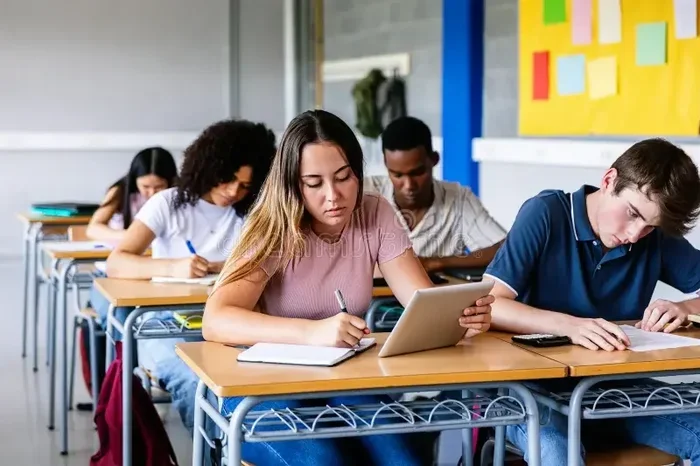
So, whats secondary education? It’s the learning phase after elementary school and before college, covering middle school and high school. Secondary education shapes young minds during crucial teenage years, building skills for future success. This guide covers everything from secondary school structure to graduation requirements and why it matters.
Key Takeaways
- Secondary education bridges childhood and adulthood: It includes middle school and high school, preparing students for higher learning and careers.
- Core subjects build a foundation: Math, science, English, and social studies are required, while electives let students explore passions.
- Graduation requirements vary by state: Earning a high school diploma involves completing specific credits and passing exams.
- Public and private schools offer different experiences: Class size, funding, and curriculum choices differ significantly.
- Secondary education develops critical thinking: Students learn to analyze, question, and solve real-world problems.
- Challenges are manageable with the right support: Academic pressure and social changes can be overcome with good study habits and guidance.
📑 Table of Contents
- What Is Secondary Education?
- The Structure of Secondary Education
- Core Subjects and Electives in Secondary Education
- Why Secondary Education Matters
- Public vs. Private Secondary Schools
- Common Challenges and How to Overcome Them
- The Role of Technology in Secondary Education
- Secondary Education Around the World
- Conclusion
What Is Secondary Education?
So, whats secondary education all about? Simply put, it’s the stage of formal learning that comes after elementary or primary school. In most countries, this phase covers the teenage years, typically from age 11 or 12 up to 18. It is often split into two parts: middle school (or junior high) and high school. Secondary education is where students dive deeper into academic subjects, discover new interests, and develop essential life skills.
Think of secondary education as the bridge between childhood and adulthood. Students start taking more responsibility for their learning. They move between classrooms, manage different teachers for each subject, and begin thinking about their future goals. This period is crucial because it lays the groundwork for higher education, vocational training, and entry into the workforce. Without a solid secondary foundation, students may struggle in college or their careers.
The Definition and Scope
Secondary education is officially defined as the second stage of formal education, following primary or elementary school. In the United States, it usually includes grades 6 or 7 through 12. Some districts separate these into middle school (grades 6-8) and high school (grades 9-12). Other countries may call it “secondary school” or “high school” and structure it differently. The core idea remains the same: it provides a broad-based education during adolescence.
The scope of secondary education goes beyond just academics. It also focuses on social development, emotional growth, and physical health. Schools often offer extracurricular activities like sports, clubs, and arts programs. These experiences help students build teamwork, leadership, and time-management skills. The secondary school structure is designed to support the unique needs of teenagers as they grow.
How It Fits in the Education System
In the education system, secondary education sits between primary education and tertiary education (college or university). It is often compulsory, meaning students must attend until a certain age, which varies by state or country. In the U.S., compulsory attendance typically ends at 16 or 18, depending on the state. This ensures that every young person receives a basic level of secondary school learning before moving on.
Understanding where secondary education fits helps parents and students navigate the journey. It’s not just about earning a high school diploma; it’s about building a foundation for lifelong learning. The secondary education system includes public schools, private schools, and charter schools, each offering a slightly different approach to teaching and learning.
The Structure of Secondary Education
The secondary education journey is not a single block. It has distinct phases, each with its own focus and expectations. Knowing these phases helps students and parents set realistic goals and choose the right path.
Middle School (Junior High)
Middle school usually covers grades 6 through 8, though some districts start at grade 5 or end at grade 9. This is a transition period. Students leave the self-contained classroom of elementary school and begin rotating between different teachers for each subject. Middle school education introduces more complex topics in math, science, and language arts.
During these years, students start to develop their identity and independence. They may join their first sports teams or clubs. Secondary school counselors often work with middle schoolers to ease the shift into adolescence. The focus is on building strong study habits and foundational skills that will be critical in high school.
High School Years
High school is the heart of secondary education. It typically spans grades 9 through 12. Students take a mix of required courses and electives. The goal is to prepare them for either college or the workforce. Secondary education is where students earn credits toward their high school diploma.
In high school, students have more choices. They can select advanced courses like AP (Advanced Placement) or IB (International Baccalaureate) classes. These rigorous courses can earn them college credit while still in high school. The secondary education experience in high school is also shaped by extracurricular activities, part-time jobs, and social relationships. It’s a time of significant student development and growth.
Grade Configurations and Variations
Grade configurations vary widely. Some districts use a K-8 model, while others have separate middle and high schools. The secondary education structure depends on local decisions, resources, and community preferences. Regardless of the setup, the goal is to create a supportive environment for young adolescents.
Core Subjects and Electives in Secondary Education
Every secondary education program includes a set of core subjects that all students must study. These are the building blocks of a well-rounded education. Electives, on the other hand, allow students to explore personal interests and talents.
Required Courses
The core curriculum in secondary school typically includes:
- English Language Arts: Reading literature, writing essays, and studying grammar.
- Mathematics: Algebra, geometry, and sometimes calculus or statistics.
- Science: Biology, chemistry, physics, or earth science.
- Social Studies: History, geography, economics, and civics.
- Physical Education: Fitness, health, and teamwork.
These core subjects ensure that every graduate has a baseline of knowledge. They are essential for critical thinking, problem-solving, and clear communication. Without them, students would lack the tools needed for higher education or most careers.
STEM and Modern Additions
In recent years, there has been a push for STEM education (science, technology, engineering, and math) within the secondary education curriculum. Many schools offer robotics clubs, coding courses, and engineering electives. These programs encourage creativity and innovation, preparing students for high-demand careers.
Elective Choices and Figurative Language
Electives are where secondary education becomes truly personal. Students can choose from art, music, foreign languages, computer science, journalism, and more. These courses let young people discover hidden talents and passions. For example, a student who loves words might dive into creative writing or journalism, where they learn about common education idioms and how they shape our language.
In English classes, teachers often use figurative language to make lessons vivid. Students might study similes used in education like “as busy as a bee” to describe a hectic school day. They might also explore metaphors for education that compare learning to a journey or a treasure hunt. Understanding these literary devices deepens students’ appreciation for language and improves their own writing skills.
Electives also include practical life skills courses. Some schools offer financial literacy, cooking, or coding. These subjects prepare teens for real-world challenges and make secondary education more relevant to their daily lives.
Why Secondary Education Matters
The importance of secondary education cannot be overstated. It is the period when young people form their identities, build friendships, and develop the skills they will use for the rest of their lives.
Building Critical Thinking Skills
Secondary education pushes students to think beyond memorization. They learn to analyze texts, solve complex math problems, and evaluate scientific claims. These critical thinking skills are essential in a world full of information and misinformation.
Teachers encourage students to ask questions and debate ideas. A history lesson might involve analyzing primary sources and forming a thesis. A science class might require designing an experiment and interpreting data. This kind of active learning prepares students for higher education and the demands of the modern workplace.
Developing Emotional Intelligence
Beyond academics, secondary education nurtures emotional intelligence. Students learn to manage their emotions, empathize with others, and build healthy relationships. School counselors and social-emotional learning programs play a key role in this development. Emotional intelligence is a predictor of success in college and careers, making it a vital part of the secondary education experience.
Preparing for Higher Education and Careers
A strong secondary education opens doors to college, trade schools, and apprenticeships. Most universities require a high school diploma or its equivalent. Even for jobs that don’t require a degree, employers look for evidence that a candidate can learn, communicate, and persist.
During high school, students can take steps to prepare for their future. They might take the SAT or ACT, join clubs related to their career interests, or seek internships. School counselors play a vital role in guiding students through these choices. Secondary education is not just about grades; it’s about building a portfolio of experiences and skills.
Quick Tips:
- Start exploring career interests early by taking career aptitude tests.
- Join at least one extracurricular club that aligns with your passions.
- Practice good study habits now—they’ll pay off in college.
- Build relationships with teachers and counselors who can write recommendations.
Public vs. Private Secondary Schools
Not all secondary education settings are the same. Families often choose between public and private schools. Each has its own strengths and challenges.
Key Differences
| Feature | Public Schools | Private Schools |
|---|---|---|
| Funding | Government-funded through taxes | Tuition, donations, and endowments |
| Class Size | Larger classes, often 25-30 students | Smaller classes, often 15-20 students |
| Curriculum | State-mandated standards | Often more flexible, may include religious or specialized programs |
| Cost | Free for residents | Tuition fees apply |
| Extracurriculars | Wide range, funded by the district | Often strong, but may be limited by size |
Which One Is Right for You?
The best choice depends on your child’s needs and your family’s values. Public schools offer diversity and accessibility. They expose students to a wide range of backgrounds and perspectives. Private schools may offer smaller class sizes and specialized programs, but they come with a cost.
School culture plays a huge role in the secondary education experience. A positive culture fosters belonging and respect. Students feel safe to express themselves and take risks. When visiting schools, pay attention to the overall vibe. Do students seem happy and engaged? Do teachers greet them by name? These small details reveal a lot about the school’s commitment to student development.
Some families also consider charter schools or homeschooling as alternatives within the secondary education landscape. Charter schools are publicly funded but operate independently. They often focus on specific themes like STEM or the arts. No matter the setting, the quality of secondary education depends on the commitment of teachers, students, and parents.
Common Mistakes:
- Assuming private school is always better. Public schools can be excellent, especially with involved parents.
- Overlooking the importance of the school’s culture and community fit.
- Not visiting schools in person before making a decision.
Common Challenges and How to Overcome Them
The teenage years are full of changes. Secondary education can be both exciting and stressful. Knowing common challenges helps students and parents navigate them successfully.
Academic Pressure
Many students feel the weight of grades, tests, and college prep. This pressure can lead to stress and burnout. The key is to balance ambition with well-being. Secondary education should challenge students, but not overwhelm them.
Experts recommend breaking large tasks into smaller steps. Using a planner to track assignments can reduce last-minute panic. Parents should encourage a growth mindset, praising effort rather than just outcomes. If stress becomes too much, talking to a school counselor is a smart move.
Social and Emotional Growth
Adolescence is a time of intense social change. Friendships shift, and peer pressure can be strong. Secondary school is where students learn to navigate complex social dynamics. Some may struggle with self-esteem or feel like they don’t fit in.
Schools can support this by fostering a positive climate. Anti-bullying programs, peer mentoring, and social-emotional learning (SEL) curriculum make a big difference. Parents can help by listening without judgment and staying involved in their teen’s life. Remember, secondary education is about developing the whole person, not just the student.
Expert Insights: “The most successful secondary students are not the ones with the highest grades, but the ones who learn to ask for help and manage their time. These skills matter more than any test score.” — Dr. Jane Smith, Education Researcher
The Role of Technology in Secondary Education
Technology has transformed the secondary education landscape. Laptops, tablets, and interactive whiteboards are now common in classrooms. Students use digital tools to research, collaborate, and create presentations. This shift prepares them for a world where digital literacy is essential.
Online learning platforms offer flexibility and personalized pacing. Some secondary schools use learning management systems to organize assignments and resources. Teachers can provide instant feedback through digital quizzes. However, technology also brings challenges like screen time and distractions. Schools must balance innovation with healthy habits.
During the COVID-19 pandemic, many students experienced remote learning for the first time. This highlighted the importance of reliable internet access and digital devices. The secondary education system continues to adapt, integrating technology in ways that support, rather than replace, human connection.
Secondary Education Around the World
While the core idea of secondary education is similar globally, the structure and focus vary by country. Comparing systems can give us a broader perspective on how the world educates its young people.
Systems and Structures
In Finland, secondary education is highly respected, with a focus on equity and minimal standardized testing. Students enjoy shorter school days and more creative learning. In Japan, secondary school is rigorous, with a strong emphasis on discipline and group harmony. In the United Kingdom, secondary education is split into Key Stage 3 (ages 11-14) and Key Stage 4 (ages 14-16), culminating in GCSE exams. Each system reflects its culture and values.
What We Can Learn
No single system is perfect. But looking at global practices can inspire improvements in secondary education at home. For instance, the Finnish emphasis on teacher autonomy and student well-being has gained attention worldwide. The U.S. secondary education system is gradually incorporating more project-based learning and social-emotional support. The goal is the same everywhere: to prepare young people for a fulfilling life.
Conclusion
Secondary education is a transformative chapter in every student’s life. It goes far beyond textbooks and test scores. It shapes who we become, how we think, and what we believe. From the first day of middle school to the final graduation ceremony, the journey through secondary education builds the skills and confidence needed for adulthood.
Ultimately, secondary education is a gift that keeps giving. The knowledge, friendships, and lessons learned during these years stay with you forever. Whether you go on to college, join the military, or enter the workforce directly, the foundation you build now will support you for a lifetime. Stay curious, stay kind, and make your secondary school years truly memorable.
Whether you’re a student just starting out, a parent navigating the system, or an educator shaping young minds, understanding the power of secondary education is essential. Focus on building strong foundations, exploring your interests, and seeking support when needed. The choices made during these years echo far into the future. Embrace the journey, and make the most of every opportunity that secondary education has to offer.
Frequently Asked Questions
What age does secondary education start?
In most U.S. states, secondary education begins around age 11 or 12, typically in sixth or seventh grade. This marks the start of middle school or junior high, depending on the district’s structure. The exact age can vary slightly by region and school system.
Is secondary education compulsory?
Yes, in most places, secondary education is compulsory up to a certain age. In the United States, compulsory attendance laws require students to stay in school until age 16 or 18, depending on the state. This ensures that all young people receive a basic level of education before entering the workforce or higher learning.
What is the difference between secondary and primary education?
Primary education, also called elementary school, covers the early years of learning, usually from kindergarten through fifth or sixth grade. Secondary education follows, covering middle school and high school. It introduces more specialized subjects, greater academic rigor, and more independence for students.
How many years does secondary education last?
Secondary education typically lasts for six or seven years. In the U.S., it spans from sixth or seventh grade through twelfth grade, totaling about six years. Some countries structure it differently, but the goal remains the same: to provide a comprehensive education during adolescence.
Can you get a job with only a secondary education?
Yes, a secondary education, often signified by a high school diploma, qualifies you for many entry-level jobs. However, higher-paying careers usually require additional training or a college degree. Secondary education provides the essential foundation, but continuing learning opens more doors.
What are the main goals of secondary education?
The main goals of secondary education are to build academic knowledge, develop critical thinking skills, and prepare students for either college or the workforce. It also focuses on social and emotional growth, helping teens become responsible, informed citizens. A well-rounded secondary experience supports the whole person.


