
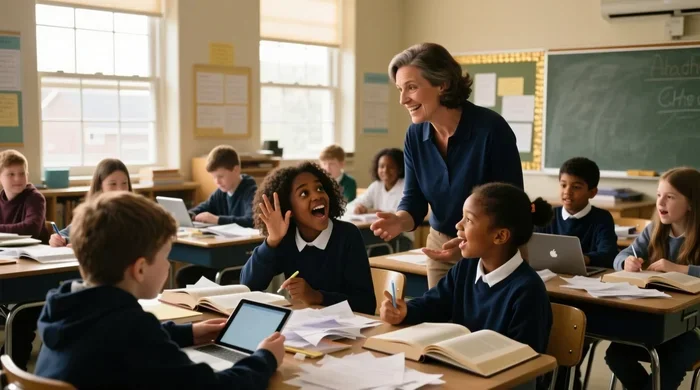
Education is a basic human right, not a luxury. When we ask why education should be free, the answer touches on equality, economic growth, and personal freedom. Free education removes barriers, opens doors, and gives every person a fair shot at a better life.
Key Takeaways
- Free education promotes equality: It levels the playing field for people from all income levels.
- It boosts the economy: Educated populations drive innovation, productivity, and growth.
- Student debt disappears: Tuition-free learning removes the financial burden that holds millions back.
- Lifelong learning becomes possible: Free access encourages people to keep learning throughout their lives.
- Society benefits as a whole: Better education leads to healthier communities, lower crime rates, and stronger democracies.
- It’s a moral imperative: Every person deserves the chance to learn and grow, regardless of background.
📑 Table of Contents
- Why Education Should Be Free for Every Single Person
- The Case for Free Education
- The Real Cost of Paid Education
- Countries That Prove Free Education Works
- Addressing the Counterarguments
- The Broader Impact on Society
- Practical Steps Toward Free Education
- Common Mistakes People Make About Free Education
- Expert Insights on Free Education
- Final Thoughts
Why Education Should Be Free for Every Single Person
Think about this. A bright kid grows up in a poor family. They have big dreams. They love to learn. But school costs money. So they give up. That just doesn’t feel right, does it?
Why education should be free is one of the most important questions we can ask today. Education is not a privilege for the rich. It is a basic right for every human being on this planet. When learning comes with a price tag, millions of people get left behind. And that hurts all of us.
The idea of free education has been around for a long time. Many countries have already made it work. Finland, Germany, and Norway offer tuition-free college or even free schooling through university. Their results speak for themselves. So why can’t the rest of the world follow suit? Let’s dig deep into this topic and find out.
The Case for Free Education
Education Is a Fundamental Right
The United Nations says education is a human right. That’s not just a nice saying. It’s a global agreement. Article 26 of the Universal Declaration of Human Rights clearly states that everyone has the right to education. So why do we still put a price on it?
When we charge for learning, we create a two-tier system. Rich kids get opportunities. Poor kids get left out. This goes against the very idea of educational equity. Every child deserves a fair start, no matter who their parents are or how much money they have.
Think of it this way. We don’t charge people to use roads or breathe clean air. These are public goods. Education should be treated the same way. It benefits everyone, not just the person sitting in the classroom.
Some folks argue that free education is too expensive. But let’s think about the cost of not educating people. The price we pay in poverty, crime, and lost potential is far greater. Investing in free schooling pays for itself many times over.
Breaking Down Socioeconomic Barriers
Money talks. And in education, it often shouts. Families with wealth can afford tutors, books, and private schools. Families without means struggle to keep kids in classrooms. This gap creates a cycle that is hard to break.
Why education should be free is tied directly to breaking this cycle. When learning costs nothing, everyone gets access. A child from a low-income family can compete with a child from a wealthy family. That’s the power of accessible learning.
Here’s a quick look at how costs affect different groups:
- Low-income families: Often can’t afford tuition, books, or supplies. Kids may drop out early.
- Middle-income families: Struggle with loans and debt. Education becomes a financial burden.
- High-income families: Face little to no financial stress. Kids have full access to quality learning.
Do you see the problem? The system we have now rewards those who already have money. Free education flips this script. It gives everyone an equal shot.
Free Education Boosts the Economy
Let’s talk money. Not the cost of education, but the money it creates. A well-educated population is an economic engine. It drives innovation, productivity, and growth.
When people have access to quality education, they get better jobs. They earn more money. They spend more in their communities. This creates a ripple effect that lifts everyone up. It’s like dropping a pebble in a pond. The waves go far and wide.
Countries that invest in free education see huge returns. They have lower unemployment rates. They attract businesses. They build stronger middle classes. The economic mobility that comes from learning is priceless.
On the flip side, nations that limit education to those who can pay face real problems. They have higher poverty rates. They struggle with inequality. They fall behind in the global race for talent and innovation.
The Real Cost of Paid Education
Student Debt Crisis
In many countries, student loan debt has become a monster. In the United States alone, millions of people owe over a trillion dollars in student loans. This debt follows them for years. It delays homeownership. It delays starting families. It delays dreams.
When we ask why education should be free, the student debt crisis is front and center. Learning should lift people up. Not hold them down with years of financial stress.
Free education would change lives overnight. Graduates could start careers without the weight of debt hanging over them. They could save, invest, and contribute to the economy much sooner. The free education model removes this barrier completely.
The Opportunity Cost of Not Learning
There’s a hidden cost to paid education. It’s called the opportunity cost. This is what people give up when they can’t afford to learn.
A talented young person might choose a low-paying job just to survive. They give up their true passion. They give up their potential. This isn’t just sad. It’s a waste of human talent. Society loses out on doctors, artists, engineers, and leaders who never get the chance to shine.
Free education removes this waste. It lets people follow their passions. It lets them contribute their gifts to the world. And that benefits all of us.
How Paid Systems Create Inequality
Paid education systems naturally favor the wealthy. This isn’t a secret. It’s just math. When school costs money, only those with money can fully participate.
This creates a learning gap that starts early and grows over time. Rich kids get better resources. Better teachers. Better facilities. Poor kids get whatever’s left. Over time, this gap becomes a chasm.
Some might say this is just how things are. But that’s not good enough. We can do better. We must do better. Free schooling is one of the best tools we have to close this gap.
Countries That Prove Free Education Works
Finland’s Education Model
Finland is often called the gold standard in education. And one big reason is that it’s free. Finnish students don’t pay tuition at any level. Not primary school. Not university. Nothing.
The results are stunning. Finnish students consistently rank among the top in the world. They score high in reading, math, and science. But they also enjoy learning. They don’t face the crushing pressure that students in paid systems deal with.
Finland proves that free education doesn’t mean low quality. In fact, the opposite is true. When you invest in learning for everyone, everyone benefits.
Germany and Tuition-Free Universities
Germany offers tuition-free college at public universities, even for international students. This has made Germany a top destination for learners from around the world.
German students graduate without debt. They can focus on their studies instead of worrying about bills. And German businesses benefit from a highly skilled workforce. It’s a win-win situation.
Other countries have taken notice. Many are now exploring their own versions of free education. The proof is clear. It works.
Lessons from Nordic Countries
The Nordic countries — Norway, Sweden, Denmark, and Iceland — all offer free or very low-cost education. These nations consistently rank high in happiness, equality, and economic strength.
There’s a clear connection between free education and a thriving society. When people have access to learning, they build better lives. And better lives build better communities.
These countries show us that why education should be free isn’t just a theory. It’s a proven path to a stronger, fairer world.
Addressing the Counterarguments
“Free Education Is Too Expensive”
This is the most common argument against free education. And it sounds reasonable at first. But let’s look closer.
Yes, funding free education requires investment. Governments need to allocate money. But where does this money come from? It comes from taxes. And guess what? Educated people pay more taxes. They earn more. They contribute more. So the investment pays for itself.
Countries like Finland spend a lot on education. But they also get a lot back. Their economy is strong. Their society is healthy. Their people are happy. The return on investment in free schooling is enormous.
Think of it as a seed. You plant a little money now. You harvest a lot later. That’s smart economics, not wasted spending.
“Free Education Lowers Quality”
Some people worry that free education means lower standards. They think you have to pay to get quality. But this isn’t true.
Finland, Germany, and the Nordic countries prove that free systems can be world-class. The key is how you fund and manage them. When education is treated as a public good, it gets the support it needs.
Quality comes from good teaching, strong curricula, and proper resources. None of these require student payments. In fact, paid systems can hurt quality by creating profit-driven incentives that put money before learning.
“People Won’t Value What They Get for Free”
This is an old argument. But it doesn’t hold up. People value education deeply when they have access to it. Free education doesn’t make people lazy. It makes them motivated.
When someone has to pay thousands of dollars for a degree, they often stress about money instead of focusing on learning. Free education removes this distraction. It lets people engage fully with their studies.
Many free education systems see higher completion rates and better outcomes. People show up, work hard, and succeed. Because they can. Because nothing stands in their way.
The Broader Impact on Society
Building Stronger Communities
Free education doesn’t just help individuals. It strengthens entire communities. Educated people are more likely to volunteer, vote, and help their neighbors.
They build businesses that create jobs. They start families that value learning. They become leaders who make their communities better. This ripple effect spreads far and wide.
When we invest in accessible learning, we invest in the future of our neighborhoods, our cities, and our nations. The benefits go way beyond the classroom.
Health and Well-Being
Did you know that educated people tend to be healthier? They make better choices. They live longer. They have lower rates of chronic disease.
Free education is really an investment in public health. When more people learn, the whole society gets healthier. This reduces healthcare costs and improves quality of life for everyone.
Some folks compare this to the idea behind idioms for free — useful knowledge that should be shared with everyone without cost. Just as understanding language tools empowers communication, free education empowers people to live better lives.
Similarly, the way similes for education help us compare and understand ideas, free education helps us compare paths to better outcomes for all people. And just as metaphors for education paint vivid pictures of learning as a journey, free education transforms the journey from a struggle into an open road for everyone.
These comparisons remind us that education tools and knowledge should flow freely, just like the best idioms for education carry deep meaning that enriches anyone who learns them.
Strengthening Democracy
Democracy needs informed citizens. People who can think critically. People who understand the world around them. Free education builds these citizens.
When education is only for those who can pay, democracy suffers. Only the wealthy get a full voice. The rest are left behind. Free education levels the democratic playing field. It gives everyone a say in their future and their government.
History shows us that educated populations are more stable. They are more tolerant. They are more resilient. Free education is one of the best tools we have for building strong democracies.
Practical Steps Toward Free Education
What Governments Can Do
Moving toward free education requires action. Here’s what leaders can do:
- Increase public funding for schools and universities.
- Remove tuition fees at public institutions.
- Invest in teacher training and pay teachers well.
- Provide free learning materials like textbooks and technology.
- Create scholarship programs for students who need extra support.
These steps aren’t magic. But they work. Countries that have taken them see real results.
What Communities Can Do
Governments aren’t the only ones who can help. Communities play a big role too:
- Support local schools with donations and volunteers.
- Advocate for free education policies at the local level.
- Create mentorship programs for young learners.
- Offer free tutoring and after-school programs.
- Push for equal funding across all schools in a district.
Change doesn’t always start at the top. Sometimes it starts in a neighborhood. Sometimes it starts with one person who believes education should be free for everyone.
Quick Tips for Supporting Free Education
Want to make a difference? Here are some quick tips:
- Share information about the benefits of free education with friends and family.
- Contact your local representatives and voice your support.
- Volunteer with organizations that promote accessible learning.
- Donate to scholarship funds or community education programs.
- Stay informed about education policy in your area.
Common Mistakes People Make About Free Education
There are a lot of misconceptions out there. Let’s clear some of them up.
Mistake 1: Free means low quality. As we’ve seen, countries like Finland prove this wrong. Free education can be world-class.
Mistake 2: It’s too expensive. The long-term economic benefits far outweigh the upfront costs. It’s an investment, not an expense.
Mistake 3: Only poor people benefit. Free education helps everyone. It creates a stronger, smarter, more innovative society for all.
Mistake 4: It kills motivation. The opposite is true. When people aren’t burdened by debt, they focus more on learning and achieving.
Avoiding these mistakes helps us have a clearer conversation about why education should be free. It lets us focus on solutions instead of myths.
Expert Insights on Free Education
Economists, educators, and leaders around the world agree on one thing: free education is one of the best investments a society can make.
Nobel Prize-winning economists have pointed out that education creates positive externalities. That’s a fancy way of saying that when one person learns, everyone benefits. A doctor’s education helps patients. A teacher’s education helps students. A scientist’s education helps the whole world.
Educators also stress that free education levels the playing field. It gives every child the same starting line. And that’s the foundation of a fair and just society.
Business leaders see it differently too. They know that quality education creates the skilled workers they need. Companies thrive in countries with strong education systems. Free education isn’t just good for people. It’s good for business.
Final Thoughts
So let’s come back to where we started. Why education should be free? The answer is simple. Because every person deserves the chance to learn. Because education breaks cycles of poverty. Because it builds stronger economies and healthier communities.
Free education isn’t a dream. It’s a proven reality in many countries. It works. It helps people. It helps societies. And it’s the right thing to do.
The path forward isn’t always easy. There are challenges. There are costs. But the cost of not educating people is far greater. We can’t afford to keep education behind a paywall.
Let’s build a world where learning has no price. A world where every single person can reach their full potential. A world where education is free — not as a privilege, but as a promise.
That’s the world we should be fighting for. And it starts with understanding that why education should be free isn’t just a question. It’s a calling.
Frequently Asked Questions
What does it mean when we say education should be free?
Free education means that all levels of schooling — from primary school to university — are available without tuition fees. Students don’t pay to attend classes, and learning materials are often provided at no cost. This model removes financial barriers and ensures that everyone, regardless of income, can access quality education.
Which countries offer free education?
Several countries have adopted free education models. Finland offers free schooling at all levels, including university. Germany provides tuition-free education at public universities. Norway, Sweden, Denmark, and Iceland also offer free or very low-cost education. These countries prove that free education is both achievable and highly effective.
How is free education funded?
Free education is typically funded through public taxes and government budgets. Governments allocate money to schools and universities so students don’t have to pay tuition. Some countries also use a combination of federal and state funding to keep education costs at zero for students. The long-term economic returns often exceed the initial investment.
Does free education reduce student debt?
Absolutely. Free education eliminates the need for student loans in most cases. When tuition is covered, students can focus on their studies without worrying about debt. This leads to higher graduation rates, better career outcomes, and stronger financial health for graduates. It also stimulates the economy since graduates can spend and invest sooner.
Can free education improve economic mobility?
Yes, free education is one of the most powerful tools for improving economic mobility. It gives people from all backgrounds the chance to gain skills, earn degrees, and secure better jobs. This breaks the cycle of poverty and opens doors that might otherwise stay closed. Over time, whole communities benefit from a more educated workforce.
What are the biggest challenges to implementing free education?
The main challenges include funding, political will, and ensuring quality. Governments need to commit real resources to make free education work. There can also be resistance from those who benefit from the current paid system. However, countries that have overcome these challenges show that the benefits far outweigh the obstacles.
=== CONCLUSION ===
Why education should be free is a question with a clear answer. Education is a right, not a luxury. It drives equality, fuels economies, and transforms lives. Countries around the world have shown us that free education works. It creates smarter citizens, stronger communities, and brighter futures.
The path to free education isn’t without challenges. But every step we take toward removing financial barriers brings us closer to a fairer world. Let’s keep pushing for change. Let’s keep believing that every single person deserves the chance to learn and grow.
The future of education is free. And that future starts now.


