
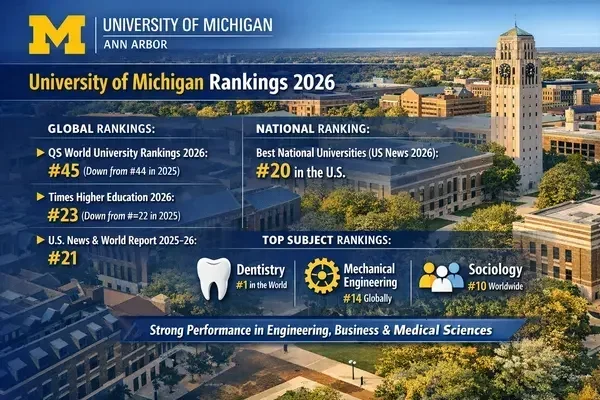
Where does Michigan rank in education? Michigan sits in the middle of the pack nationally, ranking around 30th to 34th in overall education quality. The state faces challenges in test scores, graduation rates, and funding. However, there are bright spots in certain districts and programs that show promise for improvement.
Key Takeaways
- Mid-Pack Ranking: Michigan typically ranks between 30th and 34th in national education rankings.
- Test Scores Lag Behind: Michigan students often score below the national average on standardized tests like NAEP.
- Funding Gaps Exist: Education funding in Michigan has faced cuts and inequities across districts.
- Graduation Rates Are Improving: High school graduation rates have shown steady growth over the past decade.
- Bright Spots Exist: Certain Michigan districts and programs outperform the state average significantly.
- Teacher Shortages Are a Concern: Michigan struggles with recruiting and retaining qualified educators.
- Change Is Possible: Targeted reforms and community efforts are driving gradual improvement.
📑 Table of Contents
- Where Does Michigan Rank in Education Compared to Other States?
- How Michigan Compares on National Education Rankings
- Michigan Student Test Scores: What the Data Shows
- Graduation Rates and College Readiness
- Education Funding in Michigan
- Bright Spots and Success Stories in Michigan Education
- What Michigan Can Do to Improve Its Education Ranking
- Common Mistakes People Make When Comparing State Education Rankings
- The Future of Michigan Education
- Conclusion
Where Does Michigan Rank in Education Compared to Other States?
So, where does Michigan rank in education? The short answer is that Michigan sits in the middle of the pack nationally. It usually lands somewhere between 30th and 34th out of 50 states when we look at overall education quality. This ranking comes from a mix of factors like test scores, graduation rates, and funding levels.
Now, being in the middle of the pack might sound okay at first. But when you dig deeper, you see some real problems. Michigan students often score below the national average on key assessments. And some districts face big challenges that hold students back. Let us break this all down for you.
Understanding where Michigan stands helps parents, teachers, and policymakers make better decisions. It also shines a light on what needs to change. In this article, we will walk you through the latest data, the biggest challenges, and the hopeful signs that things are getting better.
How Michigan Compares on National Education Rankings
National education rankings come from several trusted sources. Organizations like U.S. News & World Report, Education Week, and the National Assessment of Educational Progress (NAEP) all publish annual reports. These reports look at different factors to give each state a score.
Michigan has not cracked the top 20 in any major education ranking in recent years. The state usually falls in the bottom third nationally. This is not great news for a state that was once known for its strong industrial economy and workforce development.
Key Ranking Factors
Here are the main factors that determine where Michigan lands in these rankings:
- Standardized Test Scores: NAEP results show Michigan students scoring below average in reading and math.
- High School Graduation Rates: Michigan has seen improvement, but still trails many states.
- College Readiness: SAT and ACT scores for Michigan students are often below national averages.
- Education Funding Per Pupil: Michigan spends less per student than the national average in many districts.
- Teacher Quality and Retention: The state faces ongoing challenges with teacher shortages and turnover.
When you look at these factors together, it is clear why Michigan struggles to climb the rankings. But each of these areas has its own story. Let us take a closer look.
Michigan Student Test Scores: What the Data Shows
Standardized test scores are one of the most talked-about measures of education quality. And Michigan has some work to do in this area. The NAEP, often called the Nation’s Report Card, gives us a clear picture.
In recent NAEP assessments, Michigan fourth graders scored below the national average in both reading and math. Eighth graders showed similar trends. These scores have not improved much over the past decade, which is a red flag for education experts.
Reading Scores
Michigan reading scores have been a particular concern. Only about one-third of students in the state read at or above the proficient level. This is a big gap compared to states that rank much higher. Literacy rates directly affect how well students perform in every other subject too.
Math Scores
Math scores in Michigan have also been flat or declining in many districts. This is a problem because math skills build on each other year after year. If students fall behind early, it is very hard to catch up later. Many educators point to a lack of resources and outdated curricula as contributing factors.
Graduation Rates and College Readiness
On the brighter side, Michigan high school graduation rates have improved over the years. The state now has a graduation rate that is close to the national average. This shows that schools are making progress in keeping students on track to earn their diplomas.
But graduation rates alone do not tell the whole story. College readiness is another important measure. Many Michigan graduates need remedial courses in college, which means they were not fully prepared for higher education. This is a costly and frustrating reality for many young people in the state.
SAT and ACT Performance
Michigan students’ SAT and ACT scores tend to fall below national averages. The state used to require the SAT as part of the high school curriculum, which helped boost participation. But performance has not kept up with participation numbers. This gap tells us that more students are taking the tests, but they are not necessarily scoring higher.
The Role of Early Education
One reason Michigan struggles with college readiness may be rooted in early education. Access to quality preschool programs is uneven across the state. Children who start behind often stay behind. This is why many experts push for universal pre-K as a way to level the playing field.
Education Funding in Michigan
Funding plays a huge role in education quality. And Michigan has had its share of funding challenges. The state has gone through periods of budget cuts that affected schools at every level. When funding drops, districts have to make tough choices about staffing, programs, and resources.
Per-pupil spending in Michigan varies widely from district to district. Wealthier areas can supplement state funding with local property taxes. But lower-income districts often struggle to provide the basics. This funding gap creates inequities that hurt students in the most vulnerable communities.
How Michigan Stacks Up
Compared to states that rank higher in education, Michigan spends less per student in many cases. States like Massachusetts and New Jersey invest heavily in their schools and see better results. Michigan has tried to close this gap, but progress has been slow.
Some experts argue that Michigan needs a more equitable funding model. This would ensure that every student has access to quality resources, no matter where they live. Until then, the state will likely continue to struggle with its education ranking.
Bright Spots and Success Stories in Michigan Education
It is not all bad news for Michigan. There are districts and programs that are doing great things. These success stories show that improvement is possible when communities invest in their schools.
For example, some Michigan charter schools and magnet programs have produced outstanding results. Students in these programs often outperform their peers on state assessments. These schools focus on smaller class sizes, personalized learning, and strong community involvement.
Also, Michigan has seen growth in career and technical education programs. These programs give high school students real-world skills and connections to local industries. This is a smart approach that prepares students for both college and careers.
What Other States Can Teach Michigan
Michigan can learn from states that rank much higher in education. For instance, states like Massachusetts and Florida have implemented reforms that boosted their rankings. Florida focused on reading interventions and accountability measures. Massachusetts invested heavily in teacher training and early education.
Michigan could adopt similar strategies. The key is to focus on what works and commit to long-term improvement. Quick fixes rarely lead to lasting change in education systems.
Some people also use creative language to describe education challenges. For example, you might hear someone say that Michigan education is “as slow as molasses” when talking about reform timelines. Others compare the funding gap to “a leaky bucket” that keeps losing resources. These similes for education and metaphors for education help people express frustration and hope in colorful ways. Even idioms for education capture the spirit of the ongoing debate about school reform in the state.
What Michigan Can Do to Improve Its Education Ranking
Improving Michigan’s education ranking will not happen overnight. It requires commitment from lawmakers, educators, families, and communities. But there are clear steps the state can take to move in the right direction.
1. Increase and Equalize Funding
Michigan needs a funding model that gives every student a fair shot. This means directing more resources to underperforming districts. It also means investing in modern facilities, technology, and learning materials.
2. Support Teachers Better
Teacher shortages are a major problem in Michigan. The state can address this by offering competitive salaries, loan forgiveness programs, and better working conditions. When teachers feel valued, they stay longer and teach better.
3. Focus on Early Literacy
Reading is the foundation of all learning. Michigan should invest in early literacy programs that start in preschool. Research shows that children who read well by third grade are much more likely to succeed in school and beyond.
4. Expand Career and Technical Education
Not every student needs a four-year college degree to succeed. Michigan can grow its career and technical education offerings. These programs give students practical skills and open doors to well-paying jobs right after high school.
5. Use Data to Drive Decisions
Michigan should use student performance data to identify what is working and what is not. Data-driven decisions help districts target their efforts where they will have the most impact. This approach has worked in other states that have improved their rankings.
Common Mistakes People Make When Comparing State Education Rankings
When people look at education rankings, they sometimes make mistakes that lead to wrong conclusions. Here are a few to watch out for.
- Ignoring Context: Rankings do not always account for poverty rates, demographics, or local challenges.
- Focusing Only on One Metric: Test scores alone do not measure the full picture of education quality.
- Assuming Rankings Never Change: States can and do improve. Michigan has shown progress in some areas.
- Overlooking Local Successes: A state ranking can mask great performance in individual districts.
- Comparing Only to Top States: It is more useful to compare Michigan to states with similar challenges.
Avoiding these mistakes helps you understand the real story behind the numbers. Education is complex, and rankings are just one tool for understanding it.
The Future of Michigan Education
There is reason for cautious optimism about Michigan’s education future. The state has started to acknowledge its challenges and is beginning to take meaningful steps toward reform. New leadership in education policy, combined with community demand for better schools, is creating momentum for change.
Experts believe that if Michigan invests in the right areas, it could see its ranking improve over the next decade. Early literacy, teacher support, and equitable funding are the keys to unlocking that potential.
Parents and community members also play a vital role. When families advocate for their schools and get involved, students benefit. Michigan’s education future depends on all of us working together.
Conclusion
So, where does Michigan rank in education? The honest answer is that Michigan has a long way to go. The state ranks in the middle of the pack nationally, with room for improvement in test scores, funding, and college readiness. But Michigan is not stuck in place. There are bright spots, dedicated educators, and growing community support for change.
Understanding where Michigan stands is the first step toward making it better. By focusing on equity, investing in teachers, and supporting students early, the state can climb the rankings. Every student in Michigan deserves a quality education, and that goal is worth fighting for.
The journey is not over. But with awareness, effort, and smart policy, Michigan can build an education system that truly works for all its students.
Frequently Asked Questions
What is Michigan’s current education ranking among all 50 states?
Michigan typically ranks between 30th and 34th in overall education quality depending on the source and year. Rankings vary based on which factors are measured, but the state consistently falls in the middle of the pack nationally.
How do Michigan student test scores compare to the national average?
Michigan students generally score below the national average on standardized tests like the NAEP. Reading and math scores have been a particular concern, with many students performing below the proficient level.
Has Michigan’s education ranking improved over time?
Michigan’s ranking has remained relatively flat over the past decade, with some modest improvements in graduation rates. However, test scores and funding gaps have slowed overall progress compared to top-ranking states.
What are the biggest challenges facing Michigan schools today?
The biggest challenges include funding inequities between districts, teacher shortages, below-average test scores, and unequal access to early education programs. These issues disproportionately affect students in lower-income communities.
Which states rank highest in education compared to Michigan?
States like Massachusetts, New Jersey, Florida, and Connecticut typically rank at the top of national education lists. These states invest more per student, have higher test scores, and show stronger graduation and college readiness rates than Michigan.
What can parents do to help improve Michigan’s education ranking?
Parents can advocate for better school funding, volunteer in classrooms, support early literacy programs at home, and engage with local school boards. Community involvement is one of the most powerful drivers of educational improvement.
=== INTERNAL LINKS ===
Looking for creative ways to talk about education challenges? Check out these resources on similes for education, metaphors for education, and idioms for education.


