
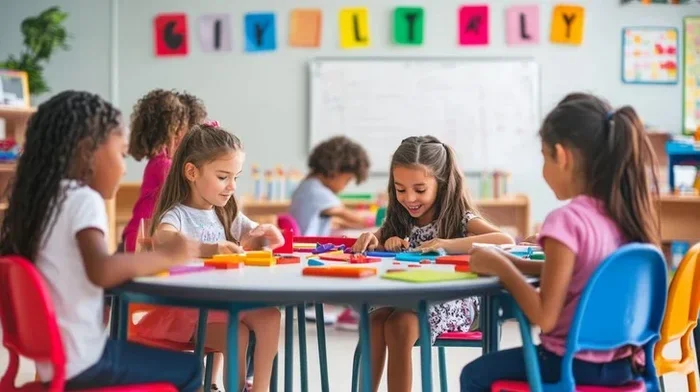
Primary education is the first formal stage of learning, usually for kids ages 5 to 11. It builds foundational skills in reading, writing, math, and social growth that shape a child’s entire academic journey. This guide covers what primary education includes, why it matters so much, and how parents can support it at home.
Key Takeaways
- Primary education is the foundation of a child’s academic and personal growth.
- Core subjects include reading, writing, math, science, and social studies.
- Early learning builds critical thinking and social skills that last a lifetime.
- Teachers and classroom environment play a huge role in student success.
- Parents can boost learning outcomes by staying involved at home.
- Addressing challenges in primary education ensures educational equity for all children.
📑 Table of Contents
- What Is Primary Education?
- Why Primary Education Matters So Much
- Core Subjects and Skills Taught in Primary School
- How Primary Education Shapes a Child’s Development
- The Role of Teachers and the Classroom Environment
- Challenges and the Future of Primary Education
- How Parents Can Support Primary Education at Home
- Conclusion
What Is Primary Education?
So, what is primary education exactly? It is the first stage of formal schooling for children. In most countries, it covers kids from about age 5 or 6 up to age 11 or 12. This period is often called elementary school in the United States. In other parts of the world, people call it primary school or grade school. Whatever the name, the purpose is the same.
Primary education is where children learn the basics. They start with reading, writing, and counting. But it is so much more than that. It is the foundation for everything they will learn later in life. Think of it as building a house. You need a strong base before you can add walls and a roof.
During these early years, kids also grow socially and emotionally. They learn how to work with others. They build friendships. They start to understand the world around them. That is why primary education is so much more than just academics.
How Long Does Primary Education Last?
The length of primary education varies by country. In the United States, it usually covers kindergarten through fifth or sixth grade. In the United Kingdom, it spans from age 5 to 11. Many countries in Asia and Africa follow a similar pattern. The primary school years are universally recognized as the most formative period in a child’s life.
No matter where it happens, the goal is the same. It gives every child a solid start. It opens doors to future learning. And it helps kids grow into confident, curious individuals.
Why Primary Education Matters So Much
You might wonder why so much attention is given to the early years of schooling. The answer is simple. Primary education sets the stage for everything that follows. Children who get a strong start in these years tend to do better in secondary school and beyond.
Research shows that early childhood learning has a lasting impact. Kids who read well by third grade are more likely to graduate high school. They are also more likely to succeed in college or career training. The foundational skills built during primary education are truly irreplaceable.
Building Literacy and Numeracy
Reading and math are the two biggest pillars of primary education. In the early grades, children learn to decode words. They start with simple sentences and move to full books. This process, called literacy development, is one of the most important outcomes of early schooling.
Math works the same way. Kids start with counting and basic addition. Then they move to multiplication, fractions, and problem-solving. These numeracy skills are used every single day. Without them, even simple tasks become hard.
Social and Emotional Growth
Primary education is not just about books and numbers. It is also about people. Children learn how to share, take turns, and resolve conflicts. They develop social skills that help them throughout their lives.
In the classroom, kids face challenges. They might disagree with a friend. They might struggle with a tough assignment. Learning to handle these moments builds emotional intelligence. It teaches them resilience and patience. These are skills no textbook can fully teach.
Core Subjects and Skills Taught in Primary School
What exactly do children learn during the primary school years? The curriculum standards vary from place to place. But most primary education programs cover a similar set of core subjects and skills.
Language Arts and Reading
Language arts is often the centerpiece of primary education. It includes reading, writing, spelling, and speaking. Children learn phonics, which is the relationship between letters and sounds. They practice reading comprehension by answering questions about stories they read.
Writing starts with forming letters. Then it moves to simple sentences. Eventually, kids write short paragraphs and stories. Teachers often use creative methods to make writing fun. For example, they might teach similes for education like “the student was as eager as a bee.” These kinds of figurative language tools help kids express themselves more vividly. You can explore more about these techniques in our guide on similes for education.
Mathematics
Math in primary education starts with the basics. Children learn to count, add, subtract, multiply, and divide. They also explore shapes, patterns, and simple measurements. By the end of the primary school years, most kids can solve basic word problems.
Good math teaching goes beyond memorization. It encourages critical thinking. Kids learn to look at a problem and figure out the best way to solve it. This kind of analytical thinking is a valuable life skill.
Science and Social Studies
Science introduces children to the natural world. They learn about plants, animals, weather, and basic physics. Social studies cover topics like community, culture, and geography. Together, these subjects help kids understand the world around them.
Teachers often use hands-on activities to teach these subjects. A science experiment or a field trip to a local park can make learning come alive. These experiences boost learning outcomes and make school more enjoyable.
How Primary Education Shapes a Child’s Development
The impact of primary education goes far beyond the classroom. It shapes how a child thinks, feels, and interacts with the world. Let us look at some of the key ways it makes a difference.
Cognitive Development
Cognitive development refers to how a child’s brain grows and learns. During the primary school years, the brain is like a sponge. It absorbs new information rapidly. Primary education taps into this natural ability by providing structured learning experiences.
Children learn to focus, remember, and reason. They start to understand cause and effect. They can follow multi-step instructions. These cognitive gains are essential for later academic success. Without a strong start, catching up later becomes much harder.
Creativity and Expression
Primary education also nurtures creativity. Through art, music, and storytelling, children learn to express themselves. They explore colors, sounds, and ideas. This kind of creative play is not just fun. It builds critical thinking and problem-solving skills.
Teachers can use figurative language to spark imagination. For instance, teaching metaphors for education like “the classroom is a garden” helps kids see learning as something that grows. You can find more examples in our article on metaphors for education.
Building Confidence and Independence
When a child learns to read their first book or solve their first math problem, something powerful happens. They gain confidence. Primary education gives children a sense of accomplishment. This confidence carries them forward into higher grades.
Kids also learn independence during these years. They start to take responsibility for their work. They learn to manage their time. These habits are small but mighty. They set the stage for student success in the years to come.
The Role of Teachers and the Classroom Environment
A great teacher can change a child’s life. This is especially true during primary education. The classroom is where kids spend most of their waking hours during the school year. That makes the environment and the teacher absolutely critical.
What Makes a Great Primary Teacher?
Effective teachers in primary education share certain qualities. They are patient and kind. They know how to explain things in simple ways. They make learning feel safe and fun. Good teachers also understand child development. They know what kids can handle at each age.
Ongoing teacher training is essential. The best educators keep learning new methods. They adapt to the needs of their students. They use data to track learning outcomes and adjust their approach. This dedication makes a real difference in every classroom.
The Importance of a Positive Classroom
The classroom environment matters just as much as the teacher. A warm, welcoming space encourages kids to participate. It makes them feel safe to ask questions and make mistakes. On the other hand, a cold or chaotic room can hold children back.
Simple things make a big impact. Bright colors on the walls. Organized learning materials. A reading corner with cozy seats. These details create a space where primary education can truly thrive.
Challenges and the Future of Primary Education
Primary education faces real challenges today. Not every child has the same access to quality learning. And the world is changing fast. Schools must adapt to meet new demands.
Educational Equity
One of the biggest challenges is educational equity. In many places, children from low-income families do not get the same quality of primary education as their wealthier peers. This gap starts early and can grow over time.
Fixing this requires effort from everyone. Governments must fund schools fairly. Communities must support local classrooms. And parents must stay involved in their children’s early childhood learning. When we all work together, we can close these gaps.
Technology in the Classroom
Technology is changing the way kids learn. Tablets, interactive whiteboards, and educational apps are becoming common. These tools can make primary education more engaging and personalized.
But technology is not a magic fix. It works best when teachers use it wisely. Screen time must be balanced with hands-on activities. And every child must have access to devices and internet. Without that, technology can actually widen the educational equity gap.
Teaching Language Through Figurative Expression
Language arts in primary education benefits greatly from creative teaching methods. One approach is introducing figurative language early. When children learn expressions like “the teacher is a guiding light,” they start to think more deeply about words. You can explore how idioms play a role in early learning in our article on idioms for education.
Using figurative language in the classroom helps kids remember concepts better. It makes lessons more memorable and fun. It also builds vocabulary and reading comprehension at the same time. This is a win-win for both teachers and students.
How Parents Can Support Primary Education at Home
Parents play a huge role in primary education. You do not need to be a teacher to help your child learn. Small actions at home can make a big difference.
Read Together Every Day
Reading with your child is one of the best things you can do. It builds literacy development and strengthens your bond. Even 15 minutes a day can boost reading comprehension and vocabulary.
Let your child choose the books. Ask questions about the story. Make it fun, not like a test. The goal is to build a love for reading that lasts a lifetime.
Practice Math in Everyday Life
Math is everywhere. You can practice it while cooking, shopping, or playing games. Count the apples at the grocery store. Divide the pizza into equal slices. These small moments reinforce what kids learn in primary education.
Encourage Curiosity and Questions
Kids are naturally curious. Encourage it. When your child asks a question, take it seriously. Help them find the answer. This teaches critical thinking and shows that learning is a lifelong journey.
You can also explore learning together. Visit a museum, a park, or a library. These experiences enrich primary education in ways that a textbook alone cannot.
Conclusion
Primary education is the most important foundation a child will ever receive. It builds the skills, confidence, and curiosity that carry kids through school and beyond. From reading and math to social growth and creativity, these early years shape who our children become.
Every child deserves access to quality primary education. Every parent can play a role in supporting it. And every teacher can make a lasting difference. When we invest in the early years, we invest in the future of our communities and our world.
So take what you have learned here today. Use it to support the young learners in your life. Because a strong start in primary education truly changes everything.
Frequently Asked Questions
What age range does primary education cover?
Primary education typically covers children from ages 5 or 6 to 11 or 12. This can vary slightly depending on the country and its education system. In the United States, it usually includes kindergarten through fifth or sixth grade.
Why is primary education considered so important?
Primary education builds the foundational skills children need for all future learning. It develops literacy, numeracy, social skills, and emotional growth during the most formative years of a child’s life. Research shows that a strong start in these years leads to better outcomes later.
What are the core subjects taught in primary school?
The core subjects include language arts, mathematics, science, and social studies. Most programs also incorporate art, music, and physical education. The focus is on building basic skills while encouraging curiosity and creativity.
How can parents support primary education at home?
Parents can read with their children daily, practice math through everyday activities, and encourage questions and curiosity. Creating a positive learning environment at home reinforces what children learn in the classroom and builds a lifelong love of learning.
What challenges does primary education face today?
Key challenges include educational equity gaps, uneven access to technology, and the need for ongoing teacher training. Addressing these issues requires collaboration between governments, communities, schools, and families to ensure every child receives quality learning.
How does primary education impact long-term student success?
Children who receive strong primary education are more likely to succeed in secondary school, college, and careers. The cognitive, social, and emotional skills built during these early years create a lasting foundation for student success throughout life.


