
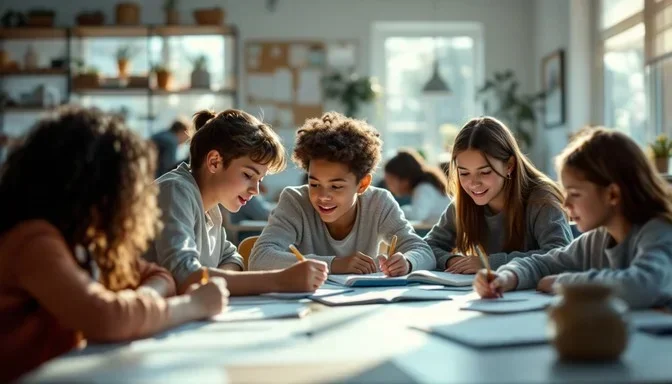
So what is the purpose of education? It goes far beyond grades and diplomas. The purpose of education is to empower people with knowledge, build critical thinking skills, and prepare them for meaningful lives. Whether it fuels personal growth, career success, or social progress, learning shapes who we become.
Have you ever stopped to think about what is the purpose of education? It is a question that has sparked debates for centuries. Some folks say it is about getting good grades. Others believe it is all about landing a great job. But the truth is, the purpose of education runs much deeper than that.
Why education matters touches every part of our lives. From the moment we learn to read as kids, education sets the foundation for who we become. It shapes how we think, how we treat others, and how we navigate the world. In this article, we will explore the many layers of what education is really for and why it remains one of the most powerful forces in human life.
Let us be real for a second. The modern education system often feels like a race. Students rush through tests, chase grades, and worry about college admissions. But somewhere along the way, we may have lost sight of the bigger picture. The real purpose of education is not just about filling heads with facts. It is about lighting fires in minds.
Key Takeaways
- Education builds essential life skills: It equips people with critical thinking, problem-solving, and communication abilities that go far beyond the classroom.
- Personal growth is a core goal: Learning helps individuals discover their strengths, build confidence, and develop a sense of purpose.
- Education drives social progress: It reduces inequality, fosters empathy, and creates informed citizens who contribute to their communities.
- Career readiness matters: One key purpose of education is preparing people for meaningful work and economic independence.
- Lifelong learning adds value: The benefits of education don’t stop at graduation — they continue throughout every stage of life.
- Character development is just as important as academics: Education shapes values, ethics, and emotional intelligence.
📑 Table of Contents
- Understanding the Core Purpose of Education
- Personal Growth and Self-Discovery
- Critical Thinking and Independent Thought
- Social Development and Community Impact
- Career Readiness and Economic Empowerment
- Lifelong Learning: Education That Never Ends
- Common Mistakes About the Purpose of Education
- Expert Insights on Why Education Matters
- Conclusion
Understanding the Core Purpose of Education
At its heart, the purpose of learning is to help people grow. Education gives us tools to understand the world around us. It teaches us how to ask questions, seek answers, and think for ourselves. Without education, we would be stuck repeating the same mistakes over and over again.
Think about it this way. When you were a child, everything was new. Every day brought a fresh lesson. Education simply continues that journey. It is not just a phase of life. It is a lifelong process that evolves with us.
Knowledge and Skills: The Foundation
The most obvious reason we pursue education is to gain knowledge and skills. Math teaches us how to solve problems. Science helps us understand how the world works. Literature opens doors to different cultures and perspectives. These are not just classroom exercises. They are life tools.
Consider how we use educational goals every single day. Balancing a budget, understanding a news article, or even following a recipe — these all rely on what we learned in school. Academic achievement matters, but only because it represents a deeper truth: we are building capabilities that serve us for life.
Here are some core skills that education for life develops:
- Literacy and numeracy — the basics of reading, writing, and math
- Research skills — knowing how to find and evaluate information
- Communication — expressing ideas clearly and confidently
- Digital literacy — navigating an increasingly tech-driven world
- Creative thinking — approaching problems from new angles
These skills form the backbone of a capable, independent person. And they all start with a commitment to learning outcomes that go beyond test scores.
Personal Growth and Self-Discovery
One of the most powerful reasons we ask why education matters comes down to personal growth. Education does not just teach us facts. It helps us discover who we are. When we explore new subjects, we find passions we never knew existed.
Maybe you took an art class and discovered a hidden talent. Or perhaps a history lesson sparked a deep interest in social justice. These moments of intellectual growth change the trajectory of our lives. They show us what we are capable of.
Building Confidence Through Learning
Every time you master a new concept, your confidence grows. Educational value is not only measured by diplomas. It is also measured by the quiet pride of knowing you worked hard and achieved something meaningful.
Education teaches us resilience too. Not every test will be easy. Not every project will go perfectly. But learning to push through challenges builds character development that no one can take away. You learn that failure is not the end — it is a stepping stone.
Think about some of the greatest leaders and innovators in history. Almost all of them shared one thing in common: they were curious learners. Their purpose of schooling was not just to pass exams. It was to become better versions of themselves.
Critical Thinking and Independent Thought
Here is where what is the purpose of education gets really exciting. Education is not about memorizing answers. It is about learning how to ask the right questions. Critical thinking is one of the most valuable gifts that learning gives us.
In a world full of information — and misinformation — the ability to think critically is more important than ever. Education teaches us to:
- Evaluate sources and check facts
- See problems from multiple perspectives
- Make informed decisions based on evidence
- Challenge assumptions and think creatively
- Distinguish between opinion and fact
These abilities are not just useful in school. They are essential in everyday life. Whether you are choosing a healthcare plan, voting in an election, or making a major purchase, critical thinking helps you navigate complexity with clarity.
When we talk about educational goals, we must include the goal of creating independent thinkers. A person who can think for themselves is a person who is truly educated.
Social Development and Community Impact
Education does not happen in a vacuum. We learn in classrooms, in groups, and through interactions with others. Social development is a huge part of the educational purpose. School teaches us how to work with people who are different from us.
In a classroom, you sit next to someone from a different background. You might have different beliefs, different experiences, or different ways of seeing the world. Education teaches us to listen, to respect, and to find common ground.
Education as a Great Equalizer
One of the most important reasons we invest in education is its power to reduce inequality. When people have access to quality learning, their opportunities expand dramatically. Education can break cycles of poverty, open doors to careers, and give voice to the voiceless.
Consider these facts:
- Higher education levels are linked to better health outcomes
- Educated communities tend to have lower crime rates
- Education increases civic participation and voter turnout
- Learning opportunities help bridge income gaps over time
These are not just statistics. They are proof that why education matters extends far beyond individual success. It strengthens entire communities and societies.
The Role of Education in Preserving Culture and History
Schools do more than teach math and science. They also pass down cultural knowledge and historical understanding. When students learn about the past, they gain context for the present. They understand why things are the way they are and how they can help shape the future.
Using similes for education can help students grasp these connections more vividly. For example, comparing a society without education to a ship without a compass helps learners visualize the importance of guidance and direction. Similarly, idioms for education like “the sky is the limit” or “knowledge is power” carry deep cultural meaning that reinforces the value of learning.
These figurative expressions are not just decorative language. They carry centuries of wisdom about the role of learning in human life. They remind us that education has always been central to who we are as a species.
Career Readiness and Economic Empowerment
Let us talk about the practical side. One of the most tangible reasons people pursue education is career readiness. A good education opens doors to better jobs, higher income, and greater economic stability.
Now, this does not mean that everyone needs a four-year degree to succeed. The purpose of education includes preparing people for all kinds of paths — trades, entrepreneurship, creative fields, and service careers. What matters is that education gives people options and agency over their own futures.
Here is how education supports economic empowerment:
- Skill development: Specialized training prepares people for in-demand careers
- Higher earning potential: Education levels often correlate with income levels
- Adaptability: Lifelong learners adjust more easily to changing job markets
- Entrepreneurship: Education provides the knowledge needed to start and run businesses
The benefits of education in the workplace go beyond technical skills. Employers also value soft skills like teamwork, communication, and time management — all of which are developed through the learning process.
Lifelong Learning: Education That Never Ends
Perhaps the most beautiful truth about the purpose of education is that it never really stops. The day you graduate is not the end of learning. It is just the beginning of a new chapter.
Lifelong learning means staying curious and open to new ideas. It means reading books, taking courses, asking questions, and seeking out new experiences. The world changes fast, and the people who thrive are those who keep growing.
Think about your own life. Have you learned something new in the last month? Maybe it was a cooking technique, a new word, or a fresh perspective on a problem you had been facing. That is lifelong learning in action. And it is one of the greatest rewards of embracing a learning mindset.
When we see education as a lifelong journey, everything changes. It stops being a chore and starts being a gift. Every day becomes an opportunity to grow, to understand, and to contribute.
Common Mistakes About the Purpose of Education
Let us clear up some misconceptions. Many people misunderstand what education is really for. Here are a few common mistakes:
Mistake 1: Confusing grades with growth. A high test score does not always mean deep understanding. And a low score does not mean a person is not smart. Educational value lies in the journey of learning, not just the results on paper.
Mistake 2: Ignoring emotional and social learning. Education is not just about academics. It is also about developing empathy, emotional intelligence, and interpersonal skills. Character development matters just as much as intellectual growth.
Mistake 3: Thinking education ends after school. As we discussed, lifelong learning is essential. The moment you stop learning is the moment you start to stagnate.
Mistake 4: Believing education only benefits the individual. Education has ripple effects. When one person learns, their family, community, and even future generations benefit. The educational purpose is deeply collective, not just personal.
Avoiding these mistakes helps us appreciate the full depth of what is the purpose of education. It is a holistic process that touches every dimension of human life.
Expert Insights on Why Education Matters
Educators, researchers, and thought leaders have long understood that the purpose of education is multifaceted. Dr. Maria Montessori once said that education is not something the teacher does — it is a natural process that develops through the child’s interactions with the environment. This idea still holds true today.
Modern research continues to support the idea that education matters far beyond employment. Studies show that educated individuals report higher levels of life satisfaction, stronger relationships, and better mental health. Learning does not just make you more employable. It makes you more human.
The key is to approach education with intention. Ask yourself not just “what do I need to learn?” but “who do I want to become?” When you connect your educational goals to your values and vision for your life, learning becomes deeply meaningful.
Conclusion
What is the purpose of education? After exploring this question together, we hope you see that the answer is rich and multifaceted. The purpose of education is to build knowledge, develop critical thinking, foster personal growth, strengthen communities, and prepare people for meaningful lives. It is about much more than grades and diplomas.
Why education matters is a question we can answer with a single word: everything. From the classroom to the boardroom, from childhood to old age, learning shapes who we are and who we can become. The benefits of education ripple outward, touching every person and every community along the way.
So whether you are a student, a parent, a teacher, or simply someone who loves to learn, remember this: education is not just a phase of life. It is the foundation of a life well-lived. Keep asking questions. Keep growing. And never stop learning.
As we wrap up, think about how you can apply these insights today. Maybe it is picking up a book on a topic you know nothing about. Maybe it is having a deeper conversation with a student or child about their dreams. Every act of learning, no matter how small, moves you closer to the full purpose of education.
And if you ever want to explore how creative language enriches the learning experience, check out our similes for education guide or our idioms for education collection. You can also explore how figurative language connects to preserving history through our idioms about the past page.
Frequently Asked Questions
Why is education important for personal growth?
Education helps people discover their strengths, build confidence, and develop a sense of purpose. It challenges us to grow beyond our comfort zones and become more capable, independent individuals. Personal growth through learning is one of the most rewarding aspects of the entire educational journey.
What is the main purpose of education in today’s world?
The main purpose of education today is to prepare people for both career success and meaningful lives. It goes beyond technical skills to include critical thinking, emotional intelligence, and social awareness. Modern education aims to create well-rounded individuals who can adapt and thrive in a changing world.
How does education benefit communities?
Education reduces inequality, strengthens economies, and creates informed citizens. Educated communities tend to have better health outcomes, lower crime rates, and higher civic participation. When one person gains knowledge, the positive effects ripple outward to everyone around them.
Can education change a person’s life trajectory?
Absolutely. Education opens doors that might otherwise remain closed. It provides people with options, skills, and confidence that can transform their futures. Many successful people credit education as the single biggest factor in changing the direction of their lives.
What role does critical thinking play in education?
Critical thinking is at the core of what makes education valuable. It teaches us to evaluate information, question assumptions, and make thoughtful decisions. Without critical thinking, education becomes rote memorization rather than true understanding and intellectual empowerment.
How can someone continue learning after formal schooling ends?
Lifelong learning happens through reading, taking courses, exploring new hobbies, and staying curious about the world. Online platforms, community classes, and self-directed study all offer ways to keep growing. The key is to maintain a mindset of openness and never stop asking questions.


