
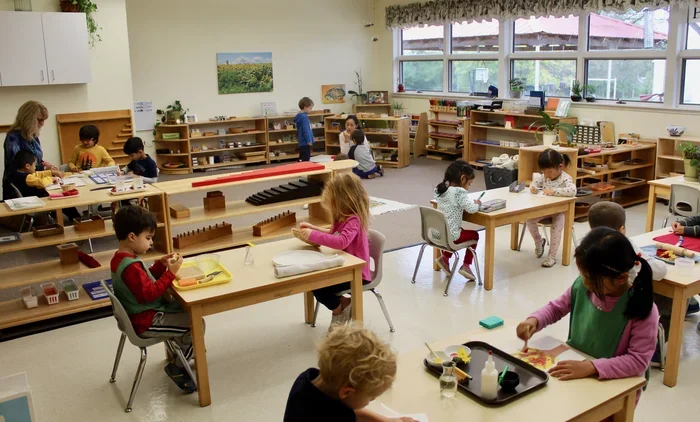
Montessori education is a child-centered learning approach developed by Dr. Maria Montessori that focuses on hands-on, self-directed exploration. It builds independence, creativity, and a lifelong love of learning through carefully prepared environments and mixed-age classrooms. This guide covers everything from core principles to practical benefits, helping parents and educators understand why Montessori education works so well.
You have probably heard the term Montessori education thrown around a lot lately. Maybe you saw a Montessori school in your neighborhood or a friend raved about how much their child loves learning in a Montessori classroom. But what exactly is Montessori education, and why is it gaining so much popularity?
Montessori education is a unique approach to learning that puts the child at the center of everything. Instead of a teacher standing at the front of the room lecturing, kids guide their own learning journey. They explore, touch, and discover at their own pace. This method was developed over a century ago by Dr. Maria Montessori, an Italian physician and educator. Today, Montessori schools exist in more than 100 countries around the world.
In this article, we will break down everything you need to know about Montessori education. We will cover the core principles, how a Montessori classroom works, the benefits for children, and whether this approach might be the right fit for your family. Whether you are a parent, teacher, or simply curious, this guide has you covered.
Key Takeaways
- Child-Led Learning: Montessori education lets children choose their activities and learn at their own pace.
- Hands-On Approach: Kids use special materials to explore concepts through touch, movement, and discovery.
- Prepared Environment: Classrooms are designed to be safe, inviting, and full of learning opportunities.
- Mixed-Age Groups: Children of different ages learn together, building teamwork and mentorship skills.
- Real-Life Skills: Practical life activities like cooking and cleaning are part of the daily learning routine.
- Long-Term Benefits: Montessori education builds confidence, independence, and problem-solving abilities that last a lifetime.
📑 Table of Contents
- What Is Montessori Education?
- Core Principles of Montessori Education
- How a Montessori Classroom Works
- Benefits of Montessori Education
- Montessori Education at Home
- Montessori Education vs. Traditional Education
- Is Montessori Education Right for Your Child?
- Common Misconceptions About Montessori Education
- Final Thoughts on Montessori Education
What Is Montessori Education?
Montessori education is a child-centered learning approach that respects each child as an individual. It is based on the idea that children are naturally curious and eager to learn. The role of the teacher is not to lecture but to guide. They observe each child and introduce materials and activities that match the child’s interests and developmental stage.
This approach is very different from traditional education. In a traditional classroom, all students follow the same lesson at the same time. In Montessori education, children work independently or in small groups. They pick activities from a carefully curated selection. This freedom within limits is one of the hallmarks of the Montessori method.
The Origins of Montessori Education
Dr. Maria Montessori opened the first Montessori school in 1907 in Rome, Italy. She called it Casa dei Bambini, which means “Children’s House.” The children she worked with were from low-income families. Dr. Montessori noticed that when given the right tools and environment, these children learned remarkably fast. They were engaged, focused, and happy.
Her observations led to a whole new philosophy of education. She believed that children learn best through hands-on experience. She designed special Montessori materials to support this belief. Over time, her method spread across Europe and eventually around the globe. Today, Montessori education is respected worldwide for its effectiveness.
Core Principles of Montessori Education
The Montessori philosophy rests on several key principles. These principles guide everything that happens in a Montessori classroom. Let us break them down.
Respect for the Child
Every child is treated with dignity and respect in Montessori education. This means teachers never interrupt a child’s work. They do not force activities on children who are not interested. Instead, they observe and support. This respect builds trust and helps children feel safe to explore.
Independence and Freedom
One of the most important ideas in Montessori education is that children should learn to do things on their own. In a Montessori classroom, children choose their own activities. They decide how long to spend on each one. They learn to make choices and take responsibility for their decisions. This self-directed learning builds confidence and problem-solving skills.
The Prepared Environment
A prepared environment is at the heart of Montessori education. The classroom is designed with the child in mind. Everything is within reach. Materials are organized neatly on low shelves. The furniture is sized for children. The environment is calm, warm, and inviting. This thoughtful setup reduces distractions and encourages deep focus.
Hands-On Learning
Montessori education believes that children learn best by doing. Rather than just listening or watching, kids manipulate objects, build things, and explore with their senses. The Montessori materials are specifically designed to teach one concept at a time. For example, children might use wooden blocks to learn about math or sandpaper letters to learn about reading.
How a Montessori Classroom Works
Walking into a Montessori classroom feels very different from a traditional school room. There are no rows of desks facing a chalkboard. Instead, you will see children moving around the room, choosing activities, and working at tables or on mats on the floor. The teacher moves quietly between them, offering guidance when needed.
Mixed-Age Groupings
One of the most distinctive features of Montessori education is the mixed-age classroom. Children of different ages learn together, usually in three-year spans. For example, a primary classroom might have children ages 3 to 6. This setup has many benefits:
- Younger children learn from older peers.
- Older children develop leadership skills by helping younger ones.
- Children feel less pressure because they are not compared to same-age classmates.
- The classroom feels more like a family than a competition.
Montessori Materials
The materials used in Montessori education are truly special. Each one is designed to teach a specific concept. They are made from natural materials like wood, metal, and glass. They are beautiful, which invites children to use them. And they are self-correcting, which means children can spot their own mistakes without needing a teacher to point them out.
Some common examples of Montessori materials include:
- Pink Tower: A set of pink wooden cubes that teach size and dimension.
- Sandpaper Letters: Letters textured with sandpaper that help children learn the alphabet by touch.
- Golden Beads: Beads used to teach math concepts like addition and subtraction.
- Practical Life Tools: Kid-sized brooms, pitchers, and utensils that teach everyday skills.
The Role of the Montessori Teacher
In Montessori education, the teacher is not the center of attention. Instead, the teacher acts as a guide and observer. They carefully watch each child and introduce new materials when the child is ready. They do not force a lesson. They wait for the right moment. This approach respects the child’s natural curiosity and developmental timeline.
Benefits of Montessori Education
Parents often wonder whether Montessori education really makes a difference. The answer is yes. Research and decades of experience show that children in Montessori schools develop a wide range of benefits that go far beyond academics.
Builds Independence
Because children make their own choices in a Montessori classroom, they learn to be independent from an early age. They figure out how to complete tasks, clean up after themselves, and manage their time. These skills serve them well throughout their lives.
Encourages a Love of Learning
In traditional education, learning can sometimes feel like a chore. In Montessori education, it feels like play. Children are naturally drawn to the hands-on materials and the freedom to explore. This early positive experience with learning creates a lifelong love of discovery.
Develops Social Skills
The mixed-age classroom in Montessori education naturally fosters social development. Children learn to share, cooperate, and resolve conflicts. They practice empathy when they help younger classmates. They build communication skills through daily interactions.
Supports Diverse Learners
Montessori education works well for all types of learners. Whether a child is gifted, has learning challenges, or falls somewhere in between, the individualized approach meets them where they are. The self-paced learning model means no child is left behind or held back.
Enhances Creativity and Critical Thinking
Because children are encouraged to explore and make choices, Montessori education nurtures creativity. There is no single “right way” to use the materials. Children experiment, imagine, and think critically. These skills are essential in today’s rapidly changing world.
Montessori Education at Home
You do not need to enroll your child in a Montessori school to benefit from the Montessori method. Many parents bring Montessori principles into their homes. This is sometimes called the “Montessori approach at home.”
Creating a Montessori-Inspired Space
Start by setting up a few key areas in your home. A low shelf with a few carefully chosen toys or activities can work wonders. Keep things simple and uncluttered. Let your child access materials easily. The goal is to create a calm space that invites exploration.
Encouraging Practical Life Skills
One of the easiest ways to bring Montessori education principles into your home is through practical life activities. Let your child help with cooking, cleaning, or gardening. These activities build fine motor skills, concentration, and a sense of responsibility. They also make children feel capable and valued.
Observing Your Child
Dr. Montessori taught parents and teachers to observe children carefully. Watch what your child is drawn to. Notice what holds their attention. Use these observations to guide their activities. This simple practice is at the core of the Montessori philosophy.
Montessori Education vs. Traditional Education
It is helpful to compare Montessori education with traditional education to see the differences clearly. Here is a quick comparison:
| Aspect | Montessori Education | Traditional Education |
|---|---|---|
| Learning Pace | Child-led, self-paced | Teacher-led, uniform pace |
| Role of Teacher | Guide and observer | Lecturer and director |
| Classroom Setup | Child-sized, prepared environment | Standard desks and chairs |
| Age Grouping | Mixed-age groups | Same-age groups |
| Learning Style | Hands-on, tactile materials | Textbooks and worksheets |
| Assessment | Observation and portfolios | Grades and tests |
Neither approach is perfect for every child. But many parents find that Montessori education offers a more nurturing and individualized experience. The best choice depends on your child’s personality, needs, and learning style.
Is Montessori Education Right for Your Child?
Every child is different, and Montessori education is not a one-size-fits-all solution. However, it tends to work wonderfully for children who are curious, hands-on learners. If your child loves to explore, touch, and experiment, they may thrive in a Montessori classroom.
Children who need a lot of structure and external direction may take a little time to adjust. The freedom in a Montessori school can feel overwhelming at first. But with patience and support, most children adapt beautifully. The key is to visit a few Montessori schools near you and see how your child responds to the environment.
It is also worth noting that Montessori education is not just for preschoolers. Many Montessori schools offer programs through elementary, middle school, and even high school. The principles of self-directed learning and hands-on exploration grow with the child.
Common Misconceptions About Montessori Education
There are several myths about Montessori education that can confuse parents. Let us clear a few of them up.
Myth 1: Montessori is only for wealthy families. While some Montessori schools can be expensive, there are also public Montessori programs and affordable options available. The Montessori method itself is not about money. It is about respecting children and giving them the right tools to learn.
Myth 2: Montessori is too unstructured. On the contrary, Montessori education is very structured. The structure comes from the prepared environment, the routine, and the guidance of the teacher. Children have freedom within clear boundaries.
Myth 3: Children in Montessori do not learn academics. This is far from the truth. Montessori education covers all academic subjects including reading, math, science, and geography. The difference is that children learn these subjects through hands-on exploration rather than rote memorization.
Final Thoughts on Montessori Education
Montessori education is more than just a teaching method. It is a philosophy that honors the potential of every child. By creating a prepared environment and trusting children to lead their own learning, the Montessori approach builds confident, curious, and capable individuals. Whether you choose a full Montessori school or simply bring some Montessori principles into your home, the benefits are real and lasting.
If you want to dive deeper into creative learning strategies, you might also enjoy exploring similes for education, which can help children express ideas in fun and vivid ways. Similarly, metaphors for education are a wonderful tool for making abstract concepts more concrete and engaging for young learners. For a broader look at language and expression in learning, check out idioms for education to see how figurative language can enrich your child’s educational journey.
The most important thing you can do is to stay curious and keep exploring what works best for your child. Montessori education offers a beautiful foundation for that journey.
Frequently Asked Questions
What age can a child start Montessori education?
Children can start Montessori education as early as 18 months old. Most Montessori schools offer programs for toddlers, preschoolers, and elementary-age children. The earlier a child begins, the more they benefit from the Montessori method‘s focus on hands-on exploration and independence.
Is Montessori education only for preschoolers?
No, Montessori education extends well beyond preschool. Many Montessori schools offer elementary and even middle school programs. The core principles of self-directed learning and hands-on materials apply at every age level.
Do Montessori children do well in traditional schools later?
Yes, research shows that children who attend Montessori schools often transition well to traditional settings. They tend to have strong problem-solving skills, independence, and a love of learning. These qualities help them adapt to new environments with ease.
How is a Montessori teacher trained?
A Montessori teacher completes specialized training beyond standard teaching certification. They learn the Montessori philosophy, how to observe children, and how to use Montessori materials effectively. This training ensures they can guide each child’s unique learning path.
Can I use Montessori education techniques at home without a formal Montessori school?
Absolutely. Many parents apply Montessori education principles at home without enrolling in a Montessori school. Simple steps like creating a child-friendly space, offering hands-on activities, and observing your child’s interests can bring the Montessori method into daily family life.
Are Montessori schools expensive?
The cost of Montessori education varies widely. Some private Montessori schools can be pricey, but there are also public Montessori programs that are free. The key is to research options in your area. Many communities offer affordable or sliding-scale Montessori schools to make this approach accessible to all families.


