
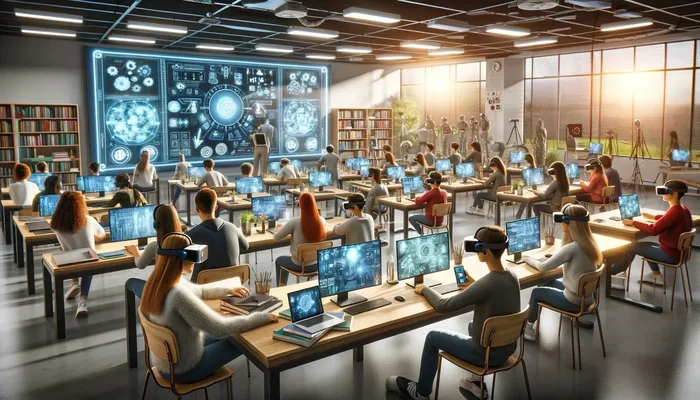
Why is AI good for education? It personalizes learning, saves teachers time, and boosts student engagement like never before. AI-powered tools adapt to each student’s pace, provide instant feedback, and make classrooms smarter. This guide covers the top benefits, real-world examples, and what the future holds for AI in education.
Artificial intelligence is reshaping the way we teach and learn. From personalized lesson plans to automated grading, AI in education is no longer a futuristic idea. It is happening right now in classrooms around the world. But what makes AI good for education so powerful? And how does it actually help students and teachers every day?
The answer is simpler than you might think. AI-powered learning tools give every student a custom experience. They adjust to different skill levels, offer instant feedback, and keep learners engaged. At the same time, teachers get back precious time to focus on what matters most — connecting with their students. In this article, we will explore the many ways AI transforms learning, share real examples, and look at what comes next for educational technology.
Key Takeaways
- Personalized Learning: AI tailors lessons to each student’s pace and style, improving learning outcomes.
- Teacher Support: AI handles grading, planning, and feedback so teachers can focus on teaching.
- Smart Classrooms: Tools like AI tutors and chatbots make learning more interactive and accessible.
- Better Engagement: Students stay motivated with adaptive content and instant responses.
- Future-Ready Skills: Using AI in schools prepares students for a tech-driven world.
- Challenges Exist: Privacy, equity, and over-reliance on tech need careful attention.
📑 Table of Contents
What Does AI Mean for Education?
AI in schools refers to using smart computer systems to support teaching and learning. These systems can analyze data, recognize patterns, and respond to individual needs. Think of it as a teaching assistant that never sleeps and always knows what each student needs.
Not long ago, classrooms relied mostly on one-size-fits-all lessons. A teacher would lecture, assign homework, and grade tests the same way for everyone. But every student learns differently. Some grasp concepts quickly. Others need more time and practice. AI for education bridges that gap by adapting to each learner in real time.
The rise of education technology trends has made this possible. Schools now use laptops, tablets, and cloud platforms alongside traditional tools. AI layers intelligence on top of all of this. It turns static content into dynamic, responsive experiences. The result? Students stay curious, and teachers stay energized.
How AI Supports Modern Classrooms
Machine learning education tools can track how a student answers questions over time. They notice patterns — maybe a student struggles with fractions but excels at geometry. The system then adjusts the difficulty and type of content it offers. This kind of adaptive learning was impossible at scale before AI arrived.
Teachers also benefit enormously. Instead of spending hours on repetitive tasks, they can use AI to handle logistics. Grading multiple-choice tests? Done in seconds. Tracking attendance? Automatic. Sending reminders about upcoming deadlines? Instant. All of this frees teachers to do what they do best — inspire and guide.
How AI Creates Personalized Learning Experiences
One of the biggest reasons AI is good for education is personalization. Every student brings unique strengths, weaknesses, and interests to the classroom. Traditional teaching often cannot keep up with that diversity. AI-powered learning tools change the game entirely.
Adaptive Learning Paths
Imagine a math lesson where the difficulty changes based on how well you perform. Get five questions right, and the system moves you forward. Struggle with a concept? It offers extra practice and simpler explanations. That is adaptive learning in action.
Platforms like Khan Academy and DreamBox already use this approach. They analyze responses in real time and adjust the path for each student. No one gets left behind, and no one gets bored. Learning outcomes improve because students work at their own pace.
Instant Feedback and Corrections
Waiting days for a teacher to grade an essay can feel like forever. AI-driven feedback changes that. Students can submit writing, coding exercises, or quizzes and receive detailed comments within seconds. They know exactly what to fix and how to improve.
This does not replace the teacher. It supports them. The feedback loop becomes faster, which means students correct mistakes while the material is still fresh. Over time, this builds confidence and stronger skills.
Engaging Content That Sticks
Let us be honest — not every student loves traditional textbooks. AI in education brings content to life. Interactive simulations, gamified lessons, and smart quizzes keep students engaged. When learning feels like play, retention goes up.
For example, language learning apps use AI to adjust conversations based on your level. Science platforms simulate experiments you cannot do in a regular classroom. These experiences make digital education exciting and memorable.
How AI Helps Teachers Work Smarter
Teaching is one of the most demanding jobs in the world. Educators juggle lesson planning, grading, parent communication, and classroom management — all at once. AI for teachers lightens that load in powerful ways.
Automated Grading and Assessment
Grading is one of the most time-consuming parts of teaching. AI-powered tools can grade multiple-choice tests, fill-in-the-blank quizzes, and even short-answer responses. Some platforms can even evaluate written paragraphs for structure and clarity.
This does not mean teachers stop grading entirely. It means they spend less time on repetitive tasks and more time on meaningful interactions. A teacher who saves two hours on grading can use that time to help a struggling student one-on-one.
Lesson Planning Made Easier
Creating fresh, engaging lesson plans every week takes serious effort. AI tools can suggest activities, generate worksheets, and even draft lesson outlines based on curriculum goals. Teachers can then customize these suggestions to fit their unique classroom.
Think of AI as a brainstorming partner. It does not do all the thinking. But it gives teachers a strong starting point. That means less late-night planning and more time for rest and creativity.
Tracking Student Progress
Keeping tabs on every student’s progress is tough in a class of 30 or more. AI analytics do it effortlessly. They flag students who are falling behind, highlight topics the whole class struggles with, and suggest interventions.
Teachers get a dashboard with clear insights. No more guessing. No more waiting for report cards to spot problems. Early warnings mean early support — and that changes lives.
For educators looking to deepen their understanding of how language shapes the classroom, our guide on idioms for teaching offers valuable insights into using figurative language to enhance communication with students. Similarly, exploring idioms for teachers can help educators connect with students through relatable, everyday expressions that make lessons more memorable.
AI-Powered Tools That Are Changing Classrooms
The educational technology landscape is growing fast. New tools appear every year, each promising to make learning better. Here are some of the most impactful categories of AI-powered tools in use today.
Intelligent Tutoring Systems
Intelligent tutoring systems act like a personal tutor for every student. They know what the student has mastered and what they still need to learn. The system adjusts explanations, offers hints, and presents problems at just the right level.
Research shows that students using these systems often outperform peers using traditional methods alone. The key advantage is the one-on-one attention that would be impossible for a single teacher to provide to every student all day long.
AI Chatbots and Virtual Assistants
Many schools now use AI chatbots to answer student questions after hours. A student stuck on homework at 10 PM can get instant help. These bots do not give away answers — they guide students toward understanding.
Virtual assistants also help with administrative tasks. They can answer questions about school schedules, deadlines, and resources. This reduces the burden on school staff and gives students immediate support whenever they need it.
Content Generation Tools
AI can create practice quizzes, flashcards, summaries, and study guides from any topic or textbook. Teachers save hours of prep time, and students get customized study materials tailored to their current unit.
Some tools even generate visual aids, diagrams, and simplified explanations for complex topics. This makes AI-driven education more inclusive, helping students with different learning styles access the same material.
Accessibility and Inclusion
AI for students with disabilities is a game-changer. Text-to-speech tools help visually impaired students read content. Speech-to-text assists those who struggle with writing. Real-time translation breaks language barriers for non-native speakers.
These tools ensure that every student, regardless of ability or background, can participate fully. Inclusive education becomes more achievable when smart technology removes barriers that were once hard to overcome.
The Benefits of AI for Students
So what does all of this mean for the students themselves? The benefits of AI in schools go far beyond convenience. They touch every part of the learning journey.
- Confidence boost: Students learn at their own pace without feeling rushed or left behind.
- Deeper understanding: Instant feedback helps students correct mistakes before they become habits.
- Greater independence: AI tools teach students how to find answers and solve problems on their own.
- Higher engagement: Interactive and adaptive content keeps students interested and motivated.
- Future readiness: Using AI tools in school prepares students for workplaces that rely on technology.
When students feel supported and challenged at the right level, they thrive. AI-powered education makes that possible for every learner, not just those in well-funded schools.
For those interested in how figurative language enhances communication in educational settings, check out our article on metaphors for education to discover how creative language use can make lessons more vivid and impactful.
Challenges and What to Watch For
AI in education is not perfect. There are real challenges that schools, parents, and policymakers must address. Being aware of these helps us use AI wisely and responsibly.
Data Privacy and Security
AI tools collect a lot of data about how students learn. That data can include names, answers, time spent on tasks, and even behavioral patterns. Schools must ensure this information is stored securely and used ethically. Clear privacy policies and parental consent are essential.
Equity and Access
Not every school has the budget for the latest AI-powered tools. There is a real risk that wealthy schools get smarter technology while underfunded schools fall further behind. Governments and organizations must work to close this gap so that AI benefits for students reach everyone.
Over-Reliance on Technology
AI is a tool, not a replacement for human teachers. The best classrooms blend technology with genuine human connection. Students still need empathy, encouragement, and real-world mentorship. AI should enhance teaching, not take it over.
Quality and Accuracy
Not all AI education tools are created equal. Some produce inaccurate content or offer shallow explanations. Schools must vet tools carefully and choose platforms backed by solid research and proven learning outcomes.
The Future of AI in Education
The next few years will bring even more exciting changes. Here is what we can expect from the future of education powered by AI.
- Fully personalized curricula: AI will design entire learning paths tailored to each student’s goals and pace.
- Emotion-aware systems: Tools will detect frustration or boredom and adjust content in real time.
- Global classrooms: AI translation and tutoring will connect students across countries and languages seamlessly.
- Teacher AI assistants: Every teacher will have a dedicated AI co-pilot for planning, grading, and student support.
- Lifelong learning: AI-driven education will extend beyond schools into workplaces and adult learning programs.
The potential is enormous. But the key to unlocking it is thoughtful implementation. Schools must invest in training, infrastructure, and ethical guidelines. Teachers must feel empowered, not threatened, by new technology. Students must stay at the center of every decision.
When we get this balance right, AI transforms learning in ways we are only beginning to imagine. The question is no longer whether AI belongs in education. It is how we can use it to serve every learner better.
Exploring how figurative language enriches educational communication can also complement your understanding of AI-enhanced teaching methods. Our piece on similes for education provides excellent examples of how creative language tools work alongside technology to make learning more engaging and relatable for students of all ages.
Conclusion
Why is AI good for education? Because it makes learning personal, efficient, and accessible for everyone. From adaptive learning paths to automated grading, AI gives teachers superpowers and students the support they deserve. The technology is not here to replace educators — it is here to amplify their impact.
AI in education is still evolving, and the best is yet to come. Schools that embrace these tools thoughtfully will see better learning outcomes, happier students, and more inspired teachers. The transformation has already begun, and the future looks brighter than ever.
If you are a teacher, parent, or student, now is the time to explore what AI-powered learning can do for you. Start small. Try one new tool. See the difference it makes. You might be surprised at how quickly AI changes the classroom for the better.
Frequently Asked Questions
How does AI improve the learning experience for students?
AI improves learning by creating personalized paths for each student. It adjusts difficulty in real time, provides instant feedback, and offers engaging content. This means students work at their own pace and get help exactly when they need it.
Can AI replace teachers in the classroom?
No. AI is a powerful tool, but it cannot replace the empathy, creativity, and human connection that teachers bring. AI handles repetitive tasks so teachers can focus on mentoring, inspiring, and guiding students through real challenges.
What are the best AI tools for education right now?
Popular tools include Khan Academy, DreamBox, ChatGPT for education, and Google Gemini. These platforms offer tutoring, lesson support, and adaptive learning features. The best tool depends on the subject, age group, and learning goals.
Is AI in education safe for children’s privacy?
Most reputable platforms follow strict privacy laws like COPPA and FERPA. However, parents and schools should always review privacy policies. Choosing tools from trusted companies and limiting data sharing helps keep children safe.
How does AI help students with disabilities?
AI offers text-to-speech, speech-to-text, real-time translation, and adaptive interfaces. These tools remove barriers for students with visual, hearing, or cognitive challenges. They make inclusive education more achievable than ever before.
What should schools look for when choosing AI tools?
Schools should check for research-backed results, strong privacy protections, ease of use, and teacher support. The tool should improve learning outcomes without adding complexity. Free trials and pilot programs help schools test before committing.


