
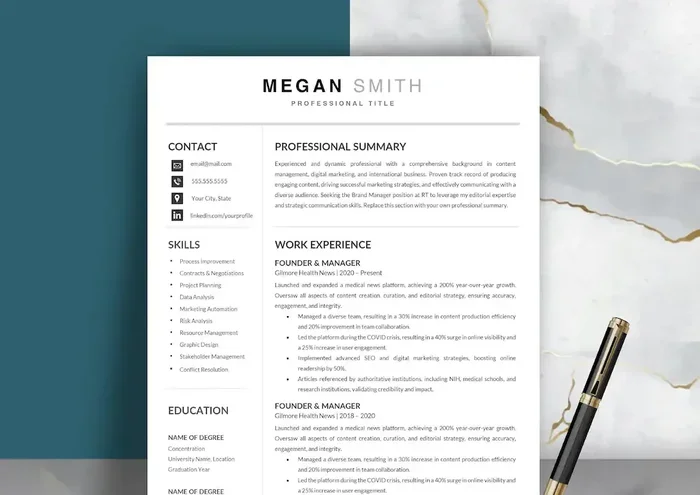
What to put in the education section of resume depends on your academic background and career goals. You should always include your degree, institution name, graduation date, and relevant honors. This guide covers every detail you need, from formatting tips to common mistakes, so you can build a strong education section that grabs attention.
When you are building a resume, the education section might seem like a small detail. But it carries a lot of weight. What to put in education section of resume is a question that trips up many job seekers. Whether you are a fresh graduate or a seasoned professional, getting this section right can make or break your application.
The education section of your resume tells employers about your academic background. It shows them what you know, what you have achieved, and how committed you are to learning. A well-written education section can open doors. A weak one can close them before you even get a chance to speak.
In this guide, we will walk you through everything you need to know. We will cover what to include, how to format it, and common mistakes to avoid. By the end, you will have a clear picture of how to make your education section shine. Let us get started.
Key Takeaways
- Always include your degree, institution, and graduation date: These are the three non-negotiable elements every employer expects to see.
- Add GPA and honors only if they are strong: A 3.5+ GPA or dean’s list recognition adds real value to your resume.
- Place the education section above experience for fresh graduates: When you lack work history, your education leads the way.
- Use reverse chronological order: List your most recent degree first to keep things clear and professional.
- Avoid common mistakes like listing every course you ever took: Focus on what is relevant and impactful.
- Tailor the section to each job: Highlight coursework, projects, and skills that match the job description.
- Keep formatting clean and consistent: Use the same font, spacing, and style throughout your resume.
📑 Table of Contents
- Why the Education Section Matters
- What to Include in Your Education Section
- How to Format the Education Section on Your Resume
- Common Mistakes to Avoid
- Tips to Make Your Education Section Stand Out
- Education Section Examples You Can Follow
- Expert Insights on Education Section Best Practices
- Conclusion
Why the Education Section Matters
Many people focus all their attention on the work experience section. They forget that the education section plays a big role too. Hiring managers often scan this section early in the review process. It helps them quickly gauge your qualifications and academic foundation.
Your education tells a story. It shows your dedication, your ability to learn complex topics, and your commitment to personal growth. For entry-level candidates especially, this section can carry more weight than any work experience you have. That is why knowing what to put in the education section of resume is so important.
Consider this: two candidates apply for the same job. Both have similar work experience. One has a strong education section that highlights relevant degrees, honors, and coursework. The other has a bare-bones list with just a degree name. Which one do you think stands out more? The answer is obvious.
What Hiring Managers Look For
Recruiters and hiring managers have specific things they scan for in the education section. Understanding these expectations helps you tailor your resume effectively. Here is what they typically look for:
- Degree type and major: This tells them if you have the right academic background.
- Institution name: A well-known school can add credibility, but any accredited institution counts.
- Graduation date or expected date: This helps them understand your timeline and availability.
- GPA: Only include this if it is 3.0 or higher. A strong GPA signals academic excellence.
- Honors and awards: Dean’s list, cum laude, or scholarships show you went above and beyond.
- Relevant coursework: For recent graduates, this bridges the gap between education and the job.
When you understand what employers want, you can build an education section that speaks directly to their needs. This is the first step in mastering what to put in education section of resume for any job application.
What to Include in Your Education Section
Now let us get into the specifics. What exactly should you write in this section? The answer depends on your situation. A recent college graduate has different needs than a mid-career professional. But there are core elements that everyone should include.
Degree and Institution Name
This is the foundation of your education section. Always list your degree title and the full name of your institution. For example:
- Bachelor of Science in Computer Science, University of California, Berkeley
- Associate of Arts in Business Administration, Community College of Denver
- Master of Business Administration, Harvard Business School
Do not shorten the institution name unless it is widely recognized. Use the official name to avoid confusion. This is a key part of what to put in the education section of resume that many people overlook.
Graduation Date and Year
Include your graduation year prominently. If you have not yet graduated, write “Expected May 2025” or the appropriate month and year. This gives employers a clear timeline.
Some people wonder whether to include the month and year or just the year. Here is a quick tip:
- Include the month and year if you graduated recently. It shows precision.
- Year only is fine if you graduated many years ago. It keeps the section clean.
GPA and Academic Honors
Your GPA can be a powerful addition, but only when it works in your favor. Here are some guidelines:
- Include your GPA if it is 3.0 or higher on a 4.0 scale.
- Mention honors like cum laude, magna cum laude, or summa cum laude.
- List dean’s list or chancellor’s list recognitions if you earned them.
- Leave out GPA if it is below 3.0 and you have several years of work experience.
Remember, the goal is to present yourself in the best light without exaggerating. Honesty always wins in the long run.
Relevant Coursework and Projects
This is especially valuable for recent graduates or career changers. If you took courses that directly relate to the job you are applying for, list them. This shows employers you have the right knowledge base.
For example, if you are applying for a marketing role and took a digital marketing course, include it. Keep the list to 3-5 courses that are most relevant. Do not dump your entire transcript on the resume. That is a common mistake we will cover later.
Similarly, academic projects can demonstrate hands-on skills. A capstone project, a research paper, or a group presentation can all be listed. These show you can apply classroom knowledge to real-world situations.
How to Format the Education Section on Your Resume
Formatting matters just as much as content. A cluttered or messy education section can hurt your resume. A clean, well-organized section makes it easy for hiring managers to scan and absorb the information quickly.
Reverse Chronological Order
Always list your education in reverse chronological order. This means your most recent degree comes first. This is the standard format that recruiters expect. It makes logical sense and keeps things simple.
Here is an example of correct order:
- Master of Business Administration, 2023
- Bachelor of Science in Marketing, 2021
- Associate of Arts in General Studies, 2019
This format is part of every good education resume format guide. It keeps your resume professional and easy to follow.
Education Section Placement
Where should the education section go on your resume? The answer depends on your experience level:
- Fresh graduates: Place education above experience. Your academic background is your strongest asset right now.
- Mid-career professionals: Place education below experience. Your work history carries more weight.
- Senior professionals: Keep education brief and at the bottom. Focus on your career achievements.
Getting the placement right ensures that the most relevant information stands out. This is a simple but powerful way to improve your resume’s impact.
Consistent Formatting
Use the same font, size, and spacing throughout your education section. If your experience section uses bullet points, use bullet points here too. Consistency creates a polished, professional look.
Keep each entry to two or three lines maximum. You want enough detail to be informative, but not so much that it becomes overwhelming. This balance is key to writing a resume that actually gets read.
Common Mistakes to Avoid
Even well-intentioned job seekers make mistakes in the education section. These errors can hurt your chances. Here are the most common ones to watch out for.
Listing Every Single Course
Your resume is not a transcript. Do not list every course you have ever taken. This clutters the section and distracts from what really matters. Instead, pick the 3-5 most relevant courses and highlight those.
Including Irrelevant Education
If you have a degree in philosophy but are applying for a software engineering role, you do not need to list every philosophy course. Focus on what connects to the job. Your educational background resume should always serve the job you are targeting.
Forgetting to Include Online Courses and Certifications
In today’s job market, online courses and professional certifications carry real weight. If you completed a relevant course on Coursera, Udemy, or LinkedIn Learning, include it. These show initiative and a commitment to continuous learning.
Using Vague or Incomplete Information
Do not write “Attended University of Texas” if you graduated from there. Write the degree, the full name, and the year. Vague information raises red flags and can make employers question your attention to detail.
Overlooking the Power of Language in Your Resume
How you describe your education matters just as much as what you include. Using strong, descriptive language can make your achievements pop. Consider exploring education idioms to find expressive ways to describe your academic journey. Similarly, similes for education can help you craft vivid comparisons that make your bullet points more memorable. And for deeper creative inspiration, metaphors for education can help you frame your accomplishments in a compelling way. These language tools are not just for English class, they can elevate your resume writing too.
Tips to Make Your Education Section Stand Out
Now that you know what to include and what to avoid, let us talk about how to make your education section truly stand out. These tips will help you go from good to great.
Tailor It to Each Job Application
One size does not fit all. When you apply for a marketing position, highlight your marketing coursework and projects. When you apply for a finance role, emphasize your economics classes and analytical skills. Tailoring shows employers you put thought into your application.
This is one of the most effective resume writing tips you can follow. It takes a little extra time, but the results are worth it.
Use Strong Action Words
Even in the education section, action words add energy and impact. Instead of writing “Studied marketing,” write “Completed advanced coursework in digital marketing and consumer behavior.” The second version is much more powerful and descriptive.
Connect Education to Job Requirements
Read the job description carefully. Identify the skills and knowledge the employer wants. Then, show how your education matches those needs. This creates a direct line between what you learned and what the job requires.
For example, if the job asks for data analysis skills, mention your statistics coursework or a data analysis project. This connection makes your education feel relevant and practical.
Add a Skills Subsection
Consider adding a small skills subsection under your education entry. This can include technical skills, languages, or tools you learned during your studies. It adds depth without taking up much space.
For instance, under your degree entry, you might add:
- Skills: Python, SQL, Data Visualization, Statistical Analysis
- Languages: Fluent in Spanish, Conversational in French
This small addition can make a big difference, especially for technical roles.
Keep It Updated
If you earn a new degree, complete a certification, or receive an award, update your resume right away. An outdated education section can make you look careless. Set a reminder to review and refresh your resume every few months.
Education Section Examples You Can Follow
The best way to understand how to build your own education section is to see real examples. Here are a few templates you can adapt to your own situation.
Example 1: Recent Graduate
Bachelor of Science in Computer Science
Massachusetts Institute of Technology
Graduated: May 2024 | GPA: 3.8/4.0
Relevant Coursework: Machine Learning, Software Engineering, Database Systems
Honors: Dean’s List (6 semesters), Cum Laude
Example 2: Mid-Career Professional
Master of Business Administration
University of Michigan, Ross School of Business
Graduated: December 2020
Example 3: Career Changer
Bachelor of Arts in Psychology
University of Michigan
Graduated: May 2018
Relevant Coursework: Research Methods, Cognitive Psychology, Data Analysis
Notice how each example is tailored to the person’s situation. The recent graduate includes GPA and honors. The mid-career professional keeps it brief. The career changer highlights relevant coursework. This is the essence of knowing what to put in the education section of resume for different scenarios.
Expert Insights on Education Section Best Practices
We asked hiring managers and career coaches for their top tips on the education section. Here is what they had to say.
- Keep it concise: “I spend an average of 6 seconds on the initial scan of a resume. Make sure your education section is scannable and easy to find,” says Sarah Mitchell, Senior Recruiter at TechCorp.
- Lead with relevance: “If your education directly connects to the job, put it front and center. Do not bury it at the bottom,” advises James Lee, Career Coach at ResumePro.
- Do not lie: “We verify education claims. Any discrepancy can cost you the job instantly,” warns David Park, HR Director at Global Solutions Inc.
- Include certifications: “Professional certifications can sometimes matter more than degrees, especially in tech and healthcare,” notes Rachel Wong, Talent Acquisition Specialist.
These insights reinforce the importance of getting your education section right. It is not just a formality, it is a strategic part of your resume that can significantly impact your chances.
When you think about what to put in education section of resume, remember this: every piece of information should serve a purpose. If it does not add value or connect to the job, consider leaving it out. Quality always beats quantity.
Also, keep in mind that your resume is a living document. As you grow in your career, your education section will evolve. New degrees, certifications, and achievements will replace older entries. Keep it fresh and relevant at all times.
The education section is your chance to show employers that you have a solid academic foundation. It complements your work experience and skills sections. When all three work together, you get a resume that tells a compelling story and makes a strong impression.
So take the time to get it right. Review the examples, follow the tips, and avoid the mistakes we discussed. Your education section can be a real differentiator in a competitive job market. Use it wisely, and it will work hard for you.
Conclusion
Knowing what to put in the education section of resume is a game-changer for your job search. It is not just about listing your degrees. It is about presenting your academic achievements in a way that connects with employers and supports your overall career story.
Include the right details, format it cleanly, avoid common mistakes, and tailor it to each application. These simple steps will set your resume apart from the pile. Your education is a valuable asset, and your resume should reflect that.
Take what you have learned from this guide and apply it today. Update your resume, refine your education section, and watch your confidence grow as you submit applications. You have got this. Good luck!
Frequently Asked Questions
Should I include my high school education on my resume?
Only include high school education if you are a recent graduate with no college experience. Once you have completed any college degree, leave high school off your resume. Employers are more interested in your higher education and recent achievements.
Where should I place the education section if I have lots of work experience?
If you have extensive work experience, place the education section below your experience. Your career achievements should take center stage. Keep the education section brief and focused on your most relevant degree or certification.
Should I include my GPA if I graduated a long time ago?
Generally, no. If you graduated more than 5 years ago and your GPA was average, it is best to leave it out. Employers care more about your recent skills and experience at that point. Only include GPA if it is exceptionally strong and relevant to the job.
Can I include online courses and certifications in the education section?
Yes, absolutely. Online courses and professional certifications are valuable, especially in fields like technology, marketing, and healthcare. Create a separate “Certifications” section if you have many, or group them under your education entry if there are only a few.
What if I am still pursuing my degree?
List your degree as expected with the expected graduation date. For example, “Bachelor of Science in Nursing, Expected May 2026.” This shows employers you are actively working toward completing your education and gives them a timeline.
How do I handle multiple degrees on my resume?
List each degree separately in reverse chronological order. Include the degree title, institution name, and graduation year for each. If you have many degrees, focus on the ones most relevant to the job you are applying for. You can briefly mention others without going into detail.
=== META TITLE ===
What to Put in the Education Section of Your Resume
=== URL SLUG ===
/what-to-put-in-education-section-of-resume


