
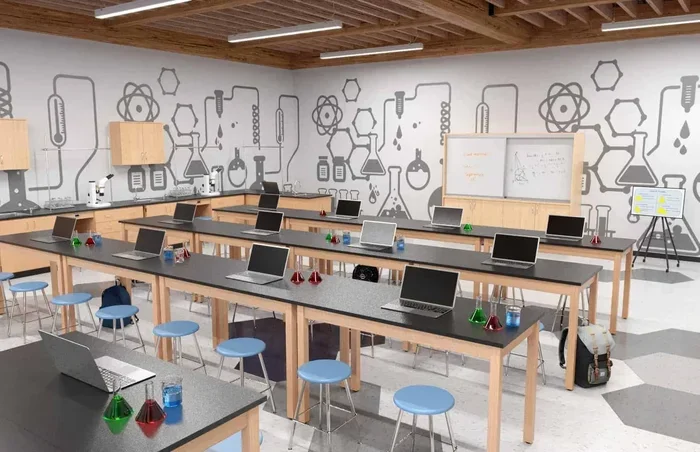
Steam education is a teaching approach that combines science, technology, engineering, arts, and math into one engaging learning experience. It helps students build real-world skills through hands-on activities and creative problem-solving. This guide covers what steam education is, why it matters, and how you can support it today.
Steam education is more than just a buzzword in schools today. It is a powerful way of teaching that brings together five key subjects into one exciting learning journey. If you have ever wondered why some kids light up when they build things or solve puzzles, steam education is the reason behind that spark.
The word steam stands for Science, Technology, Engineering, Arts, and Mathematics. Each of these subjects plays a big role in how we understand the world. When you put them together, you get a teaching method that feels less like a lesson and more like an adventure. This approach helps students think deeply, create boldly, and solve problems with confidence.
In this article, we will explore what steam education really means, why it has become so important, and how it works in real classrooms. You will also learn simple ways to support this style of learning at home or in school. Let us dive in and discover why steam education is changing the way kids grow and learn.
Key Takeaways
- Steam education blends five subjects into one connected learning approach that feels natural and fun.
- Hands-on activities and project-based learning are at the heart of steam education.
- Critical thinking and creativity are two skills that steam education builds at every age.
- Future-ready skills like problem-solving and collaboration prepare students for real-world challenges.
- Parents and teachers can easily support steam learning with simple tools and everyday projects.
- Interdisciplinary learning through steam education breaks down subject walls and sparks deeper understanding.
- Arts integration makes steam education more inclusive and engaging for all types of learners.
📑 Table of Contents
What Is Steam Education?
Steam education is a teaching approach that mixes five core subjects into one connected learning experience. Instead of teaching science, math, or art in separate boxes, steam education weaves them all together. This creates a learning environment where students see how different ideas link up in real life.
The Five Pillars Of Steam Education
Each letter in steam stands for a subject that matters deeply in a child’s growth. Let us look at each one closely.
Science encourages kids to ask questions and explore the world around them. They learn to observe, test ideas, and find answers through experiments. Technology teaches students how to use tools, from simple rulers to computers and coding platforms. Engineering lets kids design, build, and test things like bridges, circuits, or simple machines. Arts bring creativity into the mix, helping students express ideas through drawing, music, writing, or design. Mathematics gives students the logical backbone to measure, calculate, and think in patterns.
When these five subjects work together, students do not just memorize facts. They learn how to think, create, and apply what they know. This is what makes steam education so powerful and different from traditional teaching methods.
How Steam Education Differs From Traditional Teaching
In a traditional classroom, subjects are often taught one at a time. You might study math in the morning and science in the afternoon, with little connection between them. Steam education breaks that pattern. It invites students to use multiple subjects at once to tackle a single challenge.
For example, a steam project might ask students to design a mini garden. They would use science to understand plant needs, math to measure soil and spacing, engineering to build a planter, art to design the layout, and technology to track growth with a simple app. This kind of cross-curricular teaching mirrors how we use knowledge in real life.
Learning through project-based learning also keeps students more engaged. They are not just listening to a lecture. They are doing, building, and creating. This hands-on approach makes learning memorable and meaningful.
Why Steam Education Matters More Than Ever
The world is changing fast. Jobs that exist today may not exist in ten years. New fields like artificial intelligence, green energy, and digital design are growing every day. Steam education prepares students for this ever-changing landscape by building skills that never go out of style.
Building Future-Ready Skills
One of the biggest reasons steam education matters is that it builds future-ready skills. These are abilities that students will need no matter what career path they choose. Skills like problem-solving, critical thinking, communication, and collaboration are all part of the steam learning process.
When students work on a steam project, they face real challenges. They might fail at first, and that is okay. Failing teaches them to try again, adjust their ideas, and keep going. This kind of resilience and grit is something no textbook alone can teach.
Steam education also nurtures innovation in education. It tells students that their ideas matter and that creativity is a valid way to learn. This confidence encourages them to think outside the box and dream bigger.
Meeting The Needs Of All Learners
Not every student learns the same way. Some kids love numbers, while others shine through drawing or building. Steam education reaches all types of learners because it offers many ways to engage with a topic.
A visual learner might enjoy the design and art parts of a project. A hands-on learner might thrive during the building phase. A logical thinker might gravitate toward the math and engineering aspects. Because steam education is so interdisciplinary, every student can find a way in.
This inclusivity is a huge advantage. It means no student feels left out. Everyone has a role to play and a contribution to make.
How Steam Education Works In Real Classrooms
Steam education is not just a theory. It is alive and well in classrooms around the world. Teachers use creative methods to bring these five subjects together in ways that excite students.
Hands-On Learning And Making
The heart of steam education lies in hands-on learning. Students get to touch, build, and experiment. They are not just reading about how things work. They are making things work.
Maker education is a big part of this approach. In a maker space, students might use recycled materials to build a robot, create a simple circuit, or design a bridge out of popsicle sticks. These activities make learning feel like play, and that is exactly the point.
Teachers also use experiential learning to deepen understanding. For instance, a lesson on water cycles might involve building a mini terrarium. Students watch evaporation and condensation happen right before their eyes. This kind of experiential learning sticks with students far longer than reading from a textbook.
Collaborative Group Projects
Steam education thrives on collaborative learning. Students work in small groups to solve problems, share ideas, and build things together. This mirrors how people work in the real world, where teamwork is essential.
In a group project, each student brings a unique strength. One might be great at math, another at drawing, and another at coming up with wild ideas. Together, they create something none of them could have built alone. This builds social skills, empathy, and respect for different ways of thinking.
Connecting Learning To Language And Expression
Steam education also connects deeply to language and expression. When students explain their projects, they practice communication and storytelling. They learn to describe their process, share what they discovered, and present their results clearly.
Figurative language plays a surprising role here too. When a student says their project design was like a puzzle that finally clicked into place, they are using a simile for education to express their thinking. Similarly, when they describe a concept as a bridge between two ideas, they are using metaphors for education to deepen understanding. These language tools help students think more creatively and explain their ideas with clarity.
Building a strong vocabulary around these subjects also helps students grasp complex concepts faster. When they learn idioms for education and related expressions, they connect classroom learning to everyday language in a more natural way.
The Key Benefits Of Steam Education
Steam education offers a wide range of benefits that go far beyond the classroom. Let us look at some of the most important ones.
1. Boosts Critical Thinking
Steam education trains students to think carefully about problems. They learn to ask questions, gather information, and evaluate different solutions. This kind of critical thinking is valuable in every area of life.
2. Sparks Creativity
By including arts in the mix, steam education gives students a creative outlet. They are not just solving problems the same way every time. They are encouraged to find new and original solutions. Creativity in education helps students become flexible thinkers who can adapt to new situations.
3. Makes Learning Fun And Relevant
When students see how what they learn connects to real life, they care more. Steam education makes learning feel relevant and exciting. Students are more likely to remember what they learned when they built it, tested it, or created it themselves.
4. Develops Teamwork Skills
Working in groups teaches students how to listen, share, and compromise. These collaborative skills are essential in almost every career and relationship. Steam projects give students plenty of chances to practice working well with others.
5. Prepares For High-Demand Careers
Many of the fastest-growing jobs today require skills in science, technology, engineering, and math. Adding arts to the mix also opens doors in design, media, and creative industries. Steam education gives students a head start in these high-demand career paths.
How Parents And Teachers Can Support Steam Education
You do not need to be a scientist or an engineer to support steam education. Simple everyday activities can spark the same curiosity and learning that happens in a steam classroom.
Tips For Parents
- Encourage questions. When your child asks “why” or “how,” explore the answer together. Look it up, experiment, or visit a museum.
- Use everyday materials for building. Cardboard boxes, rubber bands, paper clips, and tape can become tools for amazing projects.
- Cook together. Cooking is a perfect steam activity. Kids use math for measuring, science for understanding heat, and art for plating.
- Visit science museums or maker spaces. These places are filled with interactive exhibits that bring steam learning to life.
- Celebrate the process, not just the result. Praise effort, creative thinking, and persistence. This builds a growth mindset.
Tips For Teachers
- Start small. Add one steam element to an existing lesson. For example, ask students to draw a diagram of a science concept.
- Use open-ended questions. Instead of asking for one right answer, ask “What if?” or “How many ways can you solve this?”
- Create a maker corner. Even a small area with basic supplies can become a hub for steam exploration.
- Invite real-world connections. Bring in guest speakers from different fields or plan field trips to local businesses and labs.
- Collaborate with other teachers. Plan steam projects with colleagues from different subjects. A joint history-math-art project can be incredibly engaging.
Common Mistakes To Avoid With Steam Education
While steam education is powerful, there are some common pitfalls that teachers and parents should watch out for.
Mistake 1: Treating arts as an afterthought. Arts are not just decoration in steam education. They are a core pillar that drives creativity and expression. Make sure art time is as valued as math or science time.
Mistake 2: Overcomplicating projects. Steam projects do not need to be fancy or expensive. A simple paper airplane challenge can teach engineering and physics just as well as a robotics kit. Keep it accessible and fun.
Mistake 3: Skipping reflection. After a steam activity, take time to discuss what happened. Ask students what worked, what did not, and what they would try differently. This reflection step is where the deepest learning happens.
Mistake 4: Ignoring student interests. The best steam projects connect to what students already care about. If a student loves music, build a steam project around sound waves and instrument design. When learning aligns with passion, engagement soars.
Conclusion
Steam education is one of the most exciting and effective approaches to learning we have today. It brings science, technology, engineering, arts, and math together in a way that feels natural, fun, and deeply relevant. Through hands-on activities, collaborative projects, and creative problem-solving, students build skills that will serve them for a lifetime.
The beauty of steam education is that it is not limited to classrooms. Parents, caregivers, and community leaders can all play a role in nurturing this style of learning. Whether it is a kitchen experiment, a backyard building project, or a visit to a maker space, every moment of curiosity counts.
If you want to give children the best start in a rapidly changing world, steam education is the path forward. It teaches kids not just what to think, but how to think. And that is a gift that keeps giving for years to come. Start small, stay curious, and watch young minds grow through the power of steam learning.
Frequently Asked Questions
What does steam stand for in education?
Steam stands for Science, Technology, Engineering, Arts, and Mathematics. It is a teaching approach that combines these five subjects into one connected learning experience, helping students see how different areas of knowledge work together in real life.
How is steam education different from stem education?
Stem education covers Science, Technology, Engineering, and Mathematics. Steam education adds Arts to the mix. The inclusion of arts brings creativity, design thinking, and self-expression into the learning process, making it more well-rounded and inclusive for all types of learners.
At what age can children start steam education?
Children can start steam education as early as preschool. Simple activities like building with blocks, sorting objects, or drawing shapes introduce foundational concepts. As kids grow, projects can become more complex, but the core idea of hands-on, connected learning works at every age.
Do schools need expensive equipment to teach steam education?
No, steam education does not require expensive equipment. Many steam activities use everyday materials like cardboard, paper, tape, and recycled items. The focus is on creativity and thinking, not on having the most advanced tools. Even simple supplies can lead to powerful learning moments.
Can steam education help students who struggle with traditional learning?
Yes, steam education can be a game-changer for students who struggle in traditional settings. Because it involves hands-on activities, visual design, and group work, it offers multiple ways to engage with content. Students who feel disconnected from lectures often thrive when they can build, create, and experiment.
How can parents support steam education at home?
Parents can support steam education by encouraging curiosity, providing simple building materials, cooking together, and asking open-ended questions about everyday things. Visiting museums, maker spaces, or even exploring nature are all easy ways to bring steam learning into family time without any special equipment.


