
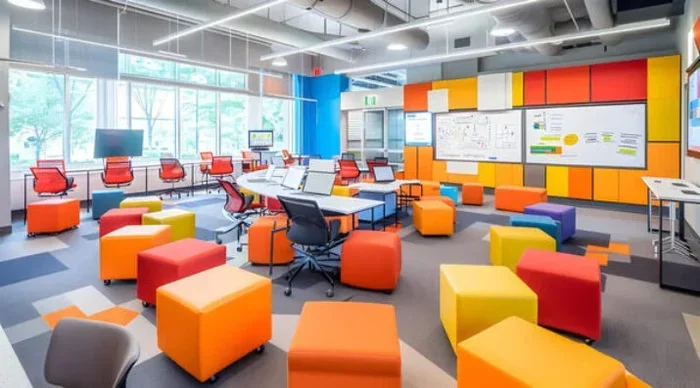
Progressive education is a student-centered approach that prioritizes hands-on learning, critical thinking, and real-world problem-solving over rote memorization. It focuses on the whole child, encouraging collaboration, creativity, and active participation in the learning process. Understanding progressive education helps parents, teachers, and students embrace modern methods that build skills for life.
Imagine a classroom where students are not just sitting quietly at desks, memorizing facts for a test. Instead, they are debating, building, experimenting, and asking big questions. That is the heart of progressive education. It is a teaching philosophy that puts the child at the center of learning. Rather than forcing information into young minds, it invites students to explore, create, and grow in meaningful ways.
So what exactly is progressive education, and why are more people talking about it today? In simple terms, it is an approach to teaching that values experience, curiosity, and real-world skills over rigid curricula and standardized testing. It has deep roots in history but feels more relevant than ever in our fast-changing world. Let us break it all down.
At its core, progressive education is about trusting the learner. It recognizes that every child is different. Some kids learn by seeing. Others learn by touching, listening, or moving. A progressive classroom honors these differences. It gives students the freedom to learn in ways that make sense to them.
Key Takeaways
- Student-Centered Approach: Progressive education puts the learner first, tailoring experiences to individual needs and interests.
- Hands-On and Experiential: Students learn by doing, solving real problems, and engaging with the world around them.
- Critical Thinking Over Memorization: The focus shifts from recalling facts to analyzing, questioning, and creating.
- Collaboration and Social Skills: Group work and democratic classroom practices build teamwork and communication abilities.
- Relevance to Modern Life: Progressive methods prepare students for a rapidly changing world that demands adaptability and creativity.
- Historical Roots: The approach traces back to thinkers like John Dewey and the progressive education movement of the early 20th century.
- Growing Popularity: More schools and families are adopting progressive methods as traditional models fall short of modern needs.
📑 Table of Contents
- What Is Progressive Education?
- Why Progressive Education Matters Today
- Key Principles of Progressive Education
- Progressive Education vs. Traditional Education
- Progressive Education in Practice
- Benefits of Progressive Education
- Challenges and Criticisms of Progressive Education
- How Parents Can Support Progressive Education at Home
- The Future of Progressive Education
- Conclusion
What Is Progressive Education?
The term progressive education refers to a broad movement in teaching that began in the late 1800s and grew strong in the early 1900s. It was a reaction against traditional education. Back then, schools focused heavily on rote memorization, strict discipline, and teacher-led lectures. Students sat in rows. They listened. They repeated. They tested.
Progressive education said, “There has to be a better way.” And it offered one. The philosophy centers on the idea that children learn best through experience. They learn by asking questions, solving problems, and working with others. It is not just about getting the right answer. It is about thinking deeply and learning how to learn.
The Philosophy Behind Progressive Education
The philosophy of progressive education draws from several big ideas in learning theory. One of the most important is constructivism. This is the belief that people build knowledge through their own experiences. You do not just absorb information passively. You actively shape your understanding.
John Dewey, one of the most famous thinkers behind this movement, believed that education should be connected to real life. He argued that schools should not just prepare students for the future. They should be a part of life right now. His ideas still shape classrooms around the world today.
Another key figure is Maria Montessori, who developed a method that lets children lead their own learning. Her approach uses hands-on materials and self-directed activities. Both Dewey and Montessori shared a belief that children are naturally curious. Given the right environment, they will seek out knowledge on their own.
Why Progressive Education Matters Today
You might wonder why progressive education is getting so much attention now. The world has changed a lot since Dewey’s time. Today, we live in an age of technology, rapid change, and complex challenges. The jobs our children will hold may not even exist yet. The problems they will face, from climate change to global health, require creative and critical thinkers.
Traditional education models were designed for a different era. They were built for factories and industrial work. They valued obedience, repetition, and conformity. But the modern world demands something different. It demands people who can think on their feet, collaborate across cultures, and adapt to new situations. Progressive education builds exactly these skills.
Preparing Students for the Future
When we talk about why progressive education matters, the future is front and center. Students today need more than just academic knowledge. They need emotional intelligence, communication skills, and the ability to solve unfamiliar problems. Progressive classrooms focus on all of these areas.
For example, in a progressive classroom, a teacher might present a real-world problem, like reducing waste in the school cafeteria. Students then work together to research the issue, brainstorm solutions, and propose changes. They use math to analyze data. They use writing to make their case. They use art to design posters. Every subject becomes connected and alive.
This kind of learning sticks with students far longer than memorizing a textbook chapter. It teaches them how to think, not just what to think. And that is a skill they will use for the rest of their lives.
Key Principles of Progressive Education
What makes progressive education different from traditional schooling? Several core principles set it apart. Let us look at each one closely.
1. The Child Is at the Center
In a progressive classroom, the student is not a passive receiver. The child is the main actor. Teachers act as guides and facilitators. They observe each student’s interests and strengths. Then they tailor learning experiences accordingly.
This does not mean there is no structure. It means the structure serves the child, not the other way around. A good progressive education program balances freedom with clear expectations. Students know the boundaries, but they also have room to explore.
2. Learning by Doing
Experiential learning is a big part of progressive education. Students learn best when they are actively involved. This might mean building a model bridge in science class. It might mean planting a garden to learn about biology. Or it might mean acting out a historical event in social studies.
When children use their hands and minds together, they understand concepts more deeply. They remember what they have done. They connect new knowledge to real experiences. This is very different from reading about something in a book and answering questions at the end of a chapter.
3. Collaboration and Social Learning
Progressive education strongly values working together. Students often learn in groups. They share ideas, listen to others, and build on each other’s thoughts. This mirrors how people work in the real world. Very few jobs require someone to sit alone all day without talking to anyone.
In a student-led classroom, children also take turns leading discussions and projects. They learn to respect different viewpoints. They practice conflict resolution. They develop empathy. These social-emotional skills are just as important as academic knowledge.
4. Integration Across Subjects
Traditional schools often teach subjects in isolation. You have math time, then reading time, then science time. Progressive education breaks down these walls. It connects subjects together through themes and projects.
For instance, a unit on the ocean might involve reading books about marine life, writing stories from the perspective of a sea creature, studying ocean ecosystems in science, and creating art inspired by underwater scenes. This holistic development approach helps students see how knowledge is interconnected.
5. Focus on Critical Thinking and Problem-Solving
In a progressive classroom, answers are not handed down. Students are encouraged to ask questions and find their own solutions. Teachers might say, “What do you think?” or “How could we test that idea?” This builds critical thinking skills that are essential in every area of life.
Students learn to evaluate information, consider different perspectives, and make reasoned judgments. These abilities are crucial in a world filled with information and misinformation.
6. Emphasis on Real-World Relevance
Progressive education connects learning to the world outside the classroom. Students work on projects that have real impact. They might interview community members, conduct surveys, or present their findings to local leaders. This gives learning purpose and meaning.
When students see that their work matters, they become more engaged and motivated. They understand that education is not just about grades. It is about making a difference.
Progressive Education vs. Traditional Education
It can be helpful to compare progressive education side by side with traditional methods. Both have strengths, and understanding the differences helps parents and educators make informed choices.
| Aspect | Traditional Education | Progressive Education |
|---|---|---|
| Focus | Teacher-centered instruction | Student-centered learning |
| Method | Lectures and memorization | Hands-on activities and exploration |
| Assessment | Standardized tests and grades | Portfolio reviews and project-based evaluation |
| Classroom Structure | Rows of desks, quiet work | Flexible seating, group work |
| Role of Teacher | Lecturer and authority figure | Guide and facilitator |
| Curriculum | Fixed and standardized | Flexible and responsive to student interests |
| Skill Development | Academic knowledge | Academic, social, and emotional skills |
Neither approach is perfect in every way. Traditional education has its strengths, especially in building discipline and foundational knowledge. But progressive education addresses many of the gaps that traditional models leave behind. It prepares students not just for tests but for life.
Progressive Education in Practice
Wondering what progressive education looks like in a real classroom? Let us walk through a day in a progressive elementary school.
In the morning, students gather for a morning meeting. They greet each other, share news, and set goals for the day. This builds a sense of community and belonging. The teacher then introduces a project, such as designing a sustainable garden for the schoolyard.
Over the next few weeks, students research plants, measure garden beds, calculate soil needs, and write proposals to the school principal. They use math, science, reading, and writing skills all in one project. They also learn to present their ideas clearly and work as a team.
Along the way, the teacher uses figurative language to spark imagination. For example, the teacher might use a simile for education to help students compare learning to building a house, brick by brick. Or the teacher might explain a complex idea using a metaphor for education, saying that knowledge is a garden that grows when you water it with curiosity. These teaching tools make abstract concepts feel tangible and fun.
At the end of the project, students present their garden plan to the class and invited parents. They answer questions, defend their choices, and celebrate their hard work. This kind of active learning stays with students long after the project ends.
Benefits of Progressive Education
There are many reasons to embrace progressive education. Here are some of the biggest benefits.
- Deeper Understanding: Students do not just memorize facts. They truly understand concepts and can apply them in new situations.
- Intrinsic Motivation: When learning is engaging and relevant, students want to learn. They do not need constant external rewards or punishments.
- Creativity and Innovation: Progressive classrooms encourage students to think outside the box and come up with original ideas.
- Stronger Social Skills: Group work and collaborative projects help students build communication, empathy, and teamwork abilities.
- Adaptability: Students learn how to handle uncertainty and solve unfamiliar problems. These skills are invaluable in a changing world.
- Confidence and Independence: When students take ownership of their learning, they develop self-reliance and a strong sense of self-worth.
Challenges and Criticisms of Progressive Education
No approach is without its challenges. Progressive education has faced criticism over the years, and it is important to understand these concerns.
1. Lack of Standardization
Critics argue that progressive methods can be too flexible. Without standardized testing, it can be hard to measure student progress. Some parents and policymakers worry that students may miss key foundational skills.
However, many progressive schools use alternative assessments, such as portfolios and presentations, to track growth. These methods often provide a more complete picture of a student’s abilities than a single test score.
2. Requires Skilled Teachers
A progressive classroom demands a lot from teachers. They must be skilled at observing, guiding, and adapting to each student’s needs. This requires strong training and ongoing professional development.
Not all teachers feel prepared for this shift. Traditional teacher training programs often emphasize lecture-based instruction and standardized curricula. Schools that adopt progressive education must invest in supporting their teachers through this transition.
3. Resource and Time Demands
Hands-on projects and experiential learning often require more time, materials, and planning than traditional lessons. Some schools may struggle with limited budgets or tight schedules.
Despite these challenges, many educators and families find that the benefits far outweigh the costs. When students are genuinely engaged and learning deeply, the results speak for themselves.
How Parents Can Support Progressive Education at Home
Progressive education does not stop at the classroom door. Parents play a powerful role in reinforcing these values at home. Here are some practical tips.
- Encourage Curiosity: When your child asks a question, take it seriously. Help them explore the answer together. Visit the library, watch videos, or conduct simple experiments.
- Promote Hands-On Activities: Cooking, building, gardening, and crafting all teach valuable skills. Let your child get messy and make mistakes. These are part of the learning process.
- Ask Open-Ended Questions: Instead of asking “Did you learn something today?” try asking “What did you discover?” or “What surprised you?” This encourages deeper reflection.
- Use Figurative Language to Spark Thinking: Try using a idiom for education to make learning fun at home. For example, you might say “knowledge is power” or “practice makes perfect” to reinforce the value of effort and learning.
- Value the Process Over the Result: Praise your child’s effort, creativity, and persistence, not just their grades. This builds a growth mindset and resilience.
Small changes at home can make a big difference. When children see that their parents value learning and curiosity, they are more likely to embrace progressive education principles in their own lives.
The Future of Progressive Education
As we look ahead, progressive education seems poised to play an even bigger role. Schools around the world are beginning to recognize the limitations of traditional models. Parents are demanding more engaging and meaningful learning experiences for their children.
Technology is also opening new doors. Digital tools, virtual reality, and online collaboration platforms allow for experiential learning on a scale never before possible. Students can connect with peers across the globe, work on shared projects, and access vast amounts of information at their fingertips.
At the same time, the social-emotional side of learning is gaining more attention. Schools are realizing that academic success means little if students do not feel safe, supported, and connected. Progressive education has always understood this connection. It is leading the way in creating learning environments that nurture both the mind and the heart.
The future of education is not about memorizing more facts or taking more tests. It is about developing thoughtful, creative, and compassionate human beings. Progressive education is a powerful path toward that vision.
Conclusion
Progressive education is more than a teaching method. It is a belief that every child deserves a learning experience that is meaningful, engaging, and connected to real life. It values curiosity, collaboration, and critical thinking above all else. In a world that changes faster every day, these skills are not just nice to have. They are essential.
Whether you are a parent, a teacher, or simply someone who cares about the future of learning, understanding progressive education matters. It challenges us to rethink what school can be. It invites us to imagine classrooms where every child feels seen, heard, and inspired.
The ideas behind progressive education are not new. But their importance has never been greater. As we face new challenges and new opportunities, the principles of child-centered, experiential, and collaborative learning will continue to light the way. The question is not whether progressive education matters. It is how soon we can bring its full promise to every learner.
Frequently Asked Questions
What is progressive education in simple terms?
Progressive education is a teaching approach that focuses on the whole child. It values hands-on learning, critical thinking, and real-world experiences over rote memorization and standardized testing. In short, it puts the student at the center of the learning process.
Who founded progressive education?
The progressive education movement was shaped by several key thinkers. John Dewey is often considered the most influential figure. Maria Montessori also made major contributions with her child-centered method. Their ideas laid the foundation for modern progressive education practices.
How is progressive education different from traditional education?
Traditional education tends to be teacher-centered, with lectures and memorization. Progressive education is student-centered, emphasizing exploration, collaboration, and experiential learning. It focuses on deep understanding rather than just covering material for a test.
Is progressive education effective?
Research suggests that progressive education can be very effective, especially in developing critical thinking, creativity, and social skills. However, its success depends on skilled teachers, proper training, and adequate resources. When done well, it produces engaged and capable learners.
Can progressive education be used in all grade levels?
Yes, progressive education principles can be adapted for any age group. From early childhood classrooms to high schools, the core ideas of hands-on learning, student voice, and real-world connections apply at every level. The methods may look different depending on the age group, but the philosophy stays the same.
What role do parents play in progressive education?
Parents are essential partners in progressive education. They can support it by encouraging curiosity at home, valuing the learning process over grades, and staying involved in their child’s school. Using tools like similes for education or idioms for education at home can also make learning fun and relatable for children.


