
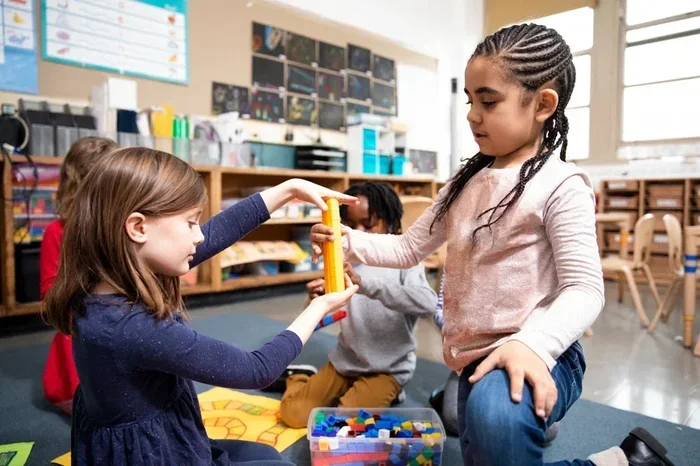
Experiential education is a powerful approach where students learn through direct experience and reflection. It replaces passive listening with active participation, making education more engaging and memorable. This method builds critical thinking, problem-solving skills, and real-world confidence that traditional classrooms often miss.
Key Takeaways
- Hands-on learning: Experiential education puts students at the center of the learning process through direct experience.
- Better retention: Students remember more when they actively participate rather than just listen.
- Real-world skills: This approach builds practical abilities that prepare learners for life beyond school.
- Deeper engagement: Active participation sparks curiosity and motivation in ways traditional methods often cannot.
- Reflective practice: Reflection after experience is a core component that deepens understanding.
- Widely applicable: From classrooms to workplaces, experiential methods work across all ages and subjects.
📑 Table of Contents
- What Is Experiential Education And Why It Matters
- How Experiential Education Works
- Key Benefits of Experiential Education
- Types of Experiential Learning Activities
- Experiential Education vs Traditional Education
- How to Implement Experiential Education in Any Setting
- Real-World Examples of Experiential Education
- Common Mistakes to Avoid
- The Future of Experiential Education
- Final Thoughts
What Is Experiential Education And Why It Matters
So, what is experiential education? Simply put, it is a learning approach where students gain knowledge through direct experience and reflection. Instead of sitting in rows listening to a lecture, learners actively participate in activities that bring concepts to life.
This method has been around for decades, but it is gaining massive attention right now. Why? Because traditional teaching methods often fall short. Students forget information quickly when they only read or hear it. Experiential education changes that by making learning hands-on, memorable, and deeply personal.
Think about it this way. You can read about riding a bike a hundred times. But you will never really know how until you actually ride one. That is the core idea behind experiential learning. It bridges the gap between theory and practice in a way that sticks.
Many educators now call it the future of education. And the reasons are clear. It boosts engagement, improves retention, and builds skills that students actually use in real life. Let us dive deeper into what makes this approach so powerful.
How Experiential Education Works
At its heart, experiential education follows a simple cycle. You experience something, reflect on it, analyze it, and then apply what you learned. This cycle repeats throughout the learning process. It is not a one-time event. It is a continuous loop of growth.
The model was popularized by David Kolb, an educational theorist. His experiential learning cycle has four stages:
- Concrete Experience: You do something. You try it out. You get your hands dirty.
- Reflective Observation: You step back and think about what happened. What worked? What did not?
- Abstract Conceptualization: You draw conclusions and form new ideas based on your reflection.
- Active Experimentation: You test your ideas in a new situation. The cycle begins again.
Each stage matters. Skip one, and the learning becomes shallow. The magic happens when all four stages work together. Students do not just absorb information. They process it, question it, and make it their own.
The Role of Reflection in Experiential Learning
Reflection is the secret sauce of this approach. Without it, experience alone does not lead to deep learning. A student might go on a field trip but learn nothing if they do not stop and think about what they saw.
Good experiential education always includes structured reflection. This can take many forms. Journaling, group discussions, and debriefing sessions all work well. The goal is to help students connect the experience to broader concepts.
Some educators also use figurative language tools to deepen reflection. For example, asking students to create similes for education helps them express abstract ideas in creative ways. Similarly, metaphors for education allow learners to reframe complex topics through familiar imagery. These tools make reflection more engaging and personal.
Key Benefits of Experiential Education
Why are so many schools and organizations adopting this approach? The benefits are hard to ignore. Here is what research and real-world practice tell us.
1. Improved Knowledge Retention
People remember what they do far better than what they hear. Studies show that active learning can boost retention rates by up to 75%. Compare that to traditional lectures, where retention drops to just 5-10% after 24 hours.
When students physically engage with material, they build stronger neural connections. The experience becomes a memory anchor. Years later, they can still recall what they learned and how they learned it.
2. Development of Critical Thinking Skills
Real-world problems do not come with neat instructions. Experiential education teaches students to think on their feet. They learn to analyze situations, consider multiple perspectives, and develop creative solutions.
This is a skill that textbooks alone cannot teach. It requires messy, unpredictable, real-life challenges. And that is exactly what makes it so effective.
3. Increased Student Engagement
Let us face it. Sitting still and listening for hours is boring. Experiential learning breaks that monotony. When students are actively involved, they stay focused and motivated.
Engagement leads to participation. Participation leads to deeper understanding. It is a positive cycle that benefits everyone in the classroom.
4. Preparation for Real-World Challenges
One of the biggest gaps in traditional education is the disconnect from real life. Experiential education closes that gap. Students practice skills they will actually use in careers and daily life.
Communication, teamwork, problem-solving, adaptability. These are the skills employers look for. And they are the skills that hands-on learning develops naturally.
Types of Experiential Learning Activities
Experiential education is not just one thing. It comes in many forms. Here are some of the most effective approaches used in schools and training programs today.
| Activity Type | Description | Best For |
|---|---|---|
| Project-Based Learning | Students work on real-world projects over an extended period. | Collaboration and long-term planning |
| Service Learning | Students engage in community service while reflecting on the experience. | Civic responsibility and empathy |
| Role-Playing and Simulations | Students act out scenarios to understand different perspectives. | Social studies, conflict resolution |
| Field Trips and Excursions | Students visit real-world sites to observe and learn firsthand. | Science, history, geography |
| Internships and Practicums | Students work in professional settings to gain practical experience. | Career readiness and skill building |
| Lab Experiments | Students conduct hands-on experiments to test hypotheses. | STEM subjects and scientific thinking |
Each type offers unique benefits. The best programs often combine several approaches. This gives students a well-rounded learning experience that covers different skills and perspectives.
Why Idioms and Figurative Language Matter in Experiential Settings
Language plays a bigger role in experiential education than many people realize. When students reflect on their experiences, they need words to express what they learned. Figurative language tools help them do this more effectively.
For instance, educators often encourage students to explore educational idioms as a way to internalize lessons. Idioms like “learning the ropes” or “getting the hang of it” capture the essence of experiential growth in a single phrase. They make abstract ideas feel concrete and relatable.
Using figurative language also helps students who struggle with formal academic writing. It gives them a creative outlet to share their reflections. And that makes the whole experiential learning process richer and more inclusive.
Experiential Education vs Traditional Education
How does experiential education compare to the traditional model most of us grew up with? Let us look at the key differences.
| Factor | Traditional Education | Experiential Education |
|---|---|---|
| Learning Style | Passive listening and reading | Active participation and doing |
| Student Role | Receiver of information | Active creator of knowledge |
| Assessment | Tests and written exams | Portfolio, reflection, and performance |
| Real-World Connection | Often abstract and theoretical | Directly tied to real situations |
| Student Engagement | Often low and passive | High and participatory |
| Skill Development | Knowledge-focused | Skills and knowledge combined |
Neither approach is perfect on its own. Traditional education has its strengths, especially for building foundational knowledge. But experiential methods add a layer of depth that lectures alone cannot provide.
The best educational programs blend both. They give students the theory they need and the practice they crave. This balanced approach leads to the strongest learning outcomes.
How to Implement Experiential Education in Any Setting
You do not need a fancy lab or a big budget to bring experiential learning into your classroom or program. Here are practical steps to get started.
Step 1: Start Small
You do not have to redesign your entire curriculum overnight. Start with one lesson or one activity. A simple role-play exercise or a short group project can introduce the basics of hands-on learning.
Small wins build confidence. Once you see the positive response, you can expand to more complex activities.
Step 2: Connect Activities to Learning Goals
Every experiential activity should tie back to a clear learning objective. Ask yourself: what do I want students to understand or be able to do after this activity?
If the activity does not connect to a goal, it is just fun and games. Purposeful design is what makes experiential education effective.
Step 3: Build in Reflection Time
This cannot be stressed enough. Reflection turns experience into learning. After every activity, give students time to process what happened.
Quick prompts work great. “What surprised you?” “What would you do differently next time?” “How does this connect to what we studied?” These simple questions open the door to deeper understanding.
Step 4: Encourage Collaboration
Many of the best experiential activities are group-based. Students learn from each other as much as from the activity itself. Collaboration builds communication skills and exposes learners to diverse viewpoints.
Pair students with different strengths. This creates natural peer teaching moments that boost everyone’s educational outcomes.
Step 5: Assess Holistically
Traditional tests do not always capture what students gain from experiential learning. Use a variety of assessment methods. Portfolios, presentations, reflective essays, and peer evaluations all provide a fuller picture of student growth.
Focus on progress, not just performance. The journey of learning matters just as much as the destination.
Real-World Examples of Experiential Education
Theory is great, but real examples bring the concept to life. Here are some inspiring examples of experiential education in action.
Medical Schools: Instead of only reading about anatomy, medical students practice on cadavers and in clinical rotations. They learn by doing, under supervision, in real healthcare settings.
Business Programs: Many MBA programs use consulting projects where students solve real problems for actual companies. This gives them a taste of the business world before they even graduate.
Environmental Science Classes: Students might monitor a local river’s water quality over several months. They collect data, analyze it, and present findings to local authorities. This is science in action.
Art and Design Schools: These programs are inherently experiential. Students create, critique, and refine their work constantly. The studio model is pure experiential learning in practice.
Each of these examples shows a different side of experiential education. But they all share one thing in common: students learn by doing, reflecting, and growing.
Common Mistakes to Avoid
Even well-intentioned educators can stumble when implementing experiential methods. Here are pitfalls to watch out for.
- Skipping reflection: Without reflection, experience alone does not lead to deep learning. Always build in time for students to think about what happened.
- Vague goals: If students do not know what they are supposed to learn, the activity loses its purpose. Set clear objectives before you begin.
- Too much structure: Over-directing the experience kills creativity and autonomy. Give students room to explore and make discoveries on their own.
- Ignoring individual differences: Not every student thrives in the same type of activity. Offer variety and choice whenever possible.
- Neglecting assessment: Just because the approach is hands-on does not mean you should skip evaluation. Use appropriate methods to measure growth.
Avoiding these mistakes will help you create a more effective and impactful experiential learning environment for your students.
The Future of Experiential Education
The future looks bright for experiential education. More schools, universities, and training organizations are embracing hands-on methods every year. Technology is playing a big role too.
Virtual reality allows students to experience simulations that would be impossible in a traditional classroom. Imagine medical students practicing surgery in VR or history students walking through ancient Rome. These tools make immersive education more accessible than ever before.
Employers are also demanding more practical skills from new graduates. A degree alone is no longer enough. Workers need to demonstrate that they can apply knowledge in real situations. Experiential learning prepares students for exactly this demand.
As research continues to support its effectiveness, we can expect experiential methods to become even more mainstream. The question is no longer whether this approach works. It is how quickly more institutions will adopt it.
Final Thoughts
Experiential education is more than a teaching method. It is a mindset. It believes that every student can learn deeply when they are actively involved in the process.
It transforms classrooms from places of passive listening into hubs of discovery and growth. It equips learners with skills that serve them far beyond the school walls. And it makes education feel relevant, engaging, and alive.
Whether you are a teacher, a parent, or a lifelong learner, embracing the principles of experiential education can change the way you approach knowledge. Start small. Reflect often. And never stop learning by doing.
The world is complex and ever-changing. The learners who will thrive are those who can adapt, think critically, and apply what they know. Experiential education builds exactly those capabilities. And that is why it truly changes everything.
For educators looking to deepen their practice, exploring tools like figurative language exercises can add a creative dimension to reflection. Resources on similes for education and idioms for education offer excellent starting points for making experiential reflection more engaging and expressive.
Frequently Asked Questions
What is the main goal of experiential education?
The main goal is to help students learn through direct experience and reflection. Rather than just reading or listening, learners actively engage with real-world activities. This leads to deeper understanding and stronger skill retention.
How is experiential education different from traditional learning?
Traditional learning is mostly passive. Students listen, read, and memorize. Experiential education is active. Students do things, reflect on what happened, and draw their own conclusions. It bridges the gap between theory and real-world application.
Can experiential education be used in online settings?
Absolutely. Virtual simulations, online group projects, and digital collaboration tools can all create meaningful experiential opportunities. The key is to make the activity hands-on and reflective, even in a digital environment.
What age group benefits most from experiential learning?
All age groups benefit. Young children learn through play, which is a natural form of experiential education. Older students and adults gain even more when activities connect to real-world challenges. The approach simply adapts to the learner’s level.
How do teachers assess experiential learning?
Teachers use a variety of methods. Reflective journals, group presentations, portfolios, and peer evaluations work well. The focus is on growth and depth of understanding, not just test scores or grades.
What subjects work best with experiential education?
Almost any subject can benefit. Science thrives with lab experiments. History comes alive through role-playing and simulations. Even literature and language arts can use creative projects and reflective exercises. The approach is flexible and adaptable.
=== CONCLUSION ===
Experiential education is a game-changer for learners of all ages. It takes the best parts of hands-on activity, critical thinking, and reflective practice and combines them into one powerful approach. Whether you are a teacher looking to energize your classroom or a learner seeking deeper understanding, this method delivers real results.
The evidence is clear. Active participation leads to better retention, stronger skills, and greater confidence. And in a world that keeps changing, those qualities matter more than ever. Start exploring experiential methods today. Your future self will thank you.


