
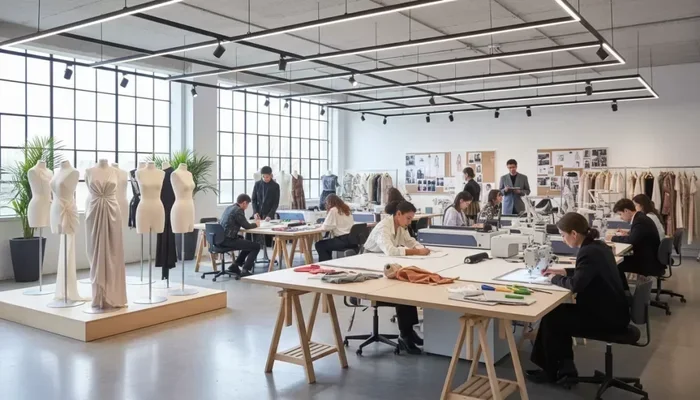
Becoming a fashion designer doesn’t follow just one path. You can pursue a formal fashion degree, attend design school, or build skills through self-study and hands-on experience. Most successful designers combine education with real-world practice like internships and portfolio building to stand out in the competitive fashion industry.
Have you ever dreamed of creating stunning outfits that turn heads on the runway? Maybe you sketch designs in your notebook during class or spend hours browsing fashion blogs for inspiration. The question on your mind might be simple: what education is required to be a fashion designer?
The truth is, there is no single road that leads to a career in fashion design. Some designers earn bachelor’s degrees from top fashion schools. Others learn through apprenticeships, online classes, or pure hands-on practice. What matters most is your passion, creativity, and willingness to learn. In this guide, we will walk you through every education path so you can choose the one that fits your goals and lifestyle.
Key Takeaways
- Formal education is not mandatory: Many designers succeed without a degree by building strong portfolios and gaining experience.
- Fashion degrees offer structured learning: Programs cover design, textiles, pattern making, and fashion history.
- Portfolio development matters more than diplomas: Employers and clients care most about your creative work.
- Internships bridge the gap between school and career: They provide real industry exposure and networking opportunities.
- Self-taught designers can thrive: Online courses, workshops, and practice can build the skills you need.
- Business knowledge is essential: Understanding fashion marketing and merchandising helps designers succeed long-term.
📑 Table of Contents
- Understanding What Fashion Design Education Really Means
- Formal Degree Options for Aspiring Fashion Designers
- Top Fashion Schools and Programs
- Skills You Need Beyond the Classroom
- The Role of Internships and Hands-On Experience
- Can You Become a Fashion Designer Without a Degree?
- How to Choose the Right Education Path for You
- Common Mistakes to Avoid in Fashion Education
- Expert Insights on Fashion Design Education
- Final Thoughts on Fashion Designer Education
Understanding What Fashion Design Education Really Means
Fashion design education covers more than just drawing pretty clothes. It includes a wide range of subjects that prepare you for the real fashion industry. Think of it like learning a language. You need grammar, vocabulary, and practice to speak fluently. Similarly, you need technical skills, creative vision, and business knowledge to succeed as a designer.
Many people confuse fashion design with fashion merchandising or fashion marketing. While they are related, they are different fields. Design focuses on creating garments. Merchandising focuses on selling them. Understanding this difference helps you choose the right educational path.
Good education also teaches you about fashion history. Knowing who Coco Chanel was or how streetwear evolved gives you context for modern trends. It helps you understand why certain styles work and others do not. This knowledge makes you a more thoughtful and versatile designer.
The Core Subjects in Fashion Education
Most fashion programs, whether in a college or a standalone school, cover several key areas. Here are the main subjects you can expect to study:
- Fashion Illustration: Learning to draw the human form and sketch clothing designs by hand or digitally.
- Textile Science: Understanding different fabrics, their properties, and how they behave when sewn.
- Pattern Making: Creating the templates used to cut fabric for garments.
- Garment Construction: The actual process of sewing and assembling clothing.
- Color Theory: Learning how colors work together and evoke emotions.
- Fashion Marketing: Understanding how to sell and promote fashion products.
- Computer-Aided Design (CAD): Using software to create digital fashion designs.
These subjects build a strong foundation. Even if you choose a less traditional path, knowing these basics gives you a serious advantage. Think of it like learning the rules of grammar before you write poetry. The rules help you express yourself better.
Formal Degree Options for Aspiring Fashion Designers
If you want a structured learning environment, formal education is a great choice. Several types of degrees can lead you to a career in fashion design. Let us look at the most common options.
Associate Degree in Fashion Design
An associate degree typically takes two years to complete. It covers the basics of fashion design, including sketching, textiles, and garment construction. Community colleges and some technical schools offer these programs.
An associate degree is a solid starting point. It gets you into the industry faster and costs less than a four-year program. However, some employers prefer candidates with a bachelor’s degree. Think of an associate degree as a fast track that still gives you real value.
Bachelor’s Degree in Fashion Design
A bachelor’s degree is the most common path for fashion designers. It usually takes four years and provides a deeper, more comprehensive education. You will study advanced design techniques, fashion history, business, and marketing.
Many top fashion schools offer bachelor’s programs. These schools often have strong industry connections. They may invite guest speakers, host fashion shows, and help students find internships. Having a bachelor’s degree opens more doors in the long run, especially for positions at established fashion houses.
Master’s Degree in Fashion Design
A master’s degree is for those who already have a bachelor’s and want to specialize. It usually takes one to two additional years. You might focus on haute couture, sustainable fashion, or fashion technology.
Not everyone needs a master’s degree. But if you want to teach fashion, lead a design team, or start your own high-end label, this advanced education can be very helpful. It shows commitment and deep expertise.
Short-Term Courses and Certificates
Not ready for a full degree? Short-term courses and certificate programs are excellent alternatives. These programs last anywhere from a few weeks to six months. They focus on specific skills like pattern making, digital design, or fashion business.
Many online platforms offer these courses. They are flexible and affordable. If you are already working or studying something else, a short course lets you build fashion skills at your own pace.
Top Fashion Schools and Programs
When people think about fashion education, certain schools come to mind. These institutions have strong reputations and industry connections. Here are a few well-known options:
- Parsons School of Design (New York): Known for its creative and experimental approach to fashion design.
- Fashion Institute of Technology (FIT) (New York): Offers a wide range of fashion programs and has strong ties to the industry.
- Central Saint Martins (London): Famous for producing iconic designers and pushing creative boundaries.
- Polytechnic University of Milan (Italy): A top choice for students interested in Italian fashion and craftsmanship.
- Royal Academy of Fine Arts Antwerp (Belgium): Known for its avant-garde and artistic approach to fashion.
Attending a top school can give you an edge. But remember, your portfolio matters more than the name on your diploma. Many successful designers graduated from lesser-known schools or were self-taught. What counts is what you create and how you present it.
Skills You Need Beyond the Classroom
Education gives you knowledge, but skills make you employable. The fashion industry values certain abilities that go beyond what textbooks teach. Let us look at the most important ones.
Creativity and Artistic Vision
This is the heart of fashion design. You need a unique perspective and the ability to see beauty in unexpected places. Some people are naturally creative, but creativity is also a skill you can develop. Surround yourself with art, visit museums, and study different cultures. Even learning about similes for education or metaphors for education can spark new ways of thinking and expressing your ideas. These literary tools train your brain to make creative connections.
Technical Sewing and Construction Skills
You do not need to be a master tailor, but you should understand how garments are made. Knowing how fabric falls, how seams hold, and how garments fit on the body is essential. Practice sewing regularly. Start with simple projects and gradually work your way up to more complex designs.
Digital Design Skills
Most fashion design work today involves computers. Programs like Adobe Illustrator and Photoshop are industry standards. Some schools also teach specialized fashion design software. Learning these tools early gives you a huge advantage in the job market.
Communication and Presentation
Fashion designers do not work in isolation. You will collaborate with manufacturers, marketers, and clients. Being able to clearly explain your ideas and present your designs is critical. Practice pitching your concepts to friends or family. Get comfortable talking about your work with confidence.
The Role of Internships and Hands-On Experience
Education in a classroom is valuable, but nothing replaces real-world experience. Internships bridge the gap between learning and doing. They give you a taste of what the fashion industry is really like.
During an internship, you might assist a senior designer, attend fashion shows, or help with production. You learn how deadlines work, how teams collaborate, and what clients expect. These experiences are invaluable.
Many fashion schools require internships as part of their curriculum. But even if your program does not, you should seek them out yourself. Reach out to local designers, fashion brands, and retail stores. Every internship builds your network and your resume.
Volunteer work at fashion events or costume departments is another great way to gain experience. You do not always need to be paid to learn. The goal is to be around the industry, observe how it works, and build relationships.
Can You Become a Fashion Designer Without a Degree?
The short answer is yes. Many successful designers never attended a formal fashion school. They learned by doing, making mistakes, and constantly improving their craft. If you are self-taught, here is what you should focus on:
- Build a Strong Portfolio: This is your most important asset. Include your best designs, sketches, and finished garments. A compelling portfolio can outweigh any degree.
- Learn the Basics Online: Countless free and affordable courses teach fashion design fundamentals. Websites, YouTube tutorials, and online schools offer quality instruction.
- Practice Every Day: Sketch daily. Sew regularly. The more you practice, the better you become. Consistency beats talent over time.
- Network Actively: Attend fashion events, join online communities, and connect with other creatives. The fashion industry runs on relationships.
- Start Small: Create a small clothing line or sell designs on platforms like Etsy. Real sales give you real experience and confidence.
Think about it this way. Some of the best writers never went to writing school. They read widely, practiced constantly, and developed their own voice. The same principle applies to fashion design. Your education is whatever you make it.
How to Choose the Right Education Path for You
Choosing your education path depends on several factors. Consider these questions before making a decision:
- What is your budget? Fashion school can be expensive. Associate degrees and certificate programs cost less than four-year bachelor’s programs. Scholarships and financial aid are also available.
- How much time do you have? If you need to start working quickly, a short-term course or associate degree might be the best fit.
- What is your learning style? Do you thrive in structured classrooms, or do you prefer self-paced online learning? Be honest about what works for you.
- Where do you want to work? Some regions have stronger fashion industries than others. Research where fashion jobs are concentrated.
- What is your ultimate goal? Do you want to work for a major brand, start your own label, or freelance? Your goal shapes your education choice.
There is no wrong answer here. Every path has its strengths. The key is to start somewhere and stay committed. Education in fashion is a journey, not a destination.
Common Mistakes to Avoid in Fashion Education
As you plan your education, watch out for these common pitfalls:
- Focusing only on creativity and ignoring business: Fashion is a business. Understanding marketing, branding, and sales makes you more employable.
- Neglecting your portfolio: Your portfolio is your calling card. Start building it early and update it regularly with your best work.
- Choosing a school based only on reputation: A famous name does not guarantee success. Focus on the curriculum, faculty, and opportunities the school provides.
- Skipping internships: Classroom knowledge is important, but real-world experience sets you apart from other candidates.
- Comparing yourself to others: Every designer’s journey is different. Focus on your own progress and celebrate small wins along the way.
Expert Insights on Fashion Design Education
We spoke with industry professionals to get their perspective on fashion education. Here is what they had to say:
Maria Chen, Senior Designer at a leading fashion brand: “I learned more on the job in my first six months than I did in four years of school. But my education gave me the foundation to understand why things work the way they do. Both matter.”
James Rivera, Freelance Fashion Designer: “I never went to fashion school. I taught myself through online courses and practice. My advice is to just start creating. You do not need permission to be a designer.”
Dr. Sarah Okonkwo, Fashion Professor at Parsons: “The best designers I have seen are curious ones. They read widely, travel, and stay open to new ideas. Education is not just about what you learn in a classroom. It is about how you see the world.”
Final Thoughts on Fashion Designer Education
So, what education is required to be a fashion designer? The honest answer is that it depends on you. There are many paths to a career in fashion design. Formal degrees provide structure and credibility. Self-study offers flexibility and independence. Internships give you real-world experience. And your portfolio proves your talent to the world.
No matter which path you choose, remember that education does not stop after graduation. The fashion industry changes constantly. New technologies, trends, and consumer demands emerge every season. The best designers never stop learning. They stay curious, practice regularly, and adapt to new challenges.
If you are just starting out, begin with the basics. Learn to sketch, understand fabrics, and build a portfolio. Then explore more advanced topics like marketing, branding, and digital design. Every step you take brings you closer to your dream.
The fashion industry rewards creativity, hard work, and persistence. Your education is the foundation. But your passion and determination will build the house. So grab a sketchbook, pick up a needle and thread, and start creating. Your journey as a fashion designer begins now.
Frequently Asked Questions
Do I need a degree to become a fashion designer?
No, a degree is not strictly required. Many successful fashion designers are self-taught or learned through apprenticeships. However, a degree can provide structured learning, industry connections, and credibility that help you stand out in a competitive market.
What is the best degree for a fashion designer?
A Bachelor’s degree in Fashion Design is the most common and widely recognized path. It covers design, textiles, pattern making, and fashion business. However, associate degrees and certificate programs are also excellent options depending on your goals and timeline.
How long does it take to become a fashion designer through education?
It depends on the path you choose. An associate degree takes about two years. A bachelor’s degree takes four years. Short-term certificate programs can be completed in weeks or months. Self-study timelines vary based on your dedication and practice schedule.
Is fashion school worth the cost?
Fashion school can be worth it if you want structured learning and industry connections. However, it is expensive. Consider scholarships, financial aid, and the reputation of the school before enrolling. Your portfolio and skills ultimately matter more than the school name.
Can online courses teach me to be a fashion designer?
Yes, online courses can teach you the fundamentals of fashion design. They cover topics like illustration, textile knowledge, and digital design tools. However, online learning requires self-discipline and practice. Combine online courses with hands-on projects for the best results.
What skills matter most for a fashion designer besides education?
Beyond formal education, creativity, technical sewing skills, digital design proficiency, and strong communication are essential. Understanding fashion marketing and building a professional network also play huge roles in your long-term success as a designer.
=== CONCLUSION ===
Education to become a fashion designer comes in many forms. You can pursue a formal degree, take short courses, or teach yourself through practice and online resources. What education is required to be a fashion designer ultimately depends on your goals, budget, and learning style. The most important thing is to start, stay consistent, and never stop creating. Your unique voice and vision are what will set you apart in the fashion world. So choose your path, build your skills, and let your creativity shine.


