
Becoming a veterinarian requires years of dedicated study, hands-on training, and ongoing learning. From undergraduate science courses to veterinary school and board certification, the path is challenging but deeply rewarding. This guide covers every step of veterinarian education so you know exactly what it takes to succeed.
So, you are wondering what education does a veterinarian need to thrive in this field? The answer is more layered than most people think. It is not just about earning a degree. It is a journey that starts in high school, stretches through years of college, and continues long after a vet earns their license. The path demands hard work, curiosity, and a genuine love for animals.
Veterinary education is one of the most rigorous career pathways in the health sciences. It combines classroom learning, lab work, clinical rotations, and real-world patient care. Every step builds on the last. Whether you are a high school student dreaming of this career or an adult considering a career change, understanding the full picture helps you plan smarter.
The road to becoming a vet is long but incredibly fulfilling. Animals need skilled professionals who understand medicine, biology, and compassion. If you want to be that person, this guide breaks down everything you need to know about veterinarian education requirements. Let us dive in.
Key Takeaways
- Doctor of Veterinary Medicine (DVM) Degree: This is the core degree every practicing vet must earn from an accredited veterinary school.
- Underground Prerequisites Matter: Strong foundations in biology, chemistry, and animal science set you up for success before vet school even starts.
- Licensing Exams Are Essential: Passing the NAVLE and state-specific tests is a non-negotiable step to practice.
- Specializations Open New Doors: Residency programs and board certification let vets focus on areas like surgery, dentistry, or emergency care.
- Continuing Education Keeps Skills Sharp: Vets must stay current with new treatments, technologies, and research throughout their careers.
- Soft Skills Are Just as Important: Communication, empathy, and teamwork make a great veterinarian even better.
📑 Table of Contents
- Understanding the Path to Becoming a Veterinarian
- Undergraduate Education: Building the Foundation
- Veterinary School: The Core Training
- Licensing and Certification: Proving Your Expertise
- Specializations: Taking Your Career Further
- Continuing Education: Never Stop Learning
- Skills That Complement Veterinary Education
- Conclusion
Understanding the Path to Becoming a Veterinarian
The journey to becoming a licensed veterinarian follows a clear but demanding route. Every aspiring vet must complete specific stages of training. Each stage builds critical skills and knowledge. Let us walk through the big picture first.
The typical path looks like this:
- Complete high school with a focus on science and math.
- Earn a bachelor’s degree with pre-veterinary prerequisites.
- Gain admission to an accredited veterinary school.
- Earn a Doctor of Veterinary Medicine (DVM) degree.
- Pass national and state licensing exams.
- Pursue residency or specialization if desired.
- Commit to lifelong continuing education.
This process usually takes eight to ten years after high school. It requires dedication at every stage. But each phase prepares you for the next. The goal is to produce a well-rounded professional who can care for animals safely and effectively.
Why Education Matters So Much in Veterinary Medicine
Animal health care is complex. Vets diagnose diseases, perform surgeries, prescribe medications, and guide pet owners through difficult decisions. None of this is possible without a strong educational foundation. The veterinary medicine career demands both scientific knowledge and practical skill.
Unlike some professions where you can learn on the job, veterinary practice requires formal training. Animals cannot describe their symptoms in words. Vets must rely on diagnostics, observation, and deep medical understanding. That is why every step of veterinarian education matters so much.
Undergraduate Education: Building the Foundation
Before you can enter veterinary school, you need a solid undergraduate foundation. Most accredited veterinary programs expect applicants to complete specific pre-veterinary coursework. This usually takes about three to four years of college.
Here are the typical pre-veterinary coursework requirements:
- Biology: Two to three semesters with lab work.
- General Chemistry: Two semesters with lab work.
- Organic Chemistry: Two semesters with lab work.
- Biochemistry: One semester.
- Physics: Two semesters with lab work.
- Mathematics: Statistics and calculus are often required.
- English or Communication: To build strong writing and speaking skills.
Choosing the Right Bachelor’s Degree
You do not have to major in animal science to get into vet school, but it helps. Many successful applicants choose animal science degrees, biology, or zoology. These majors naturally cover many of the prerequisite courses. They also give you early exposure to animal-related topics.
That said, you can major in almost anything as long as you complete the required courses. Some students choose less obvious paths like psychology or business. A diverse academic background can actually make you a stronger applicant. Vet schools value well-rounded candidates.
During your undergraduate years, try to gain hands-on experience with animals. Volunteer at a local clinic, work on a farm, or shadow a practicing vet. These experiences strengthen your application and confirm your passion for the field. They also teach you things no textbook can.
Veterinary School: The Core Training
This is the heart of veterinarian education. Veterinary school is where aspiring vets transform from students into professionals. It is intensive, immersive, and incredibly rewarding.
Most veterinary programs award a Doctor of Veterinary Medicine (DVM) degree. In some countries, the equivalent degree is called a Bachelor of Veterinary Science (BVSc). The DVM program typically takes four years to complete.
What You Will Learn in Vet School
The first two years of vet school focus heavily on classroom and lab work. Students study subjects like:
- Anatomy: Understanding the structure of different animal bodies.
- Physiology: How animal systems function day to day.
- Pharmacology: How drugs work in various species.
- Pathology: What causes diseases and how they progress.
- Microbiology: Studying bacteria, viruses, and parasites that affect animals.
- Veterinary Diagnostics: Using lab tests and imaging to identify health problems.
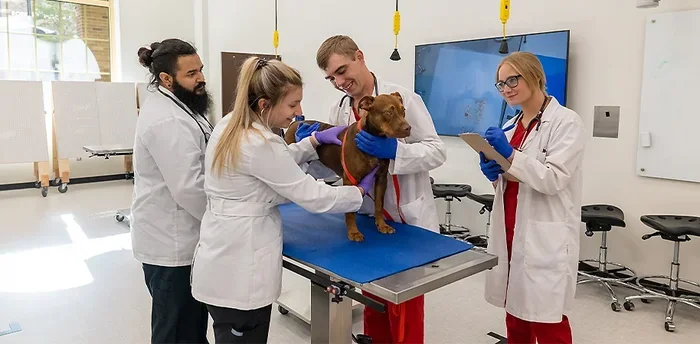
The last two years shift to clinical training. Students rotate through different departments in teaching hospitals. They work with real patients under the supervision of licensed veterinarians. These clinical rotations are where textbook knowledge meets real practice.
Gaining Admission to Veterinary School
Getting into vet school is competitive. Acceptance rates are low compared to many other graduate programs. Admissions committees look for strong grades, test scores, and relevant experience. The Veterinary College Admission Test (VCAT) was once required, but many schools now weigh experience and coursework more heavily.
Here are tips to strengthen your application:
- Maintain a high GPA, especially in science courses.
- Build relationships with professors who can write strong recommendation letters.
- Log hundreds of hours working with animals in clinical or research settings.
- Prepare a compelling personal statement that shows your passion.
- Apply to multiple schools to increase your chances.
Licensing and Certification: Proving Your Expertise
Earning a DVM degree is a huge milestone, but it is not the final step. Every veterinarian must pass licensing exams before they can practice. This ensures that all vets meet a national standard of competence.
The main exam is the North American Veterinary Licensing Examination (NAVLE). It is a comprehensive test that covers all major areas of veterinary medicine. Most states and provinces also require a state-specific exam or jurisprudence test. These cover local laws and regulations.
What the NAVLE Covers
The NAVLE tests knowledge across many domains:
- Animal welfare and ethics
- Diagnosis and treatment planning
- Surgical procedures and anesthesia
- Pharmacology and therapeutics
- Preventive medicine and public health
- Practice management basics
Passing the NAVLE is a serious accomplishment. It proves that a new vet has the knowledge base to provide safe, effective care. After passing, graduates can apply for state licenses and begin practicing. Some also choose to pursue additional veterinary board certification in a specialized area.
Specializations: Taking Your Career Further
Not all vets practice general medicine. Many choose to specialize in a specific area of animal health care. Specialization allows vets to dive deeper into topics they are passionate about. It also often leads to higher earning potential and career satisfaction.
Common veterinary specializations include:
- Surgery: Performing complex operations on animals.
- Dentistry: Focusing on oral health in dogs, cats, and other species.
- Internal Medicine: Treating complex organ and system diseases.
- Emergency and Critical Care: Saving lives in urgent situations.
- Zoological Medicine: Caring for exotic and wildlife species.
- Pathology: Studying disease at the cellular and tissue level.
- Theriogenology: Specializing in animal reproduction and breeding.
How Specialization Works
After earning a DVM and gaining some practice experience, vets can apply to veterinary residency programs. These programs typically last three to four years. They provide intensive, focused training in one specialty. At the end of a residency, vets can sit for board certification exams.
Board-certified specialists are recognized as experts in their field. They often work in referral hospitals, universities, or research facilities. The path is longer, but it offers incredible depth and professional respect. Think of it as the difference between a general practitioner and a specialist in human medicine.
Continuing Education: Never Stop Learning
Veterinary medicine is always evolving. New diseases emerge. Treatments improve. Technology advances rapidly. This is why continuing education for vets is so important. No vet can rely on what they learned in school alone.
Most states require licensed veterinarians to complete a certain number of continuing education hours each year. These hours keep vets up to date with the latest research and best practices. Common formats include:
- Attending conferences and workshops.
- Taking online courses and webinars.
- Reading peer-reviewed veterinary journals.
- Participating in hands-on training sessions.
- Presenting or publishing research findings.
Some vets also pursue additional certifications throughout their careers. These might be in areas like acupuncture, chiropractic care, or advanced imaging. The learning never truly ends in this profession. And that is part of what makes it so exciting.
How Continuing Education Benefits Your Career
Beyond meeting licensing requirements, ongoing learning offers real career advantages. Vets who stay current are better equipped to serve their clients. They can offer the newest treatments and technologies. They also build stronger professional networks through conferences and training events.
If you are curious about how education is described in language, you might enjoy our idioms for education page. It shows how people use colorful expressions to talk about learning and growth. Similarly, our metaphors for a person collection explores how we describe individuals, including dedicated professionals like veterinarians.
Education shapes how we see ourselves and others. For veterinarians, every new lesson brings better care to the animals they love.
Skills That Complement Veterinary Education
Technical knowledge is essential, but soft skills set great vets apart. Clients trust veterinarians who communicate clearly and show genuine empathy. Here are key skills that complement formal veterinarian education requirements:
- Communication: Explaining medical terms in simple language helps pet owners make informed decisions.
- Empathy: Understanding the emotional bond between people and their animals builds trust.
- Problem-Solving: Every case is unique. Vets must think critically and adapt quickly.
- Manual Dexterity: Surgery and physical exams demand steady, precise hands.
- Teamwork: Veterinary practices rely on collaboration between vets, technicians, and support staff.
These skills develop over time. Some people naturally have them, but anyone can improve with practice. Many vet schools now include communication training in their curricula. This reflects how important people skills are in modern animal health care.
Quick Tips for Success in Veterinary Education
- Start volunteering with animals as early as possible.
- Build strong relationships with professors and mentors.
- Stay organized. Vet school workloads are heavy.
- Do not be afraid to ask for help when you need it.
- Explore different animal species to find your passion.
- Join veterinary student organizations for networking opportunities.
- Remember why you started. That motivation will carry you through tough days.
Common Mistakes to Avoid
Many aspiring vets make preventable mistakes during their education journey. Here are a few to watch out for:
- Skipping hands-on experience: Book knowledge is not enough. Real animal experience is critical.
- Ignoring non-science courses: Communication and business skills matter just as much.
- Applying to only one school: Vet school is competitive. Apply broadly.
- Neglecting mental health: The pressure is real. Seek support when you need it.
- Stopping learning after graduation: The field evolves fast. Stay curious.
Avoiding these pitfalls can save you time, stress, and money. They also help you build a stronger, more resilient career.
You might also find our similes for education page interesting. It explores how we use comparisons to talk about learning journeys. And if you are curious about figurative language in general, our metaphors for education collection offers a fun look at how we describe academic pursuits.
Conclusion
The answer to what education does a veterinarian need is clear. It takes years of focused study, hands-on training, and a commitment to lifelong learning. From undergraduate science courses to a DVM degree, licensing exams, and beyond, every step matters. The path is demanding, but it leads to a career that truly makes a difference in the lives of animals and their families.
If you are considering this path, start planning now. Build a strong academic foundation. Gain real animal experience. Stay curious and compassionate. The world of veterinary medicine needs dedicated professionals who care deeply about animal welfare education and excellence in care.
The journey is long, but every step brings you closer to a career you can be proud of. Embrace the challenge. The animals are counting on you.
Frequently Asked Questions
How long does it take to become a veterinarian?
Most aspiring vets spend eight to ten years in education after high school. This includes four years of undergraduate study and four years of veterinary school. Some vets add extra years for specialization through residency programs.
Is veterinary school harder than medical school?
Both are demanding, but they differ in focus. Veterinary school covers many species, from dogs and cats to horses and exotic animals. The breadth of knowledge required is vast. Many students find the volume of species-specific information to be the biggest challenge.
Can I become a vet with an online degree?
Most veterinary programs require in-person lab work and clinical training. While some prerequisites can be completed online, the core DVM program is hands-on and must be done at an accredited institution. Always verify a school’s accreditation before applying.
What is the NAVLE exam?
The North American Veterinary Licensing Examination is the primary exam vets must pass to practice in the United States and Canada. It covers all major areas of veterinary medicine. Passing it demonstrates that a vet has the knowledge needed for safe practice.
Do veterinarians need to keep learning after graduation?
Absolutely. Most states require continuing education hours every year. The field of veterinary medicine evolves constantly with new research, treatments, and technologies. Lifelong learning keeps vets current and effective throughout their careers.
What is the difference between a DVM and a VMD degree?
Both degrees qualify a person to practice veterinary medicine. The DVM is awarded by most veterinary schools in the United States. The VMD is awarded only by the University of Pennsylvania School of Veterinary Medicine. They carry the same legal weight and represent the same level of training.


