
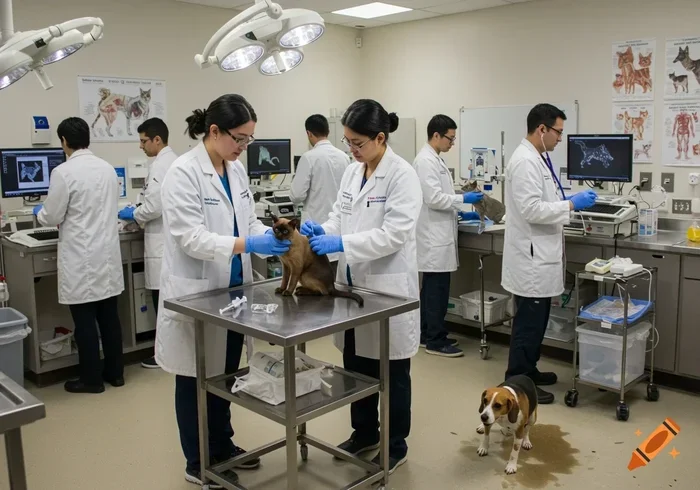
To become a veterinarian, you need a strong foundation in science, a bachelor’s degree, and a Doctor of Veterinary Medicine (DVM) degree from an accredited school. The journey typically takes 7–9 years of education, including clinical training and licensing exams. This guide covers every step of the veterinary education path so you can plan your career with confidence.
Have you ever dreamed of helping animals feel better and living a career that makes a real difference? If so, you might be wondering what education do you need to be a veterinarian. The path to becoming a vet is not short, but it is rewarding and full of purpose. Every year, thousands of students commit to this journey because they love animals and want to care for them professionally.
The road to becoming a veterinarian involves several stages of learning. You start with undergraduate studies, move on to a professional doctoral degree, and then complete licensing exams. Each step builds on the last. In this article, we will walk you through every stage of the veterinary education requirements. By the end, you will know exactly what it takes to earn your veterinary degree and start your career in animal health.
Key Takeaways
- Bachelor’s Degree Required: You need a pre-veterinary or science-related undergraduate degree before applying to vet school.
- DVM Degree Is Essential: A Doctor of Veterinary Medicine degree from an accredited institution is mandatory to practice.
- Licensing Exams Are Crucial: Passing the NAVLE and state exams is required to become a licensed veterinarian.
- Specializations Add Value: Internships and residencies allow you to focus on specific areas like surgery or oncology.
- Strong Science Background Matters: Courses in biology, chemistry, and animal anatomy form the core of veterinary preparation.
- Soft Skills Count Too: Communication and empathy are just as important as technical knowledge in veterinary medicine.
📑 Table of Contents
- Understanding the Veterinary Education Path
- Undergraduate Preparation: The First Step
- Doctor of Veterinary Medicine (DVM) Degree
- Licensing and Certification Requirements
- Specializations and Advanced Training
- Skills and Qualities That Support Your Veterinary Education
- Comparing Veterinary Education to Other Animal Careers
- Common Mistakes to Avoid in Your Veterinary Education Journey
- Conclusion
Understanding the Veterinary Education Path
Becoming a veterinarian requires a clear and focused education plan. You cannot skip steps or take shortcuts. The path is structured to give you the knowledge and hands-on skills you need to treat animals safely and effectively. Let us break down each stage so you know what to expect.
Why Education Matters in Veterinary Medicine
Animal healthcare is complex. Vets diagnose diseases, perform surgeries, prescribe medications, and guide pet owners through difficult decisions. You need a deep understanding of animal anatomy, physiology, and pharmacology to do all of this well. That is why the education requirements are so thorough.
Think of it this way. Just like a human doctor spends years in school, a veterinarian must also complete extensive training. The veterinary medicine career demands both book knowledge and practical experience. Without proper education, you simply cannot provide the level of care animals deserve.
In many ways, learning about language and communication works similarly. For example, using the right idioms for education can make complex ideas easier to share with pet owners. Clear communication is a vital part of being a great vet too.
Undergraduate Preparation: The First Step
Before you can enter vet school, you must complete an undergraduate degree. This usually takes four years. Most aspiring vets choose a pre-veterinary or animal science degree program. Some students major in biology or chemistry instead. The key is to complete the required prerequisite courses.
Pre-Veterinary Coursework You Need
Most vet schools require specific undergraduate courses. These typically include:
- Biology: General biology and animal biology courses.
- Chemistry: Organic and inorganic chemistry.
- Physics: Basic physics principles.
- Biochemistry: The chemistry of living organisms.
- Mathematics: Statistics and calculus.
- English: Strong writing and communication skills.
Some schools also look for experience working with animals. Volunteering at a clinic, shelter, or farm can strengthen your application. This hands-on exposure shows admissions committees that you are serious about the veterinary career path.
How Long Does Undergraduate Study Take?
A standard bachelor’s degree takes four years. However, some students finish in three years if they take heavy course loads. Others may take longer if they balance work or other commitments. The important thing is to maintain strong grades, especially in science courses. Your GPA matters a lot for vet school admission.
Doctor of Veterinary Medicine (DVM) Degree
The DVM degree is the core of your veterinary education. This professional doctorate typically takes four years to complete. It is offered at accredited veterinary schools across the country. During this time, you will learn everything from veterinary anatomy to clinical decision-making.
What Does the DVM Program Include?
The DVM program is divided into two main parts. The first two years focus on classroom learning and lab work. You will study subjects like:
- Animal physiology and anatomy
- Pharmacology and drug interactions
- Pathology and disease identification
- Microbiology and immunology
- Veterinary surgery principles
The last two years are all about hands-on training. You will work directly with animals in clinical settings. Under the supervision of licensed veterinarians, you will diagnose conditions, perform procedures, and develop treatment plans. This veterinary clinical training is invaluable. It bridges the gap between theory and real-world practice.
Choosing the Right Veterinary School
Not all vet schools are the same. Accreditation matters a lot. Make sure the school you choose is accredited by the AVMA (American Veterinary Medical Association). This ensures the program meets high standards. Also, consider factors like:
- Location and tuition costs
- Available specializations
- Clinical rotation opportunities
- Faculty expertise and research programs
- Student support services
The veterinary tuition costs can be significant. However, many schools offer scholarships and financial aid. Do not let the cost scare you away from pursuing your dream.
Just as learning metaphors for education helps you express ideas more vividly, studying diverse subjects in vet school helps you see animal health from multiple angles. This broader perspective makes you a better veterinarian.
Licensing and Certification Requirements
After earning your DVM degree, you are not quite done with your education. You must pass licensing exams to practice legally. This is a non-negotiable step in the veterinary licensure process.
The NAVLE Exam
The North American Veterinary Licensing Examination (NAVLE) is the main exam you must pass. It tests your knowledge of veterinary science and clinical skills. The exam contains hundreds of multiple-choice questions. You need a passing score to move forward. Most students prepare for months using review courses and practice tests.
State-Level Exams and Requirements
In addition to the NAVLE, many states require their own exams. These cover state-specific laws and regulations. You must check with your state’s veterinary board for exact requirements. Each state has slightly different rules, so preparation is key.
Continuing Education for Veterinarians
Once you are licensed, your learning does not stop. Most states require continuing education (CE) credits each year. These courses keep you updated on the latest advances in animal healthcare. Topics may include new treatments, surgical techniques, or emerging diseases. Lifelong learning is a hallmark of a great veterinarian.
Specializations and Advanced Training
After becoming a licensed vet, you may want to focus on a specific area. Specializations allow you to deepen your expertise and provide advanced care to animals. This is where veterinary specialization comes into play.
Common Veterinary Specialties
There are many areas you can specialize in. Some of the most popular include:
- Surgery: Performing operations on animals of all sizes.
- Internal Medicine: Treating complex diseases and disorders.
- Oncology: Diagnosing and treating animal cancers.
- Dentistry: Focusing on animal oral health.
- Zoological Medicine: Caring for exotic and wildlife species.
- Theriogenology: Specializing in animal reproduction.
Internships and Residencies
To pursue a specialty, you typically need to complete an internship or residency. An internship usually lasts one year and provides supervised clinical experience. A residency is longer, often lasting three to four years. During this time, you train under specialists and gain deep expertise in your chosen field.
These advanced programs are competitive. You need strong grades, letters of recommendation, and a clear passion for your specialty area. But the payoff is enormous. Specialized vets often earn higher salaries and enjoy more career opportunities.
Using clear similes for education can help explain complex topics to pet owners. Similarly, advanced training helps vets communicate complex medical concepts in ways that are easy to understand.
Skills and Qualities That Support Your Veterinary Education
Education alone is not enough to thrive as a veterinarian. Certain personal qualities and skills make a big difference in your success. Let us look at some of the most important ones.
Communication Skills
You will talk to pet owners every day. You need to explain diagnoses, treatment options, and costs clearly. Good communication builds trust and helps owners make informed decisions for their animals.
Empathy and Compassion
Animals cannot speak for themselves. You must be their advocate. This means showing genuine care and understanding. Many pet owners are emotionally attached to their animals. A compassionate vet makes difficult situations easier for everyone involved.
Problem-Solving Abilities
Veterinary medicine is full of puzzles. Each animal is unique, and symptoms can be tricky to interpret. Strong critical thinking and problem-solving skills help you find the right diagnosis and treatment plan.
Physical Stamina
Veterinary work can be physically demanding. You may stand for long hours, restrain large animals, or perform lengthy surgeries. Good physical fitness helps you handle the demands of the job.
Comparing Veterinary Education to Other Animal Careers
There are many careers in animal care. Not all of them require the same level of education. Here is a quick comparison to help you understand where veterinary education stands.
| Career | Education Required | Typical Duration | Licensing Required |
|---|---|---|---|
| Veterinarian | DVM Degree | 7–9 years total | Yes |
| Veterinary Technician | Associate or Bachelor’s Degree | 2–4 years | Varies by state |
| Animal Shelter Worker | High School Diploma | On-the-job training | No |
| Animal Trainer | Certification or Apprenticeship | 6 months–2 years | No |
| Wildlife Biologist | Bachelor’s or Master’s Degree | 4–6 years | No |
As you can see, the veterinary education requirements are among the highest in animal care. This reflects the responsibility and expertise needed to practice as a veterinarian. If you are willing to invest the time and effort, the rewards are truly meaningful.
Just as metaphors for a person can capture someone’s character in a vivid way, the journey through veterinary school shapes you into a dedicated professional. Every course, every clinical rotation, and every exam builds the skills and character you need to succeed.
Common Mistakes to Avoid in Your Veterinary Education Journey
Many students make avoidable mistakes along the way. Here are some pitfalls to watch out for:
- Neglecting Pre-Vet Requirements: Skipping key courses can delay your application.
- Ignoring Hands-On Experience: Vet schools value practical animal experience highly.
- Underestimating Exam Difficulty: The NAVLE is challenging. Start preparing early.
- Choosing a School Based Only on Cost: Accreditation and program quality matter more than price.
- Skipping Continuing Education: Staying current with new developments is essential for long-term success.
Quick Tips for Aspiring Veterinarians
- Start volunteering at animal clinics early.
- Build relationships with professors for strong recommendation letters.
- Join pre-veterinary clubs on your campus.
- Shadow a licensed veterinarian to see the day-to-day work.
- Stay organized and manage your time well throughout your studies.
Conclusion
The path to becoming a veterinarian is long, but it is one of the most fulfilling careers you can pursue. From completing your undergraduate pre-veterinary coursework to earning your DVM degree and passing licensing exams, every step brings you closer to your goal. The veterinary education requirements are demanding, but they exist for a good reason. They ensure that every veterinarian is fully prepared to care for animals with skill and compassion.
If you are passionate about animal health and willing to put in the work, the veterinary medicine career can be incredibly rewarding. Start planning your education today. Research accredited vet schools, complete your prerequisites, and gain hands-on experience. The journey is challenging, but the destination is worth every effort.
Remember, every great veterinarian started exactly where you are now. With dedication, hard work, and the right education, you can make a real difference in the lives of animals and the people who love them.
Frequently Asked Questions
What is the minimum education required to become a veterinarian?
You need a Doctor of Veterinary Medicine (DVM) degree from an accredited veterinary school. Before that, you must complete a bachelor’s degree with pre-veterinary prerequisites. In total, the minimum education takes about seven to nine years.
How long does it take to become a licensed veterinarian?
The typical timeline is seven to nine years. This includes four years of undergraduate study, four years of veterinary school, and time spent preparing for and passing licensing exams. Some students take longer if they pursue additional specializations.
Can I become a veterinarian online?
No. Veterinary medicine requires hands-on clinical training that cannot be completed online. You must attend an accredited veterinary school in person. However, some undergraduate prerequisites can be taken online at certain institutions.
What is the NAVLE exam and why is it important?
The NAVLE is the North American Veterinary Licensing Examination. It is the primary exam you must pass to become a licensed veterinarian. It tests your knowledge of veterinary science and clinical skills, and it is required in most states.
Do veterinarians need to continue their education after graduation?
Yes. Most states require continuing education credits each year to maintain your license. These courses keep you updated on new treatments, technologies, and best practices in animal healthcare.
What is the difference between a veterinarian and a veterinary technician?
A veterinarian holds a DVM degree and is licensed to diagnose and treat animals independently. A veterinary technician typically holds an associate or bachelor’s degree and works under the supervision of a veterinarian to provide supportive care.


