
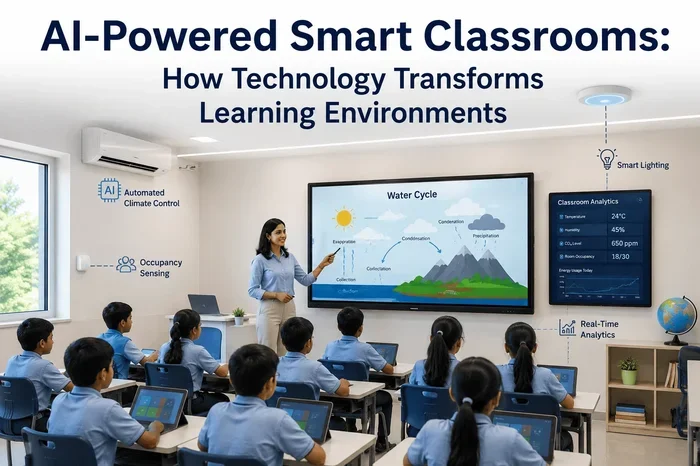
AI is reshaping education fast, and the changes are only beginning. From personalized lesson plans to smart grading tools, AI in education is making learning more flexible and accessible for every student. This article breaks down the real ways how will AI affect education in the future and what teachers, students, and parents should expect next.
Education is changing faster than most people expected. Just five years ago, the idea of a classroom run by machines felt like science fiction. Today, AI in education is a real part of how millions of students learn every day. From smart apps that adjust to your reading level to tools that grade essays in seconds, the impact is already here.
So what does this mean for the long term? How will AI affect education in the future? The answer is both exciting and a little complicated. AI will not replace teachers. But it will give them superpowers. It will help create custom learning paths, catch problems early, and free up time for what really matters: human connection.
In this article, we will walk through the major ways AI is shaping the future of learning. We will look at the benefits, the risks, and the practical steps schools and families can take right now. Whether you are a teacher, a student, or just curious about edtech, this guide has something for you.
Key Takeaways
- Personalized Learning: AI adapts to each student’s pace and style, making education more effective.
- Automated Grading: Teachers save time on routine tasks and focus on meaningful student interaction.
- Smart Tutoring: AI-powered tutors provide 24/7 help without replacing human teachers.
- Data-Driven Insights: Schools use AI analytics to spot struggling students early and adjust teaching methods.
- Ethical Challenges: Privacy, bias, and over-reliance on technology remain key concerns in AI adoption.
- Future-Ready Skills: Students need to learn alongside AI, not just about it.
📑 Table of Contents
The Rise of AI in Classrooms Today
Before we dive into the future, it helps to understand where things stand right now. Schools around the world are already using AI tools in everyday teaching. These range from simple quiz apps to full-scale learning management systems powered by machine learning.
Many teachers use AI-powered learning tools to assign homework, track progress, and suggest extra practice. Some schools have started using intelligent tutoring systems that act like a personal tutor for each student. These systems study how a student answers questions and then adjust the difficulty level on the fly.
What Is Happening Right Now
Here are some of the most common ways AI is already showing up in schools:
- Adaptive learning platforms that change content based on student performance
- Automated grading systems for multiple-choice and short-answer assignments
- Chatbot assistants that answer student questions after hours
- Plagiarism detectors that use AI to check originality in written work
- Language learning apps like Duolingo that use AI to personalize lessons
These tools are not perfect. But they show a clear trend: educational technology is moving toward smarter, more responsive systems. And that trend will only speed up in the years ahead.
How AI Will Personalize Learning
This is perhaps the biggest promise of AI in education. Traditional classrooms teach all students the same way at the same pace. But we know that every learner is different. Some students grasp math quickly but struggle with reading. Others need more time but excel in creative thinking.
AI in education solves this problem by creating personalized learning paths. Instead of a one-size-fits-all approach, AI analyzes each student’s strengths, weaknesses, and learning habits. Then it delivers content that fits their unique needs.
How Personalized Learning Works with AI
Imagine a student named Mia. She is in eighth grade and finds science easy but struggles with fractions. An AI-powered learning tool would notice that Mia scores well on science quizzes but keeps making errors on fraction problems. Over time, the system would give Mia more fraction practice and less science review. It might also switch the format from text to videos if it notices she learns better visually.
This kind of customization was nearly impossible in the past. Teachers with 30 students simply could not give each child a private lesson plan. But AI changes that equation completely.
Also, AI helps teachers understand figurative language and communication patterns in education. When students learn about similes for education, AI tools can adapt examples to match a student’s interests and reading level. Similarly, understanding metaphors for education becomes easier when AI breaks down complex comparisons into simple, relatable ideas. And when students explore idioms for education, smart systems can provide context clues and practice exercises tailored to each learner’s progress.
Benefits of AI-Driven Personalization
- Students learn at their own pace without feeling left behind or bored
- Teachers get detailed insights into each student’s progress
- Parents can track their child’s growth in real time
- Struggling students get targeted help before they fall too far behind
- Advanced students can move ahead without waiting for the rest of the class
AI and the Role of Teachers
One of the biggest fears about AI in schools is that it will replace teachers. This concern is understandable, but the reality is quite different. AI will not replace teachers. Instead, it will take over the repetitive tasks that eat up so much of a teacher’s time.
Think about all the things teachers do besides lecturing. They grade papers. They track attendance. They write lesson plans. They answer the same questions over and over. These tasks are time-consuming, and they leave less energy for the creative, emotional work that only humans can do.
What AI Will Handle
Automated grading is already a reality for many subjects. AI can grade multiple-choice tests instantly. It can also evaluate short-answer responses and even essays with impressive accuracy. This does not mean human grading disappears. But it means teachers can focus their feedback on the most important parts.
AI teacher automation tools can also:
- Generate quizzes and practice worksheets based on lesson content
- Send automatic reminders to students about upcoming deadlines
- Create progress reports with minimal input from the teacher
- Identify patterns in class performance that suggest a topic needs reteaching
What Teachers Will Still Do Best
No AI system can replicate the warmth of a caring teacher. Humans inspire, encourage, and connect with students in ways that machines cannot. Teachers model empathy, resilience, and curiosity every day. They notice when a student is having a bad day and offer a kind word. They create safe spaces for honest conversation.
The future of teaching is not about doing less. It is about doing what matters most. AI in education frees teachers to be more human, not less.
Challenges and Risks of AI in Education
For all its promise, AI in education comes with real challenges. Ignoring these problems would be irresponsible. Any honest conversation about how will AI affect education in the future must include the risks.
Privacy and Data Security
AI systems need data to work. They track what students click on, how long they spend on each task, and where they make mistakes. This data can be incredibly useful for improving learning. But it also raises serious privacy concerns.
Schools must ensure that student data is stored securely and used ethically. Parents should have clear answers about who can access their child’s information and how it is protected.
Bias in AI Systems
AI is only as fair as the data it learns from. If an educational technology tool is trained on biased data, it may give certain groups of students an unfair advantage or disadvantage. For example, an AI grading system might favor writing styles that match a particular cultural background.
Developers and educators must work together to test AI tools for bias and correct problems before they reach the classroom.
Over-Reliance on Technology
There is a real danger of schools leaning too hard on AI. Technology should support learning, not replace the fundamental human experiences of reading a book together, debating ideas face-to-face, or working through a problem on paper.
Teachers and parents should set healthy boundaries around screen time and make sure AI-powered learning tools complement, rather than dominate, the educational experience.
The Future of Assessment and Feedback
Grading and assessment are about to change dramatically. Traditional tests measure memory and speed. But the real world values creativity, critical thinking, and problem-solving. AI can help shift assessment toward these deeper skills.
AI essay grading is already advancing rapidly. Future systems will not just check for grammar and spelling. They will evaluate argument structure, creativity, and logical flow. Some tools can even give students specific suggestions for improvement, not just a letter grade.
Real-Time Feedback
One of the most powerful features of AI in education is real-time feedback. Instead of waiting a week for a teacher to return a test, students can get instant responses from AI systems. This immediate feedback loop helps students correct mistakes while the material is still fresh.
Imagine working through a math problem and getting a hint the moment you make an error. Or writing a paragraph and receiving suggestions for clarity before you submit it. This kind of immediate support makes learning faster and more effective.
A Comparison: Traditional vs. AI-Enhanced Assessment
| Feature | Traditional Assessment | AI-Enhanced Assessment |
|---|---|---|
| Feedback Speed | Days or weeks | Instant or within minutes |
| Personalization | One-size-fits-all | Tailored to each student |
| Teacher Time Required | High | Reduced for routine tasks |
| Feedback Depth | Limited by time | Detailed and consistent |
| Student Engagement | Passive waiting | Active and immediate |
As you can see, AI-enhanced assessment offers clear advantages. But it works best when combined with human judgment. The ideal model is a partnership between AI efficiency and teacher insight.
Preparing Students for an AI-Driven World
Here is the big picture question: what skills do students need to thrive in a world shaped by AI? The answer goes beyond knowing how to use a computer. Students need to understand how AI works, why it matters, and how to use it responsibly.
Future of learning means building AI literacy into the curriculum. This includes teaching students how algorithms make decisions, how data drives AI systems, and what the limitations of these tools are.
Skills Students Will Need
- Critical thinking: The ability to evaluate AI-generated content and spot errors or bias
- Creativity: Skills that AI cannot easily replicate, such as original storytelling and artistic expression
- Collaboration: Working effectively with both humans and AI tools
- Ethical reasoning: Understanding the moral implications of AI decisions
- Adaptability: Willingness to learn new tools and approaches as technology evolves
Schools that teach these skills alongside traditional academics will prepare students for success in any career path they choose.
What This Means for Parents
Parents play a huge role in shaping how children interact with AI. At home, you can encourage curiosity about technology while setting clear boundaries. Talk with your kids about how AI tools work and why it is important to verify information. Help them see AI as a helpful assistant, not a replacement for their own thinking.
Also, make sure your child’s school is transparent about which AI tools they use and how student data is protected. Ask questions. Advocate for ethical AI ethics in education policies that put student welfare first.
Looking Ahead: The Big Picture
The future of AI in education is bright but requires careful navigation. We are moving toward a world where every student has access to a personalized learning experience, where teachers are empowered by smart tools, and where assessment reflects real understanding rather than rote memorization.
But none of this happens by accident. It requires thoughtful planning, ongoing investment in teacher training, and a commitment to keeping human connection at the center of learning. How will AI affect education in the future? The answer depends on the choices we make today.
If schools, families, and policymakers work together, AI can make education more fair, more engaging, and more effective than ever before. The goal is not a classroom run by machines. It is a classroom where every student is seen, supported, and challenged to reach their full potential.
The future of learning is not about choosing between technology and humanity. It is about bringing the two together in ways that serve every learner. And that future is closer than we think.
Frequently Asked Questions
Will AI replace teachers in the future?
No. AI will handle repetitive tasks like grading and tracking, but it cannot replace the empathy, creativity, and human connection that teachers provide. The role of teachers will evolve, not disappear.
How does AI personalize learning for students?
AI analyzes each student’s performance data and adjusts the content, difficulty, and format to match their individual needs. This creates a custom learning path that helps every student progress at their own pace.
Is AI in education safe for students?
When implemented with strong privacy protections and ethical guidelines, AI in education is safe. Schools must ensure data is secure, transparent, and used only to support student learning.
What skills should students develop to thrive with AI?
Students should build critical thinking, creativity, collaboration, and ethical reasoning skills. These are the abilities that AI cannot easily replicate and that will remain valuable in any career.
How can parents support AI learning at home?
Parents can encourage curiosity about technology, discuss how AI tools work, set healthy screen time limits, and stay involved in their child’s school’s AI policies and practices.
What are the biggest risks of AI in education?
The main risks include privacy concerns, bias in AI systems, and over-reliance on technology. Addressing these risks requires ongoing vigilance, transparent policies, and a commitment to keeping human judgment at the center of education.
=== CONCLUSION ===
AI is not coming to education. It is already here. The question is not whether AI will affect education in the future. The question is how we will shape that future to benefit every learner. From personalized learning and automated grading to real-time feedback and smart tutoring systems, the opportunities are enormous.
But technology alone is not enough. We need thoughtful policies, ethical guardrails, and a firm commitment to keeping the human touch at the heart of learning. Teachers, parents, and students all have a role to play in building a future where AI in education empowers rather than replaces.
The future of learning belongs to those who embrace change while staying true to what makes education meaningful: curiosity, creativity, and human connection. Let us build that future together.


