
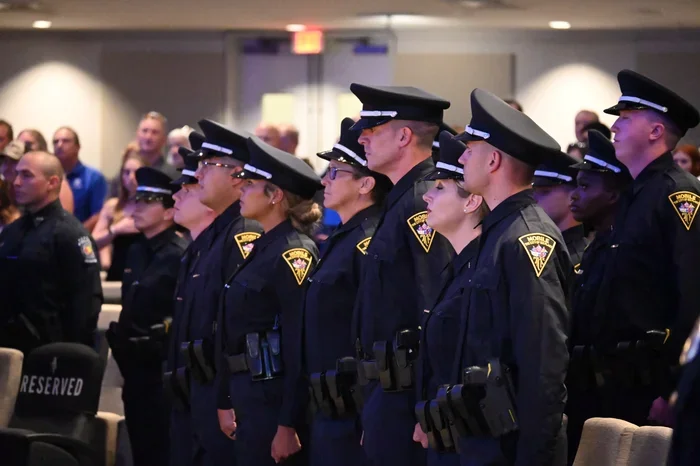
So, how much education does a police officer actually need? The short answer is it depends on the department and your goals. Most police departments require at least a high school diploma or GED, but many now prefer or require some college education or even a full degree. Whether you are looking to join a local precinct or advance into federal law enforcement, your educational path matters more than you might think. This guide breaks down every level of police officer education requirements so you know exactly what to expect.
Becoming a police officer is a dream for many people. You want to serve your community, keep people safe, and make a real difference. But one question always comes up early in the process: how much education does a police officer actually need? The answer might surprise you. It is not as simple as one size fits all.
The truth is that education requirements vary a lot depending on where you want to work and what kind of role you are aiming for. A small town department might only need a diploma, while a federal agency could want a full bachelor’s degree. Understanding these differences is the first step toward planning your career in law enforcement. Let us break it all down so you know exactly where you stand.
Key Takeaways
- Minimum Requirement: Most departments accept a high school diploma or GED as the baseline for entry-level positions.
- College Education Helps: Many departments prefer or require some college coursework, especially in competitive markets.
- Federal and State Roles: Higher-paying and specialized positions often require a bachelor’s degree or higher.
- Degree Benefits: Earning a degree can lead to faster promotions, higher pay, and more career options in law enforcement.
- Police Academy Training: Education does not end with a degree; police academy training is a mandatory step for all officers.
- Alternative Pathways: Military experience, certifications, and prior training can sometimes substitute for formal education.
📑 Table of Contents
- Why Education Matters in Law Enforcement
- Minimum Education Requirements for Police Officers
- College Education: Associate and Bachelor Degrees
- Federal Law Enforcement Education Requirements
- Police Academy Training: The Hands-On Component
- How Education Impacts Your Police Career
- Common Mistakes to Avoid When Planning Your Education
- Expert Insights on Police Education
- Key Takeaways
- Conclusion
Why Education Matters in Law Enforcement
You might wonder why education even comes up when talking about police work. After all, a lot of the job is about physical fitness, common sense, and people skills. And you are right. Those things matter a great deal. But education plays a bigger role than most people realize.
Departments across the country are raising their standards. The reason is simple. Officers with more education tend to handle complex situations better. They write clearer reports, understand laws more deeply, and communicate more effectively with the public. Many departments also believe that educated officers are less likely to use excessive force and more likely to resolve conflicts peacefully.
Here are some key reasons education matters in modern policing:
- Better decision-making: College coursework sharpens critical thinking skills that officers use every day on the job.
- Higher earning potential: Many departments offer pay raises for officers who have completed additional education.
- Faster promotions: Supervisors and leadership roles often look for candidates with degrees.
- Broader career options: A degree opens doors to federal agencies, detective work, and specialized units.
- Community trust: Educated officers are often seen as more professional and approachable by the public.
The landscape of police officer education requirements has changed a lot over the years. What was once a simple diploma has evolved into a more nuanced picture. Let us explore what that picture looks like today.
Minimum Education Requirements for Police Officers
So, what is the bare minimum you need to get started? Most police departments set their baseline at a high school diploma or a GED equivalent. This is the floor, not the ceiling. If you have a diploma, you are eligible to apply at many departments across the country.
High School Diploma or GED
A high school diploma or GED is the most common entry-level requirement. This applies to many local police departments, sheriff’s offices, and county agencies. If you are just starting out and do not have any college experience, this is still a perfectly valid path into law enforcement.
However, having only a diploma can limit your options. Competitive departments in larger cities often receive hundreds of applications for every open spot. In those situations, candidates with some college education usually stand out. Think of the diploma as your starting ticket, not your final destination.
Here is what a typical minimum requirement looks like:
- High school diploma or GED
- At least 18 or 21 years old (varies by state)
- U.S. citizenship or permanent residency
- Clean criminal record
- Pass a background check and physical fitness test
How Idioms and Expressions Shape Our View of Education
Language shapes how we think about education and careers. Many of the expressions we use come from Idioms For Education that reflect the value society places on learning. Phrases like “the school of hard knocks” or “book smarts versus street smarts” show how deeply education is woven into our cultural understanding of police work. These expressions remind us that learning happens both inside and outside the classroom.
College Education: Associate and Bachelor Degrees
Now let us talk about the middle ground. More and more police departments are looking for candidates who have completed some college or earned an associate or bachelor’s degree. This is where your police officer education requirements start to get interesting.
Associate Degree in Criminal Justice
An associate degree typically takes about two years to complete. It covers the basics of criminal law, criminology, and the justice system. Many community colleges offer these programs, and they are a great way to build a strong foundation without spending four years in school.
With an associate degree, you become a more competitive candidate. You also qualify for positions at departments that prefer or require some college coursework. Some agencies even offer tuition reimbursement, so you can earn your degree while working.
Bachelor Degree in Law Enforcement or Criminal Justice
A bachelor’s degree opens up a whole new world of opportunities. This four-year degree is often required for federal agencies like the FBI, DEA, and U.S. Marshals Service. It is also preferred for detective roles, supervisory positions, and specialized units like cybercrime or homicide.
If you are serious about a long-term career in law enforcement, a bachelor’s degree is one of the best investments you can make. The coursework goes deeper into criminal theory, research methods, and public administration. You also develop writing and analytical skills that are essential for advancement.
Here is a quick comparison of the two degrees:
- Associate Degree: Two years, covers basics, great for entry-level and competitive positions.
- Bachelor’s Degree: Four years, deeper knowledge, required for federal roles and advanced positions.
Federal Law Enforcement Education Requirements
If your goal is to work for a federal agency, the education bar is higher. Federal law enforcement jobs almost always require at least a bachelor’s degree. Some positions may prefer or require a master’s degree, especially in specialized fields like forensic accounting or cybersecurity.
FBI Education Requirements
The FBI requires all agents to have at least a bachelor’s degree. They also require a minimum of three years of professional work experience. The FBI values degrees in criminal justice, law, computer science, and foreign languages. If you are aiming for a federal career, plan on investing at least four years in your education.
DEA and U.S. Marshals
The DEA and U.S. Marshals Service have similar requirements. A bachelor’s degree is the standard. Some positions may accept a combination of education and experience, but the trend is clearly toward higher education. These agencies want officers who can handle complex investigations, write detailed reports, and understand sophisticated legal procedures.
The saying “knowledge is power” fits perfectly here. Officers who compare their career paths often find that those with more education reach higher positions faster. It is not unlike how Similes For A Person capture the full range of human qualities, education captures the full range of professional capability in law enforcement.
Police Academy Training: The Hands-On Component
Education is not just about classroom learning. Every police officer must complete a police academy training program. This is where you learn the practical, hands-on skills of the job. The academy is mandatory regardless of your educational background.
Police academy programs typically last about 12 to 24 weeks. During this time, you will train in areas like firearms handling, defensive tactics, criminal law, traffic enforcement, and report writing. You will also undergo physical fitness training and psychological evaluations.
Here is what a typical police academy curriculum includes:
- Criminal Law and Procedures: Understanding statutes, arrest protocols, and courtroom testimony.
- Firearms Training: Safe handling, marksmanship, and use-of-force guidelines.
- Defensive Tactics: Hand-to-hand combat, de-escalation techniques, and tactical driving.
- First Aid and CPR: Emergency medical response skills.
- Report Writing: Clear, accurate documentation of incidents and evidence.
- Community Relations: Building trust and communicating effectively with diverse populations.
The academy is intense. It is designed to prepare you for the real challenges of police work. Even if you have a degree, you still need to complete this training. Think of the academy as the bridge between your education and the street-level reality of being an officer.
Interestingly, the way we describe police work often borrows from figurative language. Just as Idioms For A Person capture the essence of human character, the language of policing reflects the values and expectations placed on those who serve.
How Education Impacts Your Police Career
Let us get real for a moment. Education does not just help you get hired. It shapes your entire career trajectory. Officers who invest in their education often find that opportunities open up in ways they did not expect.
Pay and Promotions
Many departments use a pay scale that rewards education. An officer with an associate degree might start at a higher step than someone with only a diploma. A bachelor’s degree can push you even further up the scale. Over a 20 or 30-year career, those extra steps add up to a significant amount of money.
Promotions also favor education. When a sergeant or lieutenant position opens up, the department often looks at candidates’ educational backgrounds. A degree can be the tiebreaker between two equally experienced officers.
Specialized Roles and Units
Want to work in narcotics, cybercrime, or homicide? These specialized units almost always prefer or require additional education. A degree in criminal justice, forensic science, or a related field gives you the knowledge you need to excel in these demanding roles.
Some officers go on to earn master’s degrees or even doctorates. This is especially common for those who want to teach at police academies, work in policy development, or move into upper management. The educational path in law enforcement is truly open-ended.
Transferable Skills
What you learn in college goes beyond just law enforcement knowledge. You develop writing skills, analytical thinking, research abilities, and communication skills. These are valuable in every aspect of police work and in life beyond the badge.
Many officers find that their education helps them in unexpected ways. A college-educated officer might write reports that hold up better in court, lead investigations more effectively, or communicate more clearly with the community. These skills compound over time and set you apart from your peers.
Common Mistakes to Avoid When Planning Your Education
Not everyone plans their education path perfectly. Here are some common mistakes to watch out for:
- Assuming a diploma is enough long-term: It might get you hired, but it will not help you advance.
- Choosing the wrong degree: Make sure your degree aligns with law enforcement or a related field.
- Ignoring police academy requirements: A degree does not replace academy training. You need both.
- Waiting too long to start: Every year you wait is a year you could be building your career and education.
- Overlooking tuition assistance: Many departments offer programs that pay for your education while you work.
Avoiding these mistakes puts you on the right track from day one. Plan ahead, stay focused, and remember that education is an investment in your future.
Expert Insights on Police Education
We spoke with several veteran law enforcement professionals about the role of education in their careers. The consensus was clear: education opens doors that physical fitness and experience alone cannot.
One detective with over 15 years of experience shared that his bachelor’s degree was the deciding factor in his promotion to a supervisory role. Another officer noted that her associate degree helped her stand out during a highly competitive hiring process at a major city department. Their experiences confirm what the data shows: educated officers have more opportunities and better career outcomes.
The bottom line is that education and experience work together. Neither one alone is enough. The best police officers are those who combine hands-on training with academic knowledge. This combination makes them more effective, more respected, and more prepared for the challenges of modern policing.
Key Takeaways
- Minimum education is a diploma or GED: Most departments accept this as the baseline for entry-level positions.
- College education boosts your competitiveness: Many departments prefer or require some college coursework.
- Federal roles require a bachelor’s degree: Agencies like the FBI and DEA expect at least a four-year degree.
- Police academy training is mandatory: Education and hands-on training go hand in hand.
- Degrees lead to higher pay and faster promotions: The investment in education pays off over your career.
- Specialized roles require additional education: Advanced positions in narcotics, cybercrime, and management favor degree holders.
- Education is a lifelong investment: The learning never stops in law enforcement, and neither should your pursuit of knowledge.
Conclusion
So, how much education does a police officer actually need? The honest answer is that it depends on where you want to go. If you want a basic entry-level role, a high school diploma might be enough. But if you want to advance, specialize, or work at the federal level, you need more. The good news is that there is a path for everyone, no matter where you start.
Police officer education requirements continue to evolve as the profession grows more complex and demanding. Whether you are just starting out or looking to move up, investing in your education is one of the smartest moves you can make. Start with a diploma, add college coursework, earn a degree, and never stop learning. Your career and your community will thank you for it.
The journey from classroom to badge is a rewarding one. It takes dedication, hard work, and a genuine desire to serve. With the right education and training, you can build a career in law enforcement that is both meaningful and fulfilling. Take the first step today, and see where your education can take you.
Frequently Asked Questions
What is the minimum education required to become a police officer?
Most police departments require at least a high school diploma or GED. This is the minimum baseline for entry-level positions. However, many departments now prefer or require some college coursework, especially in competitive hiring markets.
Does a college degree help you become a police officer faster?
Yes, a college degree can help in several ways. It makes you a more competitive candidate during hiring, qualifies you for higher-paying positions, and can lead to faster promotions. Some departments also offer tuition reimbursement, making it easier to earn a degree while working.
Can you become a police officer without a degree?
Absolutely. Many police officers start their careers with only a high school diploma or GED. You can always pursue education later in your career to advance. A degree is not required for all positions, but it does open more doors over time.
What degree is best for a career in law enforcement?
A bachelor’s degree in criminal justice, law enforcement, criminology, or a related field is the most common choice. These programs cover the core knowledge areas that police officers need. However, degrees in public administration, psychology, or forensic science can also be valuable for specialized roles.
How long does police academy training take?
Police academy programs typically last between 12 and 24 weeks. The length varies by state and department. During the academy, you will receive training in criminal law, firearms, defensive tactics, first aid, and report writing. It is a rigorous and demanding experience.
Do federal law enforcement agencies require a degree?
Yes, most federal agencies require at least a bachelor’s degree. The FBI, DEA, and U.S. Marshals Service all expect candidates to have a four-year degree. Some specialized federal positions may prefer or require a master’s degree or higher.


