
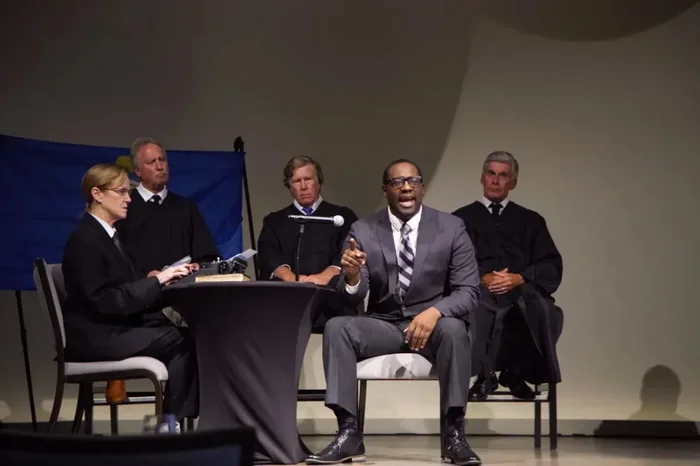
The brown vs board of education case began as a challenge to racial segregation in public schools. It started in Topeka, Kansas, when Oliver Brown fought for his daughter Linda’s right to attend a nearby white school. The Supreme Court’s unanimous 1954 ruling declared that separate educational facilities were inherently unequal, dismantling the “separate but equal” doctrine and igniting the modern civil rights movement.
Key Takeaways
- The case originated in Topeka, Kansas: Oliver Brown joined other parents in challenging school segregation after his daughter was forced to travel far for a Black-only school.
- It overturned Plessy v Ferguson: The 1896 ruling that allowed “separate but equal” facilities was finally struck down by the Supreme Court in 1954.
- Thurgood Marshall led the legal fight: The NAACP lawyer who argued the case later became the first Black Supreme Court Justice.
- The ruling sparked massive change: It fueled the civil rights movement and led to desegregation efforts across the country.
- Resistance was real: Many states and communities fought the ruling, leading to events like the Little Rock Nine crisis.
- The legacy continues today: Educational inequality remains a topic, and the case is still studied as a cornerstone of American justice.
📑 Table of Contents
- How Did Brown vs Board of Education Start and Change America
- The Roots of Segregation in American Schools
- How the Case Actually Began
- The Journey to the Supreme Court
- The Immediate Impact and Backlash
- How Brown vs Board of Education Changed Education Forever
- The Lasting Legacy of the Case
- Common Mistakes People Make About the Case
- Quick Tips for Understanding the Case
- Expert Insights
- Conclusion
How Did Brown vs Board of Education Start and Change America
Few legal cases have shaped a nation the way brown vs board of education did. This landmark decision didn’t just change laws. It changed how Americans think about fairness, equality, and the right to a good education. But how did it all begin? The story starts with a simple question: why should a child be told she can’t go to school just because of the color of her skin?
The journey from a small town in Kansas to the highest court in the land is nothing short of remarkable. It involved brave families, brilliant lawyers, and a nation grappling with its own contradictions. Understanding how brown vs board of education started gives us a deeper look at one of the most important moments in American history. It also shows us how ordinary people can spark extraordinary change.
The Roots of Segregation in American Schools
To understand how brown vs board of education started, you need to understand what came before it. For decades, racial segregation was the law of the land in many parts of the United States. Black and white children attended separate schools, drank from separate water fountains, and sat in separate sections on buses.
This system was built on the idea of “separate but equal.” It was a legal doctrine that said segregation was okay as long as the facilities for both races were supposedly equal. But in reality, education inequality was everywhere. Black schools were often underfunded, overcrowded, and lacking basic supplies. White schools had new books, better buildings, and more qualified teachers.
The “Separate But Equal” Doctrine
The “separate but equal” rule came from a much earlier Supreme Court case called Plessy v Ferguson in 1896. That ruling upheld racial segregation and gave states the green light to create separate facilities for Black and white citizens. For nearly 60 years, this doctrine shaped every aspect of daily life for Black Americans.
Public schools were no exception. In many Southern and border states, the law required Black children and white children to attend different schools. This wasn’t just about buildings and books. It was about sending a message: white children were superior, and Black children were inferior. The psychological damage of this message was enormous and long-lasting.
Jim Crow Laws and Daily Life
The Jim Crow laws enforced racial segregation across the South and parts of the North. These laws touched everything from transportation to restaurants to hospitals. But perhaps no area was more affected than education. Black children were often denied access to quality learning environments simply because of their race.
Many Black families knew this was wrong. But speaking up came with real risks. People lost jobs. Houses were burned. And in some cases, lives were taken. Despite these dangers, the seeds of resistance were always growing. The story of how brown vs board of education started is really a story of courage in the face of fear.
How the Case Actually Began
Now let’s get to the heart of the story. How did brown vs board of education start in the first place? It began in a quiet, unassuming city called Topeka, Kansas. Topeka wasn’t the Deep South. It wasn’t a place most people associated with the fight against segregation. But that’s exactly what made it so powerful.
Oliver Brown and His Daughter Linda
The case is named after Oliver Brown, a welder and assistant pastor at a local church. His daughter, Linda Brown, had to walk several blocks just to catch a bus to her segregated Black school. Even though there was a white school just a few blocks from their home, Linda was not allowed to attend it because of her race.
Oliver Brown wasn’t looking to become a civil rights hero. He just wanted a better life for his daughter. When a local NAACP chapter asked parents to come forward and challenge segregation, Oliver stepped up. He joined a group of parents who were tired of watching their children be treated unfairly.
Together, they filed a lawsuit in 1951. The case argued that segregated schools violated the equal protection clause of the 14th Amendment to the U.S. Constitution. It was a bold move. And it set the stage for one of the most important legal battles the country had ever seen.
The NAACP’s Strategic Plan
The NAACP Legal Defense Fund had been planning a direct challenge to school segregation for years. They chose Topeka carefully because it offered the best chance of success. The case was built on real stories of real families whose children suffered because of racial discrimination.
Thurgood Marshall was the lead attorney for the plaintiffs. Marshall was a brilliant legal mind who had been fighting segregation cases for over a decade. He knew this case could change everything. And he was right. But the road from Topeka to the Supreme Court was long and filled with setbacks.
The Journey to the Supreme Court
After the lower courts ruled against the plaintiffs, the case was appealed. The Supreme Court agreed to hear it. But here’s what many people don’t know: brown vs board of education wasn’t just one case. It was actually a combination of five different cases from different states, all challenging school segregation.
The Court bundled these cases together under the name Brown v. Board of Education. This strategy showed that segregation wasn’t just a Southern problem. It was a national issue that affected Black children everywhere.
Thurgood Marshall Takes the Stand
Marshall’s argument was powerful and straightforward. He told the justices that segregated schools caused psychological harm to Black children. He cited studies showing that Black children who attended segregated schools felt inferior. He argued that no amount of equal funding could fix the damage that separation itself caused.
The phrase separate but equal had been the law for over half a century. Marshall asked the Court to finally recognize that it was a lie. Separate could never be equal when it was built on the idea that one race was better than another.
The Historic 1954 Ruling
On May 17, 1954, the Supreme Court delivered its unanimous decision. Chief Justice Earl Warren wrote the opinion. The Court ruled that racial segregation in public schools was unconstitutional. The “separate but equal” doctrine had no place in American education.
The ruling stated that “separate educational facilities are inherently unequal.” Those nine words changed the country forever. It was a victory for civil rights and a blow against the system of Jim Crow laws that had oppressed Black Americans for generations.
The Immediate Impact and Backlash
The ruling was celebrated by many, but it also sparked fierce resistance. Not everyone in America was ready to accept desegregation. In fact, some states did everything in their power to fight the decision.
The Little Rock Nine
One of the most famous moments in the story of brown vs board of education happened in Little Rock, Arkansas. In 1957, nine Black students, known as the Little Rock Nine, tried to enter Central High School. The governor of Arkansas tried to block them using the National Guard.
President Eisenhower eventually sent federal troops to escort the students into the school. The images of those brave teenagers facing angry mobs shocked the nation. They showed the world that racial discrimination was still alive and that the fight for equality was far from over.
Resistance Across the South
Many Southern states passed laws to resist the ruling. Some counties closed their public schools rather than integrate. Others created private “segregation academies” that excluded Black students. The pushback was intense and sometimes violent.
But the ruling also energized the broader civil rights movement. It proved that the legal system could be used as a tool for justice. It inspired activists to push for change in other areas, including voting rights, public accommodations, and housing.
How Brown vs Board of Education Changed Education Forever
The impact of brown vs board of education on education was enormous. It opened doors that had been closed for generations. Black children finally had the legal right to attend the same schools as white children. But access was only the beginning.
Desegregation was a slow and painful process. Many schools resisted for years after the ruling. Some didn’t fully integrate until decades later. And even today, education inequality remains a serious issue in many communities.
The case also set a legal precedent that extended beyond schools. It was used to challenge segregation in other areas of public life. The idea that “separate is inherently unequal” became a guiding principle for civil rights law and policy.
The Role of Language and Metaphor in the Movement
One interesting aspect of the civil rights movement is how language shaped public opinion. The movement used powerful similes for education and metaphors for education to make its case. Phrases like “the walls of segregation” and “the bridge to equality” helped people visualize the struggle. These figurative tools made complex legal and social issues easier to understand and feel.
Similarly, the movement drew on common idioms for education to connect with everyday Americans. The idea that “knowledge is power” or that “education is the great equalizer” resonated deeply. These expressions reminded people that learning is a fundamental human right, not a privilege for the few.
The Lasting Legacy of the Case
More than 70 years later, the legacy of brown vs board of education is still being felt. The case is taught in schools across the country. It’s studied in law schools and debated in courtrooms. It remains a symbol of what America can achieve when it strives to live up to its founding ideals.
Thurgood Marshall’s work on this case eventually led him to become the first Black Supreme Court Justice. His journey from arguing against segregation to sitting on the highest court in the land is a testament to the power of persistence and justice.
Today, conversations about racial segregation in schools continue. Many communities still face education inequality in different forms. The achievement gap, funding disparities, and unequal access to resources are all issues that trace their roots back to the era of segregation.
The story of how brown vs board of education started reminds us that change often begins with ordinary people who refuse to accept injustice. Oliver Brown just wanted his daughter to have a fair chance. That simple desire helped transform the entire nation.
Common Mistakes People Make About the Case
There are several myths and misunderstandings about brown vs board of education that are worth clearing up:
- Myth: The case was only about schools. While the ruling focused on education, its principles apply to all areas of public life where segregation exists.
- Myth: The ruling ended segregation immediately. In reality, desegregation took years and faced massive resistance. Full integration is still a work in progress.
- Myth: Oliver Brown was a prominent activist. He was a regular man who stepped up because he cared about his daughter. He wasn’t a professional civil rights leader.
- Myth: The ruling was unanimous because everyone agreed. The unanimous decision was actually a strategic choice by Chief Justice Warren to strengthen the ruling’s legitimacy.
Quick Tips for Understanding the Case
- Start with the timeline: Knowing the sequence of events from 1951 to 1954 helps you understand the legal process.
- Follow the key players: Oliver Brown, Linda Brown, Thurgood Marshall, and Earl Warren each played a crucial role.
- Understand the legal framework: The 14th Amendment’s equal protection clause was the constitutional foundation for the ruling.
- Look at the broader context: The case didn’t happen in a vacuum. It was part of a larger civil rights movement that was building momentum.
- Consider the lasting impact: The ruling’s effects are still being felt in debates about school funding, integration, and equity today.
Expert Insights
Legal historians often point out that brown vs board of education was not just a legal victory. It was a moral one. The ruling forced the nation to confront the lie that racial separation could ever be truly equal. It shifted the conversation from whether segregation was acceptable to how to dismantle it.
Experts also emphasize the importance of the NAACP‘s long-term strategy. The organization had been building cases and gathering evidence for years before brown vs board of education was even filed. This patient, methodical approach is a lesson in how lasting change is built, not just won in a single courtroom.
Social scientists continue to study the psychological effects of the ruling. The doll experiments conducted by Kenneth and Mamie Clark were pivotal evidence in the original case. These studies showed that segregated schools made Black children feel inferior, and they remain a powerful example of how education inequality damages young minds.
Even the language used in the movement connects to broader cultural tools. The civil rights leaders used similes for education to draw comparisons and metaphors for education to paint vivid pictures of the struggle. Understanding these idioms for education helps us appreciate how storytelling and persuasion played a role in achieving justice.
Conclusion
The story of how brown vs board of education started is a story of hope, courage, and justice. It began with one father’s love for his daughter and grew into a movement that reshaped the nation. The ruling didn’t solve every problem related to racial discrimination and education inequality. But it gave millions of people a legal foundation to fight for their rights.
Today, when we talk about fairness in schools, we are still walking the path that Oliver Brown and countless others started. The case reminds us that the law can be a powerful force for good. But it also reminds us that justice requires constant effort and vigilance.
Understanding the origins of brown vs board of education helps us appreciate how far we’ve come and how far we still have to go. It’s a story every American should know. And it’s a story that continues to unfold in classrooms and courtrooms across the country every single day.
Frequently Asked Questions
What was the main argument in brown vs board of education?
The main argument was that racial segregation in public schools violated the equal protection clause of the 14th Amendment. The plaintiffs argued that separate schools were inherently unequal and caused psychological harm to Black children.
Who was Oliver Brown and why is the case named after him?
Oliver Brown was a welder and pastor from Topeka, Kansas, whose daughter Linda was forced to attend a segregated Black school far from home. He was one of the parents who filed the lawsuit, and his name came first alphabetically among the plaintiffs.
How did brown vs board of education impact the civil rights movement?
The ruling energized the civil rights movement by proving that the legal system could be used to challenge injustice. It inspired activists to push for desegregation in other areas and gave momentum to the broader fight for racial equality across the country.
What happened after the Supreme Court ruling in 1954?
The Court ordered desegregation “with all deliberate speed.” However, many states resisted. Events like the Little Rock Nine crisis in 1957 highlighted the intense opposition. Full desegregation took many more years and required ongoing legal and social pressure.
Was brown vs board of education a unanimous decision?
Yes, the Supreme Court ruled unanimously in favor of the plaintiffs. Chief Justice Earl Warren wrote the opinion, and the unanimous decision helped strengthen the ruling’s authority and legitimacy across the nation.
How does brown vs board of education affect education today?
The ruling set the legal precedent that segregation in public schools is unconstitutional. However, education inequality persists in many forms today, including funding disparities and unequal access to resources. The case continues to influence debates about school equity and racial discrimination in education.


