
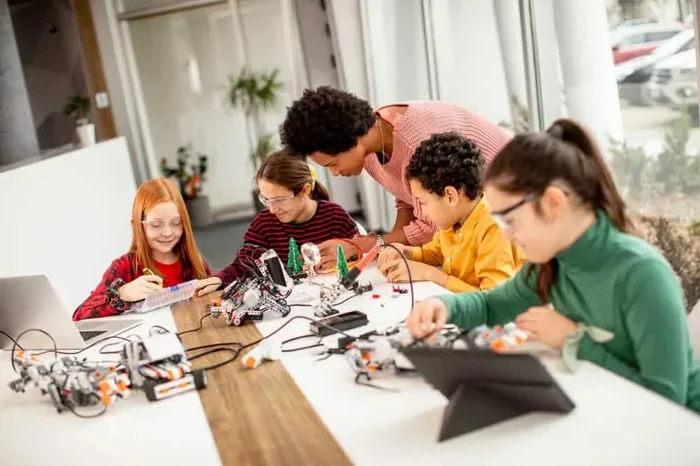
Stem education transforms how students learn by blending science, technology, engineering, and math into real-world experiences. It builds critical thinking, problem-solving skills, and creativity that prepare learners for future careers. Schools and educators are embracing stem learning because it works.
Imagine a classroom where students don’t just read about science. They build robots, design apps, and solve real problems in their community. That is the power of stem education. It is changing the way kids learn and preparing them for a world that demands creativity and technical skill.
Many parents and teachers ask, “How can stem education shape the future of learning?” The answer is clear. Stem learning blends four key subjects into one exciting approach. It makes school more engaging, more practical, and more meaningful. In this article, we will explore exactly how stem education is reshaping classrooms and careers around the world.
Like similes for education help us compare ideas in vivid ways, stem education gives students a framework to connect classroom lessons with real-life challenges. Whether your child is in elementary school or heading to college, stem learning offers benefits that last a lifetime.
Key Takeaways
- Future-Ready Skills: Stem education equips students with problem-solving and critical thinking abilities that employers demand.
- Real-World Application: Hands-on projects make learning relevant and memorable for students of all ages.
- Career Opportunities: Stem fields offer some of the fastest-growing and highest-paying jobs in the global economy.
- Inclusive Learning: Stem education opens doors for underrepresented groups in science and technology fields.
- Collaborative Growth: Team-based stem projects teach communication and cooperation alongside technical skills.
📑 Table of Contents
- What Is Stem Education and Why Does It Matter?
- How Stem Education Shapes Future Careers
- The Role of Hands-On Learning in Stem Classrooms
- How Stem Education Builds Critical Thinking Skills
- Overcoming Challenges in Stem Education
- The Future of Stem Education and Lifelong Learning
- How Parents Can Support Stem Education at Home
- Comparing Traditional Education vs. Stem Education
- Conclusion
What Is Stem Education and Why Does It Matter?
Stem education stands for Science, Technology, Engineering, and Mathematics. But it is much more than four subjects put together. It is an approach that teaches students to think critically, work collaboratively, and apply knowledge to real situations.
The Four Pillars of Stem Learning
Each pillar of stem education plays a unique role:
- Science: Encourages curiosity and exploration of the natural world.
- Technology: Builds digital literacy and familiarity with tools that drive modern life.
- Engineering: Teaches design thinking and how to create solutions from scratch.
- Mathematics: Strengthens analytical thinking and logical reasoning.
When these four areas come together, students gain a holistic learning experience. They stop seeing subjects as isolated topics and start understanding how everything connects. This integrated approach mirrors how problems work in the real world.
Think of it like metaphors for education that paint a bigger picture. Stem education paints a complete picture of how knowledge works in practice, not just in theory.
How Stem Education Shapes Future Careers
The job market is changing fast. Automation, artificial intelligence, and digital transformation are reshaping entire industries. Stem education prepares students for this shifting landscape by giving them skills that robots and algorithms cannot easily replace.
High-Demand Stem Careers
Here are some career paths that stem learning opens up:
- Software Developer: Coding and building digital products.
- Data Scientist: Analyzing complex data to drive business decisions.
- Biomedical Engineer: Designing medical devices and healthcare solutions.
- Environmental Scientist: Tackling climate change and sustainability challenges.
- Robotics Engineer: Creating machines that assist humans in daily life.
According to the U.S. Bureau of Labor Statistics, stem careers are growing much faster than non-stem fields. The Bureau of Labor Statistics projects that stem jobs will grow by about 10.8% from 2022 to 2032. This makes stem education one of the smartest investments a student can make.
But it is not just about landing a job. Stem learning teaches adaptability. Graduates with a stem education can pivot between industries, learn new tools quickly, and tackle unfamiliar challenges with confidence.
The Role of Hands-On Learning in Stem Classrooms
One of the biggest strengths of stem education is its focus on hands-on activities. Memorizing formulas or reading textbooks alone does not prepare students for real innovation. They need to touch, build, test, and refine.
Project-Based Learning Examples
Teachers around the world are using project-based learning to bring stem concepts to life:
- Bridge Building Challenge: Students use basic materials to design bridges that can hold weight. This teaches engineering principles and physics.
- App Development Projects: Kids create simple apps to solve everyday problems, building technology and design skills.
- School Garden Science: Students grow plants, measure data, and analyze results, combining biology with math.
- Coding Games: Learners build simple games using block-based coding, making technology fun and accessible.
These activities do more than teach content. They build problem-solving skills, creative thinking, and resilience. When a project fails, students learn to iterate and improve. That is a lesson no textbook can fully deliver.
Just as idioms for education add color and depth to language, hands-on stem activities add depth and meaning to learning. Students remember what they build far longer than what they read.
How Stem Education Builds Critical Thinking Skills
Critical thinking is the ability to analyze information, evaluate evidence, and form reasoned conclusions. Stem education is one of the best ways to develop this essential skill in young learners.
Why Critical Thinking Matters in the Modern World
We live in an age of information overload. Students need to distinguish reliable sources from misinformation. They need to question assumptions and think independently. Stem learning trains the brain to do exactly that.
When students tackle a stem challenge, they go through a natural thinking process:
- Identify the Problem: What exactly needs to be solved?
- Research and Gather Data: What information do we already have?
- Brainstorm Solutions: What are all the possible approaches?
- Test and Evaluate: Which solution works best?
- Reflect and Improve: What can we do better next time?
This process mirrors how professionals in stem fields work every day. By practicing it in school, students build habits of mind that serve them in every area of life.
Quick Tip: Encourage your child to ask “Why?” and “What if?” during every project. These simple questions boost analytical thinking and make stem learning more powerful.
Overcoming Challenges in Stem Education
Despite its many benefits, stem education faces real challenges. Schools and communities must work together to address these obstacles and ensure every student has access to quality stem learning.
Common Barriers to Stem Access
Here are some challenges that limit stem education in many areas:
- Lack of Resources: Many schools cannot afford lab equipment, computers, or specialized materials.
- Teacher Training: Not all educators feel confident teaching stem subjects or integrating them into lessons.
- Gender and Diversity Gaps: Women and minority groups remain underrepresented in many stem careers.
- Curriculum Rigidity: Traditional school schedules make it hard to fit in hands-on, project-based learning.
Solutions That Are Working
Good news is, many of these challenges have practical solutions:
- Community Partnerships: Local businesses and universities can donate equipment and mentor students.
- Professional Development: Ongoing teacher training helps educators feel comfortable with stem curriculum design.
- Inclusive Programs: Targeted outreach encourages girls and minorities to explore stem fields early.
- Flexible Scheduling: Schools that adopt block scheduling or project weeks see better engagement with stem activities.
When schools address these barriers, stem education becomes accessible to all students. And that is exactly what our future needs.
The Future of Stem Education and Lifelong Learning
Stem education does not stop at graduation. It plants the seed for lifelong learning. The skills students gain through stem learning stay with them and grow as they face new challenges throughout life.
Why Stem Skills Last a Lifetime
Unlike specific software tools or programming languages that become outdated, the core skills from stem education remain valuable:
- Adaptability: The ability to learn new tools and methods quickly.
- Analytical Thinking: The capacity to break down complex problems into manageable parts.
- Creativity: The confidence to approach challenges from fresh angles.
- Collaboration: The skill to work effectively in diverse teams.
- Digital Literacy: The comfort with technology that defines modern work and life.
These are often called 21st century skills, and they are exactly what employers and communities need most. As the world becomes more complex and interconnected, stem education gives learners the foundation to thrive.
Expert Insight: Many educators believe that stem education should not be limited to science and math classrooms. Integrating stem principles into humanities, arts, and social studies creates a richer, more connected learning experience for every student.
How Parents Can Support Stem Education at Home
You do not need to be a scientist or engineer to support stem learning at home. Simple everyday activities can spark curiosity and build stem skills in children.
Easy Ways to Encourage Stem at Home
- Cook Together: Baking teaches measurements, ratios, and chemistry in a fun, practical way.
- Build with Blocks or LEGO: Construction play develops spatial reasoning and engineering thinking.
- Explore Nature: Walks in the park can turn into biology lessons about plants, insects, and ecosystems.
- Watch Documentaries: Shows about space, oceans, or technology spark curiosity and conversation.
- Ask Open-Ended Questions: “What do you think will happen if…” encourages experimentation and hypothesis building.
By weaving stem concepts into daily life, parents reinforce what children learn in school and show them that stem education is not just for the classroom. It is a way of thinking about the world.
Quick Tip: Keep a “curiosity journal” at home. Encourage your child to write down questions they want to explore. This simple habit builds the research and inquiry skills that are at the heart of stem learning.
Comparing Traditional Education vs. Stem Education
Understanding the difference between traditional learning and stem education helps parents and educators make informed choices.
| Aspect | Traditional Education | Stem Education |
|---|---|---|
| Approach | Teacher-led, lecture-based | Student-driven, project-based |
| Focus | Memorization of facts | Application of knowledge |
| Skills Developed | Recall and repetition | Critical thinking and creativity |
| Real-World Connection | Limited | Strong and direct |
| Student Engagement | Variable | Typically high |
| Assessment Style | Standardized tests | Portfolio and project-based |
As the table shows, stem education offers a more dynamic and relevant approach to learning. It prepares students not just for tests, but for life.
Conclusion
Stem education is more than a trend. It is a fundamental shift in how we prepare the next generation for the challenges and opportunities ahead. By blending science, technology, engineering, and math into hands-on, engaging experiences, stem learning equips students with the skills they need to thrive in a rapidly changing world.
From building robots to solving environmental problems, stem education opens doors that traditional classrooms often cannot. It fosters critical thinking, creative problem-solving, and collaborative spirit in learners of all ages.
The question is no longer whether stem education matters. The question is how quickly we can make it available to every student, in every community, around the globe. The future of learning depends on it.
Frequently Asked Questions
What exactly does STEM stand for?
STEM stands for Science, Technology, Engineering, and Mathematics. It represents an integrated approach to learning that combines these four disciplines into hands-on, real-world experiences for students.
Why is STEM education important for young children?
Early exposure to stem education builds curiosity and foundational thinking skills. Young children naturally ask questions and explore the world around them, and stem learning channels that natural curiosity into structured discovery.
Can STEM education help with career readiness?
Absolutely. Stem careers are among the fastest-growing job sectors worldwide. Stem education gives students the technical skills, analytical thinking, and adaptability that employers actively seek in today’s workforce.
Is STEM education only for students who are good at math and science?
Not at all. Stem learning is designed for all students. It emphasizes creativity, collaboration, and problem-solving skills that benefit every learner, regardless of their starting strengths or background.
How can schools improve their STEM programs?
Schools can improve stem education by investing in teacher training, partnering with local businesses, incorporating project-based learning, and ensuring equitable access to resources for all students.
What role do parents play in supporting STEM learning?
Parents can support stem education by encouraging curiosity at home, engaging in hands-on activities together, asking open-ended questions, and showing enthusiasm for stem subjects in everyday life.


