
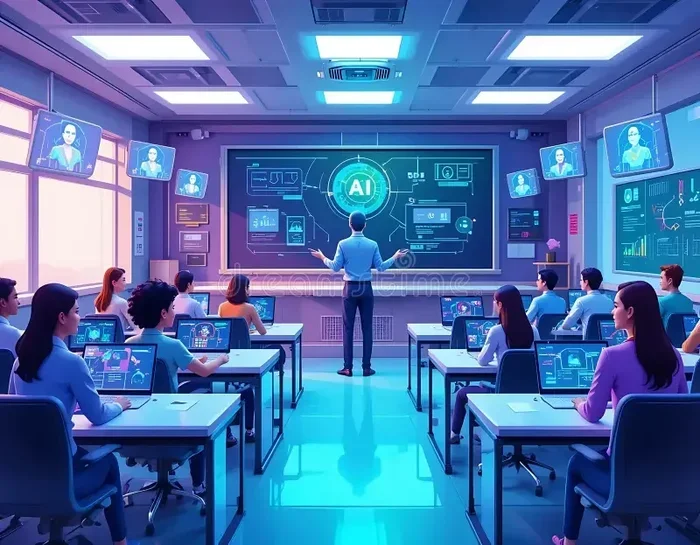
Artificial intelligence is transforming how students learn and how teachers teach. From personalized lesson plans to automated grading, AI is making education smarter and more accessible. This guide covers the biggest changes AI brings to classrooms today.
Artificial intelligence is no longer a futuristic idea. It is here, and it is reshaping classrooms around the world. How AI is changing education is a question on every educator’s mind. From elementary schools to universities, AI tools are making learning faster, smarter, and more personal than ever before.
Teachers are finding new ways to connect with students. Students are getting help that feels tailor-made just for them. The shift is real, and it is happening fast. In this article, we will break down the biggest ways AI is transforming education. You will learn what is working, what to watch out for, and what the future looks like.
Key Takeaways
- Personalized Learning: AI adapts lessons to each student’s pace and style, making education more effective.
- Time Savings for Teachers: AI handles grading, planning, and administrative tasks so teachers can focus on teaching.
- Smart Classroom Tools: Virtual assistants and chatbots provide instant help to students anytime.
- Better Engagement: AI-powered games and interactive tools make learning more fun and immersive.
- Future-Ready Skills: Students learn tech skills that prepare them for the evolving job market.
- Figurative Language Support: AI tools now help students grasp similes for education, metaphors for education, and idioms for education through contextual explanations.
📑 Table of Contents
- What Does AI in Education Actually Mean?
- Personalized Learning: Every Student Gets Their Own Path
- AI for Teachers: A Helping Hand, Not a Replacement
- AI-Powered Tools That Boost Student Engagement
- How AI Helps Students Learn Figurative Language
- Challenges and Concerns With AI in Education
- The Future of AI in Education
- Final Thoughts
What Does AI in Education Actually Mean?
Let us start with the basics. When people talk about AI in education, they mean using smart computer systems to support teaching and learning. These systems can analyze data, recognize patterns, and respond to individual needs. Think of it as a really clever teaching assistant that never sleeps.
AI is not here to replace teachers. It is here to help them do their jobs better. The technology handles repetitive tasks, gives instant feedback, and creates custom learning paths. This frees up teachers to do what they do best, which is inspire and guide students.
How AI Tools Work in the Classroom
AI tools use something called machine learning. This means they get better over time by studying patterns. For example, if a student keeps getting fractions wrong, the system notices. It then adjusts the lesson to focus on that area. The result is a learning experience that fits each student like a glove.
Some tools use natural language processing. This lets them understand and respond to student questions in plain language. Others use predictive analytics to flag students who might be falling behind. All of these technologies work together to create a smarter classroom.
Personalized Learning: Every Student Gets Their Own Path
One of the most exciting parts of how AI is changing education is personalized learning. In a traditional classroom, one teacher tries to reach thirty students at the same pace. That is hard. AI changes this completely.
Adaptive learning platforms study how each student learns. They track speed, accuracy, and confidence. Then they adjust the content in real time. A student who grasps a concept quickly moves ahead. A student who struggles gets extra practice and support.
Real Examples of Personalized AI Learning
Platforms like DreamBox and Carnegie Learning use AI to build custom math lessons. If a student is strong in multiplication but weak in division, the system focuses on division. It does not waste time on what the student already knows.
Language learning apps like Duolingo use AI to personalize vocabulary and grammar exercises. The app notices which words you forget and reintroduces them at the right time. This is called spaced repetition, and it works incredibly well.
Another great example is AI-powered writing assistants. These tools help students improve their essays by suggesting better word choices and fixing grammar errors. They also explain why something is wrong, which helps students learn rather than just copy fixes.
Quick Tips for Using Personalized AI Tools
- Start with one subject and one AI tool. Do not try to do everything at once.
- Let the student set their own pace. Resist the urge to rush them.
- Check the AI-generated reports regularly to spot trends and gaps.
- Combine AI tools with human guidance for the best results.
AI for Teachers: A Helping Hand, Not a Replacement
Teachers carry a heavy load. They plan lessons, grade papers, manage classrooms, and handle paperwork. AI steps in to take some of that weight off their shoulders. The goal is to give teachers more time to do what matters most, which is teaching.
AI for teachers is not about replacing the human touch. It is about amplifying it. When teachers spend less time on busywork, they have more energy for creative lesson design and one-on-one student support.
Automated Grading and Feedback
Grading is one of the most time-consuming parts of teaching. AI can grade multiple-choice tests in seconds. It can even assess short answers and essays with surprising accuracy. Tools like Gradescope and Turnitin use AI to speed up the grading process.
But here is the best part. AI does not just grade. It also gives detailed feedback. It can point out patterns in student mistakes. It can suggest which topics need more review. This saves teachers hours of work and gives students faster, more specific feedback.
Lesson Planning Made Easier
AI tools can now help teachers build lesson plans in minutes. You type in a topic and a grade level, and the AI suggests activities, resources, and assessments. Some tools even align lessons with state standards automatically.
This does not mean teachers should stop being creative. It means AI handles the heavy lifting of research and organization. Teachers can then focus on adding their own flair and expertise to the plan.
Common Mistakes Teachers Make With AI
- Trusting AI blindly: Always review AI-generated content for accuracy. AI makes mistakes sometimes.
- Over-relying on automation: Use AI as a helper, not a crutch. Your judgment still matters most.
- Ignoring student privacy: Choose tools that comply with data protection laws like FERPA and COPPA.
- Skipping training: Take time to learn any new AI tool before using it with students.
AI-Powered Tools That Boost Student Engagement
Let us face it. Keeping students engaged is tough. Many students struggle to stay focused during long lectures or repetitive exercises. AI-powered tools are changing this by making learning more interactive and fun.
Gamification is one of the biggest trends in AI-powered education. AI adapts game-based learning to each student’s skill level. If a student is doing well, the game gets harder. If they are struggling, it offers easier challenges and hints. This keeps students in the zone, where learning feels just right.
Virtual Learning Assistants
Imagine a student stuck on a homework problem at 10 PM. There is no teacher available. A virtual learning assistant powered by AI can step in. It explains the concept in a different way, offers examples, and guides the student to the answer.
These assistants are available 24/7. They do not get tired or impatient. For students who are shy about asking questions in class, AI chatbots offer a safe, judgment-free space to learn.
Smart Classrooms and the Internet of Things
Smart classrooms use AI along with connected devices to create a better learning environment. Smart boards respond to student input. AI cameras can track engagement levels and alert teachers when attention drops. Environmental sensors adjust lighting and temperature for optimal focus.
These systems collect data that helps schools improve over time. Teachers can see which activities work best and which topics students find most challenging. This data-driven approach makes education more effective for everyone.
How AI Helps Students Learn Figurative Language
One area where AI is making a big difference is helping students understand figurative language. Concepts like comparisons and implied meanings can be tricky for young learners. AI tools now offer interactive ways to break these ideas down.
For example, AI-powered language apps can teach students about similes for education by showing real-world examples and letting students practice creating their own. The system gives instant feedback, which helps students learn faster and remember more.
Similarly, AI tools can guide students through metaphors for education by comparing them to similes and showing how both figures of speech paint vivid pictures in writing. This kind of interactive comparison builds deeper understanding.
AI also supports learning idioms for education by providing context clues and cultural explanations. Instead of memorizing a list, students see idioms used in stories and conversations. This makes the meaning stick much better.
These AI-driven language tools are especially helpful for English language learners. They can slow down explanations, offer translations, and provide visual aids. The result is a more inclusive classroom where every student can thrive.
Challenges and Concerns With AI in Education
AI in education is not all sunshine and rainbows. There are real challenges that schools and families need to address. Being aware of these issues helps us use AI more responsibly.
Data Privacy and Security
AI systems collect a lot of student data. This includes grades, learning habits, and even browsing behavior. Schools must make sure this data is stored safely and used ethically. Parents should always know what data is being collected and why.
The Digital Divide
Not all students have access to the same technology. Some families cannot afford tablets or reliable internet. If AI tools become essential to learning, students without access could fall behind. Schools and governments need to work together to close this gap.
Over-Reliance on Technology
There is a risk that students and teachers lean too heavily on AI. Critical thinking and creativity still need human guidance. AI should enhance learning, not replace the hard work of thinking for yourself.
Quality and Accuracy of AI Content
AI is not perfect. It can generate incorrect information or biased content. Teachers must always review and verify what AI tools produce. Teaching students to question AI outputs is just as important as using the tools themselves.
The Future of AI in Education
So what comes next? The future of AI in education is bright and full of possibility. As the technology improves, we can expect even more personalized and effective learning experiences.
AI tutors may become as common as textbooks. They could provide one-on-one support to every student, no matter where they live. Rural schools could access the same quality of education as urban ones. This would be a game changer for equity in learning.
AI could also help identify learning disabilities earlier. By analyzing patterns in student performance, AI might flag signs of dyslexia or ADHD before traditional methods do. Early intervention can change a child’s entire academic journey.
Teachers will likely spend less time on paperwork and more time on mentorship. The human connection in education will always matter. AI simply gives teachers the tools to strengthen that connection.
How AI is changing education is not just a trend. It is a fundamental shift in how knowledge is shared and absorbed. Schools that embrace this change will prepare students better for the future.
Final Thoughts
Artificial intelligence is reshaping education in ways we could not have imagined a few years ago. From personalized learning paths to smart classroom tools, AI is making education more effective and more inclusive. Teachers are getting the support they need, and students are getting the attention they deserve.
The key is to use AI wisely. It is a powerful tool, but it works best when combined with human creativity and care. As we move forward, the goal should always be to enhance the learning experience, not to replace the people who make it special.
If you are a teacher, a student, or a parent, now is the time to explore AI tools. Start small, stay curious, and keep learning. The future of education is here, and it is powered by intelligence, both human and artificial.
Frequently Asked Questions
How is AI being used in education today?
AI is used for personalized learning, automated grading, virtual tutoring, and lesson planning. It helps teachers save time and gives students custom learning experiences that adapt to their pace and needs.
Will AI replace teachers in the future?
No. AI is a tool that supports teachers, not replaces them. Teachers provide empathy, creativity, and human connection that AI cannot replicate. The goal is to make teachers more effective, not unnecessary.
What are the best AI tools for students?
Popular tools include Duolingo for language learning, DreamBox for math, Gradescope for grading, and various AI writing assistants. The best tool depends on the subject and the student’s learning style.
Is AI in education safe for kids?
Most reputable AI education tools follow strict data privacy laws. However, parents and schools should always review the privacy policies of any tool they use. Choosing trusted platforms is essential for keeping student data safe.
How does AI help students with learning disabilities?
AI can adapt content to different learning speeds and styles. It can also detect patterns that may indicate learning challenges early on. This allows for timely support and interventions that can make a big difference.
What should schools look for when choosing AI tools?
Schools should look for tools that are easy to use, data compliant, and backed by good research. The tool should genuinely improve learning outcomes and not just add complexity to the classroom.
=== CONCLUSION ===
How AI is changing education is one of the most important conversations happening in schools today. The technology is not perfect, but the potential is enormous. Personalized learning, smarter grading, and engaging tools are just the beginning. As AI continues to evolve, education will become more adaptive, more inclusive, and more effective for everyone involved.
The best approach is to stay informed, stay curious, and keep the focus on students. AI is a powerful ally in the journey of learning. Used well, it can open doors that once seemed closed. The future of education is bright, and AI is helping light the way.


