
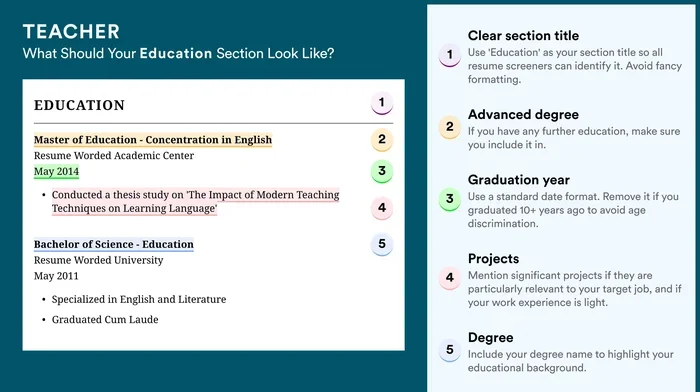
Knowing how to list continuing education on resume can set you apart from other candidates. This guide covers where to place it, what to include, and the best formats to use. You will learn actionable tips, common mistakes to avoid, and expert strategies to make your education section shine.
Your resume tells a story. And one of the most powerful chapters in that story is your continuing education. Whether you recently completed a professional development course, earned a new certification, or finished an online course, knowing how to present that information correctly can make a huge difference.
Many job seekers overlook the importance of their education section. They focus so much on work experience that they forget to highlight their lifelong learning efforts. But here is the truth: recruiters and hiring managers actively look for candidates who invest in their growth. A well-crafted education section signals that you are curious, driven, and committed to staying current in your field.
This guide will walk you through everything you need to know about resume education formatting. You will learn where to place your continuing education, what details to include, which formats work best, and the mistakes you should avoid at all costs. By the end, you will have a clear roadmap to build an education section that impresses.
Think of your resume like a language of its own. Just as education idioms add depth to how we talk about learning, the right presentation of your credentials adds depth to your professional narrative. The goal is to make every line count.
Key Takeaways
- Placement matters: The location of your continuing education section depends on your experience level and career stage.
- Include key details: Always list the course name, institution, date, and credential or certificate earned.
- Use the right format: Choose between reverse chronological, functional, or skills-based formats based on your situation.
- Avoid common mistakes: Do not overload your resume with irrelevant or outdated coursework.
- Tailor it to the job: Customize your education section for each application to match the job description.
- Leverage online learning: Online courses and professional certifications carry real weight with modern recruiters.
📑 Table of Contents
- Why Listing Continuing Education on Your Resume Matters
- Where to Place Continuing Education on Your Resume
- What to Include in Each Continuing Education Entry
- Best Formats for Listing Continuing Education
- Common Mistakes to Avoid When Listing Continuing Education
- Expert Tips to Make Your Education Section Stand Out
- Conclusion
Why Listing Continuing Education on Your Resume Matters
You might wonder, does anyone really care about courses taken after college? The answer is a strong yes. In today’s fast-changing job market, continuous learning is not just a nice-to-have. It is a must. Employers want to see that you stay updated with new trends, tools, and techniques in your industry.
Here are a few reasons why your continuing education deserves a spot on your resume:
- It shows initiative: Taking courses on your own proves you are self-motivated. You do not wait for someone else to tell you what to learn.
- It fills skill gaps: If you are transitioning careers or updating your skill set, additional education bridges the gap between where you are and where you want to be.
- It demonstrates relevance: Hiring managers prefer candidates who keep their knowledge current. Recent coursework signals that your skills are up to date.
- It sets you apart: Many applicants have similar work histories. Your professional development can be the differentiator that makes a recruiter choose you.
- It supports career advancement: Whether you are aiming for a promotion or a new role, additional credentials strengthen your candidacy.
Think of it this way. When comparing two candidates with similar experience, the one who invested time in skills training and educational achievements often wins the interview. Your resume is your marketing tool, and your education section is one of its strongest features.
Where to Place Continuing Education on Your Resume
The placement of your education section depends on your career stage and the type of roles you are targeting. There is no one-size-fits-all answer. Let us break down the best placement strategies.
For Recent Graduates and Early-Career Professionals
If you have limited work experience, place your education section near the top of your resume. Right after your contact information and summary, list your degrees, certifications, and relevant coursework. Recruiters will look here first because your academic background is your strongest asset at this stage.
Include your GPA if it is 3.5 or higher. List any honors, dean’s list mentions, or relevant class projects. These details add credibility and show that you took your studies seriously.
For Mid-Career and Senior Professionals
If you have years of work experience, your education section can move lower on the page. Place it after your work history. At this stage, your professional accomplishments carry more weight than your degrees. However, your continuing education still matters, especially if it is directly related to the job you are applying for.
Think about it this way. Just as similes for education help us compare learning experiences in relatable ways, your continuing education entries should be compared and contextualized against the job requirements. Place them where they will have the most impact.
For Career Changers
If you are switching industries, your continuing education becomes even more important. Consider giving it a prominent spot, perhaps right below your professional summary. Relevant coursework, bootcamps, and certifications show that you are serious about your new direction. They prove you have taken concrete steps to build knowledge in your target field.
For Executive and Leadership Roles
Senior leaders should include executive education programs, leadership workshops, and advanced certifications. These entries reinforce your authority and expertise. Place them in a dedicated section or integrate them into a broader “Professional Development” area.
What to Include in Each Continuing Education Entry
Every entry on your resume should be clear, specific, and relevant. Here is exactly what to include for each continuing education item on your resume.
Essential Details to List
- Course or Program Name: Use the full, official title. Do not abbreviate or shorten it unless the abbreviation is widely recognized.
- Institution or Provider: Name the university, online platform, training organization, or professional body that issued the credential.
- Completion Date or Date Range: Include the month and year you finished the course. If it is ongoing, note that clearly.
- Credential or Certificate Earned: If you received a certificate, license, or digital badge, mention it.
- Relevant Coursework or Topics: For recent graduates or career changers, listing 2-3 key topics can add value.
- Hours or Credits Completed: Some programs track hours. Including this can add weight to your entry.
What to Leave Out
Not every course deserves a spot on your resume. Here is what you should skip:
- Courses unrelated to your target job or industry
- Very old coursework that no longer reflects your current skills
- Basic or introductory courses that do not add value
- Anything that takes up space without strengthening your candidacy
The goal is quality over quantity. Each entry should serve a purpose and support your job qualifications. Just like metaphors for education help us describe learning in powerful ways, each entry on your resume should paint a strong picture of your growth and commitment.
Quick Tips for Writing Education Entries
- Use action verbs when describing projects or outcomes from your coursework.
- Keep each entry to 1-3 lines maximum.
- Align your language with keywords from the job posting.
- Prioritize credentials that are most relevant to the position.
- Update your resume regularly as you complete new training.
Best Formats for Listing Continuing Education
How you format your education section can make it easy to scan or easy to miss. The right format depends on your background and the impression you want to create.
Reverse Chronological Format
This is the most common and widely accepted format. List your most recent continuing education first, then work backward. This format works well for most professionals because it highlights your latest achievements and shows a clear timeline of growth.
Example:
- Google Analytics Certification – Google Skillshop, 2024
- Project Management Professional (PMP) – PMI, 2023
- Data Science Bootcamp – General Assembly, 2022
Functional Format
This format groups your education by category rather than date. It works well for career changers or those with diverse learning experiences. You might create sections like “Technical Training,” “Leadership Development,” and “Industry Certifications.”
Skills-Based Format
This format ties your education directly to the skills you bring. Instead of listing courses, you list skills and then note the education that supports each one. This approach is excellent for roles where specific competencies matter more than formal credentials.
Comparison Table: Which Format Works Best?
| Format | Best For | Pros | Cons |
|---|---|---|---|
| Reverse Chronological | Most professionals | Clear timeline, easy to scan | May highlight gaps |
| Functional | Career changers | Highlights skills, flexible | Less familiar to some recruiters |
| Skills-Based | Technical roles | Directly ties learning to job needs | Can feel repetitive |
Choose the format that best supports your career advancement goals. If you are unsure, reverse chronological is always a safe and effective choice.
Common Mistakes to Avoid When Listing Continuing Education
Even well-intentioned job seekers make errors when presenting their education. Avoiding these mistakes will keep your resume polished and professional.
Mistake 1: Including Irrelevant Coursework
Just because you completed a course does not mean it belongs on your resume. If a course has no connection to the job you are applying for, leave it off. Every line of your resume should serve a strategic purpose.
Mistake 2: Using Vague Descriptions
Phrases like “various online courses” or “multiple training programs” are too vague. They tell the recruiter nothing. Always be specific about the course name, provider, and what you gained from it.
Mistake 3: Listing Incomplete Programs
If you did not finish a program, think carefully before including it. In most cases, incomplete programs can raise questions rather than build credibility. However, if the coursework you did complete is highly relevant, you can list it with a note like “Coursework completed” or “In progress.”
Mistake 4: Forgetting to Update Regularly
Your resume is a living document. As you complete new professional certificates and training programs, update your education section. An outdated resume signals that you have stopped learning, which is the opposite of what employers want to see.
Mistake 5: Overloading with Too Many Entries
More is not always better. If your continuing education section stretches to a full page, you have too many entries. Curate it carefully. Include only the most impactful and relevant items.
Expert Tips to Make Your Education Section Stand Out
Now that you know the basics, let us go deeper. These expert strategies will help you elevate your continuing education section from good to great.
1. Align Your Education with the Job Description
Read the job posting carefully. Identify the skills and qualifications the employer is looking for. Then, make sure your resume education section highlights the coursework and credentials that match those requirements. This is called tailoring your resume, and it works.
2. Use Numbers and Metrics Where Possible
Quantify your learning achievements when you can. Instead of saying “Completed a data science course,” say “Completed a 120-hour data science bootcamp covering Python, machine learning, and statistical analysis.” Numbers add credibility and help recruiters understand the scope of your commitment.
3. Highlight Industry-Recognized Credentials
Some certifications carry more weight than others. Prioritize credentials from recognized organizations and institutions. If you have a professional certification from a well-known body, make sure it stands out in your education section.
4. Show the Impact of Your Learning
Do not just list what you learned. Show how it helped you in your role. For example, “Completed a leadership development program and subsequently led a team of 10 to deliver projects 20% ahead of schedule.” This connects your education to real results.
5. Keep It Fresh and Current
Recruiters respond well to recent learning. If you completed a course within the last 1-2 years, give it more prominence. Older coursework can be moved lower or consolidated into a single line.
6. Do Not Undervalue Online Learning
Online courses from platforms like Coursera, edX, LinkedIn Learning, and Udemy are widely respected today. Do not hesitate to include them. Employers understand that workforce development happens in many forms now, and online learning is one of the most accessible and practical ways to grow your skills.
7. Create a Separate Section for Certifications if Needed
If you have multiple professional certifications, consider creating a dedicated “Certifications” section rather than burying them in your education area. This draws attention to your credentials and makes them easy to find.
Conclusion
Listing your continuing education on resume does not have to be complicated. With the right placement, format, and details, you can turn your educational achievements into a powerful career tool. Remember to keep your entries specific, relevant, and updated. Avoid the common mistakes that weaken your resume, and use the expert tips in this guide to make your education section work harder for you.
Your commitment to lifelong learning is one of your greatest assets. Make sure your resume reflects that commitment clearly and confidently. Every course, certification, and training program you complete is a step forward. Your resume should show that progress in a way that grabs attention and opens doors.
Take the time to review and refine your education section today. A few thoughtful updates can lead to career advancement opportunities you never expected. Your future self will thank you.
Frequently Asked Questions
Where should continuing education go on a resume?
For recent graduates, place it near the top. For experienced professionals, put it after your work history. For career changers, give it a prominent spot near the top or in a dedicated section. The key is to place it where it will have the most impact based on your career stage.
Should I include online courses on my resume?
Yes, absolutely. Online courses from reputable platforms are widely accepted by employers today. They show you are proactive about professional development and staying current in your field. Just make sure the courses are relevant to the job you are applying for.
How do I format continuing education entries?
Use a consistent format for each entry: Course Name, Institution, and Completion Date. Keep each entry to 1-3 lines. Use reverse chronological order (most recent first) for the clearest presentation.
Can I include courses I am currently taking?
Yes, you can list in-progress courses. Use a phrase like “Expected completion: December 2024” or “In progress” to indicate the timeline. Just be prepared to discuss what you have learned so far in an interview.
How many continuing education entries should I include?
Quality matters more than quantity. Include 3-7 strong, relevant entries that support your career goals. If you have more, curate the list to only the most impactful and job-relevant ones.
Does continuing education really help with job searches?
Yes, it does. Employers value candidates who invest in their growth. Continuing education shows initiative, relevance, and a commitment to staying current. It can be the deciding factor between you and another candidate with similar experience.


