
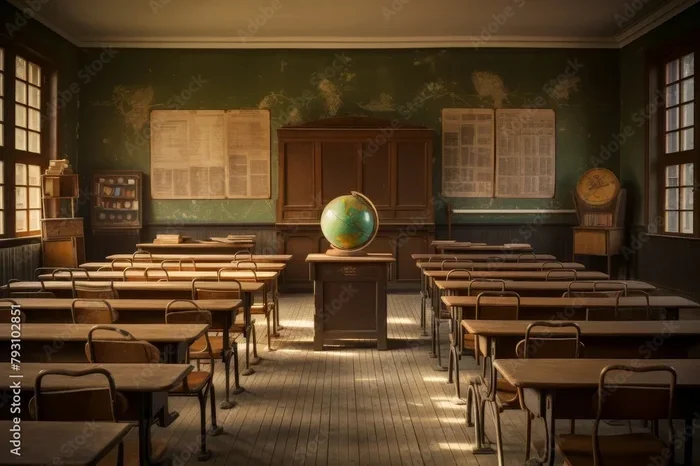
The modern education system was shaped by several key figures, with Horace Mann often called the father of American public schooling. The system has roots in the Prussian model of the 1800s and has evolved through centuries of reform. Understanding who invented the education system helps us appreciate why schools look the way they do today.
Key Takeaways
- Horace Mann is widely regarded as the father of the American public education system and a driving force behind compulsory schooling laws.
- The Prussian education model provided the structural blueprint for modern schooling, including age-based grade levels and standardized curricula.
- Other pioneers like Maria Montessori, John Dewey, and Friedrich Froebel introduced innovative approaches that still influence classrooms today.
- Understanding who invented the education system helps us appreciate the evolution of modern education and identify areas for improvement.
- The education system development is ongoing, and each generation has the opportunity to contribute to meaningful education reform.
- Access, equity, and quality remain the central challenges that educators and policymakers continue to address.
- Studying the history of schooling gives us the perspective and tools needed to build a better educational framework for the future.
📑 Table of Contents
- The Ancient Roots of Formal Education
- Horace Mann: The Father of American Education
- The Prussian Education Model: A Global Influence
- Other Key Figures in Education History
- How the Modern Education System Took Shape
- Why Understanding Education History Matters
- Quick Tips for Exploring Education History
- Common Mistakes People Make About Education History
- Expert Insights on Education System Origins
- Conclusion
The Ancient Roots of Formal Education
Have you ever wondered who invented the education system? The answer is more complex than you might think. Education as we know it today did not appear overnight. It grew over thousands of years through the efforts of many thinkers, reformers, and governments.
The earliest forms of teaching date back to ancient civilizations. In Greece, philosophers like Socrates and Plato believed that learning was the foundation of a good society. They taught students how to think, debate, and question the world around them. In Rome, education focused on rhetoric, law, and public speaking.
During the Middle Ages, the Catholic Church became the main keeper of knowledge. Monks copied manuscripts and taught young boys in monastery schools. Learning was limited mostly to religious instruction and basic literacy. Very few people had access to formal education at this point in history.
Fast forward to the 1800s, and everything began to change. Governments started to see education as a tool for building stronger nations. This shift led to the creation of the public school system that most of the world follows today. But the story really begins much earlier than that.
Early Education in Ancient Civilizations
The ancient Greeks and Romans laid the groundwork for structured learning. They believed that a well-educated citizen was essential for a thriving democracy. Students learned reading, writing, math, music, and physical training. These subjects formed the basis of what we now call a curriculum design.
In ancient China, Confucius taught that education was a path to moral character. His ideas influenced schooling for over two thousand years. In India, the Gurukul system placed students with teachers in a residential setting. Each of these early models contributed something valuable to the education system history we study today.
The ancient world also gave us the concept of education standards. Teachers set expectations for what students should know and be able to do. These early standards were simple compared to today, but they established the principle that learning should follow a structured path.
The Role of the Church in Preserving Knowledge
When the Roman Empire fell, much of the structured learning in Europe disappeared. The Catholic Church stepped in to fill the gap. Monasteries became centers of learning where monks preserved texts and taught young apprentices. The Church controlled what was taught and who could learn.
This period lasted for several centuries. Education was closely tied to religion. Students memorized religious texts and learned Latin. The idea of universal learning was far from anyone’s mind at this point. Education was a privilege, not a right. Only the wealthy and the clergy had access to meaningful schooling.
This began to change during the Renaissance. Scholars rediscovered classical Greek and Roman texts. New ideas about human potential and individual worth started to spread. The seeds of the modern learning system were planted during this exciting period of cultural and intellectual growth.
Horace Mann: The Father of American Education
When people ask who invented the education system in America, the name Horace Mann comes up again and again. Born in 1796 in Massachusetts, Mann was a lawyer and politician who became a passionate advocate for public schooling.
Mann believed that every child deserved access to quality education, regardless of their family’s wealth or social status. He traveled across Massachusetts, visiting schools and speaking with teachers. He saw firsthand how unequal education opportunities were hurting communities and limiting futures.
In 1837, Mann became the first Secretary of the Massachusetts Board of Education. This role gave him the power to push for major changes. He worked tirelessly to create a modern education framework that would serve all children, not just the privileged few.
Mann’s Key Contributions to Schooling
Mann introduced several ideas that transformed American schooling. He advocated for teacher training programs to ensure educators were well-prepared. He pushed for longer school years and standardized curricula. He also fought for free public education funded by local taxes.
Here are some of his most important achievements:
- Established normal schools to train teachers professionally
- Advocated for age-based grade levels in schools
- Promoted the idea that education is a basic right
- Worked to reduce the influence of religion in public schools
- Championed equal access to education for girls and boys
Mann’s vision was bold and ahead of its time. He wanted schools to be places where every child could learn and grow. His efforts earned him the title of the leading education reformer who shaped American public schooling for generations to come.
The Education Reform Movement Gains Momentum
Mann was not alone in his mission. The education reform movement gained momentum in the 1800s. Many people recognized that an educated population was essential for a healthy democracy. Reformers across the country worked to expand access to schooling for all children.
This movement led to the creation of compulsory education laws. These laws required children to attend school up to a certain age. The idea was simple but powerful: every child deserves the chance to learn. Today, most countries have some form of compulsory education in place, a direct legacy of Mann’s advocacy.
The Prussian Education Model: A Global Influence
While Horace Mann was transforming America, another education model was making waves across the world. The Prussian education system, developed in the early 1800s in Prussia (modern-day Germany), became a blueprint for modern education systems worldwide.
Prussia designed its education system with a clear goal: to create disciplined, loyal citizens who could serve the state. The model included mandatory attendance, standardized curricula, and trained teachers. It was one of the first systems to organize learning by age and grade level.
Many historians believe that Mann drew inspiration from the Prussian model when he redesigned American schooling. The structure of attending school for a set number of hours each day, following a fixed curriculum, and progressing through grade levels all trace back to Prussia. This school system origin shaped the way billions of people experience learning today.
How Prussia Shaped Modern Schooling
The Prussian model introduced several concepts that are now standard in classrooms around the world:
- Age-based grade levels
- Standardized testing and assessments
- Compulsory attendance laws
- Professional teacher training
- A structured curriculum divided by subjects
These elements might feel familiar. They are the building blocks of the academic system that millions of students experience every day. The Prussian influence is a key reason why schools across the globe share so many structural similarities.
However, the Prussian model also had its critics. Some argued that it focused too much on obedience and not enough on creativity. This debate continues today as educators and education reformers work to balance structure with innovation in the classroom. Finding that balance remains one of the biggest challenges in education system development.
Other Key Figures in Education History
While Horace Mann and the Prussian model get much of the attention, other pioneers also played crucial roles in shaping how we learn. The story of who invented the education system involves many voices, not just one. Each contributor brought a unique perspective that enriched the educational framework we rely on today.
Maria Montessori and Child-Centered Learning
Maria Montessori was an Italian physician who developed a unique approach to early childhood education in the early 1900s. She believed that children learn best through hands-on experiences and self-directed play. Her method, known as the Montessori method, is still used in schools around the world today.
Montessori classrooms look different from traditional schools. Children choose their own activities and learn at their own pace. The teacher acts as a guide rather than a lecturer. This approach challenged the rigid structures of the time and opened new doors for classroom learning. Montessori’s work reminds us that there is no single right way to teach.
John Dewey and Experiential Learning
John Dewey was an American philosopher and educator who championed experiential learning. He believed that education should be practical and connected to real life. Dewey argued that students learn better when they actively engage with the world around them rather than simply memorizing facts.
His ideas led to major changes in how schools were designed. Progressive education movements drew heavily from Dewey’s philosophy. Today, many educators still follow his principles of hands-on, student-centered learning. Dewey’s influence on the education structure of modern schools is undeniable and far-reaching.
Friedrich Froebel and the Birth of Kindergarten
Friedrich Froebel, a German educator, invented the concept of kindergarten in the 1830s. He believed that young children learn best through play, music, and creative activities. Froebel’s idea of a “children’s garden” where kids could grow and explore became a cornerstone of early childhood education structure.
Kindergarten is now a standard part of the school system origin in most countries. Froebel’s vision of playful, nurturing early education has had a lasting impact on how young children are taught. His work also highlighted the importance of the early years in a child’s education system history.
How the Modern Education System Took Shape
The education system we know today is the result of centuries of trial, error, and reform. It has been shaped by governments, philosophers, and everyday teachers who believed in the power of learning. Understanding this education system development helps us see why schools function the way they do.
The Spread of Public Education Worldwide
By the late 1800s, most developed countries had established some form of public education. Governments recognized that an educated population was essential for economic growth and social stability. Schools became more accessible, and more children attended classes regularly.
The 20th century brought even more changes. Education became more inclusive. Girls and children from marginalized communities gained greater access to schooling. The educational framework expanded to include a wider range of subjects and teaching methods. This period marked a turning point in the global push for universal education.
Compulsory education laws spread from Europe to the Americas, Asia, and Africa. By the mid-20th century, most nations had committed to providing basic education for all children. This was one of the greatest achievements in the history of modern education and a direct result of centuries of advocacy and reform.
Technology and the Future of Learning
Today, technology is reshaping education at a rapid pace. Online learning platforms, digital textbooks, and virtual classrooms are changing how students access knowledge. The COVID-19 pandemic accelerated these changes and forced schools to adapt quickly to new realities.
As we look to the future, the question of who invented the education system reminds us that education is always evolving. The system we have today is not final. It will continue to change as new ideas, technologies, and needs emerge. The next generation of education reformers will build on the foundation laid by Mann, Froebel, Dewey, and countless others.
Common Challenges in Modern Education
Despite the progress made over the centuries, the modern education system still faces significant challenges. These issues remind us that the work of improving schooling is far from over:
- Unequal access to quality education in rural and urban areas
- Overcrowded classrooms and limited resources
- A one-size-fits-all approach that does not meet every student’s needs
- Teacher shortages and burnout across many regions
- Balancing standardized testing with creative and critical thinking
These challenges show us that education reform must continue. Each generation inherits the system and has the opportunity to improve it. The history of education teaches us that progress is possible when dedicated people work together toward a common goal.
Why Understanding Education History Matters
Learning about the history of education gives us valuable perspective. It helps us understand why certain structures exist and how they can be improved. When we know who invented the education system and what they were trying to achieve, we can make better decisions about the future of learning.
History also shows us that education systems are not perfect. They reflect the values, biases, and priorities of the societies that created them. By studying the past, we can identify what works and what does not. We can build a more effective education system that serves everyone, not just a select few.
There is an old saying: knowledge is power. This simple idiom for education captures the essence of why education matters. When we invest in learning, we invest in the future of our communities and our world.
Similarly, the right similes for education can help us describe the learning experience in vivid and memorable ways. Comparing education to a journey, a foundation, or a bridge helps us see its value more clearly. Language shapes how we think about learning.
And just as a well-chosen metaphor for education can inspire deeper thinking, understanding the history of schooling can spark new ideas for improvement. Language and learning go hand in hand. Both have the power to transform how we see the world.
The history of education is a story of progress, struggle, and hope. From ancient Greek philosophers to modern-day reformers, each generation has contributed to the system we rely on today. By appreciating this history, we honor those who came before us and empower those who will come after.
Quick Tips for Exploring Education History
Want to dive deeper into the history of education? Here are some quick tips to get you started:
- Read books and articles about famous education reformers like Horace Mann and John Dewey
- Visit local museums or historical sites related to early schooling
- Talk to older family members about their school experiences
- Explore different education models from around the world
- Follow education policy news to see how the system continues to evolve
Common Mistakes People Make About Education History
There are a few common misconceptions about who invented the education system that are worth addressing:
- Mistake 1: Thinking that one person invented the entire system. Education is the result of many contributions over centuries.
- Mistake 2: Assuming the system has always looked the way it does today. Schooling has changed dramatically over time.
- Mistake 3: Ignoring the role of non-Western education traditions. Many cultures developed rich educational practices independently.
- Mistake 4: Believing that the system is fixed and cannot be changed. Education reform happens every day at all levels.
Expert Insights on Education System Origins
Historians and educators agree that the education system is a living, breathing entity. It adapts to the needs of each generation. According to education scholars, the most successful systems are those that balance structure with flexibility, tradition with innovation, and access with quality.
Dr. Diane Ravitch, a prominent education historian, has written extensively about the evolution of American schooling. She emphasizes that understanding the past is essential for making informed decisions about the future of education. Her work reminds us that the system we have today is the product of many hands and many voices.
Another key insight from experts is that the best education systems prioritize equity. When every child has access to quality learning, entire communities benefit. This principle, championed by Horace Mann over 150 years ago, remains at the heart of education reform efforts today. The education reformer spirit lives on in classrooms and policy rooms around the world.
Key Takeaways
- Horace Mann is widely regarded as the father of the American public education system and a driving force behind compulsory schooling laws.
- The Prussian education model provided the structural blueprint for modern schooling, including age-based grade levels and standardized curricula.
- Other pioneers like Maria Montessori, John Dewey, and Friedrich Froebel introduced innovative approaches that still influence classrooms today.
- Understanding who invented the education system helps us appreciate the evolution of modern education and identify areas for improvement.
- The education system development is ongoing, and each generation has the opportunity to contribute to meaningful education reform.
- Access, equity, and quality remain the central challenges that educators and policymakers continue to address.
- Studying the history of schooling gives us the perspective and tools needed to build a better educational framework for the future.
Conclusion
The question of who invented the education system does not have a single answer. It is the product of centuries of human effort, debate, and vision. From ancient philosophers to modern reformers, many individuals and cultures have contributed to the system we rely on today.
Horace Mann stands out as a pivotal figure in American education. His tireless advocacy for public schooling and teacher training transformed the lives of millions. The Prussian model provided a structural foundation that schools around the world still follow. And visionaries like Montessori, Dewey, and Froebel introduced approaches that put children at the center of learning.
As we look to the future, the history of education reminds us that the system is never finished. It is always evolving, always improving, always responding to the needs of society. By understanding where our education system came from, we can make better choices about where it should go next.
Every child deserves access to quality learning. Every teacher deserves the support and training to do their best work. And every community benefits when its members are educated and empowered. That is the legacy of those who built the education system we have today, and that is the promise we carry forward into the future.
Frequently Asked Questions
Who is considered the father of the modern education system?
Horace Mann is widely regarded as the father of the American public education system. He championed free, universal schooling and pushed for teacher training programs that shaped modern education. His work in the 1800s laid the foundation for the education system we have today.
Did one person invent the education system?
No, the education system was not invented by a single person. It evolved over centuries through the contributions of many thinkers, reformers, and governments. Figures like Horace Mann, Maria Montessori, and John Dewey each played important roles in shaping how we learn today.
What is the Prussian education model?
The Prussian education model was developed in early 1800s Germany and became a blueprint for modern schooling worldwide. It introduced concepts like age-based grade levels, compulsory attendance, and standardized curricula. Many elements of this model are still used in classrooms today.
Why is understanding education history important?
Understanding education history helps us appreciate why schools are structured the way they are. It also reveals the values and priorities of the societies that built these systems. This knowledge empowers us to identify what works and push for meaningful education reform in the future.
How has the education system changed over time?
The education system has evolved significantly from ancient times to the present. Early education was limited to religious instruction and the elite. Over centuries, compulsory education laws, teacher training, and inclusive policies expanded access. Today, technology continues to reshape how students learn and teachers teach.
What role did women play in the development of the education system?
Women played a crucial role in education history, both as students and as teachers. Horace Mann himself advocated for equal education access for girls. Over time, women became the majority of teachers and increasingly influenced education policy, curriculum design, and the overall educational framework.


