
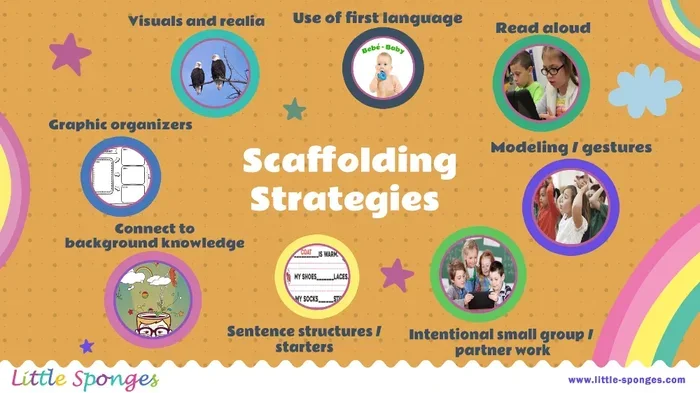
Scaffolding in education is a teaching method that provides temporary support to help students learn new concepts at their own pace. It builds on prior knowledge and gradually shifts responsibility from the teacher to the student. This approach boosts confidence, improves retention, and makes complex topics feel manageable for every learner.
Key Takeaways
- Scaffolding bridges the gap between what a student already knows and what they are ready to learn next.
- It draws from Vygotsky’s Zone of Proximal Development, a foundational theory in educational psychology.
- Teachers benefit too, as scaffolding creates more focused, intentional lesson planning.
- Students gain independence faster because scaffolding fades as competence grows.
- Scaffolding applies beyond school, helping professionals, athletes, and lifelong learners master new skills.
📑 Table of Contents
What Is Scaffolding in Education?
Imagine building a house. You don’t start with the roof. You begin with a strong foundation and add layers one step at a time. Scaffolding in education works the same way. It is a teaching approach where instructors provide temporary support to help students reach a learning goal they could not achieve alone.
The term comes from the world of construction. Just as a scaffold helps workers reach high places safely, educational scaffolding helps learners climb toward new understanding. Once the building is complete, the scaffold comes down. Similarly, as students grow more confident and capable, the support gradually fades away.
This method is rooted in the work of psychologist Lev Vygotsky. He introduced the idea of the Zone of Proximal Development, which describes the space between what a student can do independently and what they can do with guidance. Scaffolding fills that space with structured help, making learning feel achievable and exciting.
When teachers use instructional scaffolding, they break difficult tasks into smaller, manageable steps. They model the process, offer hints, ask guiding questions, and then step back as the student gains skill. It is one of the most effective teaching strategies used in classrooms today.
Why Does This Matter?
Every classroom has students at different skill levels. Some grasp new ideas quickly. Others need more time and practice. Scaffolding in education respects this diversity. It gives every student a pathway to success without lowering the bar. Instead, it raises the floor so that no one gets left behind.
Why Is Scaffolding Important in Education?
You might wonder why scaffolding deserves so much attention in modern teaching. The answer lies in how our brains actually learn. People do not absorb information in a single burst. Learning is a gradual process that requires connection, repetition, and practice.
Scaffolding in education aligns perfectly with how the brain works. It connects new information to what students already know. It provides just enough support to keep frustration at bay. And it celebrates small wins along the way. Here are the core reasons why this approach matters so much.
1. It Meets Students Where They Are
Not every student starts from the same place. Some have strong background knowledge. Others come from under-resourced learning environments and need more grounding. Scaffolding acknowledges this reality. It lets teachers tailor their approach to each learner’s starting point.
For example, a teacher might use pre-teaching vocabulary before a challenging reading assignment. This simple scaffold ensures that every student can access the material. Without it, some students would tune out before the lesson even begins.
2. It Builds Confidence Step by Step
Learning something hard can feel overwhelming. Students often shut down when they face a task that seems too big. Scaffolding breaks big challenges into small victories. Each small win builds confidence and motivation.
When a student thinks, “I can do this,” they are more likely to keep trying. That growth mindset is essential for long-term academic success. Scaffolding in education creates the conditions for that mindset to flourish.
3. It Encourages Active Participation
Traditional lectures often put the teacher at the center. Students listen, take notes, and hope for the best. Scaffolding flips that dynamic. It turns students into active participants in their own learning journey.
Through guided practice, group discussions, and hands-on activities, students engage deeply with the material. They are not just memorizing facts. They are building understanding that sticks.
Key Benefits of Scaffolding for Students
Now that we understand the basics, let us look at the specific benefits that make scaffolding in education so powerful. Each benefit plays a role in creating stronger, more capable learners.
Improved Retention and Recall
When students learn through scaffolds, they process information more deeply. They are not just receiving facts passively. They are connecting ideas, asking questions, and applying concepts in real time. This deeper processing leads to better long-term retention.
Studies show that students who learn with scaffolding strategies remember material weeks and months after the lesson ends. That is a huge advantage over rote memorization.
Faster Development of Independent Learning Skills
One of the most valuable outcomes of scaffolding is that it teaches students how to learn on their own. As the scaffold fades, students take on more responsibility. They start using strategies like self-questioning, summarizing, and self-checking without constant teacher guidance.
This shift from dependent to independent learning is the ultimate goal of any educator. Scaffolding in education makes that shift possible and natural.
Stronger Critical Thinking Abilities
Scaffolding does not just help students memorize content. It pushes them to think critically. When a teacher asks guiding questions or presents a problem to solve, students must analyze, evaluate, and create. These higher-order thinking skills are essential for success in school and beyond.
For instance, a teacher might ask, “What do you think will happen if we change this variable?” This simple question encourages students to reason and predict rather than just follow instructions.
Reduced Anxiety and Increased Engagement
Many students struggle with academic anxiety. They fear being wrong, looking foolish, or falling behind. Scaffolding reduces this anxiety by providing a safety net. Students know that support is available, so they feel safe to take risks and make mistakes.
When students feel safe, they engage more. They ask more questions. They participate more willingly. That engagement fuels the entire learning process.
How Teachers Can Implement Scaffolding Strategies
Implementing scaffolding in education does not require a complete overhaul of your teaching style. It starts with small, intentional shifts in how you deliver instruction. Here are practical strategies that any teacher can use.
Model the Task First
Before asking students to try something new, show them how it is done. Think aloud as you work through a problem. Demonstrate each step clearly. This modeling technique gives students a roadmap to follow.
For example, in a writing class, a teacher might draft a paragraph on the board while narrating their thought process. Students see that even experienced writers struggle and revise. That modeling builds trust and clarity.
Use Graphic Organizers
Graphic organizers are powerful visual scaffolds. They help students organize their thoughts before diving into a full assignment. Whether it is a Venn diagram, a flowchart, or a simple outline, these tools structure thinking in a clear and accessible way.
Teachers can introduce graphic organizers at the start of a unit and gradually remove them as students become more comfortable organizing ideas on their own.
Activate Prior Knowledge
Before introducing a new topic, spend a few minutes connecting it to what students already know. Ask questions like, “What do you already understand about this?” or “Can anyone share an experience related to this topic?”
This strategy creates a bridge between old and new knowledge. It makes the upcoming lesson feel less intimidating and more relevant to students’ lives.
Provide Think-Time and Wait Strategies
Many teachers rush to answer their own questions. But giving students think time is a form of scaffolding. It allows slower processors to catch up and encourages deeper thinking from faster processors.
Try waiting at least five to ten seconds after asking a question before calling on someone. You will be surprised by the quality of responses that emerge.
Offer Gradual Release of Responsibility
This is the heart of effective scaffolding. The teacher starts by doing the work for the student. Then the teacher and student work together. Finally, the student works independently. This gradual release model ensures that support is always matched to the student’s current level.
The key is to move through these stages at a pace that feels right for the class. Some students will need more time in the guided stage. Others will be ready to fly solo sooner.
Quick Tips for Effective Scaffolding
- Start small. Add one scaffold at a time and observe how students respond.
- Be flexible. Adjust your scaffolding based on real-time feedback from the class.
- Use formative assessment. Check for understanding frequently so you can adjust support as needed.
- Celebrate progress. Acknowledge when students move from one scaffold level to the next.
- Collaborate with peers. Pairing students for collaborative learning is a natural and effective scaffold.
Scaffolding in Education vs. Traditional Teaching
It helps to compare scaffolding in education with traditional teaching methods. This comparison highlights why scaffolding has become so popular among educators.
| Aspect | Traditional Teaching | Scaffolding Approach |
|---|---|---|
| Teacher Role | Lecturer and source of all information | Guide, facilitator, and supporter |
| Student Role | Passive listener | Active participant and problem solver |
| Pace | One-size-fits-all | Adjusted to individual learner needs |
| Support | Minimal; students expected to figure it out | Temporary and structured; fades as skill grows |
| Error Handling | Mistakes treated as failures | Mistakes treated as learning opportunities |
| Long-Term Outcome | Surface-level memorization | Deep understanding and independence |
The table above makes it clear that scaffolding is not just a different technique. It is a fundamentally different philosophy of teaching. It respects the learner as an active agent in their own growth.
Common Mistakes When Using Scaffolding
Even well-meaning teachers can fall into traps when implementing scaffolding. Here are a few common mistakes to avoid.
- Providing too much support too soon. This creates dependency. Students need enough challenge to grow.
- Removing the scaffold too early. If students are not ready, pulling back support leads to frustration and disengagement.
- Using the same scaffold for every lesson. Different topics and different students need different approaches. Variety is key.
- Forgetting to check for understanding. Scaffolding only works when you monitor how students are responding in real time.
Expert Insights on Scaffolding
Education researchers consistently highlight scaffolding as one of the most impactful teaching methods available. Dr. Pauline Gibbons, a leading expert in language and learning scaffolding, emphasizes that scaffolds should be responsive. They must adapt to the changing needs of each learner.
Another expert, Dr. John Hattie, has found that scaffolding falls within the top tier of influences on student achievement. His research shows that when teachers provide structured support and then gradually release responsibility, students make significantly greater gains than with unguided instruction.
These insights reinforce a simple truth: scaffolding in education is not just a nice-to-have. It is a research-backed necessity for effective teaching.
Scaffolding That Extends Beyond the Classroom
One of the most exciting aspects of scaffolding is that it does not stop at the school bell. The principles of scaffolding in education apply to virtually any learning environment. From workplaces to hobbies to personal growth, the idea of temporary support leading to lasting independence is universally powerful.
Scaffolding in the Workplace
New employees often receive onboarding programs that mirror educational scaffolding. A mentor walks them through tasks. Checklists guide their early work. Training wheels come off gradually as competence grows. This is scaffolding in action, and it is one of the reasons why structured onboarding leads to better employee retention.
Scaffolding for Lifelong Learners
Adults learning new skills also benefit from scaffolding. Whether you are picking up a new language, learning to code, or mastering a musical instrument, breaking the process into stages with targeted support makes the journey far more manageable.
Think about how you learned something new recently. Did you watch a tutorial first? Did you practice with a friend before going solo? That is scaffolding at work in your own life.
Connecting Language and Learning Through Idioms
Language plays a fascinating role in how we frame learning. Consider how idioms for education shape the way we think about knowledge and growth. Phrases like “the sky is the limit” or “building blocks of knowledge” carry powerful metaphors that reinforce the idea of gradual progress. These expressions remind us that learning is a process, not a single event.
Similarly, similes for education help us draw vivid comparisons that make abstract concepts feel concrete. When a teacher says, “Learning a new language is like building a house, brick by brick,” they are using a simile that mirrors the very structure of scaffolding. Both similes and idioms enrich our understanding of how learning unfolds over time.
Metaphors for education take this even further. They invite us to see learning through a symbolic lens. A “garden of knowledge” suggests patience, nurturing, and growth. These figurative language tools are not just decorative. They shape our mindset and influence how we approach challenges.
If you are curious about how these language devices deepen our understanding of learning, explore idioms for education, similes for education, and metaphors for education. Each resource offers a unique lens on how language shapes the way we think about growth and knowledge.
Conclusion
Scaffolding in education is one of the most effective and human-centered approaches to teaching. It honors where students are, supports them as they grow, and gradually hands them the keys to their own learning. The benefits are clear: deeper understanding, greater confidence, stronger critical thinking, and lasting independence.
For teachers, scaffolding transforms the classroom into a place of guided discovery. For students, it turns challenges into achievable steps. And for lifelong learners, it provides a timeless framework for mastering anything new.
The beauty of scaffolding is its simplicity. You do not need expensive materials or advanced training. You need patience, intention, and a genuine belief that every student can grow. Start small. Try one scaffold tomorrow. Watch how it changes the learning experience for your students.
Scaffolding in education is not just a strategy. It is a philosophy. And once you embrace it, you will see its impact everywhere, from the classroom to the boardroom and beyond.
Frequently Asked Questions
What is scaffolding in education in simple terms?
Scaffolding in education is a teaching method where the teacher provides temporary support to help students learn new concepts. Think of it like training wheels on a bicycle. The support is there when needed, but it is removed as the student gains skill and confidence.
Who invented the concept of scaffolding in education?
The concept was developed by psychologist Lev Vygotsky in the 1930s. He introduced the idea of the Zone of Proximal Development, which explains how learners grow when they receive guidance from someone more knowledgeable. His work laid the foundation for modern instructional scaffolding.
What are some common examples of scaffolding in the classroom?
Common examples include modeling a task before asking students to try it, using graphic organizers to structure thinking, pre-teaching difficult vocabulary, and breaking large assignments into smaller chunks. Each example provides targeted support that helps students access the material.
How does scaffolding differ from differentiated instruction?
Both approaches aim to meet individual student needs, but they differ in focus. Differentiated instruction adjusts the content, process, or product based on student readiness. Scaffolding specifically provides temporary structures that help students bridge the gap between what they know and what they are ready to learn next.
Can scaffolding be used for adult learners?
Absolutely. Scaffolding works for learners of all ages. In the workplace, onboarding programs, mentorship, and structured training are all forms of scaffolding. The same principles of guided support and gradual independence apply whether the learner is a child or an adult.
When should a teacher remove the scaffold?
A teacher should remove the scaffold when the student demonstrates consistent competence and confidence with the task. This should happen gradually, not all at once. Watching for signs of independence, such as the student self-correcting or needing fewer prompts, helps teachers know when to fade the support.
=== CONCLUSION ===
Scaffolding in education remains one of the most powerful tools teachers have at their disposal. It transforms how students experience learning by making the impossible feel within reach. Whether you are a seasoned educator or just starting out, weaving scaffolding into your practice will pay dividends for years to come. Start with one strategy, build from there, and watch your students thrive.


