
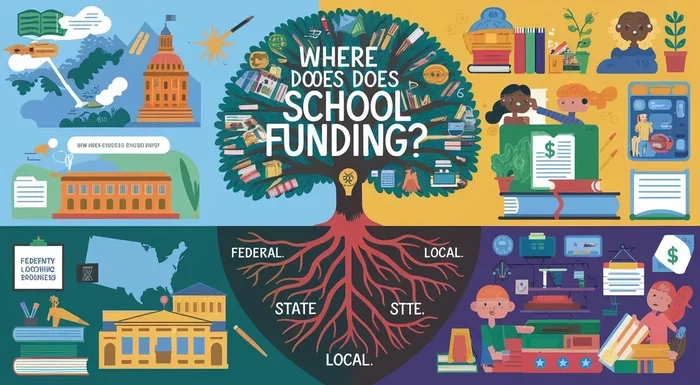
K-12 education funding comes from three main sources: federal, state, and local governments. Understanding how is K-12 education funded helps parents, teachers, and communities advocate for better school resources. The funding system is complex, and disparities between districts remain a major concern.
Key Takeaways
- Three Funding Sources: Federal, state, and local governments all contribute to K-12 education funding in different ways.
- Local Property Taxes Dominate: Most local school funding comes from property taxes, which creates inequality between wealthy and low-income areas.
- Federal Funding Targets Specific Needs: Programs like Title I focus on helping disadvantaged students and schools with high poverty rates.
- Funding Formulas Vary by State: Each state uses its own method to distribute education money to school districts.
- Disparities Are Real: Some districts spend thousands more per student than others, affecting outcomes.
- Parents Can Advocate: Understanding the funding system empowers communities to push for fair and equitable school budgets.
📑 Table of Contents
Understanding How K-12 Education Is Funded
Every parent, teacher, and community member has asked this question at some point: how is K-12 education funded? The answer is more complicated than most people think. School funding doesn’t come from a single source. Instead, it flows from federal, state, and local governments through a maze of formulas, grants, and budgets.
When you dig into the details, you start to see patterns. Some schools get more money per student. Some districts struggle to keep the lights on. And many families never realize how much their local taxes affect their child’s classroom experience. This guide breaks it all down in simple terms.
Think of it this way. Funding a school is like building a puzzle. Each piece comes from a different place. And when one piece is missing, the whole picture suffers. Understanding the puzzle helps you see where the gaps are and what can be done about them.
The Three Pillars of School Funding
Almost all K-12 education funding falls into three categories. The federal government provides a share. State governments supply the largest portion. And local funding, mostly from property taxes, fills in the rest. Let’s look at each one closely.
Federal funding typically accounts for about 8 to 10 percent of total K-12 spending. That might sound small, but it plays a huge role. Federal money targets specific groups and needs. It helps fill gaps that state and local funding might miss.
State funding is the big player. It usually makes up 45 to 50 percent of school revenue. But how states distribute that money varies wildly. Some states use simple formulas. Others use complex calculations that factor in student needs, district size, and local wealth.
Local funding rounds out the picture. It often comes from property taxes, bonds, and local levies. In many states, local contributions make up 40 to 45 percent of school budgets. This is where inequality often enters the system. Wealthy neighborhoods collect more in property taxes. Poorer areas collect less. The result? A funding gap that affects kids every day.
How Federal Funding Supports K-12 Schools
Federal funding for K-12 education might seem small, but it punches above its weight. The U.S. Department of Education distributes billions of dollars each year. Most of this money goes through specific programs designed to help particular groups of students.
Title I: The Biggest Federal Program
Title I is the largest federal education program. It sends money to schools with high percentages of low-income students. The goal is simple but powerful. Give extra resources to the schools that need them most.
Title I funds can pay for teachers, tutoring programs, and classroom materials. They can also support parent engagement activities and professional development for educators. Schools that qualify use these funds to close achievement gaps.
Other Key Federal Programs
Beyond Title I, several other federal programs shape K-12 education funding. Here are the most important ones:
- IDEA (Individuals with Disabilities Education Act): Funds special education services for students with disabilities. This program covers everything from speech therapy to individualized education plans.
- ESSA (Every Student Succeeds Act): Replaced No Child Left Behind. It gives states more control over accountability while still requiring testing and reporting.
- National School Lunch Program: Provides free or reduced-price meals to eligible students. Hungry kids can’t learn well, so this program matters.
- Title IV, Part A: Supports student support and academic enrichment. It funds things like mental health services, STEM programs, and arts education.
Federal funding often comes with strings attached. Districts must follow specific rules about how they spend the money. This ensures accountability but also adds paperwork and complexity.
How States Fund K-12 Education
State governments are the primary funders of K-12 education. Each state designs its own funding system. That means the rules change dramatically from one state to the next. Understanding state-level funding is essential to answering the question of how is K-12 education funded.
State Funding Formulas
Most states use a funding formula to decide how much money each district gets. These formulas try to account for differences between districts. A wealthy suburb with high property values needs less help than a rural district with limited tax revenue.
Common factors in state funding formulas include:
- Student enrollment numbers
- Percentage of students from low-income families
- Number of students with disabilities
- English language learner populations
- District size and geographic challenges
- Local property wealth and tax base
Some states use what’s called a “foundation formula.” This sets a target spending level per student. Then it calculates how much the local district can contribute on its own. The state fills in the gap. This approach tries to ensure every student gets a baseline level of funding.
State Funding Challenges
State funding systems are far from perfect. Many states underfund their schools. During economic downturns, education budgets often get cut first. And political battles over school funding play out in legislatures across the country every year.
Some states have faced lawsuits over unequal funding. Courts have ordered states to fix unfair systems. But changes take time, and students suffer in the meantime. The debate over how to fund schools fairly remains one of the most contentious issues in education policy.
Local Funding and the Role of Property Taxes
Local funding is where the system gets tricky. Most local school money comes from property taxes. Homeowners pay taxes based on their property value. Those taxes go directly to the local school district.
Here’s the problem. Neighborhoods with expensive homes generate more tax revenue per student. Neighborhoods with lower property values generate less. This creates a direct link between zip code and school quality.
Some people argue this system is fair. They say communities that invest more should get better schools. Others see it as deeply unfair. Kids shouldn’t be shortchanged because they were born in a less wealthy area.
Local Levies and Bonds
Beyond property taxes, districts often rely on local levies and bonds. A levy is a temporary tax increase that voters approve. It raises money for things like teacher salaries, technology, and extracurricular programs.
A bond is different. Bonds pay for big capital projects. New buildings, renovated classrooms, and school buses all come from bond money. Voters must approve bonds, usually by a simple majority.
Local levies and bonds can add significant funding. But they also widen the gap. Wealthy districts can pass bonds more easily. Lower-income districts face more resistance from taxpayers who can barely afford their current obligations.
Where Does the Money Actually Go?
Once the money flows in, how is it spent? Most people assume school budgets go mostly to teachers. And they’re right. But there’s much more to the story.
Instruction Costs
Instruction takes the biggest share of most school budgets. This includes:
- Teacher salaries and benefits
- Classroom supplies and materials
- Curriculum and textbook purchases
- Technology for student learning
Teacher salaries alone can consume 80 percent or more of a district’s budget. That’s why teacher pay is such a hot topic in education funding debates. When budgets get tight, teacher salaries often feel the pressure.
Support Services and Operations
Beyond the classroom, schools spend money on support services. These include:
- Counselors and social workers
- Librarians and media specialists
- Transportation and bus routes
- Building maintenance and utilities
- Security and administrative staff
These costs add up fast. A school might have a beautiful building, but if the HVAC system breaks, that’s a major budget item. And transportation costs can be enormous, especially in rural districts where students travel long distances.
Special Programs and Services
Schools also fund programs that serve specific student populations. Special education services are often expensive. Federal law requires districts to provide free appropriate education to all students with disabilities. But the federal government doesn’t fully cover the cost. States and locals must pick up the slack.
English language learner programs also require funding. These programs help students who speak languages other than English at home. They need specialized teachers, materials, and support services.
Funding Disparities and Equity Issues
One of the biggest concerns in education funding is equity. Do all students get an equal share of resources? The honest answer is no. Funding disparities between districts are well documented and widely studied.
Research shows that high-poverty districts often receive less funding per student than wealthy districts. This is true even though high-poverty schools need more resources to help students succeed. The irony is painful and well documented.
Some states have worked to address these gaps. They use progressive funding formulas that send more money to high-need districts. But many states still rely on systems that reinforce inequality. The way we answer how is K-12 education funded has real consequences for real children.
When we talk about these issues, we often use metaphors for education like “the achievement gap” or “the pipeline to success.” These phrases help us communicate complex ideas. But they also remind us that the language of education shapes how people think about funding and fairness.
Similarly, when parents and advocates discuss school budgets, they draw on idioms for education like “building a strong foundation” or “raising the bar.” These common phrases reflect deep beliefs about what schools should do. And they show why funding matters so much to communities.
Just as similes for education help us compare ideas clearly, clear comparisons in funding debates help stakeholders understand trade-offs. When we say one district spends “as much as” another, we’re making a comparison that can drive policy change.
How Communities Can Advocate for Better Funding
Understanding the system is the first step. But knowing how is K-12 education funded also empowers communities to take action. Parents, teachers, and citizens have more influence than they realize.
Attend School Board Meetings
School board meetings are public. That means anyone can attend and speak. These meetings are where budget decisions get made. Showing up sends a message that the community cares about funding.
Stay Informed About Ballot Measures
Many districts put funding measures on the ballot. Levies, bonds, and budget overrides all require voter approval. Learning what’s on the ballot and showing up to vote can make a real difference.
Connect with Local and State Representatives
Elected officials make funding decisions at both the state and local levels. Contacting your representatives to share your views on education funding is one of the most direct ways to influence policy. A phone call, email, or letter can have an outsized impact.
Join Advocacy Organizations
Many organizations focus specifically on education funding equity. Joining one gives you access to data, training, and a community of like-minded advocates. Together, voices are louder and more effective.
Conclusion
The question of how is K-12 education funded doesn’t have a simple answer. It involves federal programs, state formulas, and local taxes all working together. The system is complex, imperfect, and constantly evolving. But understanding it is the first step toward making it better.
Every dollar that flows into a school affects the students who learn there. When funding is fair and equitable, all children benefit. When it’s not, the gaps grow wider. That’s why this topic matters so much to every family, every teacher, and every community.
Whether you’re a parent fighting for your local school or a citizen wanting to understand education policy, knowing where the money comes from and where it goes puts you in a stronger position. Use this knowledge. Share it. And help build a better future for every student.
Frequently Asked Questions
What are the main sources of K-12 education funding?
The three main sources are the federal government, state governments, and local communities. Federal funding accounts for about 8 to 10 percent of total spending. State funding makes up roughly 45 to 50 percent. And local funding, mostly from property taxes, covers the remaining 40 to 45 percent.
Why do some school districts have more money than others?
The biggest reason is local property taxes. Districts with higher property values collect more tax revenue per student. This creates funding gaps between wealthy and low-income areas. State funding formulas try to reduce these gaps, but they don’t always succeed.
What is Title I funding?
Title I is the largest federal education program. It provides money to schools with high percentages of low-income students. The funds help pay for extra teachers, tutoring, materials, and programs designed to close achievement gaps.
How much does the federal government spend on K-12 education?
Federal spending on K-12 education is roughly 8 to 10 percent of total national K-12 funding. While this share is small, federal programs like Title I and IDEA target specific student needs and fill important gaps in state and local funding.
Can local communities increase school funding on their own?
Yes, local communities can pass levies and bonds to raise additional school funding. These measures require voter approval. Wealthy districts often pass them more easily, which can widen funding gaps between districts.
What can parents do to improve school funding?
Parents can attend school board meetings, vote on ballot measures, contact elected officials, and join advocacy organizations. Understanding how is K-12 education funded gives parents the knowledge they need to advocate effectively for their children’s schools.


