
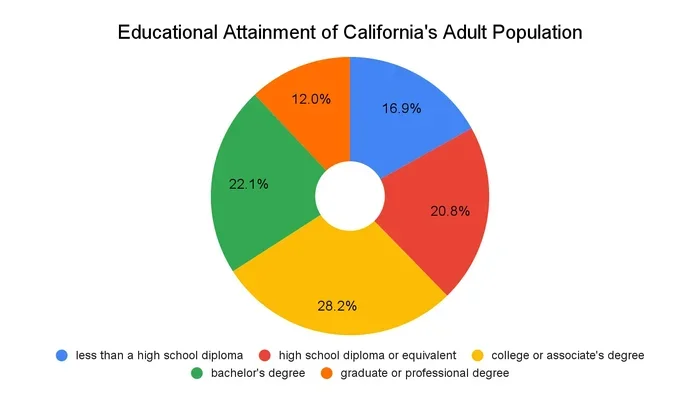
California ranks in the middle-to-lower tier of national education rankings, with mixed results on standardized tests and graduation rates. The state faces challenges in student achievement, education funding, and academic performance compared to top-performing states. However, CA also has strengths in college readiness and diverse educational programs that continue to evolve.
California is a powerhouse in many areas — tech, entertainment, agriculture, and culture. But when it comes to education rankings, the Golden State doesn’t always shine as brightly. Many parents, educators, and policymakers ask a simple question: where does CA rank in education rankings and scores?
The answer is more nuanced than you might expect. California educates over 6 million students, making it one of the largest public school systems in the country. With that scale comes both incredible diversity and significant challenges. Let’s break down the numbers and see how California truly stacks up against the rest of the nation.
Key Takeaways
- CA ranks around 30th-35th nationally in overall education quality and student outcomes.
- Standardized test scores in math and reading fall below the national average for California.
- Education funding disparities between wealthy and low-income districts remain a major challenge.
- Graduation rates have improved over the past decade, showing positive trends.
- College readiness metrics are improving but still lag behind leading states.
- Teacher shortages and staffing issues continue to impact educational quality across the state.
📑 Table of Contents
- Understanding California’s Overall Education Ranking
- Standardized Test Scores: How CA Students Perform
- Graduation Rates and College Readiness
- Education Funding and Its Impact on Scores
- Teacher Quality and Staffing Challenges
- Comparing California to Top and Bottom States
- What the Future Holds for California Education
- Key Takeaways
Understanding California’s Overall Education Ranking
When we talk about where CA ranks in education, we need to look at multiple ranking systems. Different organizations use different criteria, so the exact position can vary. However, most national reports place California in the middle-to-lower half of states.
Organizations like U.S. News & World Report, Education Week, and WalletHub publish annual education rankings. In recent years, California has typically landed somewhere between 30th and 38th out of 50 states. That’s not terrible, but it’s far from the top.
Several factors contribute to this ranking:
- Student achievement data from national assessments
- High school graduation rates across the state
- College readiness indicators for graduating seniors
- Education spending per pupil compared to other states
- Teacher quality and retention rates
Why Rankings Vary Between Reports
Not all education rankings are created equal. Some reports focus heavily on test scores, while others weigh factors like funding equity, early childhood education access, and school safety. This means California might rank 32nd in one report but 25th in another. The key is understanding what each ranking measures and why it matters for real students in real classrooms.
For context, states like Massachusetts, New Jersey, and Virginia often top these rankings. They tend to have smaller student populations, more consistent funding models, and higher average test scores. California’s massive size and diversity make direct comparisons tricky.
Standardized Test Scores: How CA Students Perform
Standardized test scores are one of the most visible measures of education quality. In California, these scores come primarily from the CAASPP (California Assessment of Student Performance and Progress) and the NAEP (National Assessment of Educational Progress).
Here is what the data generally shows:
- Math proficiency: Around 33-35% of students meet or exceed standards
- Reading/ELA proficiency: Around 47-50% of students meet or exceed standards
- Science proficiency: Around 30-34% of students meet or exceed standards
Compare these numbers to the national averages, and you can see why California education scores raise concerns. The national average for math proficiency hovers around 37%, and reading proficiency sits around 35% nationally. So California’s reading scores are slightly above average, but math scores trail behind.
The NAEP Perspective
The National Assessment of Educational Progress is often called “The Nation’s Report Card.” It gives us a consistent, apples-to-apples comparison across all states. On the NAEP, California typically scores below the national average in both math and reading for 4th and 8th graders. This gap is particularly pronounced among economically disadvantaged students and English language learners.
However, it is worth noting that California’s scores have been gradually improving over the past decade. The state has made steady gains, especially in reading. Progress is slow, but it is directionally positive.
Graduation Rates and College Readiness
One area where California has made real strides is high school graduation rates. The state’s graduation rate has climbed from around 79% a decade ago to over 85% in recent years. This is a meaningful improvement and shows that schools are making progress in keeping students on track.
But graduation is only part of the picture. College readiness tells a different story. Only about 30-35% of California graduates meet the benchmarks for college-level work in math and reading. This gap between graduation and readiness is a significant concern for policymakers.
What Drives College Readiness?
Several factors influence whether students are prepared for post-secondary success:
- Access to rigorous coursework like AP or IB classes
- Quality of counseling and guidance in high schools
- Early intervention programs for struggling students
- Parental involvement and support at home
- Stable funding for schools in underserved communities
California has invested in programs like A-G requirements, which ensure students take the right courses for UC and CSU admission. This is a step in the right direction, but implementation varies widely across districts.
In language arts and communication skills, students also benefit from learning figurative language like similes for education that help build vocabulary and expression. These creative language tools support overall literacy development in the classroom.
Education Funding and Its Impact on Scores
Money matters in education, and California’s education funding story is complex. The state spends more than the national average per pupil, but the distribution is uneven. Wealthy districts in places like Palo Alto or Arcadia can raise additional funds through local property taxes. Meanwhile, schools in lower-income areas struggle with basic resources.
The Local Control Funding Formula (LCFF) was designed to address these disparities by directing more money to schools with high-needs students. This was a major reform, and it has helped. But the gap between rich and poor districts persists.
How Funding Affects Education Rankings
Research consistently shows a link between education spending and student outcomes. States that invest more in their schools tend to see higher test scores and better graduation rates. California’s spending has increased in recent years, but it still faces challenges:
- Teacher salaries that lag behind the national average in many regions
- Large class sizes in underfunded schools
- Aging infrastructure in older school buildings
- Limited access to technology in rural and low-income areas
These funding challenges directly impact academic performance and contribute to California’s middling position in national education rankings.
Teacher Quality and Staffing Challenges
Great teachers change lives. California knows this, but the state also faces a serious teacher shortage. Many districts struggle to fill classrooms, especially in math, science, and special education. Some schools rely on long-term substitutes or underprepared teachers, which affects the quality of instruction students receive.
Several factors drive this shortage:
- High cost of living in many California cities makes teaching salaries less competitive
- Burnout and stress from the pandemic era
- Limited pathways into the teaching profession
- Political and policy challenges that make the profession less attractive
When teacher quality suffers, student achievement suffers too. This is one reason why California’s education quality rankings remain stuck in the middle of the pack despite significant investment.
What the State Is Doing About It
California has launched several initiatives to address teacher shortages:
- Golden State Teacher Grant Program offering up to $20,000 for aspiring teachers
- Residency programs that provide hands-on training and mentorship
- Loan forgiveness programs for teachers working in high-need areas
- Alternative credentialing pathways to bring career changers into teaching faster
These efforts are showing some results, but the pipeline needs time to build. Fixing a teacher shortage cannot happen overnight.
Comparing California to Top and Bottom States
To understand where California stands, it helps to compare it directly with the best and worst performing states in education.
| Metric | Top State (e.g., MA) | California | Bottom State (e.g., NM) |
|---|---|---|---|
| NAEP Math (8th Grade) | ~50% proficient | ~33% proficient | ~22% proficient |
| Graduation Rate | ~95% | ~85% | ~75% |
| Spending Per Pupil | ~$22,000 | ~$14,000 | ~$10,000 |
| College Readiness | ~55% | ~32% | ~20% |
As you can see, California is not at the bottom, but it is far from the top. The state has more in common with middle-tier performers than with the elite states that dominate the top of education rankings.
That said, California has some unique advantages. Its diverse student population includes English learners, immigrants, and students from many socioeconomic backgrounds. Serving this population well is incredibly difficult, and the state’s progress despite these challenges deserves recognition.
What the Future Holds for California Education
The good news is that California is not standing still. The state has increased education spending significantly since the passage of the Local Control Funding Formula in 2013. New funding has gone toward reducing class sizes, expanding preschool access, and supporting low-income students.
Here are some trends to watch:
- Continued improvement in graduation rates as support programs mature
- Growing investment in early childhood education and transitional kindergarten
- Expanded mental health services in schools to support student well-being
- Technology integration to bridge the digital divide
- Focus on equity and inclusion to close achievement gaps
Understanding where CA ranks in education rankings and scores is not about assigning blame. It is about identifying areas that need attention and celebrating progress where it is happening. California has a long way to go, but the trajectory is positive.
When students learn about language and expression in school, they also benefit from understanding figurative language tools like idioms for education and metaphors for education. These creative expressions build deeper engagement with learning and support overall academic growth.
Key Takeaways
- CA ranks around 30th-35th nationally in overall education quality and student outcomes.
- Standardized test scores in math and reading fall below the national average for California.
- Education funding disparities between wealthy and low-income districts remain a major challenge.
- Graduation rates have improved over the past decade, showing positive trends.
- College readiness metrics are improving but still lag behind leading states.
- Teacher shortages and staffing issues continue to impact educational quality across the state.
Frequently Asked Questions
What is California’s current education ranking?
California typically ranks between 30th and 38th nationally in education, depending on the ranking system used. The state performs below average on standardized tests but has shown improvement in graduation rates and college readiness over the past decade.
How do California students score on standardized tests?
California students score below the national average on the NAEP and CAASPP assessments. Math proficiency is around 33-35%, while reading proficiency is slightly higher at 47-50%. Scores have been improving gradually over recent years.
Why does California rank lower in education despite high spending?
California spends more than the national average per pupil, but funding is distributed unevenly. Wealthy districts have more resources, while low-income areas struggle. The state’s massive student population and high cost of living also create unique challenges that affect outcomes.
Has California’s graduation rate improved recently?
Yes, California’s high school graduation rate has climbed from about 79% a decade ago to over 85% today. This improvement reflects better support systems, early intervention programs, and increased focus on student success.
What is the biggest challenge facing California education?
The teacher shortage is one of the biggest challenges. Many districts struggle to fill classrooms, especially in math, science, and special education. High living costs and competitive job markets make it harder to attract and retain qualified educators.
How does California compare to top education states like Massachusetts?
Massachusetts outperforms California significantly in test scores, graduation rates, and college readiness. However, California serves a much larger and more diverse student population, which makes direct comparisons complex. The state is making progress but still has a considerable gap to close.
=== CONCLUSION ===
Where does CA rank in education rankings and scores? The honest answer is: in the middle of the pack, with room for significant improvement. California faces real challenges in test scores, teacher shortages, and funding equity. But the state is also making measurable progress, especially in graduation rates and early education access.
Understanding these rankings matters because they reflect real opportunities for real students. When we know where we stand, we can focus on what needs to change. California has the resources, the talent, and the determination to climb higher in national education rankings. The journey is ongoing, and every student benefits when the system gets a little better each year.
Stay informed, stay engaged, and remember that education rankings are not just numbers — they represent the futures of millions of young people across the Golden State.


