
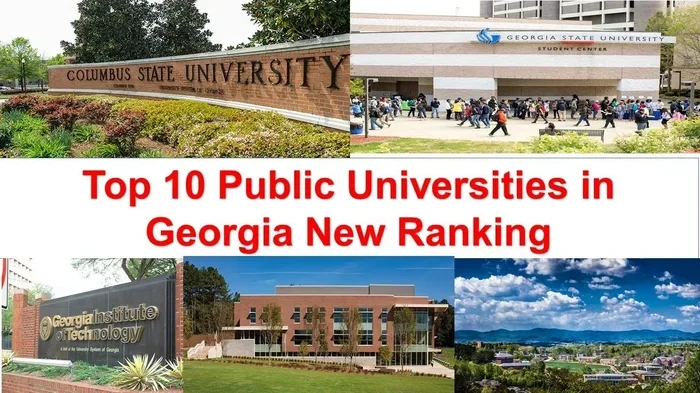
The Georgia education rank typically falls in the middle of the pack nationally. Recent reports place Georgia around 30th to 35th overall, depending on the metrics used. This article breaks down the key factors, from test scores and graduation rates to funding and teacher quality, so you can see exactly where Georgia stands.
When you ask what rank Georgia holds in education, the answer is not simple. Georgia education rank varies depending on which report you trust. Most national studies place the Peach State somewhere in the middle of the pack. Recent data from organizations like U.S. News & World Report and WalletHub often rank Georgia between 30th and 35th overall. This means Georgia is neither the worst nor the best. It is a state with real strengths and clear challenges. In this article, I will walk you through the numbers, the factors behind the ranking, and what Georgia can do to improve.
Key Takeaways
- Mid-Pack Standing: Georgia usually ranks between 30th and 35th in national education reports, reflecting a mix of strengths and gaps.
- Funding Matters: Per-pupil spending in Georgia has grown but still trails the national average, which affects school resources.
- Teacher Pay Is a Focus: Recent policy changes aim to raise teacher salaries, a key lever for improving Georgia education rank.
- Test Scores Show Gaps: NAEP and SAT results reveal room for growth, especially in math and reading proficiency.
- Graduation Rates Are Rising: Georgia’s high school graduation rate has improved steadily over the past decade.
- Policy Drives Change: Initiatives like the Georgia Foundations Act target early literacy and workforce readiness to boost long-term outcomes.
📑 Table of Contents
Georgia’s Education Rank at a Glance
Understanding where Georgia stands starts with looking at the big picture. Many people search for Georgia education rank because they want to know how their state compares to others. The truth is that rankings depend on what you measure. Some lists focus on college readiness. Others look at K-12 achievement or funding equity.
Analysts often use metaphors for education to explain why some states outperform others. They might call a top state a “beacon of learning” or describe a struggling state as “fighting an uphill battle.” Georgia sits in the middle, which means it has both bright spots and areas that need work.
How Rankings Are Measured
National education rankings usually combine several indicators. The most common ones include:
- Standardized test scores on exams like the SAT and ACT.
- Graduation rates for high school students.
- Per-pupil spending and how fairly money is distributed.
- Teacher quality, measured by pay and retention rates.
- College readiness metrics, such as Advanced Placement participation.
Each report weighs these factors differently. That is why Georgia might be 32nd on one list and 28th on another. The Georgia education rank is a snapshot, not a final verdict.
The Latest Data on Georgia’s Position
The most recent data paints a mixed picture. On the National Assessment of Educational Progress (NAEP), Georgia students score close to the national average. SAT scores tend to be a bit below the national mean. However, Georgia has made gains in high school graduation. The state now graduates about 82% of its students on time, which is close to the national average.
When you look at per-pupil spending, Georgia spends roughly $10,000 per student. That is below the national average of around $14,000. This gap matters because school funding directly impacts class sizes, materials, and teacher support. All of these elements feed into the Georgia education rank over time.
Factors That Shape Georgia’s Education Rank
Many moving parts determine where a state lands in education rankings. Georgia is no exception. Let us break down the biggest factors that pull the Georgia education rank up or down.
Funding and Per-Pupil Spending
School funding is one of the strongest predictors of student outcomes. Georgia has historically underfunded its public schools. The state constitution requires a certain level of support, but actual spending has often fallen short. People sometimes compare funding to an engine. Just as similes for education compare schools to engines or factories, a well-funded system runs smoother and produces better results.
In recent years, Georgia has increased its education budget. The state passed measures to raise teacher pay and expand pre-K programs. Still, many districts, especially rural ones, feel the pinch of limited resources. Urban districts in Atlanta and Savannah also face funding gaps tied to property tax differences.
Teacher Quality and Salaries
Great teachers change lives. Georgia has worked hard to improve teacher pay. The state raised the minimum salary for teachers in 2023 and offered bonuses for educators in high-need subjects like math and science. These steps help, but Georgia still trails many states in average teacher salary.
Teacher retention is another piece of the puzzle. When teachers leave the profession early, schools lose experienced leaders. This turnover can lower student achievement and affect the Georgia education rank. The state is investing in mentorship programs and loan forgiveness to keep more teachers in the classroom.
Student Achievement on Standardized Tests
Test scores get a lot of attention, and for good reason. They give a clear measure of whether students are meeting grade-level expectations. Georgia’s NAEP scores show that about one-third of students are proficient in math and reading. That is below the national average. SAT scores also lag a bit behind.
However, raw scores do not tell the whole story. Georgia has a large population of students from low-income families. Poverty affects test performance. The state is addressing this through targeted interventions like free tutoring and expanded learning time. These efforts aim to close gaps and lift the overall Georgia education rank.
Georgia vs. Top-Performing States
To understand Georgia’s position, it helps to compare it to states that consistently rank high. Massachusetts often tops the list with strong funding, high teacher pay, and excellent test scores. Florida also performs well, especially in reading and graduation rates. Georgia sits somewhere in between these two extremes.
People use idioms for education like “building a strong foundation” when talking about top states. Georgia is laying its foundation, but it still has gaps to fill. The table below shows a side-by-side comparison of Georgia, Massachusetts, and Florida.
| State | Overall Rank (U.S. News) | Avg. SAT Score | Graduation Rate | Per-Pupil Spending |
|---|---|---|---|---|
| Georgia | 33rd | 1050 | 82% | $10,200 |
| Massachusetts | 1st | 1100 | 90% | $16,500 |
| Florida | 10th | 1080 | 87% | $10,800 |
The numbers show that Georgia has room to grow, especially in spending and test scores. But the graduation rate gap is closing, which is a positive sign.
Where Georgia Shines
Georgia is not all about the gaps. The state has several bright spots. Its public university system, including Georgia Tech and the University of Georgia, is nationally recognized. These institutions feed a strong pipeline of skilled workers. Georgia also leads in agricultural education and vocational training programs.
Another strength is early childhood education. The state’s pre-K program serves thousands of four-year-olds each year. Research shows that high-quality pre-K boosts long-term academic success. This investment could slowly raise the Georgia education rank in future reports.
Areas That Need Improvement
On the flip side, Georgia faces real challenges. Rural schools often struggle to attract and keep teachers. Urban districts face overcrowded classrooms and aging buildings. Literacy rates among third graders remain a concern. If Georgia wants to climb the Georgia education rank, it must tackle these issues head-on.
Quick Tips for Parents and Advocates
- Get involved in school board meetings. Local decisions shape your child’s daily learning environment.
- Support early literacy at home. Reading together for 20 minutes a day builds strong skills.
- Advocate for fair funding. Push for policies that direct more resources to high-need districts.
- Explore vocational pathways. Georgia offers great career and technical education programs that lead to good jobs.
The Role of Policy and Investment
State policy plays a huge role in education outcomes. Georgia has passed several reforms aimed at boosting its Georgia education rank. The Georgia Foundations Act focuses on early literacy, ensuring that children read at grade level by third grade. The state has also increased funding for mental health services in schools, recognizing that student well-being affects learning.
Recent Education Reforms in Georgia
In 2023, Georgia raised the minimum teacher salary to $36,000 and created a bonus system for teachers in STEM and special education. The state also expanded access to dual enrollment programs, allowing high school students to earn college credit for free. These moves signal a commitment to improvement.
However, policy alone is not enough. Implementation matters. Some districts have struggled to use new funds effectively. Transparency and accountability will be key as Georgia continues to invest in its schools.
Common Mistakes People Make When Interpreting State Rankings
Rankings can be misleading if you do not look closely. Here are a few common mistakes:
- Assuming a single number tells the whole story. A rank of 33rd does not mean Georgia schools are bad. It means there is room to grow.
- Ignoring context. States with higher costs of living often spend more per pupil. Adjusting for cost of living changes the picture.
- Overlooking recent trends. Georgia has improved its graduation rate steadily. A snapshot rank may miss this progress.
Looking Ahead: What the Future Holds
The Georgia education rank is not fixed. It can move up if the state continues to invest wisely. Workforce development is a top priority. Georgia needs skilled workers for its growing industries, including film, technology, and healthcare. Education systems that align with workforce needs tend to perform better.
STEM education is another area of focus. Georgia is expanding access to computer science courses in middle and high schools. Early exposure to these fields can spark interest and build a pipeline of future professionals.
Community involvement also matters. When businesses, nonprofits, and families work together, schools thrive. Mentorship programs, after-school tutoring, and career fairs all contribute to a stronger education ecosystem. These collective efforts can slowly raise Georgia’s standing in national reports.
The road to the top is long, but Georgia is moving in the right direction. By addressing funding gaps, supporting teachers, and focusing on student needs, the state can improve its Georgia education rank over the next decade. The most important thing is to stay engaged and keep pushing for progress.
Frequently Asked Questions
What is Georgia’s current education rank among all 50 states?
Georgia typically ranks between 30th and 35th in national education reports, depending on the source and the metrics used. The exact position shifts slightly each year as new data comes out.
How does Georgia’s education funding compare to the national average?
Georgia spends less per pupil than the national average, around $10,200 compared to the U.S. average of $14,000. This funding gap affects class sizes, teacher pay, and school resources.
What factors most influence Georgia’s education rank?
Funding levels, teacher salaries, standardized test scores, graduation rates, and college readiness all play a role. Policy decisions and economic conditions also shape the Georgia education rank over time.
Has Georgia’s education ranking improved in recent years?
Yes, Georgia has made progress, especially in high school graduation rates and teacher pay. While the overall rank remains in the middle, the trend is moving upward.
How does Georgia’s SAT score compare to top states?
Georgia’s average SAT score is around 1050, which is below the national average and well below top states like Massachusetts. Improving test preparation and curriculum rigor could help close this gap.
What can Georgia do to improve its education rank?
Georgia can focus on equitable school funding, raising teacher pay further, expanding early literacy programs, and growing STEM and vocational opportunities. Sustained investment and community support are key.


