
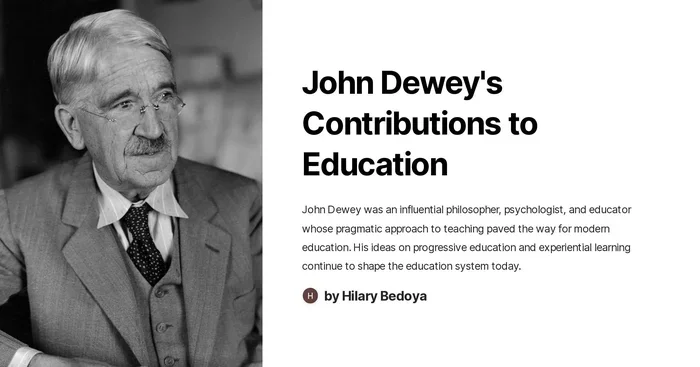
The father of education is Horace Mann, a 19th-century reformer who transformed how Americans learn. He believed every child deserved access to free public schooling, no matter their background. His ideas sparked the modern school system we still use today. Understanding his story helps us appreciate the education we often take for granted. Let us explore his incredible journey and lasting legacy.
Have you ever wondered who the father of education really is? Many people hear this title and assume it refers to some ancient philosopher sitting in a dusty library. But the truth is far more exciting. The father of education in the modern sense is a man named Horace Mann, and his ideas literally built the school systems we rely on today.
Mann was not a famous inventor or a powerful king. He was a lawyer and politician who saw a problem. Children in America were not getting the education they deserved. Poor kids had no chance to learn. Rich kids got tutors. Mann believed that was simply wrong. So he spent his life fighting for something most people took for granted: free public education for every child.
His story matters because it shows how one person’s passion can reshape an entire nation. When you send your kids to school tomorrow morning, you are living inside the world Horace Mann helped create. That is why understanding who the father of education is goes beyond just knowing a name. It is about understanding the foundation of modern learning itself.
Key Takeaways
- Horace Mann is widely recognized as the father of education in the United States and a driving force behind public schooling.
- His advocacy for common schools made education free and accessible to all children, regardless of social class.
- Mann introduced teacher training programs that raised the quality and professionalism of educators across the nation.
- His education reform ideas laid the groundwork for compulsory attendance laws and modern school systems.
- Understanding the father of education gives us perspective on why public schooling exists and how it continues to evolve.
- Mann’s vision connects to figurative language about learning, including similes for education and metaphors for education that describe the power of knowledge.
📑 Table of Contents
Who Is the Father of Education?
The title father of education is most commonly given to Horace Mann (1796-1859). He was an American educational reformer who served as a Massachusetts state legislator and later became the first secretary of the Massachusetts Board of Education. Mann dedicated his career to building a public education system that would serve every child, not just the wealthy.
Before Mann stepped onto the scene, education in America looked very different. Schools were scattered, inconsistent, and mostly available only to families who could pay. Many children worked on farms or in factories instead of sitting in classrooms. Mann looked at this reality and decided something had to change. He became the loudest voice calling for a system where every child could learn to read, write, and think critically.
His vision was bold. He imagined schools that would be free, open to all, and run by trained professionals. At the time, many people thought this was impossible. They believed education should be a privilege, not a right. Mann proved them wrong through sheer determination and relentless advocacy.
Why Horace Mann Matters
Mann is called the father of education because he did not just talk about change. He made it happen. He traveled across Massachusetts, visiting schools and talking to communities. He wrote reports, gave speeches, and pushed lawmakers to fund public schools. His work led to the creation of what he called “common schools” common schools — institutions designed to bring children from all backgrounds together under one roof.
These common schools became the blueprint for the American public education system. Mann’s influence spread beyond Massachusetts. Other states started adopting similar models. Before long, the idea of free public education was taking root across the young nation.
Horace Mann’s Vision for Public Education
Mann had a clear and powerful vision. He believed that education was the great equalizer. In his own words, he described schooling as the balance wheel of the social machinery. What did he mean by that? He meant that education could level the playing field. It could give a poor child the same opportunities as a rich child. This idea was revolutionary in the 1840s.
The Common School Movement
The common school movement was Mann’s greatest achievement. These schools had three key goals:
- Universal access: Every child, regardless of family income, could attend school.
- Standardized curriculum: All students would learn the same core subjects, ensuring consistency.
- Professional teachers: Schools would hire trained educators instead of relying on volunteers or untrained locals.
Mann also pushed for compulsory attendance laws, which required children to attend school up to a certain age. This was controversial at the time. Many families needed their children to work. But Mann argued that education was too important to skip. He believed that an educated population was essential for a healthy democracy.
Teacher Training and Professionalism
One of Mann’s most lasting contributions was his focus on teacher training. Before Mann, many teachers had little formal education themselves. Mann helped establish “normal schools” — institutions specifically designed to train teachers. These schools taught educators how to manage classrooms, design lessons, and inspire students. Today, teacher training programs are standard around the world, and Mann deserves much of the credit for that.
If you have ever wondered why teachers go through years of training before stepping into a classroom, you can trace that back to the vision of the father of education. Mann understood that good teaching requires preparation, not just good intentions.
Why Horace Mann Earned the Title of Father of Education
Mann earned the title father of education through a combination of passion, strategy, and results. He did not just theorize about what education should look like. He rolled up his sleeves and got to work. Here are the specific reasons he stands out:
- He built the first statewide public school system in Massachusetts, which became a model for other states.
- He championed the idea that education is a right, not a privilege. This philosophy is embedded in modern school systems worldwide.
- He established normal schools that professionalized teaching and raised the bar for educator quality.
- He advocated for longer school years and more funding for public education.
- He used data and evidence to support his reforms, visiting schools and documenting what worked and what did not.
Mann was not perfect, and his vision had limitations. He sometimes favored a particular religious approach to education. Some critics argued his model was too centralized. But the fact remains that his contributions were transformative. He set the stage for the modern education system we know today.
The Father of Education and the Power of Language
There is something beautiful about how we talk about education. The words we use to describe learning reveal deep cultural values. Think about the way people use figurative language to explain the importance of schooling. We say learning is a journey, a light in the darkness, or a foundation for the future. These expressions come from the same wellspring of human experience that Mann was trying to tap into.
When we describe the impact of the father of education, we often reach for metaphors and similes that capture the scale of his influence. His work was like a river carving through rock — slow, steady, and powerful enough to reshape an entire landscape. These kinds of descriptions help us feel the weight of what Mann accomplished. They connect the history of education to the way we naturally talk about knowledge and growth.
If you are curious about how language and education intersect, exploring similes for education and metaphors for education can give you a richer sense of how deeply words and learning are connected. Mann’s legacy is not just in buildings and policies. It lives in the way we speak about the power of a good education.
Education Reform and Its Lasting Ripple Effects
Mann’s work did not stop at building schools. He sparked a broader education reform movement that continued long after his death. His ideas influenced future reformers who expanded access to education for marginalized communities. The civil rights movement in the 20th century drew heavily on Mann’s principle that education should be available to everyone.
Today, debates about school funding, teacher pay, and curriculum standards all trace back to the questions Mann first raised. Who should pay for schools? Who gets to decide what children learn? What makes a good teacher? These are the same questions Mann grappled with in the 1840s. Understanding his role as the father of education helps us see that these debates are not new. They are part of a long, ongoing conversation about what education means and who it serves.
Other Figures Who Shaped Education History
While Horace Mann is the most widely recognized father of education in the American context, he was not the only influential figure. Education has many architects, and different cultures point to different pioneers.
Confucius (551-479 BC)
In many parts of the world, Confucius is considered a foundational figure in educational philosophy. He believed that education was essential for personal and social harmony. His teachings emphasized moral development, respect for elders, and the pursuit of knowledge throughout life. Confucius established private schools that were open to students from various social classes, which was remarkable for his time.
Johann Heinrich Pestalozzi (1746-1827)
This Swiss educator is often called the father of modern pedagogy. Pestalozzi focused on hands-on learning and the natural development of children. He believed education should engage the head, heart, and hands. His methods influenced Mann and many other reformers who followed.
Maria Montessori (1870-1952)
Montessori developed a child-centered approach to education that is still used in schools around the world today. Her methods emphasize independence, freedom within limits, and respect for a child’s natural psychological development. While she came much later than Mann, her work shows how the father of education’s core ideas continue to inspire new generations of educators.
Why Understanding the Father of Education Really Matters
You might be thinking, why does any of this matter today? You are not a politician. You are not a teacher. You are just someone who wants to understand the world better. But here is the thing: the father of education changed your life, whether you realize it or not.
Every time a child walks into a public school for free, that is Horace Mann’s legacy. Every time a teacher walks into a classroom with proper training, that is Mann’s vision in action. Every time a society debates the value of education, it is wrestling with the questions Mann first raised over 150 years ago.
Understanding his story also gives us a template for change. Mann showed that one person with a clear vision and relentless determination can reshape an entire system. That is a powerful lesson for anyone who cares about education today. Whether you are a parent, a student, a teacher, or a concerned citizen, the story of the father of education reminds us that systems are built by people. And people can change systems.
How Mann’s Legacy Lives On
Mann’s influence extends far beyond the classroom. His emphasis on universal literacy helped drive a cultural shift in America. People began to see reading and writing not as luxuries but as essential skills for full participation in society. This idea has only grown stronger over time.
Today, education advocates around the world continue to fight for the same principles Mann championed: equal access, well-trained teachers, and schools that serve every child. The father of education would likely be amazed by how far we have come. But he would probably also urge us to keep pushing forward, because there is still work to be done.
When we talk about education, we often use language that reflects Mann’s ideals. We speak of education as a ladder of opportunity, a gateway to success, or a bridge between worlds. These phrases carry the echo of Mann’s belief that learning transforms lives. They connect the past to the present and remind us why education remains the most powerful tool we have for building a better future.
So the next time you hear someone ask, who is the father of education, you will know the answer. You will also understand why the answer matters. It matters because education is not just about facts and figures. It is about human potential. And Horace Mann was one of the first people to truly believe in that potential for everyone.
Key Takeaways
- Horace Mann is widely recognized as the father of education in the United States and a driving force behind public schooling.
- His advocacy for common schools made education free and accessible to all children, regardless of social class.
- Mann introduced teacher training programs that raised the quality and professionalism of educators across the nation.
- His education reform ideas laid the groundwork for compulsory attendance laws and modern school systems.
- Understanding the father of education gives us perspective on why public schooling exists and how it continues to evolve.
- Mann’s vision connects to figurative language about learning, including similes for education and metaphors for education that describe the power of knowledge.
Frequently Asked Questions
Who is known as the father of education?
Horace Mann is widely recognized as the father of education in the United States. He was a 19th-century reformer who championed free public schooling for all children and helped build the modern American education system.
Why is Horace Mann called the father of education?
Mann earned this title because he was the driving force behind the common school movement in America. He established free public schools, promoted teacher training, and advocated for education as a fundamental right for every child, regardless of background.
What did the father of education do for schools?
Horace Mann created the first statewide public school system in Massachusetts. He introduced normal schools for teacher training, pushed for compulsory attendance laws, and fought for equal access to education for children from all social classes.
Are there other people called the father of education?
Yes. While Horace Mann is the father of American public education, other figures like Confucius and Johann Heinrich Pestalozzi are also called fathers of education in different cultural and historical contexts. Each contributed uniquely to how we think about learning and teaching.
How does the father of education impact schools today?
Mann’s ideas still shape modern schooling. The concepts of free public education, trained teachers, and compulsory attendance are all part of his legacy. Every time a child attends a public school, they are benefiting from the foundation Mann helped build.
What is the connection between the father of education and figurative language about learning?
Mann’s vision of education as an equalizer and a transformative force has inspired the way we describe learning. Expressions like education is a ladder or knowledge is a light reflect the deep values he championed. Exploring similes for education and metaphors for education reveals how his legacy lives on in our language.
=== CONCLUSION ===
The father of education is more than just a historical title. It represents the belief that every child deserves a chance to learn and grow. Horace Mann took that belief and turned it into action, building the public school systems that millions of children rely on every single day. His work reminds us that education is not something that just happens. It is something that people fight for, plan for, and invest in.
When we study Mann’s life and legacy, we gain a deeper appreciation for the schools we have and the opportunities they provide. We also see that the work of education reform is never truly finished. New challenges will always arise, and new advocates will always be needed. Mann’s story encourages us to be those advocates. Whether you are a parent volunteering at a school, a teacher preparing a lesson, or a student raising your hand to ask a question, you are part of the living legacy of the father of education. And that is something worth celebrating.


