
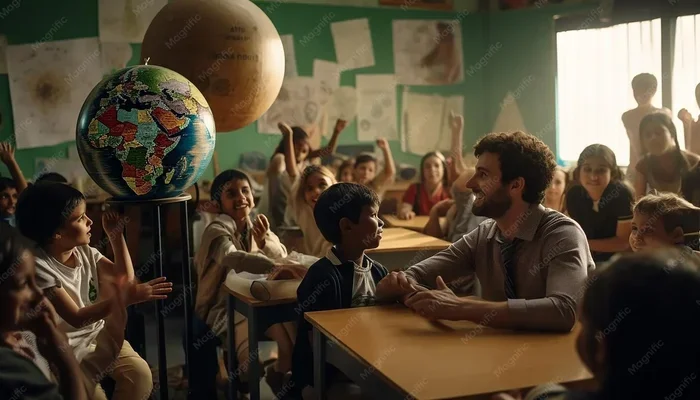
So, what country has the best education in the world? Countries like Finland, Japan, South Korea, and Singapore consistently top global education rankings. Their success comes from strong teaching standards, smart curricula, and high investment in student well-being. If you want to understand why certain nations excel in education, this guide breaks it all down for you.
Key Takeaways
- Finland remains a global leader: Finland’s education model focuses on equity, play-based learning, and highly trained teachers.
- Asian nations dominate rankings: South Korea, Japan, and Singapore excel through discipline, cultural values, and rigorous curricula.
- Teacher quality matters most: The best countries invest heavily in selecting and training their educators.
- There is no single “best”: Different countries shine in different areas, from literacy to innovation.
- Investment in education pays off: Nations that spend wisely on schools, teachers, and students see better learning outcomes.
- You can learn from any model: Even if your country isn’t on the list, these strategies can inspire education reform at home.
📑 Table of Contents
- What Country Has the Best Education in the World?
- How Do We Measure Education Quality?
- Top Countries With the Best Education Systems
- What Makes These Countries Stand Out?
- Common Mistakes People Make When Comparing Education Systems
- Lessons You Can Apply From the World’s Best Education Systems
- Conclusion
What Country Has the Best Education in the World?
When people ask what country has the best education in the world, they usually want a simple answer. But the truth is, there is no single winner. Education quality depends on many factors, including funding, teaching methods, cultural values, and student well-being.
That said, several countries stand out year after year in global rankings. Organizations like the OECD, UNESCO, and World Economic Forum publish reports that compare education systems across the globe. And when you look at the data, a clear pattern emerges. A handful of nations consistently deliver outstanding academic performance and learning outcomes for their students.
In this article, we will explore the top countries with the best education systems. We will look at what makes them succeed, where they fall short, and what lessons you can take away. Whether you are a parent, a student, or just curious about global education, this guide has you covered.
How Do We Measure Education Quality?
Before diving into the rankings, it helps to understand how experts evaluate education systems. No single metric tells the whole story. Instead, researchers use a combination of measures to compare countries fairly.
Key Metrics Used in Education Rankings
- PISA Scores: The Programme for International Student Assessment tests 15-year-olds in reading, math, and science every three years.
- Literacy Rates: The percentage of adults and young people who can read and write at a basic level.
- Enrollment Rates: How many children attend primary and secondary school.
- Graduation Rates: The percentage of students who complete high school and move on to higher education.
- Teacher-to-Student Ratios: A measure of how much individual attention students receive.
- Education Spending: How much a country invests per student, as a percentage of GDP.
These metrics give us a well-rounded picture. A country might score well on PISA tests but still have gaps in educational attainment for certain groups. That is why experts look at the full picture before declaring a winner.
Top Countries With the Best Education Systems
Now let us look at the nations that consistently rank at the top. Each country has its own strengths and unique approach to quality education.
1. Finland
Finland has long been considered the gold standard in global education. For decades, Finnish students have ranked among the highest in the world on international assessments. So what is their secret?
First, Finland places enormous trust in its teachers. All Finnish teachers must hold a master’s degree, and the profession is highly competitive. Teaching is a respected career, not a fallback option. Second, Finland minimizes standardized testing. Students do not take frequent exams, which reduces stress and encourages genuine learning outcomes.
Third, Finnish schools focus on equity. Every child, regardless of background, receives strong support. There is less emphasis on homework and more on play-based learning, especially in early years. The result? A system where students thrive both academically and emotionally.
2. South Korea
South Korea is another powerhouse when it comes to education excellence. The country has transformed from a war-torn nation in the 1950s to one of the most educated societies on Earth.
South Korean culture places a deep value on education. Families invest heavily in tutoring and private lessons, often called “hagwon.” Students study long hours and face intense pressure to succeed. This dedication shows in the numbers. South Korea consistently scores above average in reading, math, and science on PISA assessments.
However, this model comes with trade-offs. South Korean students face high levels of stress and anxiety. The intense focus on academic achievement can sometimes come at the cost of student well-being. Still, the results speak for themselves in terms of literacy rates and educational attainment.
3. Japan
Japan combines discipline, respect, and rigorous academics to create one of the world’s strongest school systems. Japanese students regularly perform well in international comparisons, particularly in math and science.
One unique aspect of Japanese education is the emphasis on character development. Students clean their schools, serve lunch to classmates, and learn social responsibility alongside academics. This holistic approach builds not just smart students but also well-rounded citizens.
Japan also has a strong teaching workforce. Teachers undergo extensive training and are expected to continuously improve their practice. The culture of respect for educators helps attract top talent into the profession.
4. Singapore
Singapore is a small nation with a massive reputation for education standards. Despite its size, Singapore consistently ranks among the top five countries in the world for student performance.
The Singaporean model is highly structured. The government designs a centralized curriculum that emphasizes mastery of core subjects like math and science. Teachers receive strong professional development and are carefully selected from the top graduates.
Singapore also invests heavily in education policy and innovation. The country regularly updates its curriculum to stay relevant in a changing global economy. This forward-thinking approach helps Singapore produce graduates who are ready for the demands of the modern workforce.
5. Estonia
Estonia is a rising star in education rankings. This small European country has made impressive gains in recent years, often outperforming much larger nations.
Estonia’s success stems from a commitment to equity. The country ensures that all students, including those from disadvantaged backgrounds, have access to quality teaching quality. Estonia also embraced digital learning early, integrating technology into classrooms in smart and effective ways.
The Estonian model shows that you do not need to be a wealthy or large nation to achieve education excellence. Smart policy choices and a focus on equity can make a huge difference.
What Makes These Countries Stand Out?
After looking at the individual countries, you might wonder: what do they all have in common? Let us break down the shared traits that drive education system success around the world.
Strong Investment in Teachers
Every top-performing country prioritizes its teachers. They are selected carefully, trained thoroughly, and compensated fairly. In Finland, for example, only the best university graduates enter teacher training programs. This creates a teaching quality standard that lifts the entire system.
When teachers are respected and well-supported, they stay in the profession longer. They invest more energy in their students. And the learning outcomes reflect that dedication.
Focus on Equity
The best countries do not just focus on high achievers. They ensure that every student has a fair chance to succeed. This means investing in rural schools, supporting students with disabilities, and providing resources for students from disadvantaged backgrounds.
Equity is not just a moral choice. It is a practical one. When more students succeed, the whole society benefits. A well-educated population drives innovation, economic growth, and social cohesion.
Smart Curriculum Design
Top countries design their curricula carefully. They focus on deep understanding rather than rote memorization. Students learn to think critically, solve problems, and work collaboratively.
For example, Singapore’s math curriculum uses a “concrete to abstract” approach. Students first learn concepts with physical objects, then move to visual models, and finally tackle abstract equations. This method has proven highly effective and is now used in schools around the world.
Balance Between Academics and Well-Being
Countries that push students too hard often see burnout and declining student achievement over time. The best systems find a healthy balance. They set high standards while also supporting mental health, creativity, and social development.
Finland is a great example here. Finnish students have less homework and more free time than their peers in many other countries. Yet they consistently outperform students from countries with much stricter academic demands. This shows that less pressure does not mean lower standards.
Common Mistakes People Make When Comparing Education Systems
Comparing education systems across countries is tricky. Here are some pitfalls to avoid.
Mistake 1: Relying on a Single Ranking
No single ranking tells the full story. Different organizations use different methods and weight different factors. A country that ranks first in one report might rank tenth in another. Always look at multiple sources before drawing conclusions.
Mistake 2: Ignoring Cultural Context
Education does not happen in a vacuum. Cultural values, economic conditions, and historical factors all shape how a school system operates. What works in Finland might not work in a very different cultural setting. It is important to understand the context behind the numbers.
Mistake 3: Overlooking the Cost
Some countries spend enormous amounts per student but do not see proportional results. Others, like Estonia, achieve excellent outcomes with modest spending. The key is not how much money a country spends but how wisely it spends it. Education investment must be strategic and focused.
Mistake 4: Forgetting About Non-Academic Skills
Tests measure some skills, but not all. Creativity, resilience, teamwork, and emotional intelligence matter just as much in life as test scores. The best education systems develop the whole child, not just the test-taker.
Lessons You Can Apply From the World’s Best Education Systems
You do not need to live in Finland or Singapore to benefit from these insights. Here are practical steps you can take, whether you are a parent, teacher, or policymaker.
Support Your Local Teachers
Teachers are the backbone of any education system. If you want better learning outcomes in your community, start by supporting the educators. Advocate for fair pay, smaller class sizes, and professional development opportunities.
Encourage a Love of Learning at Home
Parents play a huge role in their children’s academic performance. Create a home environment that values curiosity and exploration. Read together, ask questions, and celebrate effort over grades. This mirrors the approach that top-performing countries take with young learners.
Push for Equity in Your Community
Every child deserves access to quality education. Support programs that help disadvantaged students, volunteer at local schools, and advocate for fair funding. When we close the gap for struggling students, everyone wins.
Embrace Modern Teaching Methods
The world is changing fast. Global education leaders are integrating technology, project-based learning, and social-emotional skills into their classrooms. Stay informed about new approaches and share what you learn with others.
Conclusion
So, what country has the best education in the world? The honest answer is that several countries lead the way, each with its own strengths. Finland shows us that equity and trust in teachers create lasting success. South Korea and Japan prove that cultural dedication to learning produces remarkable results. Singapore demonstrates the power of smart education policy and curriculum design. And Estonia reminds us that innovation and equity can level the playing field for any nation.
No single model is perfect. But by studying these top countries for education, we can learn what works and apply those lessons everywhere. The goal is not just high test scores. It is to build school systems that help every student grow, thrive, and contribute to a better world.
If you want to dive deeper into how language and education intersect, check out our guides on idioms for education, metaphors for education, and similes for education. These resources can help you better understand and communicate about education topics in a more vivid and engaging way.
The future of global education depends on all of us. Whether you are a teacher shaping young minds, a parent supporting your child’s journey, or a citizen advocating for better schools, your role matters. Let these world-class education systems inspire you to push for excellence wherever you are.
Frequently Asked Questions
Which country has the best education system in the world?
Finland is often ranked as the top country for education due to its focus on equity, teacher quality, and student well-being. However, countries like South Korea, Japan, Singapore, and Estonia also rank very highly depending on the metrics used.
Why is Finland’s education system considered the best?
Finland excels because it invests heavily in teachers, minimizes standardized testing, and prioritizes equity. Finnish teachers are highly trained and trusted professionals, and the system focuses on the overall well-being of students rather than just test scores.
Do Asian countries have the best education in the world?
Several Asian countries, including South Korea, Japan, and Singapore, consistently rank among the top nations for academic performance. Their success comes from strong cultural values around education, rigorous curricula, and disciplined study habits.
How does education spending affect education quality?
Spending matters, but how money is spent matters more. Countries like Estonia achieve excellent results without the highest budgets. The key is strategic education investment in teacher training, equitable resources, and modern curricula.
Can education systems in other countries learn from the top performers?
Absolutely. While no system can be copied exactly, the principles behind top-performing countries, such as valuing teachers, focusing on equity, and designing thoughtful curricula, can be adapted to improve education standards anywhere in the world.
What role do PISA scores play in measuring education quality?
PISA scores are one of the most widely used tools for comparing education systems internationally. They measure 15-year-old students in reading, math, and science. However, they should be used alongside other indicators like literacy rates, graduation rates, and student well-being for a complete picture.


