
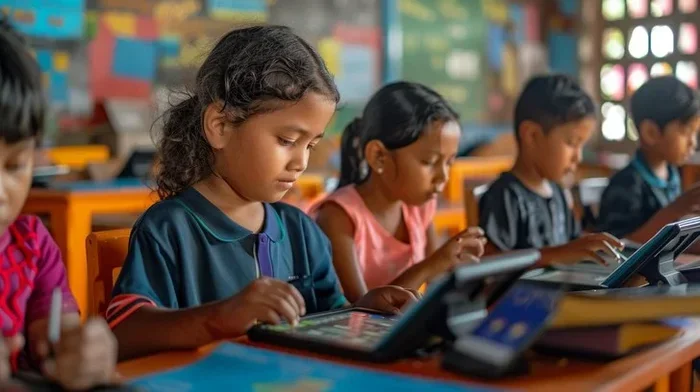
How technology affects education is one of the biggest questions in modern learning. Technology has changed the way students study, teachers teach, and schools operate worldwide. From digital tools to online classrooms, the impact is real and far-reaching. This article breaks down the key benefits, challenges, and future trends you need to know.
There is no denying it. How technology affects education has become one of the most talked-about topics in schools and homes around the world. From tablets in elementary classrooms to online degree programs for adults, digital tools are reshaping the way we learn. The changes are exciting, but they also come with real challenges that deserve attention.
In this article, we will explore the many ways technology has changed education. We will look at the benefits, the downsides, and what the future might hold. Whether you are a student, a parent, or a teacher, you will find practical insights here. So let us dive right in and explore this fascinating topic together.
Key Takeaways
- Technology boosts engagement: Interactive tools make learning more fun and effective for students of all ages.
- Access to knowledge has expanded: Students can learn from anywhere with an internet connection and a device.
- Challenges exist: Screen time, distractions, and the digital divide are real concerns that schools must address.
- Teachers benefit too: Tech tools help educators personalize lessons and track student progress more easily.
- The future is bright: AI, virtual reality, and adaptive learning are set to reshape education even further.
- Balance is key: The best results come from combining technology with traditional teaching methods.
📑 Table of Contents
The Rise of Technology in Education
Not so long ago, classrooms relied on chalkboards, textbooks, and paper notebooks. Today, many schools use smart boards, laptops, and cloud-based platforms. The shift has been rapid, and it has changed nearly every part of the learning experience.
From Chalkboards to Smart Boards
Think about how far we have come. A few decades ago, a teacher would write notes on a chalkboard and students would copy them down. Now, a teacher can display interactive lessons, videos, and quizzes on a smart board. Students can even answer questions using their own devices in real time.
This kind of classroom technology makes lessons more visual and engaging. It also helps teachers explain complex ideas more clearly. For example, a science teacher can show a 3D model of the human heart instead of just drawing it on a board.
The Growth of Online Learning
Online learning has grown enormously in recent years. The COVID-19 pandemic pushed millions of students to learn from home. Schools had to adapt quickly, and many discovered that digital tools could work surprisingly well.
Today, e-learning is not just a backup plan. It is a real option for students everywhere. People in rural areas can take courses from top universities. Working adults can earn degrees without quitting their jobs. The opportunities are vast and growing every year.
How Technology Affects Student Learning Outcomes
One of the biggest questions people ask is whether technology actually helps students learn better. The answer is not a simple yes or no. It depends on how technology is used and how well it fits into the learning process.
Boosting Engagement and Motivation
Let us be honest. Sitting through a long lecture can be boring. But what if that same lesson came to life with interactive videos, games, and quizzes? That is exactly what digital learning tools do. They turn passive listening into active participation.
Studies show that students who use interactive tools stay more focused. They are more likely to complete assignments and remember what they learned. Games like Kahoot or Quizlet make review sessions feel fun instead of tedious.
Personalized Learning Paths
Every student learns at their own pace. Traditional classrooms often struggle with this. But technology makes personalized learning possible. Adaptive software can identify where a student struggles and give them extra practice in that area.
For example, a math app might notice that a student keeps getting fractions wrong. It can then offer targeted exercises to help them improve. This kind of adaptive learning would be nearly impossible for one teacher to manage for 30 students at once.
Improving Collaboration
Technology also makes it easier for students to work together. Tools like Google Docs and Zoom allow groups to collaborate from different locations. Students can share ideas, edit documents in real time, and give each other feedback.
This is especially valuable for group projects. Instead of trying to meet in person after school, students can work together online at a time that suits everyone. Collaborative learning builds teamwork skills that are essential in the modern workplace.
Digital Tools and Resources Changing Classrooms
The number of educational tools available today is staggering. Let us look at some of the most impactful categories.
Learning Management Systems
Platforms like Canvas, Moodle, and Google Classroom have become essential in schools worldwide. These learning management systems let teachers organize lessons, assign homework, and track grades all in one place.
Students benefit too. They can see their assignments, submit work online, and check their grades without waiting for a report card. It keeps everyone on the same page and reduces confusion.
Educational Apps and Software
There is an app for almost everything now. Need to learn a new language? Try Duolingo. Want to practice coding? Use Scratch. Struggling with reading? Apps like Epic! offer thousands of books at different levels.
Educational software makes it easy for students to practice skills outside the classroom. A student who struggles with multiplication can use an app for just ten minutes a day and see real improvement over time.
Virtual and Augmented Reality
Virtual reality (VR) and augmented reality (AR) are still new, but they show great promise. Imagine a history lesson where students can walk through ancient Rome. Or a biology class where they can explore the inside of a cell.
These experiences make learning memorable. They go beyond what a textbook can offer. While VR and AR are not yet in every school, they are becoming more affordable and accessible each year.
The Benefits and Challenges of Technology in Education
Like anything, technology in education has both positive and negative sides. Understanding both helps us use it wisely.
The Benefits
- Access to information: Students can research almost any topic in seconds.
- Flexibility: Online courses allow learning at any time and from any place.
- Engagement: Interactive tools make lessons more fun and memorable.
- Preparation for the future: Tech skills are essential in today’s job market.
- Inclusion: Assistive technologies help students with disabilities participate fully.
The Challenges
- Screen time concerns: Too much screen time can cause eye strain and fatigue.
- Distractions: Social media and games can pull students away from their work.
- The digital divide: Not all students have access to devices or reliable internet.
- Privacy risks: Student data collected by apps needs to be protected carefully.
- Over-reliance on tech: Students may struggle with basic skills if technology replaces all practice.
Common Mistakes Schools Make
One common mistake is buying technology without a clear plan. A school might purchase tablets for every student but fail to train teachers on how to use them effectively. The result? Expensive tools that sit unused.
Another mistake is ignoring the human element. Technology works best when it supports great teaching, not replaces it. A screen cannot build a relationship with a student the way a caring teacher can.
It is also important to remember that how technology affects education depends heavily on implementation. The same tool can be a game-changer in one classroom and a distraction in another. Context matters a lot.
How Teachers Are Using Technology in the Classroom
Teachers are at the heart of this transformation. They are finding creative ways to use technology every day. Let us look at some of the most effective strategies.
Flipped Classrooms
In a flipped classroom, students watch video lessons at home and do homework in class. This model frees up classroom time for hands-on activities and one-on-one help. It works especially well with digital tools that let students learn at their own speed.
Teachers have found that students come to class more prepared when they watch the lesson ahead of time. Class time becomes more interactive and productive.
Gamification of Learning
Gamification means turning lessons into games. Teachers use points, badges, and leaderboards to motivate students. Platforms like Classcraft and ClassDojo make this easy to implement.
When learning feels like play, students are more willing to participate. Gamification taps into the same excitement that makes video games so engaging. It is a powerful way to keep students motivated.
Using Figurative Language to Make Tech Concepts Stick
Teachers often use creative language to help students understand complex ideas. For example, comparing a computer network to a system of roads is a common simile for education that makes abstract concepts feel familiar. Similarly, calling the internet “a giant library in your pocket” is a vivid metaphor for education that sticks in students’ minds. These kinds of figurative expressions are powerful tools in any classroom, and technology gives teachers even more ways to use them creatively.
Another great example is when teachers use popular idioms for education like “the sky is the limit” when discussing future career paths in tech. These familiar phrases help students connect new ideas to things they already understand. Blending figurative language with digital tools creates a richer, more memorable learning experience.
The Future of Technology in Education
What does the future hold for how technology affects education? The trends point toward even more exciting possibilities.
Artificial Intelligence in Learning
AI is already changing education in subtle ways. Chatbots can answer student questions at any hour. AI-powered tools can grade assignments and provide instant feedback. In the future, AI tutors may offer truly personalized lessons for every student.
Some schools are already experimenting with AI to identify students who are falling behind. The system flags concerns early, so teachers can step in before a student falls too far behind. This kind of early warning system could be a game-changer for student success.
Blended Learning Models
Blended learning combines online and in-person instruction. Students might watch lectures at home and do hands-on projects in the classroom. This model offers the best of both worlds.
It gives students flexibility while still providing the social benefits of being in a physical classroom. Many experts believe blended learning will become the standard in the coming years.
Greater Focus on Digital Literacy
As technology becomes more central to daily life, digital literacy is no longer optional. Students need to know how to evaluate online sources, protect their privacy, and use technology responsibly.
Schools are starting to add digital citizenship courses to their curriculums. These courses teach students how to navigate the online world safely and ethically. It is an essential skill for the modern age.
Comparing Traditional and Tech-Enhanced Learning
| Feature | Traditional Learning | Tech-Enhanced Learning |
|---|---|---|
| Pace | One pace for all students | Adjustable to each student |
| Resources | Textbooks and worksheets | Videos, apps, and interactive tools |
| Collaboration | In-person only | Online and in-person |
| Feedback | Delayed (after tests) | Instant with digital tools |
| Access | Limited to classroom hours | Available 24/7 |
| Engagement | Passive listening | Active participation |
The table above shows that tech-enhanced learning offers clear advantages in many areas. But it is important to remember that traditional methods still have value. The best approach often combines both.
Quick Tip: If you are a teacher or parent, start small. Pick one or two digital tools that fit your goals. Get comfortable with them before adding more. This approach prevents overwhelm and ensures that technology truly supports learning rather than distracting from it.
Final Thoughts
How technology affects education is a topic that will only grow in importance. The benefits are clear: greater access, deeper engagement, and personalized learning experiences. But we must also stay mindful of the challenges, from screen time to the digital divide.
The key is balance. Technology should enhance learning, not replace the human connections that make education meaningful. When used thoughtfully, digital tools can open doors that were once unimaginable. The future of education is bright, and technology will play a central role in shaping it.
So whether you are a student just starting out or a teacher looking for new ideas, embrace the digital tools available to you. Stay curious, keep learning, and remember that the best technology is the kind that helps you grow.
Frequently Asked Questions
How does technology affect education in the classroom?
Technology makes classrooms more interactive and engaging. Tools like smart boards, tablets, and learning apps help students participate actively. Teachers can also personalize lessons more easily with digital resources.
What are the main benefits of technology in education?
The top benefits include greater access to information, flexible learning schedules, improved collaboration, and personalized learning paths. Technology also prepares students with essential digital skills for future careers.
Are there downsides to technology in education?
Yes, there are challenges. Screen time can cause fatigue, distractions are common, and not all students have equal access to devices. Privacy concerns and the risk of over-reliance on technology are also worth considering.
How can teachers use technology effectively?
Teachers can start by choosing tools that align with their learning goals. Flipped classrooms, gamification, and learning management systems are proven strategies. Training and planning are essential for success.
What does the future of technology in education look like?
The future includes more AI-powered tutoring, wider use of virtual reality, and blended learning models. Digital literacy will become a core part of every curriculum. The focus will be on combining tech with human teaching for the best results.
Is online learning as effective as traditional learning?
Research shows that online learning can be just as effective when done well. The key factors are student motivation, quality of content, and good teacher support. Blended approaches often work best for most learners.


