
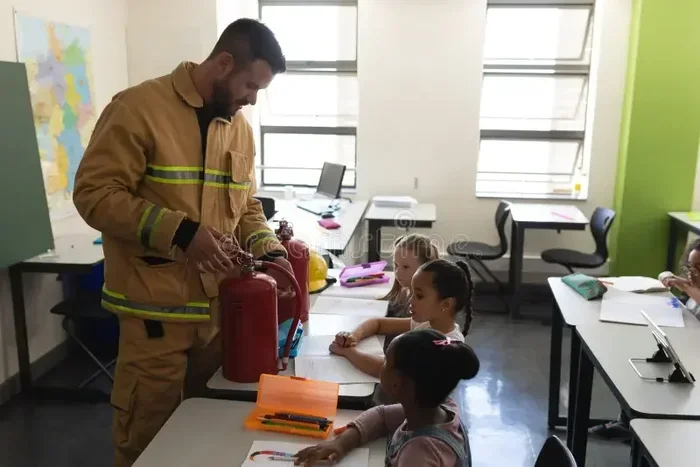
To become a firefighter, you typically need a high school diploma or GED, but many departments prefer or require college-level coursework in fire science or emergency medical training. EMT and paramedic certifications are often essential, and a degree in fire science can give you a serious edge in a competitive hiring market. The exact education you need depends on your local fire department, your career goals, and whether you want to specialize in areas like fire investigation or rescue operations.
Becoming a firefighter is one of the most rewarding career paths you can choose. You get to serve your community, help people in their darkest moments, and face challenges that truly matter. But before you can run into a burning building, there is an important question you need to answer: what education do you need to become a firefighter?
The answer might surprise you. While a college degree is not always mandatory, the education landscape for firefighters has changed a lot over the past few years. Today, many fire departments expect candidates to have at least some college-level training. They want people who understand fire behavior, emergency medical care, and modern rescue techniques. The good news is that there are many paths to get there, and you do not need a four-year degree to start.
In this guide, we will walk you through every educational requirement you need to know. We will cover fire academy training, EMT and paramedic certifications, degree options, and the physical and mental qualifications that go hand in hand with classroom learning. Whether you are just starting out or looking to advance your current career, this article has the information you need. Think of it as your roadmap to a career in firefighting.
Key Takeaways
- Minimum education: A high school diploma or GED is the baseline, but most firefighters go further with additional training and certifications.
- Fire academy training: Nearly all firefighters must complete a state-certified fire academy program before they can work on the job.
- EMT certification is key: Most fire departments require at least EMT-Basic certification, and many prefer or require paramedic credentials.
- A fire science degree boosts your chances: An associate or bachelor’s degree in fire science can set you apart from other candidates and open doors to higher positions.
- Physical fitness matters just as much: Education alone won’t get you hired. You must pass rigorous physical agility tests and meet strict medical standards.
- Continuing education is ongoing: Firefighters need to keep learning throughout their careers with ongoing training, certifications, and promotional exams.
📑 Table of Contents
- Minimum Education Requirements for Firefighters
- Fire Academy Training: The Core of Firefighter Education
- EMT and Paramedic Certification: A Must-Have
- Fire Science Degrees: Worth the Investment
- Physical and Mental Qualifications That Support Your Education
- Continuing Education and Career Advancement
- Common Mistakes People Make When Planning Their Firefighter Education
- Expert Insights: What Current Firefighters Wish They Knew Sooner
- FAQ
Minimum Education Requirements for Firefighters
Every firefighter career starts with a basic education foundation. The minimum requirement across most departments in the United States is a high school diploma or a General Educational Development (GED) certificate. This is the absolute baseline. Without it, you will not be eligible to apply in most places.
However, “minimum” does not mean “enough.” The job market for firefighters is competitive. Many departments receive hundreds of applications for a single open position. Having only a high school diploma can put you at a disadvantage compared to candidates who have completed additional training or college coursework.
Why a High School Diploma Is Not Enough Anymore
Fire departments have raised their standards significantly. They now look for candidates who show initiative and a willingness to learn. Completing extra coursework signals to hiring managers that you are serious about the profession. It also gives you a head start when you enter the fire academy, because you already understand basic concepts like chemistry, physics, and human anatomy.
Some departments, especially in larger cities, now require at least 15 to 30 college credits before you can even apply. These credits are often in subjects like fire science, emergency medical services, or public safety. So while you technically can start with just a diploma, investing in additional education early on pays off big time.
Fire Academy Training: The Core of Firefighter Education
No matter what degree you hold, you must complete a fire academy program. This is hands-on training that teaches you the practical skills you need to do the job safely. Think of it as the bridge between classroom learning and real-world firefighting.
Fire academy programs typically last between 12 and 16 weeks. During this time, you live at the training facility and go through intense physical and mental training. The curriculum covers a wide range of topics.
What You Will Learn at Fire Academy
- Fire behavior and chemistry: You will learn how fires start, spread, and respond to different extinguishing agents.
- Search and rescue techniques: This includes navigating smoke-filled buildings and locating victims under debris.
- Hose operations and water supply: You will practice connecting hoses, operating nozzles, and setting up water sources.
- Ventilation and forcible entry: These skills help you control fire spread and gain access to buildings safely.
- Personal protective equipment (PPE) use: You will learn how to properly wear, maintain, and care for your gear.
- Emergency scene management: This covers command structure, communication protocols, and teamwork under pressure.
Fire academy is demanding. You will face physical fitness tests, written exams, and practical skill evaluations every week. Passing requires dedication, discipline, and a genuine commitment to the profession. But it is also where you build the camaraderie and confidence that define a great firefighter.
EMT and Paramedic Certification: A Must-Have
Here is something many people do not realize: modern firefighters spend a huge portion of their time providing medical care. In fact, the majority of emergency calls firefighters respond to are medical in nature, not fire-related. Because of this, almost every fire department requires you to hold at least an EMT-Basic certification before you can be hired.
EMT-Basic training usually takes about 120 to 150 hours to complete. You will learn how to assess patients, perform CPR, control bleeding, immobilize fractures, and assist with childbirth. The training combines classroom instruction with hands-on clinical rotations in hospitals and ambulances.
Why Paramedic Certification Gives You an Edge
While EMT-Basic is the minimum, many departments prefer or require candidates who are also paramedics. Paramedic training goes much deeper. It includes advanced airway management, cardiac monitoring, medication administration, and IV insertion. A paramedic program typically takes one to two years and results in either a certificate or an associate degree.
Having paramedic credentials does two powerful things for your career. First, it makes you a more attractive candidate during the hiring process. Second, it gives you the skills to provide a higher level of care on the scene, which is incredibly rewarding. Many firefighters find that the medical side of the job is just as fulfilling as the firefighting side.
Some people choose to complete their EMT training before applying to the fire academy, while others do it after. Either path works. The key is to get certified as quickly as possible so you do not delay your career goals.
Fire Science Degrees: Worth the Investment
You do not need a college degree to become a firefighter in most departments. But earning one can dramatically improve your chances of getting hired and advancing in your career. A degree in fire science is the most directly relevant option, though related fields like emergency management or public administration also help.
Fire science programs are available at the associate and bachelor’s level. An associate degree typically takes two years, while a bachelor’s degree takes four. Both options cover topics like fire prevention, building codes, fire investigation, hazardous materials handling, and fire department administration.
Associate vs. Bachelor’s Degree in Fire Science
An associate degree in fire science is a great starting point. It gives you foundational knowledge and takes less time and money to complete. Many community colleges offer these programs, and some even partner directly with local fire departments for hands-on training opportunities.
A bachelor’s degree goes deeper. It prepares you for leadership roles, fire inspection positions, and fire investigation careers. If you plan to move into fire management or teaching down the road, a four-year degree is almost essential. Some officers in charge of fire companies or battalions hold bachelor’s degrees or higher.
Online fire science programs have made earning a degree more flexible than ever. You can complete coursework on your own schedule while working as a firefighter or finishing other training. Just make sure the program is accredited and recognized by your target fire department.
Physical and Mental Qualifications That Support Your Education
Education and physical fitness go hand in hand in the firefighting profession. You can have the best academic credentials in the world, but if you cannot pass the physical agility test, you will not get the job. Fire departments use these tests to make sure candidates can handle the extreme demands of the work.
The Candidate Physical Ability Test (CPAT) is the most widely used benchmark. It simulates eight critical tasks that firefighters perform on the job, including climbing stairs with heavy equipment, dragging hose lines, and forcing open heavy doors. You must complete all eight events within a set time limit, usually around 10 minutes and 20 seconds.
How Education Helps You Pass Physical Tests
This is where your education actually supports your physical performance. Fire academy coursework teaches you proper body mechanics, lifting techniques, and how to work efficiently under stress. Understanding the science behind fire behavior also helps you make smarter decisions during physical tasks, which saves energy and reduces injury risk.
Mental fitness is equally important. Firefighters deal with traumatic events regularly. Many departments now require psychological evaluations as part of the hiring process. Coursework in psychology, crisis intervention, and stress management can help you prepare for these challenges. Some fire science programs even include mental health and resilience training as part of their curriculum.
Continuing Education and Career Advancement
Your education does not stop once you get hired. Fire departments require all firefighters to participate in ongoing training throughout their careers. This includes annual refresher courses, new technique certifications, and specialized training in areas like technical rescue, hazardous materials, and fire investigation.
Continuing education also plays a big role in career advancement. If you want to move up to driver/engineer, lieutenant, captain, or chief officer, you will likely need additional credentials. Many departments give preference to candidates who pursue higher education during their careers. Some even offer tuition reimbursement programs to help you pay for it.
Specialized certifications can also open new doors. For example, becoming a certified fire investigator or fire inspector requires additional training and exams. These roles often come with different schedules and responsibilities, giving you variety within the profession. Some firefighters also pursue degrees in related fields like emergency management, public administration, or criminal justice to broaden their career options.
The bottom line is that education in firefighting is a lifelong journey. The more you learn, the better you serve your community and the more opportunities you create for yourself. Staying curious and committed to learning is one of the best habits you can build in this career.
Common Mistakes People Make When Planning Their Firefighter Education
Avoiding mistakes can save you time and frustration. Here are a few common pitfalls to watch out for.
- Waiting too long to start training: Many people delay their education because they feel overwhelmed. Start with small steps like a community college course or a local EMT class.
- Ignoring physical preparation: Education is important, but you must also train your body. Start a fitness routine early that focuses on cardiovascular endurance, strength, and flexibility.
- Choosing the wrong degree program: Not all fire science programs are equal. Research your local department requirements and choose a program that aligns with them.
- Neglecting the medical side: Some aspiring firefighters focus only on firefighting skills and skip medical training. This is a big mistake, since medical calls make up the majority of most firefighters’ work.
- Not networking early: Attend fire department open houses, volunteer at your local station, and connect with current firefighters. Relationships matter just as much as credentials.
Steering clear of these mistakes puts you on the fastest path to a successful career. Every step you take in your education brings you closer to that goal.
Expert Insights: What Current Firefighters Wish They Knew Sooner
We spoke with several experienced firefighters about the education they wish they had pursued earlier. Their advice was consistent and valuable.
“Start with EMT training before anything else,” said Captain Maria Lopez, a 15-year veteran of a mid-sized city fire department. “It gives you a huge advantage during the hiring process, and it prepares you for the medical side of the job that no one talks about enough.”
Another firefighter, Lieutenant James Chen, emphasized the importance of fire science coursework even if a full degree is not required. “I took just a few college classes before applying, and I believe that set me apart from other candidates. The interviewers could tell I already understood the fundamentals,” he shared.
These insights reinforce a clear message: every bit of education you pursue ahead of time strengthens your application and prepares you for the demands of the job. You do not need to have everything figured out right away, but starting early gives you a real advantage.
Remember, the path to becoming a firefighter is different for everyone. Your education journey should match your personal goals, your local department requirements, and your available resources. The most important thing is to take the first step and keep moving forward.
Whether you are earning your high school equivalency, completing a fire academy, or pursuing a bachelor’s degree, every credential you add makes you a stronger candidate and a more capable firefighter. The education you need to become a firefighter is not just about meeting requirements. It is about building the knowledge, skills, and confidence to protect lives and serve with excellence every single day.
FAQ
Can I become a firefighter without a college degree?
Yes, you can. Most fire departments only require a high school diploma or GED for entry-level positions. However, completing some college coursework or earning a degree in fire science can significantly improve your chances of getting hired and advancing in your career.
How long does firefighter education and training take?
The timeline varies depending on your path. Fire academy training typically takes 12 to 16 weeks. EMT certification takes a few months, and a full paramedic program can take one to two years. A two-year associate degree in fire science is common, while a bachelor’s degree takes four years. Many people combine these steps over several years.
Is EMT certification required to become a firefighter?
In most fire departments, yes. EMT-Basic certification is the minimum medical requirement for nearly all hiring processes. Some departments prefer or require paramedic certification, which provides a higher level of medical training and makes you a stronger candidate.
What is the best degree for a firefighter career?
A degree in fire science is the most directly relevant. However, degrees in emergency medical services, emergency management, public administration, or even chemistry can be valuable depending on your career goals. An associate degree is often enough for entry-level work, while a bachelor’s degree helps with advancement.
Do I need to be physically fit before starting firefighter education?
Yes, physical fitness is essential. You should be in excellent cardiovascular shape and have good strength and flexibility before you begin any firefighter training program. Many candidates start a structured fitness routine months before applying to fire academy or taking physical agility tests.
Can I get firefighter education online?
Yes, many fire science degree programs are available online through accredited colleges and universities. However, hands-on training like fire academy and EMT clinical rotations must be completed in person. Online education works best for the classroom and theoretical portions of your training.


