
To become an aerospace engineer, you typically need a bachelor’s degree in aerospace engineering or a related engineering field. Advanced roles may require a master’s or doctoral degree, along with specialized certifications and hands-on experience through internships and co-op programs. This guide covers every step of the education path, from high school preparation to advanced degrees and licenses.
Key Takeaways
- Bachelor’s Degree: A four-year degree in aerospace engineering or a related field is the minimum requirement for most entry-level positions.
- Strong STEM Foundation: High school courses in physics, mathematics, and chemistry build a critical base for future engineering studies.
- Advanced Degrees Open Doors: Master’s and doctoral degrees lead to specialized roles, research positions, and higher earning potential.
- Licenses and Certifications: Professional Engineering (PE) licensure and industry certifications boost credibility and career prospects.
- Practical Experience Matters: Internships, co-op programs, and hands-on projects are just as important as classroom learning.
- Continuous Learning: The aerospace field evolves rapidly, so ongoing education keeps skills current and competitive.
📑 Table of Contents
- The Path to Becoming an Aerospace Engineer
- Degree Options for Aerospace Engineering
- Key Subjects and Coursework
- Licenses and Certifications
- Gaining Practical Experience
- Continuing Education and Career Growth
- High School Preparation
- Choosing the Right College or University
- Skills Developed Through Aerospace Education
- Conclusion
The Path to Becoming an Aerospace Engineer
Becoming an aerospace engineer is a rewarding journey. It combines a love for flight, technology, and problem-solving. The education to become an aerospace engineer is rigorous but deeply fulfilling. Whether you dream of designing commercial airplanes or building spacecraft, the right education sets the foundation.
The path starts early. Strong math and science skills in high school make a huge difference. From there, you move into specialized undergraduate programs. Many engineers later pursue advanced degrees. The journey is long, but every step brings you closer to a career among the stars.
Let’s break down each stage. You will learn about degree options, key subjects, certifications, and more. By the end, you will have a clear roadmap. Think of it as your personal guide to what education do you need to be an aerospace engineer.
Learning about education idioms can also enrich your understanding of academic language. Similarly, knowing similes for education helps you communicate ideas more vividly in technical writing.
Degree Options for Aerospace Engineering
Choosing the right degree is the most important decision. There are several paths, and each one opens different doors. Let us explore the main options available to aspiring aerospace engineers.
Bachelor’s Degree in Aerospace Engineering
A bachelor’s degree in aerospace engineering is the gold standard. Most employers expect this as a minimum qualification. The program typically takes four years to complete. You will study aerodynamics, propulsion, structures, and flight mechanics.
Many universities offer this degree as a Bachelor of Science (B.S.). The curriculum balances theory with hands-on labs. You will learn to use computer-aided design (CAD) software. Group projects simulate real-world engineering challenges.
Some schools offer a combined degree. For example, you might earn a degree in both aerospace and mechanical engineering. This broadens your skill set. It also makes you more versatile in the job market.
Related Engineering Degrees
Not every aerospace engineer holds a dedicated aerospace degree. Many start with related engineering fields. These include mechanical engineering, electrical engineering, and physics.
Mechanical engineering is the most common alternative. It covers many of the same fundamentals. Electrical engineering is valuable for avionics and control systems. A physics degree offers deep insight into the laws governing flight and space.
The key is to choose a program with relevant coursework. Look for classes in fluid dynamics, thermodynamics, and materials science. These subjects directly apply to aerospace work.
Master’s and Doctoral Degrees
A master’s degree in aerospace engineering takes about two years. It allows you to specialize in a specific area. You might focus on spacecraft design, propulsion systems, or aerospace manufacturing. Many research and senior-level roles require this level of education.
A doctoral degree (Ph.D.) is for those interested in research or academia. It typically takes four to six years beyond a bachelor’s. Ph.D. holders often work at NASA, defense contractors, or universities. They lead cutting-edge research in space exploration and aviation technology.
Advanced degrees also lead to higher salaries. According to industry data, engineers with a master’s or Ph.D. earn significantly more over their careers. The investment in higher education pays off in the long run.
Key Subjects and Coursework
The coursework in an aerospace engineering program is challenging. It builds a strong foundation in both science and engineering. Here are the core subjects you will encounter.
Mathematics and Physics
Math is the language of engineering. You will take multiple courses in calculus, differential equations, and linear algebra. Physics courses cover classical mechanics, electromagnetism, and thermodynamics.
These subjects form the backbone of aerospace analysis. They help you understand how aircraft and spacecraft behave. Without a solid grasp of math and physics, advanced engineering concepts become very difficult.
Aerodynamics and Flight Mechanics
Aerodynamics is the study of how air moves around objects. This is central to aircraft design. You will learn about lift, drag, and thrust. Flight mechanics covers how vehicles move through the atmosphere and in space.
These courses involve a lot of calculations and modeling. You will use wind tunnel data and computer simulations. The goal is to design vehicles that are efficient and safe.
Propulsion and Thermodynamics
Propulsion systems make aircraft and rockets move. You will study jet engines, rocket motors, and electric propulsion. Thermodynamics teaches you about energy transfer and heat exchange.
Understanding propulsion is essential for any aerospace engineer. It affects every stage of a vehicle’s design. From takeoff to re-entry, propulsion principles guide the process.
Structures and Materials
Aerospace vehicles face extreme conditions. They must be lightweight yet incredibly strong. Courses in structures and materials teach you about stress, strain, and failure analysis.
You will study metals, composites, and ceramics. Each material has unique properties. The challenge is choosing the right material for each part of the vehicle.
Learning about metaphors for education can help you explain complex engineering ideas in simpler terms. This skill is valuable when presenting technical work to non-engineers.
Licenses and Certifications
While not always required, licenses and certifications strengthen your credentials. They show employers that you meet professional standards. Here is what you need to know.
Professional Engineering (PE) License
The PE license is the most recognized engineering credential. To earn it, you must pass two exams. The first is the Fundamentals of Engineering (FE) exam. You can take this right after graduating with a bachelor’s degree.
The second exam is the Principles and Practice of Engineering (PE). You can only take this after gaining several years of work experience. The PE license allows you to sign off on engineering plans. It also opens doors to leadership roles.
Industry Certifications
Beyond the PE license, several industry certifications exist. These are offered by professional organizations. They focus on specific areas of aerospace engineering.
For example, the American Institute of Aeronautics and Astronautics (AIAA) offers certification programs. These validate expertise in areas like systems engineering and project management. Certifications are especially helpful for career changers and recent graduates.
Gaining Practical Experience
Classroom learning is essential, but it is not enough on its own. Employers value hands-on experience. The aerospace industry is highly competitive. Practical experience sets you apart from other candidates.
Internships and Co-op Programs
Many engineering programs offer co-op programs. These allow you to work at aerospace companies while earning your degree. Internships provide similar benefits. They give you real-world exposure and professional connections.
Major aerospace companies like Boeing, Lockheed Martin, and SpaceX offer internships. Government agencies like NASA also accept interns. These experiences build your resume and give you a taste of the industry.
Student Projects and Competitions
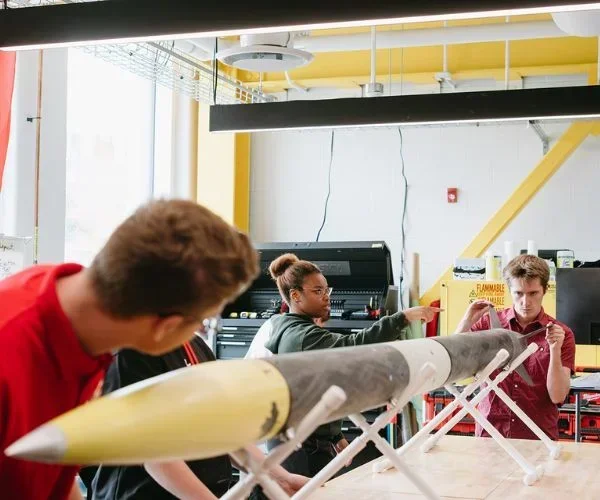
University projects are another great way to gain experience. Many engineering schools have rocketry clubs or aircraft design teams. These groups build and test real vehicles.
Competitions like the AIAA Design/Build/Fly challenge are excellent. They let you apply classroom knowledge to practical problems. Judges from the industry often evaluate these projects.
Building a strong portfolio of projects is crucial. It demonstrates your skills to future employers. It also shows that you can work as part of a team. These are qualities every aerospace company values.
Continuing Education and Career Growth
The aerospace field never stops evolving. New technologies emerge every year. Continuing education keeps your skills sharp and your career moving forward.
Why Ongoing Learning Matters
Aerospace engineering involves cutting-edge technology. Advances in materials, propulsion, and computer systems happen constantly. Engineers who stop learning quickly fall behind.
Many companies offer training programs. These cover new software, regulations, and industry standards. Attending workshops and conferences is also valuable. They connect you with other professionals and new ideas.
Career Advancement Paths
With the right education and experience, career growth is excellent. Entry-level engineers typically start as design or analysis engineers. With experience, they move into senior roles or management positions.
Some engineers transition into project management. Others specialize further in areas like robotics or satellite systems. The skills gained through education to become an aerospace engineer are transferable across many industries.
The aerospace industry offers some of the highest salaries in engineering. According to the U.S. Bureau of Labor Statistics, the median pay for aerospace engineers is well above the national average. Advanced education and specialization increase earning potential even more.
Remember that education do you need to be an aerospace engineer is not just about degrees. It is about building a mindset of curiosity and lifelong learning. The best engineers never stop asking questions and seeking answers.
High School Preparation
Your education journey can start in high school. Taking the right courses gives you a head start. Focus on science, technology, engineering, and mathematics (STEM) subjects.
Physics and chemistry are essential. So are advanced math courses like calculus and statistics. Computer science classes teach programming skills. These are increasingly important in modern aerospace work.
Extracurricular activities also matter. Join a robotics club or participate in science fairs. Build model rockets or drones. These experiences show colleges and employers that you are genuinely passionate about aerospace.
Strong communication skills are often overlooked. Engineers must write reports and present ideas clearly. English and technical writing courses help with this. A well-rounded education prepares you for the realities of the profession.
Choosing the Right College or University
Not all engineering programs are created equal. When selecting a school, look for accreditation from ABET (Accreditation Board for Engineering and Technology). This ensures the program meets high standards.
Consider the faculty’s research interests. Do they align with your career goals? Look for schools with strong aerospace research centers. These often have partnerships with major companies and government agencies.
Location matters too. Schools near aerospace hubs offer better internship opportunities. States like Washington, Texas, and California have large concentrations of aerospace companies. Being close to these hubs gives you a practical advantage.
Financial aid and scholarships are also important. Many aerospace companies offer scholarships to engineering students. Research these opportunities early. They can significantly reduce the cost of your education.
Visit campuses if possible. Talk to current students and professors. Get a feel for the learning environment. The right fit makes a big difference in your educational experience and overall success.
Skills Developed Through Aerospace Education
An aerospace engineering education develops far more than technical knowledge. You gain a wide range of transferable skills. These are valuable in many career paths.
- Problem-Solving: Aerospace engineering challenges are complex. You learn to break them down and find creative solutions.
- Analytical Thinking: You develop the ability to analyze data and make informed decisions.
- Teamwork: Most aerospace projects require collaboration. You learn to work effectively in diverse teams.
- Technical Communication: Writing reports and presenting findings are daily tasks. You become clear and concise in your communication.
- Project Management: Engineering projects have strict timelines and budgets. You learn to manage resources efficiently.
- Computer Skills: Proficiency in CAD software, simulation tools, and programming is a key outcome of aerospace education.
These skills prepare you for a wide range of careers. Many aerospace engineers move into fields like defense, automotive, or energy. The education gives you flexibility and resilience in a changing job market.
The journey to becoming an aerospace engineer is demanding. But it is also deeply rewarding. Each course you take, each project you complete, and each internship you finish brings you closer to your goal. Stay focused, stay curious, and never stop learning.
Just as the best engineers learn from metaphors for thank you to express appreciation for mentors and teammates, you will find that education in aerospace is a collaborative journey. The knowledge you gain builds not just your career but also your ability to contribute meaningfully to the world of aviation and space exploration.
Conclusion
The education to become an aerospace engineer is a multi-step journey. It starts with a strong high school foundation in STEM subjects. A bachelor’s degree in aerospace engineering or a related field is the essential first step. Advanced degrees open doors to specialized and research roles. Licenses, certifications, and practical experience round out your qualifications.
The field is competitive, but the rewards are significant. Aerospace engineers enjoy challenging work, strong salaries, and the satisfaction of contributing to cutting-edge technology. Whether you want to design the next generation of commercial aircraft or help humanity reach Mars, the right education is your greatest asset.
Stay committed to your learning. Seek out internships, join student projects, and never stop exploring new ideas. The sky is not the limit. It is just the beginning.
Frequently Asked Questions
What degree do you need to become an aerospace engineer?
A bachelor’s degree in aerospace engineering or a related engineering field is the minimum requirement. Many professionals also pursue master’s or doctoral degrees for advanced roles. The right degree gives you the technical knowledge and practical skills needed in the industry.
How long does it take to become an aerospace engineer?
A bachelor’s degree typically takes four years. If you pursue a master’s degree, add two more years. A Ph.D. can take four to six years beyond a bachelor’s. Practical experience through internships also adds to the timeline but is highly valuable.
Can you become an aerospace engineer with a mechanical engineering degree?
Yes, many aerospace engineers start with a mechanical engineering degree. The fundamental principles overlap significantly. You may need to take additional aerospace-specific coursework or gain relevant experience to specialize fully.
Is a master’s degree necessary for aerospace engineering jobs?
A master’s degree is not always required for entry-level positions. However, it is important for advanced roles, research positions, and higher salaries. Many employers prefer candidates with graduate-level education for specialized projects.
What certifications are helpful for aerospace engineers?
The Professional Engineering (PE) license is the most recognized certification. Industry certifications from organizations like AIAA also add value. These credentials demonstrate expertise and commitment to professional standards in the aerospace field.
What high school subjects should you focus on for aerospace engineering?
Focus on physics, chemistry, calculus, and computer science. Strong communication and writing skills are also important. Extracurricular activities like robotics clubs and science fairs give you a competitive advantage when applying to engineering programs.


