
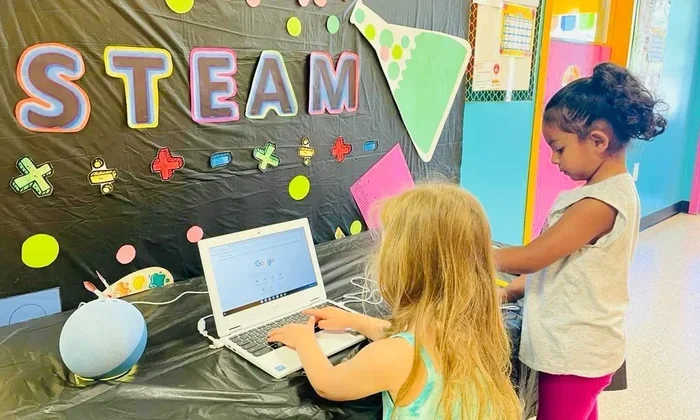
Steam is a powerful approach in early childhood education that blends science, technology, engineering, arts, and mathematics into hands-on learning. It helps young children develop critical thinking, creativity, and problem-solving skills from a very young age. This article explores the key benefits of steam education and offers practical tips for parents and educators.
Why is steam important in early childhood education? The answer is simple yet powerful. Steam education combines science, technology, engineering, arts, and mathematics into one exciting learning experience. It gives young children the tools they need to explore, question, and understand the world around them.
In today’s fast-changing world, early learning is more important than ever. Kids who engage with steam concepts from a young age build skills that last a lifetime. They learn to think critically, solve problems, and work with others. These are skills that no textbook alone can teach.
Whether you are a parent, a teacher, or a caregiver, understanding the value of steam in early education can change the way you approach learning. This guide breaks down everything you need to know. We will cover the benefits, practical tips, and real-world examples that make steam education so effective.
Key Takeaways
- Boosts Critical Thinking: Steam activities encourage children to ask questions, explore, and find solutions on their own.
- Fosters Creativity: Integrating arts into learning helps children express ideas in unique and imaginative ways.
- Builds Strong Foundations: Early exposure to steam concepts prepares children for future academic success in school.
- Makes Learning Fun: Hands-on experiments and play-based activities keep kids engaged and excited about education.
- Supports Social Skills: Group steam projects teach kids how to collaborate, share, and communicate effectively.
- Bridges Real Life and Learning: Steam connects classroom lessons to everyday experiences, making knowledge more meaningful.
📑 Table of Contents
- What Is Steam in Early Childhood Education?
- The Benefits of Steam in Early Childhood Education
- How Steam Supports Child Development
- Practical Steam Activities for Young Learners
- Common Mistakes to Avoid in Steam Education
- Expert Insights on Steam Education
- How to Get Started with Steam at Home
- Steam Education and Future Readiness
- Conclusion
What Is Steam in Early Childhood Education?
Steam stands for Science, Technology, Engineering, Arts, and Mathematics. It is an educational approach that blends these five areas into one cohesive learning experience. Instead of teaching each subject separately, steam brings them together in fun and meaningful ways.
The goal of steam is to help children learn through doing. Rather than just listening to a lecture, kids get their hands dirty. They build things, experiment, create, and explore. This hands-on approach makes learning feel less like a chore and more like an adventure.
Why Arts Matter in Steam
The “A” in steam stands for Arts, and it is what sets steam apart from STEM. Adding arts into the mix encourages children to think creatively. It helps them express their ideas through drawing, painting, music, and storytelling. When kids combine arts with science or math, they develop a deeper understanding of both.
For example, a child might learn about shapes by drawing pictures. Or they might explore sounds by making simple instruments. These activities make learning feel natural and enjoyable. They also help kids build early literacy and communication skills along the way.
The Benefits of Steam in Early Childhood Education
Steam education offers many benefits for young learners. Each benefit plays a key role in shaping a child’s growth and development. Let us look at the most important ones.
1. Builds Critical Thinking Skills
When children engage in steam activities, they learn to think on their feet. They ask questions like “What happens if…?” and “Why does this work?” These are the building blocks of critical thinking. Kids start to analyze, compare, and evaluate the world around them.
For instance, a simple experiment like mixing baking soda and vinegar teaches kids about cause and effect. They observe what happens, make predictions, and draw conclusions. Over time, this kind of thinking becomes second nature to them.
2. Encourages Creativity and Innovation
Steam education thrives on creativity. When children are encouraged to build, design, and imagine, they develop a mindset of innovation. They learn that there is no single right answer. Instead, there are many ways to solve a problem or express an idea.
Creative thinking is a skill that carries into every area of life. Kids who learn to think creatively become adults who can adapt to new challenges. They are not afraid to try new things or think outside the box.
3. Strengthens Problem-Solving Abilities
Every steam activity presents a challenge. A child might need to figure out how to build a bridge that holds weight. Or they might need to find a way to make a ball roll faster down a ramp. These challenges teach kids how to break problems into smaller steps and find solutions.
Problem-solving is one of the most valuable skills a child can develop. It helps in school, in social situations, and in everyday life. Steam gives kids a safe space to practice this skill from a young age.
4. Supports Social and Emotional Growth
Many steam activities are done in groups. When children work together on a project, they learn how to share, take turns, and listen to others. They also learn how to handle frustration when things do not go as planned.
These social and emotional lessons are just as important as academic ones. Kids who learn to cooperate and communicate well tend to do better in school and in life. Steam education provides a natural setting for this kind of growth.
How Steam Supports Child Development
Steam education supports many areas of child development. It is not just about academic skills. It also helps kids grow emotionally, socially, and physically. Let us explore how steam makes a difference in each area.
Cognitive Development
Steam activities stimulate the brain in powerful ways. When children sort objects by color or size, they build early math skills. When they observe how plants grow, they develop scientific thinking. These experiences help form strong neural connections that support lifelong learning.
Research shows that children who engage in hands-on learning activities retain information better. They understand concepts more deeply because they have experienced them firsthand. This kind of experiential learning is at the heart of steam education.
Language and Communication Skills
Steam activities naturally encourage children to talk about what they are doing. They describe their experiments, explain their ideas, and ask questions. This builds vocabulary and strengthens communication skills.
Teachers can extend this learning by using figurative language like similes for education to help children make connections. For example, saying “The balloon expanded like a balloon animal at a fair” helps kids visualize and describe what they see. Language becomes an active part of the learning process.
Fine Motor Skills
Building structures, drawing diagrams, and manipulating small objects all help develop fine motor skills. These are the small muscle movements that children need for writing, buttoning clothes, and using utensils. Steam activities give kids plenty of opportunities to practice these skills in a fun and engaging way.
Practical Steam Activities for Young Learners
One of the best things about steam education is that it does not require expensive materials. Many steam activities can be done with simple household items. Here are some ideas to get you started.
Science: Sink or Float Experiment
Fill a bowl with water and gather a variety of objects. Ask your child to predict which items will sink and which will float. Then test each one and talk about the results. This simple activity teaches scientific thinking, observation, and prediction.
Technology: Coding with Blocks
You do not need a computer to teach basic coding concepts. Use colored blocks to create a sequence of instructions. For example, “Red block means move forward, blue block means turn right.” Kids follow the sequence to navigate a toy through a maze. This teaches logical thinking and step-by-step problem-solving.
Engineering: Building with Blocks
Give your child a set of blocks and a challenge. Can they build a tower that is ten blocks tall? Can they build a bridge that spans two books? These open-ended challenges encourage kids to plan, test, and improve their designs.
Arts: Nature Collage
Take a walk outside and collect leaves, flowers, and other natural items. Then have your child create a collage on a piece of paper. This activity combines art with science as kids observe and describe the textures and colors of nature. It also helps develop early literacy when kids narrate the story behind their collage.
Mathematics: Counting with Everyday Objects
Use everyday items like buttons, cereal, or socks to teach counting and sorting. Ask your child to count how many red socks there are or how many pieces of cereal are in a cup. These simple activities build foundational math skills in a natural and playful way.
Common Mistakes to Avoid in Steam Education
While steam education is incredibly effective, there are some common mistakes that parents and teachers should avoid. Being aware of these pitfalls can help you get the most out of every activity.
Overcomplicating Activities
One of the biggest mistakes is making steam activities too complex. Young children learn best through simple and playful experiences. If an activity feels like a chore, kids will lose interest. Keep it fun, keep it short, and let the child lead the way.
Focusing Too Much on Results
In steam education, the process matters more than the outcome. A child who builds a wobbly tower still learns valuable lessons about balance and structure. Instead of focusing on whether the result is “correct,” celebrate the effort and the thinking behind it.
Ignoring the Arts Component
It is easy to focus on science and math and forget about the arts. But the arts are what make steam truly unique. They give children a way to express their understanding in creative and personal ways. Always make room for drawing, painting, music, and storytelling in your steam activities.
Not Asking Enough Questions
Questions are the engine of steam learning. When adults ask open-ended questions like “What do you think will happen?” or “Why did you choose that design?” children deepen their thinking. Avoid giving answers right away. Let children explore and discover on their own first.
Expert Insights on Steam Education
Educators and child development experts agree that steam plays a vital role in early learning. Many metaphors for education describe learning as building a foundation, and steam education is the perfect example of this. Each activity lays a brick that supports future growth and understanding.
Experts also point out that steam education aligns with how young children naturally learn. Kids are curious by nature. They want to touch, feel, and explore everything around them. Steam education simply gives that natural curiosity a structured and supportive outlet.
Furthermore, research in child development shows that children who engage in arts-integrated learning perform better in other academic areas. The combination of creativity and logic in steam education creates a well-rounded learning experience that benefits every child.
Using idioms for education in the classroom can also enhance learning. Phrases like “the sky is the limit” or “a learning curve” can make abstract concepts more relatable and memorable for young students. When combined with hands-on steam activities, these language tools create a rich and engaging learning environment.
How to Get Started with Steam at Home
You do not need to be a teacher to introduce steam education at home. Parents can easily weave steam concepts into everyday routines. Here are some simple ways to get started.
- Cook Together: Cooking involves measuring, mixing, and observing changes in materials. These are all steam skills in disguise.
- Explore Nature: Go on a walk and talk about the plants, animals, and weather you see. Ask questions and encourage curiosity.
- Build Together: Use blocks, cardboard boxes, or household items to build structures. Talk about what works and what does not.
- Read Books: Choose books that introduce science, math, or art concepts in a fun and accessible way.
- Ask Open-Ended Questions: Instead of yes or no questions, ask “What if…” or “How many ways can you…” to spark deeper thinking.
The key is to make learning a natural part of your child’s day. When steam becomes a way of life rather than a formal lesson, children develop a lifelong love of learning.
Steam Education and Future Readiness
One of the most compelling reasons to embrace steam in early childhood education is future readiness. The jobs of tomorrow will require skills that steam education builds today. Critical thinking, creativity, collaboration, and communication are known as the four Cs of modern education, and steam addresses all of them.
Children who start learning through steam at a young age are better prepared for the challenges of formal schooling. They enter kindergarten with confidence, curiosity, and a love of discovery. This early advantage can set the stage for academic success throughout their entire school journey.
Moreover, steam education helps children develop a growth mindset. They learn that mistakes are a natural part of learning. They understand that trying again is not failure, it is progress. This mindset will serve them well in every area of life.
As more schools and families recognize the value of steam education, it is becoming a standard part of early childhood curricula. The shift from STEM to STEAM reflects a growing understanding that arts and creativity are just as important as science and math in shaping well-rounded learners.
Conclusion
So, why is steam important in early childhood education? The answer is clear. Steam education gives young children a strong foundation in critical thinking, creativity, and problem-solving. It makes learning fun, engaging, and meaningful. And it prepares kids for success in school and beyond.
Whether you are a parent, a teacher, or a caregiver, you have the power to bring steam education into a child’s life. Start with simple activities, ask great questions, and let curiosity lead the way. The benefits of steam education are real, lasting, and well worth the effort.
By embracing steam, we give children the gift of exploration. We help them see that learning is not just something that happens in a classroom. It is something that happens every day, in every moment, and in every discovery. And that is a lesson that lasts a lifetime.
Frequently Asked Questions
What does steam stand for in education?
Steam stands for Science, Technology, Engineering, Arts, and Mathematics. It is an educational approach that integrates these five subjects into hands-on, interactive learning experiences for young children.
At what age should children start steam education?
Children can begin steam education as early as toddlerhood. Even simple activities like sorting objects or exploring nature introduce steam concepts. The key is to match the activity to the child’s age and developmental level.
Is steam education only for schools?
No, steam education can happen anywhere. Parents can introduce steam concepts at home through cooking, building, and play. Libraries, museums, and community centers also offer steam programs for young learners.
How is steam different from STEM education?
The main difference is the addition of Arts in steam. While STEM focuses on science, technology, engineering, and math, steam adds a creative and expressive component. This helps children develop both analytical and imaginative thinking skills.
What materials do I need for steam activities?
Most steam activities require simple household items like blocks, water, paper, crayons, and everyday objects. You do not need expensive kits or specialized equipment. The best materials are often the ones children can explore freely.
Can steam education help children with learning difficulties?
Yes, steam education can be very beneficial for children with learning difficulties. The hands-on and multi-sensory nature of steam activities makes learning more accessible. It allows children to engage with concepts in ways that suit their individual learning styles.


