
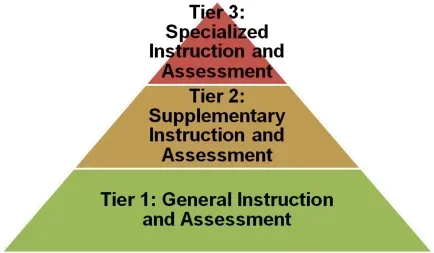
Tier 1 2 and 3 in education is a framework that helps schools support every learner at the right level. Tier 1 covers general instruction for all students, Tier 2 adds targeted help for those who need it, and Tier 3 provides intensive, one-on-one support. Understanding these tiers helps parents, teachers, and students navigate the multi-tier system of supports and improve student achievement.
If you have ever heard teachers or school leaders talk about tier 1 2 and 3 in education, you might have wondered what it all means. These tiers form a framework called the multi-tier system of supports. Schools use this model to make sure every student gets the right level of help at the right time. It is not about labeling kids. It is about matching instruction to needs.
The idea is simple but powerful. Think of it like a pyramid. The base supports the most students. The top serves the fewest but gives the most help. This tiered instruction model has changed how schools approach student support. Let us break down each tier and see why it matters so much.
Key Takeaways
- Tier 1 is the foundation: It delivers quality general education to every student in the classroom.
- Tier 2 provides targeted help: Small group interventions bridge gaps for students who fall behind.
- Tier 3 offers intensive support: One-on-one instruction addresses significant learning or behavioral challenges.
- Progress monitoring drives decisions: Teachers use data to move students between tiers as needed.
- Every tier matters: A strong Tier 1 makes Tiers 2 and 3 more effective for all learners.
- Parents play a key role: Understanding the tiers helps families advocate for the right support.
📑 Table of Contents
- What Is the Multi-Tier Framework in Education?
- Understanding Tier 1: The Foundation of Learning
- How Tier 2 Provides Targeted Support
- What Tier 3 Intensive Support Looks Like
- The Role of Data and Progress Monitoring
- How Parents Can Support the Tiered System
- Comparing the Three Tiers Side by Side
- Common Mistakes Schools Make with Tiered Instruction
- Quick Tips for Understanding Tier 1 2 and 3
- The Future of Tiered Instruction in Schools
- Final Thoughts on Tier 1 2 and 3 in Education
What Is the Multi-Tier Framework in Education?
The multi-tier framework is a way schools organize support for all learners. It is also known as Response to Intervention, or RTI. This approach uses data-driven instruction to figure out which students need extra help and how much. Instead of waiting for a child to fail, schools step in early. They provide support at the right level before problems grow.
This framework rests on three main tiers. Each tier builds on the one below it. Tier 1 is the foundation. Tier 2 adds targeted help. Tier 3 brings in intensive support. Together, they create a three-tier instruction model that works for almost every student. Schools also use universal screening to check how all students are doing. This helps them spot needs early and act fast.
Why Does This Framework Matter?
Before tiered systems became common, schools often waited until students fell far behind. Then they tried to catch them up. That approach did not work well. The tiered intervention model changes the game. It gives help sooner. It keeps students from falling through the cracks. It also helps teachers plan better differentiated instruction for mixed-ability classrooms.
When schools use this framework well, student achievement goes up. Teachers feel more confident. Parents understand what is happening. Everyone wins. The key is knowing what each tier looks like in practice.
Understanding Tier 1: The Foundation of Learning
Tier 1 is the heart of the system. It is the general education that every student receives. In Tier 1, the core curriculum is taught to the whole class. Teachers use proven methods to deliver lessons that meet grade-level standards. This tier is all about quality first instruction. When Tier 1 is strong, most students do well.
Think of Tier 1 as the floor of a building. If the floor is solid, everything above it is stable. The same is true in education. A strong Tier 1 means fewer students need extra help later. Here is what makes Tier 1 effective.
What Does Tier 1 Look Like in the Classroom?
In a well-run Tier 1 classroom, you will see a few key things happening. The teacher uses active teaching strategies that keep students engaged. Lessons are clear and well-organized. There is time for practice and feedback every day. Teachers also use progress monitoring to track how the whole class is doing.
Here are the main features of a strong Tier 1 setup:
- Evidence-based instruction: Lessons are backed by research and proven methods.
- Whole-class engagement: Every student is expected to participate and learn.
- Clear learning goals: Students know what they are working toward each day.
- Regular feedback: Teachers check understanding and adjust on the fly.
- Positive classroom culture: Students feel safe to ask questions and make mistakes.
Research shows that about 80 to 90 percent of students should succeed with good Tier 1 instruction alone. That is a big number. It means the foundation really does make a difference. When teachers focus on this tier, they set the stage for everything else.
How Tier 2 Provides Targeted Support
Not every student learns at the same pace. Some need a little extra help to keep up. That is where Tier 2 comes in. Tier 2 provides supplemental instruction for students who are not quite catching up with Tier 1 alone. It is like a bridge between the general classroom and more intense support.
Tier 2 is not about pulling students out permanently. It is a short-term boost. Small groups of students work together with a teacher or specialist. The lessons focus on specific skills they are missing. This kind of targeted intervention can make a huge difference in a short amount of time.
Who Qualifies for Tier 2?
Teachers use universal screening data to identify students for Tier 2. These are students who are falling behind but do not need the most intense help yet. Usually, about 10 to 15 percent of students will benefit from Tier 2. The goal is to get them back on track so they can succeed in the general classroom again.
Tier 2 is often compared to similes for education because it uses clear comparisons to show growth. Just as a simile for education draws a clear picture of learning progress, Tier 2 draws a clear line between where a student is and where they need to be. It makes the gap visible and the path forward simple.
Here is what Tier 2 typically looks like in practice:
- Small group sessions: Groups of 4 to 6 students work together.
- Focused skill practice: Lessons target specific reading or math skills.
- More frequent feedback: Students get regular check-ins and corrections.
- Short-term duration: Most Tier 2 programs last 6 to 8 weeks.
- Progress checks: Teachers track growth weekly or biweekly.
The beauty of Tier 2 is that it catches problems early. A student who might have struggled for months can get back on track in just a few weeks. That is the power of early intervention.
What Tier 3 Intensive Support Looks Like
Tier 3 is the most intense level of support. It is for students who have significant learning gaps or challenges. These students need intensive intervention that goes way beyond what Tier 1 or Tier 2 offers. Tier 3 often involves one-on-one or very small group instruction. It is tailored to the individual student’s needs.
Only about 5 percent of students need Tier 3 support. But for those students, it can be life-changing. Tier 3 is not a label. It is a lifeline. Schools use detailed progress monitoring data to decide when a student needs this level of help. The goal is always the same: to help the student succeed.
How Is Tier 3 Different from the Other Tiers?
The main difference is intensity. Tier 3 provides more time, more attention, and more personalized instruction. While Tier 1 serves the whole class and Tier 2 serves small groups, Tier 3 focuses on the individual. Here are the key differences:
- Frequency: Tier 3 sessions happen more often, sometimes daily.
- Duration: Support may continue for months or even a full school year.
- Personalization: Lessons are built around the student’s specific needs.
- Staffing: Trained specialists or interventionists lead the sessions.
- Data use: Teachers adjust instruction based on detailed performance data.
Tier 3 is sometimes linked to special education services. Some students who need Tier 3 support may qualify for an Individualized Education Program, or IEP. But not all Tier 3 students have disabilities. Some simply need more time and targeted help to catch up.
When people talk about metaphors for education, Tier 3 is often described as a safety net. Just as metaphors for education paint vivid pictures of the learning journey, Tier 3 represents the strongest safety net a school can offer. It catches students who are at risk of falling too far behind and gives them the tools to climb back up.
The Role of Data and Progress Monitoring
Data is the engine behind the whole tiered instruction model. Without it, schools would not know which tier a student needs or when to move them. Progress monitoring is the process of regularly checking student performance. Teachers use short assessments, observations, and work samples to gather this data.
Here is how data drives decisions across the tiers:
- Screening: All students are checked at the start of the year. This identifies who might need extra help.
- Progress checks: Teachers look at data every few weeks to see if interventions are working.
- Decision points: Based on data, students may move up or down between tiers.
- Adjustments: Teachers change instruction based on what the data shows.
This cycle of data-driven instruction keeps the system responsive. It ensures that no student stays stuck. If a Tier 2 intervention is not working, teachers adjust or move the student to Tier 3. If a student is making good progress, they may return to Tier 1. The system is flexible and student-centered.
Many schools also use idioms for education to communicate these ideas to parents. Just as common idioms for education help families understand school talk, progress monitoring reports give parents a clear picture of their child’s growth. When everyone speaks the same language, support becomes stronger.
How Parents Can Support the Tiered System
Parents are a vital part of the multi-tier system of supports. You do not have to be a teacher to make a difference. Your involvement at home strengthens what happens at school. When families and schools work together, students do better. Here is how you can support each tier.
Supporting Tier 1 at Home
You can reinforce what your child learns in class every day. Read together. Talk about math in real life. Ask your child what they learned at school. A strong home learning environment makes Tier 1 even more effective. Your encouragement and interest show your child that learning matters.
Supporting Tier 2 at Home
If your child is in Tier 2, ask the teacher what skills they are working on. Then practice those skills at home in fun ways. Use games, everyday activities, or simple worksheets. Keep the tone positive. Celebrate small wins. Your child will feel more confident and motivated.
Supporting Tier 3 at Home
Tier 3 students need extra patience and encouragement at home. Stay in close touch with the school team. Ask how you can reinforce skills between sessions. Create a calm and consistent routine. Let your child know that getting extra help is a strength, not a weakness. Like similes for change in life help us describe transitions with clarity, your support helps your child see growth as a natural part of learning. When you use similes for change in life at home, you model how to talk about progress in a positive and relatable way.
Comparing the Three Tiers Side by Side
It helps to see the tiers side by side. This comparison makes the differences clear and easy to understand.
| Feature | Tier 1 | Tier 2 | Tier 3 |
|---|---|---|---|
| Who it serves | All students | Students needing extra help | Students with significant gaps |
| Instruction type | General classroom instruction | Small group supplemental | One-on-one intensive |
| Group size | Whole class | 4 to 6 students | 1 to 3 students |
| Duration | Ongoing, all year | 6 to 8 weeks | Months or full year |
| Intensity | Standard | Moderate | High |
| Approx. % of students | 80 to 90% | 10 to 15% | About 5% |
| Progress monitoring | Regular class assessments | Weekly or biweekly checks | Frequent, detailed tracking |
This table shows how the tiers work together. Each one plays a specific role. No tier is better or worse. They are all part of the same system. The goal is to match each student with the right level of support.
Common Mistakes Schools Make with Tiered Instruction
Even with a good framework, schools can stumble. Here are some common mistakes to watch out for:
- Weak Tier 1 instruction: If the foundation is shaky, Tiers 2 and 3 cannot fully compensate. Schools must invest in quality Tier 1 first.
- Delaying intervention: Waiting too long to move a student to Tier 2 or 3 wastes valuable time. Early action is key.
- Using tiers as labels: Students should never feel defined by their tier. The tiers describe needs, not abilities.
- Skipping progress monitoring: Without regular data checks, schools cannot tell if interventions are working.
- Not involving families: Parents who understand the tiers can reinforce learning at home. Keeping them in the loop is essential.
Avoiding these mistakes helps the whole system run more smoothly. It also keeps the focus on what matters most: helping every student succeed.
Quick Tips for Understanding Tier 1 2 and 3
Here are some fast tips to remember the tiers:
- Think of it as a pyramid. The wide base is Tier 1. The narrow top is Tier 3.
- Tier 1 is for everyone. It is the starting point for all students.
- Tier 2 is a boost. It gives extra help to students who need a little more.
- Tier 3 is the most intense. It provides deep, individualized support.
- Data moves students. Progress monitoring decides who goes where.
- Flexibility is key. Students can move between tiers as they grow.
The Future of Tiered Instruction in Schools
The tiered instruction model continues to evolve. Schools are finding new ways to make it more effective. Technology plays a bigger role every year. Digital tools help teachers track progress in real time. They also make differentiated instruction easier to manage for mixed-ability classrooms.
Schools are also paying more attention to student well-being. Tiered systems now often include social-emotional support alongside academics. This holistic approach recognizes that learning is about more than grades. It is about building confident, resilient learners who can handle challenges.
As research grows, so does our understanding of what works. The future of tiered intervention looks promising. More schools are adopting these frameworks. More teachers are getting training. And more families are getting involved. Together, these trends point toward a future where every student gets the support they deserve.
Final Thoughts on Tier 1 2 and 3 in Education
Tier 1 2 and 3 in education is more than a framework. It is a commitment to every learner. It says that no student should be left behind. It says that help is available at every level. It says that schools are designed to meet students where they are.
When you understand these tiers, you become a stronger advocate. You can ask better questions. You can support your child more effectively. You can work with teachers as a true partner in learning. The multi-tier system of supports works best when everyone is on the same page.
Take what you have learned here and use it. Talk to your child’s teacher about which tier they are in and what that means. Ask about progress monitoring data. Find out how you can help at home. Your involvement matters. Together, we can make sure every student has the chance to thrive.
Frequently Asked Questions
What is the difference between tier 1, tier 2, and tier 3 in education?
Tier 1 is general instruction for all students. Tier 2 adds targeted small-group help for students who need extra support. Tier 3 provides intensive one-on-one intervention for students with significant learning gaps. Each tier serves a different level of need.
How does the multi-tier system of supports benefit students?
The multi-tier system of supports catches learning gaps early. It provides help before students fall too far behind. It also ensures that instruction is matched to each student’s level. This leads to better student achievement and fewer long-term struggles.
Can a student move between tiers?
Yes, students can and do move between tiers. If a student makes good progress in Tier 2, they may return to Tier 1. If Tier 2 is not enough, they may move to Tier 3. Progress monitoring data drives these decisions. The system is flexible and student-centered.
What role does progress monitoring play in tiered instruction?
Progress monitoring is how teachers track student growth over time. It helps them decide if an intervention is working. It also shows when a student is ready to move to a different tier. Without regular progress checks, the tiered system cannot function properly.
Is tier 3 the same as special education?
Not exactly. Some Tier 3 students may qualify for special education services and have an IEP. But not all Tier 3 students have disabilities. Tier 3 simply means a student needs the most intensive support. It can include students with or without formal diagnoses.
How can parents support the tiered instruction model at home?
Parents can reinforce learning at every tier. For Tier 1, create a strong home learning environment. For Tier 2, practice specific skills with your child. For Tier 3, stay in close contact with the school and provide patience and encouragement. Your involvement makes a real difference.
=== CONCLUSION ===
Tier 1 2 and 3 in education gives schools a clear and effective way to support every learner. From the broad foundation of Tier 1 to the intensive focus of Tier 3, each level plays a vital role. The framework relies on data-driven instruction, progress monitoring, and teamwork between teachers, families, and students. When schools implement this model well, everyone benefits. Students get the help they need. Teachers teach with confidence. Parents feel informed and involved. Understanding these tiers is the first step toward making sure no student is left behind. Use what you have learned to advocate for the best possible support for every learner in your life.


