
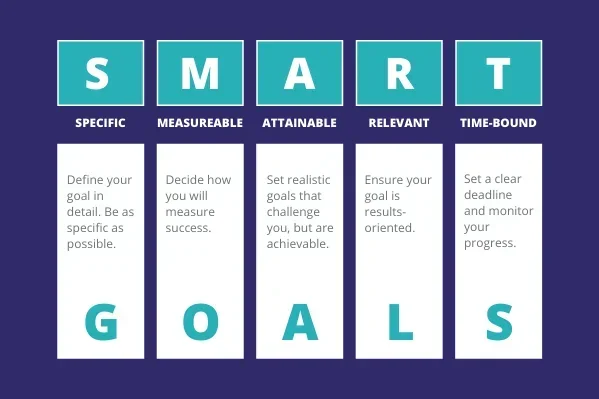
SMART goals in education are Specific, Measurable, Achievable, Relevant, and Time-bound targets that help students and teachers focus their efforts. They turn vague aspirations into clear action plans that drive real results. Whether you are a teacher planning lessons or a student aiming for better grades, this framework makes progress trackable and motivation lasting.
Setting goals in education is one of the most powerful things teachers and students can do. But not all goals are created equal. A vague goal like “do better in math” rarely leads to real change. That is where SMART goals in education come in. This framework turns wishful thinking into a clear roadmap. It gives students and teachers a shared language for success.
If you have ever wondered how to make learning targets more effective, you are in the right place. This guide breaks down everything you need to know. We will explore what SMART goals are, why they matter, and how to write them. You will also find plenty of examples you can use right away. Let us dive in.
Key Takeaways
- SMART goals give education clarity: They replace vague wishes with concrete, measurable targets that everyone can understand.
- Each letter stands for a powerful principle: Specific, Measurable, Achievable, Relevant, and Time-bound work together to create focused plans.
- Students benefit greatly: SMART goals boost motivation, accountability, and academic confidence.
- Teachers use them for better planning: They help design lessons, track progress, and personalize learning.
- Real examples make the framework click: Practical scenarios show how SMART goals work in classrooms and for individual learners.
- Avoid common pitfalls: Vague language, unrealistic targets, and missing deadlines are the top mistakes to watch for.
📑 Table of Contents
What Are SMART Goals in Education?
The term SMART stands for Specific, Measurable, Achievable, Relevant, and Time-bound. Each word represents a critical piece of effective goal setting. When applied to education, this framework helps learners and educators define exactly what success looks like.
Think of it this way. Saying “I want to improve my reading” is a nice thought. But saying “I will read 20 books at or above my grade level by the end of the school year” is a SMART goal. The second version is clear, trackable, and realistic. It gives you a target to aim for and a deadline to meet.
The beauty of the SMART framework is that it works for everyone. Teachers use it to design lesson objectives. Students use it to set personal learning targets. Administrators use it to plan school-wide improvement efforts. No matter who you are, this approach brings structure to the learning process.
Why the SMART Framework Works So Well
Goals that lack structure often fail because they are too broad. The SMART framework solves this problem by adding constraints that guide focus. Each letter forces you to think deeper. You cannot just say you want to do better. You must define how, measure it, and set a deadline.
This approach also creates natural checkpoints. When you break a big goal into smaller SMART targets, progress becomes visible. Students can see exactly how far they have come. Teachers can adjust their instruction based on real data. The framework turns abstract ideas into actionable goals anyone can act on.
Why SMART Goals Matter in the Classroom
Goal setting is not just a nice-to-have in education. It is a proven strategy that improves outcomes. Research consistently shows that clear, well-defined goals lead to higher student achievement. When learners know exactly what they are working toward, they stay more engaged and focused.
Here are some of the key reasons SMART goals in education make a real difference.
They Boost Motivation and Ownership
When students set their own goals, they feel a sense of ownership over their learning. Instead of passively receiving instructions, they become active participants. This shift in mindset is huge. Students who set personal learning objectives are more likely to push through challenges. They see their goals as their own, not just another assignment from the teacher.
Motivation also grows when progress is visible. A measurable outcome like completing five math worksheets per week gives students something concrete to celebrate. Each small win builds confidence and momentum.
They Help Teachers Personalize Learning
Every classroom has students at different skill levels. SMART goals in education give teachers a tool to tailor instruction. By setting individual targets for each student, teachers can focus their energy where it is needed most. A student who struggles with writing might have a goal to write three complete paragraphs per week. A student who excels might aim to write a full essay every two weeks.
This personalization is far more effective than a one-size-fits-all approach. It ensures that every student has a clear path forward. Teachers also benefit because they can track progress more efficiently and adjust their educational planning accordingly.
They Create Accountability
A goal without a deadline is just a dream. The time-bound element of SMART goals creates natural accountability. Students know exactly when their target needs to be met. Teachers can schedule regular check-ins to review progress. This structure keeps everyone on track and reduces procrastination.
Accountability also builds important life skills. Students learn to manage their time, monitor their own progress, and take responsibility for their results. These skills extend far beyond the classroom and prepare learners for future challenges.
The Five Pillars of SMART Goals in Education
Each letter in the SMART acronym represents a pillar that supports effective goal setting. Let us break them down one by one with practical examples.
S — Specific
A goal must be clear and well-defined. Vague goals lead to vague results. When you set a specific goal, you answer the who, what, where, when, and why.
Weak goal: “I want to get better at science.”
Specific goal: “I will improve my understanding of the water cycle by studying one chapter per week and completing all practice questions.”
The specific version leaves no room for confusion. You know exactly what to do and why it matters.
M — Measurable
You cannot improve what you do not track. A measurable goal includes concrete indicators of progress. This could be a number, a percentage, a frequency, or a quality standard.
For example, instead of saying “I will read more,” a measurable goal would be “I will read for 30 minutes every day and finish 10 books this semester.” The numbers make it easy to check off progress and stay motivated.
A — Achievable
Goals should stretch you, but they should also be realistic. An achievable goal considers your current abilities, resources, and constraints. Setting a goal that is too easy leads to boredom. Setting one that is impossible leads to frustration.
The sweet spot is a goal that challenges you but remains within reach with effort and planning. If a student currently reads five books per semester, aiming for ten is achievable. Aiming for fifty is not.
R — Relevant
A goal should matter to you and connect to your broader educational objectives. A relevant goal aligns with your interests, needs, and long-term plans. It gives you a reason to care about the outcome.
For instance, a student who wants to become a doctor might set a relevant goal to excel in biology and chemistry. The goal connects directly to their future career path, which makes it more meaningful and worth pursuing.
T — Time-bound
Every goal needs a deadline. The time-bound element creates urgency and helps you prioritize. Without a timeframe, it is easy to keep pushing a goal to “someday.”
A strong time-bound goal might be “I will complete my science fair project in three weeks, with each phase finished by a specific date.” The deadline forces action and helps you break the work into manageable steps.
SMART Goals Examples for Students and Teachers
Theory is helpful, but seeing real examples makes the concept click. Here are some practical SMART goals in education for different scenarios.
Student Goal Examples
- Reading: “I will increase my reading level by one grade within the next two months by reading 20 minutes every day after school.”
- Math: “I will solve 15 algebra problems correctly per week for the next four weeks to prepare for my upcoming exam.”
- Writing: “I will write a 500-word essay every week for the next six weeks to improve my writing fluency and structure.”
- Attendance: “I will attend all my classes this semester, missing no more than two days total.”
Each of these examples is specific, has a way to measure progress, is realistic, connects to academic success, and includes a deadline. That is the power of the framework.
Teacher Goal Examples
- Lesson Planning: “I will design three differentiated lesson plans per week for the next month to better support struggling readers.”
- Student Engagement: “I will increase class participation by 25% over the next six weeks by incorporating group discussions in every lesson.”
- Assessment: “I will provide detailed feedback on all student essays within three days of submission for the entire grading period.”
Teachers who use the SMART framework for their own professional growth see better results in the classroom too. It keeps their efforts focused and their progress trackable.
How to Write SMART Goals in Education: A Step-by-Step Guide
Writing a SMART goal is easier than it sounds. Follow these steps to create goals that actually work.
- Start with the big picture. Identify the area you want to improve. Is it reading, math, attendance, or classroom engagement?
- Make it specific. Define exactly what you want to accomplish. Replace vague words like “better” or “more” with concrete details.
- Add measurable criteria. Decide how you will track progress. Use numbers, percentages, or clear benchmarks.
- Check if it is achievable. Be honest about your current level and available resources. Adjust the goal if it is too ambitious or too easy.
- Ensure it is relevant. Connect the goal to your broader educational purpose. Ask yourself why this goal matters to you right now.
- Set a deadline. Assign a realistic timeframe. Break longer goals into smaller milestones with their own dates.
By following this process, you turn any learning aspiration into a targeted learning plan that delivers results. It works for students of all ages and for teachers at every level.
Quick Tips for Setting Effective SMART Goals
- Write your goals down. Written goals are more likely to be achieved.
- Share your goals with a teacher, parent, or study partner. External accountability helps.
- Review your goals weekly. Adjust them if circumstances change.
- Celebrate small wins along the way. Progress fuels motivation.
- Use simple language. If a goal is hard to understand, it is too complicated.
Common Mistakes to Avoid When Setting SMART Goals in Education
Even with a solid framework, people still make mistakes. Here are the most common pitfalls and how to avoid them.
Setting Goals That Are Too Vague
The biggest mistake is writing goals that lack clarity. Saying “I will do better in school” gives you nothing to work with. Every goal must answer the question “what exactly will I do?” Replace vague language with precise, concrete details.
Ignoring the Measurable Aspect
If you cannot measure your progress, you cannot manage it. Some people set goals that sound good but have no way to track them. Always include a number or a clear benchmark. Otherwise, you will never know if you are making progress.
Setting Unrealistic Targets
Ambition is great, but unrealistic goals lead to burnout and disappointment. If a student currently earns C’s and sets a goal to straight A’s in one week, that is not achievable. Set challenging but reachable targets instead. Build up gradually over time.
Forgetting the Deadline
A goal without a timeframe loses its power. Procrastination thrives when there is no deadline. Always assign a specific date or timeframe to every goal you set. This creates urgency and keeps you focused.
Not Reviewing and Adjusting
Goals are not set in stone. Life changes, challenges arise, and circumstances shift. The best goal setters regularly review their progress and adjust their targets as needed. A SMART goal should be a living document, not a forgotten piece of paper.
Expert Insights on SMART Goals in Education
Educators and researchers have long recognized the value of structured goal setting. According to studies on student progress tracking, students who set and review SMART goals consistently outperform those who do not. The framework aligns with established theories of motivation and self-regulated learning.
Experts also emphasize that goal setting works best when it is a collaborative process. When teachers and students work together to define educational milestones, the goals feel more meaningful and achievable. Students are more invested when they have a voice in the process.
Another key insight is that SMART goals should focus on growth, not just grades. The best educational goals emphasize learning and skill development rather than test scores alone. This mindset shift helps students develop a love of learning that lasts a lifetime.
Incorporating creative language elements like similes for achieving goals and metaphors for achieving goals can also make the goal-setting process more engaging for younger learners. These literary tools help students visualize their objectives and stay inspired throughout the journey.
Similarly, using idioms for achieving goals in the classroom can spark conversations about perseverance and determination. When students connect their SMART goals in education to familiar expressions, the concepts stick better and feel more relatable.
Conclusion
SMART goals in education are one of the simplest yet most powerful tools for improving learning outcomes. They bring clarity, structure, and accountability to the goal-setting process. Whether you are a student aiming for better grades, a teacher planning instruction, or an administrator driving school improvement, this framework delivers real results.
The five pillars — Specific, Measurable, Achievable, Relevant, and Time-bound — work together to turn vague aspirations into concrete plans. By following the examples and tips in this guide, you can start setting goals that actually work. Remember, the key is not just to set goals but to review them, adjust them, and celebrate every step of progress along the way.
Start today. Pick one area of your learning or teaching that you want to improve. Write a SMART goal for it. Share it with someone who can hold you accountable. You might be surprised at how quickly small, focused efforts lead to big results. Smart goal setting is the first step toward smarter outcomes in education.
And if you want to explore more ways to use language creatively in the classroom, check out our guides on similes for education and metaphors for education. These resources can add a fun and engaging layer to your educational planning and help students connect with their goals on a deeper level.
Frequently Asked Questions
What does SMART stand for in education?
SMART stands for Specific, Measurable, Achievable, Relevant, and Time-bound. Each word represents a key principle that makes a goal clear, trackable, and realistic. Together, these five elements create a framework that works for students, teachers, and administrators alike.
How do SMART goals help students perform better?
SMART goals help students by giving them clear direction and measurable targets. When learners know exactly what they are working toward, they stay more focused and motivated. The framework also builds accountability and helps students track their own progress over time.
Can SMART goals be used for all grade levels?
Yes, the SMART framework works for students of all ages. For younger children, goals might be simpler, like reading five books in a month. For older students, goals can be more complex, such as improving test scores or completing a research project by a specific date.
How often should students review their SMART goals?
Students should review their goals at least once a week. Regular check-ins help them track progress, stay motivated, and adjust their approach if needed. Weekly reviews also make it easier to celebrate small wins and stay on track toward the final deadline.
What is the difference between a regular goal and a SMART goal?
A regular goal is often vague and lacks structure. For example, “I want to do better in math” is a regular goal. A SMART goal adds specific details, measurable criteria, a realistic target, relevance, and a deadline. This makes the goal much clearer and far more likely to be achieved.
How can teachers integrate SMART goals into their lesson plans?
Teachers can integrate SMART goals by setting clear learning objectives for each lesson and unit. They can also help students create personal academic targets and track them over time. Using SMART goals in the classroom creates a culture of intention and continuous improvement.


