
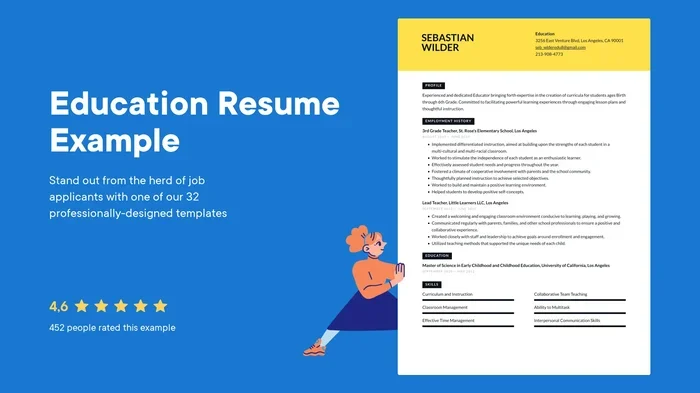
Discover the best spot for your education section on your resume. Learn where to put education on resume based on your experience level, resume format, and career goals. This guide covers placement strategies, common mistakes, and expert tips to make your resume education section stand out and land more interviews.
Your education section might be the part of your professional resume that changes everything. Where you place it can mean the difference between a hiring manager reading your application or skipping right past it. If you have ever wondered about where to put education on resume, you are not alone. This is one of the most asked questions in the job search world, and for good reason. The right placement highlights your education credentials and gives you a real edge.
A well-placed education section does more than list your degrees. It tells your story. It shows your academic achievements, your dedication, and your readiness for the role. Whether you are a fresh graduate or a seasoned professional, getting this section right matters. In this guide, we will walk through every education resume tip you need. You will learn exactly where to place your education, what to include, and how to avoid the mistakes that trip up so many job application submissions.
Key Takeaways
- Place education after your summary when you have limited work experience to fill space and show credentials early.
- Move education to the bottom when you have strong work experience that matters more to the hiring manager.
- Choose the right resume format because chronological, functional, and combination resumes handle education differently.
- Include key details like degree, institution, GPA, and honors to make your education section complete and compelling.
- Avoid common placement mistakes like burying your degree or listing irrelevant coursework that clutters the section.
- Tailor your education placement to each job application for the best possible results.
📑 Table of Contents
Why Education Placement Matters on Your Resume
The way you organize your resume layout sends a message before you even say a word. A hiring manager spends only a few seconds scanning each professional resume at first. That means every section needs to work hard. Your resume education section is no different. When you place it thoughtfully, you guide the reader’s eye exactly where you want it to go.
The Impact of Placement on First Impressions
First impressions are everything in a job application. Studies show that recruiters decide within seconds whether to keep reading. If your education credentials are buried at the bottom, the hiring manager might never see them. On the other hand, a well-placed education summary right after your professional profile draws attention immediately. Think about it this way: your resume header grabs attention, your work experience tells your story, and your education section backs it all up with proof of your knowledge.
When Education Should Come First
There are clear times when your education section deserves top billing. If you are a recent graduate with little work experience, putting education near the top of your resume format makes perfect sense. The same goes for career changers who are entering a new field. In these cases, your degree and training carry more weight than your past job titles. The degree placement should be prominent so the hiring manager sees your qualifications right away. This is a smart education placement resume strategy that many job seekers overlook.
Where to Put Education on Resume: The Best Spots
Finding the right spot on your professional resume depends on your situation. There is no one-size-fits-all answer. Let us break down the three main options and when each one works best.
Top of the Resume (After Your Professional Summary)
Placing your education section right after your professional summary is a strong move for entry-level candidates. This works well when you have just finished college and need to show your education credentials early. A recent college graduate, for example, should lead with their degree. The resume layout should flow like this: header, professional summary, education, then work experience. This puts your academic achievements front and center where they belong.
You can also use this approach if the job posting specifically asks for a certain degree or certification. When the education credentials are the main selling point, they deserve the top spot. This education placement resume strategy ensures the hiring manager sees exactly what they are looking for in the first few seconds.
Middle of the Resume
Sometimes the middle of the resume is the sweet spot. This works when you have a mix of strong work experience and impressive education. Placing your resume education section in the middle creates a natural flow. The reader sees your professional summary, then your education, then your work history. This is especially effective for mid-career professionals who want to highlight both their skills and their academic background.
If you have completed a certification or bootcamp that is highly relevant to the role, the middle placement draws attention to it. It sits between your summary and your experience, giving it real weight. This is one of the most flexible education resume tips you can use.
Bottom of the Resume
For experienced professionals, putting education at the bottom is often the best choice. When you have ten or more years of work history, your experience speaks louder than your degree. The hiring manager cares more about what you have done than where you went to school. This is a standard approach in most professional resume templates and it works well.
However, do not make the mistake of making this section tiny. Even at the bottom, your degree placement should be clear and easy to find. Include the degree name, institution, and graduation year at minimum. A skills-based resume often pairs well with a bottom-placed education section because the focus stays on your abilities first.
Education Placement for Different Resume Formats
The resume format you choose directly affects where your education goes. Each format has its own strengths, and understanding them helps you make the right call. Let us look at the three main formats and how they handle your resume education section.
Chronological Resume
A chronological resume lists your work experience in reverse order, starting with your most recent job. This is the most common format and what most hiring managers expect. In a chronological resume, the education section typically goes after your work experience. This format works best when your career history is strong and relevant. Your professional resume tells a clear story of growth and progression.
Functional Resume
A functional resume focuses on skills rather than work history. This format is ideal for career changers, people with gaps in their employment, or those with diverse experience. In a functional resume, the education section often moves higher up because it helps establish your qualifications early. The degree placement becomes even more important when work history takes a back seat. If you are using this format, consider exploring similes for education to find vivid comparisons that make your academic achievements more memorable and impactful on the page.
Combination Resume
A combination resume blends the best of both chronological and functional formats. It leads with a strong skills section, followed by work experience and education. This format gives you flexibility in education placement resume decisions. You can place education after your skills and before or after your work history, depending on what serves you best. For the best results, you might also look at metaphors for education to find powerful ways to describe your learning experiences and make your resume stand out from the crowd.
| Resume Format | Where Education Goes | Best For |
|---|---|---|
| Chronological | After work experience | Strong, consistent work history |
| Functional | Near the top, after skills | Career changers, employment gaps |
| Combination | Flexible, after skills | Balanced skills and experience |
What to Include in Your Education Section
Now that you know where to place it, let us talk about what belongs in the section itself. A strong resume education section does more than just list your degree. It gives the hiring manager a complete picture of your academic achievements and education credentials.
Degree and Institution Name
Always include your degree title and the full name of the institution. For example, “Bachelor of Science in Business Administration, University of Michigan.” This is the foundation of your education summary and should never be skipped. If you attended a well-known school, the name alone carries weight. Make sure the degree placement is clear and easy to read at a glance.
GPA on Resume
Including your GPA is a personal decision, but it can help in certain situations. If you graduated with honors or a GPA above 3.5, it is worth including. A strong GPA on resume shows the hiring manager that you take your work seriously. However, if your GPA is below 3.0 or you have been out of school for many years, you can safely leave it off. Focus on what adds value to your professional resume.
Relevant Coursework and Projects
For recent graduates or those applying for roles closely tied to their field, listing relevant coursework can be very effective. It shows the hiring manager that your education directly applies to the job. You can also include major projects, thesis work, or capstone experiences. These details bring your resume education section to life and show that you can apply what you have learned. To add even more personality to these descriptions, consider browsing idioms for education to discover expressions that add flair and character to your resume content.
Common Mistakes to Avoid When Placing Education
Even the best education resume tips can go to waste if you make avoidable errors. Here are the mistakes that hurt your education placement resume the most.
Burying Your Degree at the Bottom
The biggest mistake is relegating your education to a tiny section at the very bottom with small font. If your degree is relevant to the role, it deserves real space. A hiring manager should be able to find your education credentials within seconds of scanning the page. Do not make them hunt for it. This is especially true for entry-level candidates whose education is their strongest asset.
Listing Irrelevant Details
Another common error is listing every course and grade from your entire academic history. This clutters your resume layout and distracts from what matters. Keep your education summary focused and relevant. Include only the details that support your application for the specific job application. If a course or credential does not add value, leave it out. Quality always beats quantity when it comes to your professional resume.
Ignoring the Resume Header
Some people forget that the education section should align with the rest of their resume header and overall design. Use consistent formatting, font sizes, and spacing throughout. Your resume education section should look like a natural part of the whole document, not an afterthought. Consistency in your resume layout shows attention to detail, which is exactly what a hiring manager wants to see.
Expert Tips for a Winning Education Section
Getting the placement right is only half the battle. The content and presentation of your education section matter just as much. Here are some tried-and-true strategies that work.
Quick Tips
- Always include the graduation year unless you graduated more than 15 years ago, in which case you can omit it to avoid age bias.
- Use bold formatting for your degree title to make it stand out quickly during a scan.
- Add certifications and licenses in the education section if they are directly related to the role.
- Keep the section concise — three to five lines is usually plenty for most candidates.
- Match your education section to the job description by highlighting the most relevant degree or credential.
Common Mistakes
- Using a tiny font to squeeze the education section into a small space.
- Listing your high school education when you have a college degree (unless you are a recent high school graduate).
- Forgetting to include online courses or professional development that adds real value.
- Placing education above your summary when you have extensive work experience.
Expert Insights
Hiring managers consistently say that a clean, well-organized education section leaves a positive impression. According to resume experts, the key is balance. Your education section should complement your work experience, not compete with it. For senior-level professionals, less is more — a simple listing of degrees and institutions is often enough. For early-career candidates, expanding the section with honors, projects, and relevant coursework can make a real difference. The best education resume tips always come back to one principle: tailor everything to the specific role and the person reading it.
Conclusion
Knowing where to put education on resume is a simple but powerful skill that can transform your professional resume. Whether you place it at the top, middle, or bottom, the key is intentionality. Your resume education section should always serve the hiring manager by making your qualifications easy to find and understand. Use the education resume tips in this guide to craft a section that works hard for you. Remember to include the right details, avoid common pitfalls, and tailor your approach for each job application. With the right degree placement and a clean resume layout, your education credentials will do exactly what they are supposed to do — open doors and get you noticed.
Take action today. Review your resume format, adjust your education placement resume strategy, and watch how the right placement changes your job application results. A small tweak in where to put education on resume can lead to big outcomes. Start now and make your academic achievements work as hard as you do.
Frequently Asked Questions
Should I put education before or after work experience on my resume?
If you are a recent graduate or have limited work experience, place education before work experience. If you have several years of strong work history, put education after your experience section. The rule of thumb is to lead with whatever is most relevant to the job you are applying for.
Is it okay to include my GPA on my resume?
Yes, if your GPA is 3.5 or higher, it is a strong addition to your resume education section. However, if your GPA is below 3.0 or you have been out of school for many years, it is perfectly fine to leave it off. Focus on what adds value to your professional resume.
How do I format my education section for a chronological resume?
In a chronological resume, place your education section after your work experience. List your most recent degree first, including the degree name, institution, graduation year, and any honors. Keep the formatting clean and consistent with the rest of your resume layout.
Can I include online courses and certifications in my education section?
Absolutely. Online courses and certifications are a great way to show continuous learning. Include them in your resume education section if they are relevant to the job. List the course name, platform or institution, and completion date. This strengthens your education credentials and shows initiative.
What if I am a career changer with no relevant degree?
Even without a traditional degree, you have education credentials to highlight. Include any certifications, bootcamps, workshops, or relevant coursework that relate to your target field. Place this information prominently in your resume education section to show the hiring manager you have invested in your new career path.
How long should my education section be on a resume?
Keep your resume education section concise — usually three to five lines for most candidates. Senior professionals with decades of experience can keep it to just two lines. The goal is to provide enough detail to be informative without taking up too much space on your professional resume. Focus on what the hiring manager needs to know.


