
Becoming a licensed cosmetologist requires completing a state-approved cosmetology program, earning a set number of training hours, and passing a licensure exam. Most programs take 9 to 15 months and cover hair styling, skin care, nail technology, and salon safety. This guide walks you through every step of the cosmetology education journey, from choosing the right school to launching your beauty career.
Have you ever wondered what it takes to turn a passion for beauty into a real career? Maybe you love doing hair, giving facials, or creating stunning nail designs. The first big step is understanding what education is required to be a licensed cosmetologist. It is not as complicated as it sounds, but it does take dedication, time, and the right training.
Every state in the U.S. has its own rules for cosmetology licensing. These rules make sure that every stylist, esthetician, and nail technician can work safely and professionally. Whether you dream of running your own salon or working at a high-end spa, the foundation starts with proper education. In this guide, we will break down everything you need to know about cosmetology education requirements in a simple, easy-to-follow way.
The path to becoming a licensed cosmetologist is exciting and very achievable. Thousands of people start their beauty careers every year, and you can too. Let us dive into the details so you know exactly what to expect.
Key Takeaways
- Education Requirements: You must complete a state-approved cosmetology program covering hair, skin, nails, and safety protocols.
- Training Hours: Most states require between 1,000 and 2,100 clinical hours before you can sit for the license exam.
- License Exam: You need to pass both a written knowledge test and a practical skills exam to earn your cosmetology license.
- School Options: You can attend a traditional beauty school, a community college, or complete an apprenticeship program.
- Continuing Education: Licensed cosmetologists must pursue ongoing training to maintain their license and stay current with trends.
- Career Opportunities: A cosmetology license opens doors to hairstyling, esthetics, nail tech, salon management, and more.
📑 Table of Contents
- What Does a Cosmetologist Do?
- Types of Cosmetology Education Programs
- How Many Training Hours Do You Need?
- What Will You Learn in Cosmetology School?
- The Cosmetology License Exam
- Continuing Education for Cosmetologists
- How Long Does It Take to Become a Cosmetologist?
- Career Opportunities After Licensure
- Common Mistakes to Avoid When Choosing a Cosmetology School
- Final Thoughts
What Does a Cosmetologist Do?
Before we talk about education, it helps to understand the job itself. A cosmetologist is a trained beauty professional who provides services related to hair, skin, and nails. This is a broad field that covers many different specialties.
Common Cosmetology Services
- Hair Styling and Coloring: Cuts, blowouts, highlights, balayage, and chemical treatments.
- Skin Care and Facials: Acne treatments, anti-aging facials, and makeup application.
- Nail Services: Manicures, pedicures, acrylics, gels, and nail art.
- Waxing and Hair Removal: Brow shaping, leg waxing, and facial hair removal.
- Salon Consultation: Advising clients on products, styles, and skincare routines.
A cosmetologist wears many hats. You might wash someone’s hair in the morning, do a facial in the afternoon, and paint nails in the evening. That variety is one of the best parts of this career.
Types of Cosmetology Education Programs
Not all beauty education is the same. There are several paths you can take to meet your state’s cosmetology licensure requirements. Each option has its own benefits, and the right choice depends on your goals, budget, and schedule.
Traditional Beauty School
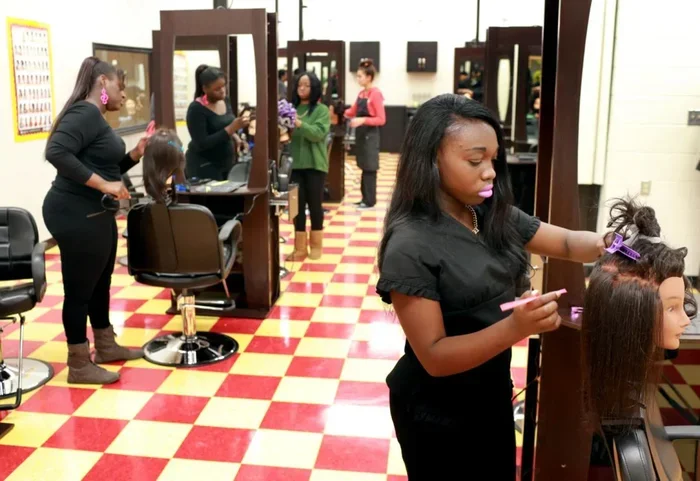
Beauty school is the most common route. These programs are offered at dedicated cosmetology schools and vocational institutes. A typical program covers all the core areas: hair, skin, nails, and sanitation. You will spend time in classrooms learning theory and in clinic rooms practicing on real clients or mannequins.
Most full-time programs take about 9 to 15 months to complete. Part-time options are also available, which can stretch the timeline to 18 or 24 months. Beauty schools focus heavily on hands-on training, which is exactly what you need to build real salon skills.
Community College Cosmetology Programs
Some community colleges offer cosmetology programs that award a certificate or an associate degree. These programs tend to be more affordable than private beauty schools. The coursework is similar, but a college program may also include general education classes like English or math.
If you want a well-rounded education and a recognized credential, a community college can be a great fit. Just make sure the program is approved by your state board of cosmetology.
Apprenticeship Programs
An apprenticeship lets you learn on the job while working under a licensed cosmetologist or salon owner. This path is ideal if you want to earn money while you learn. Apprenticeships usually take longer than traditional school programs because the training hours are spread out over a more extended period.
Not all states offer apprenticeship options, so check your state board of cosmetology requirements first. If your state does allow it, an apprenticeship can be a flexible and practical way to enter the field.
How Many Training Hours Do You Need?
Training hours are one of the most important parts of cosmetology education. Every state sets a minimum number of hours you must complete before you can take the license exam. These hours ensure you have enough practice to perform services safely and competently.
Typical Hour Requirements by State
- 1,000 Hours: Some states have a lower minimum, which allows you to finish faster.
- 1,500 Hours: This is a common requirement across many states.
- 1,800 to 2,100 Hours: States with stricter standards may require more clinical hours.
The hours are split between classroom instruction and hands-on practice. During your training, you will learn about hair cutting techniques, color theory, skin analysis, nail application, and hygiene standards. You will also study topics like salon management, client communication, and business basics.
Think of these hours as your training ground. The more practice you get, the more confident you will feel when you start working with real clients. Like learning idioms for education takes repetition and practice, mastering cosmetology skills requires consistent hands-on experience.
What Will You Learn in Cosmetology School?
A well-rounded cosmetology curriculum covers much more than just hair. Here is a look at the core subjects you will study during your training.
Hair Science and Styling
This is the biggest part of most programs. You will learn about hair types, textures, and growth patterns. Classes cover cutting techniques, styling methods, coloring, and chemical treatments like perms and relaxers. You will practice on mannequins first, then move on to real clients in the school salon.
Skin Care and Esthetics
Esthetics training teaches you about skin types, common conditions, and treatment methods. You will learn how to perform facials, extractions, and makeup applications. Many programs also cover hair removal techniques like waxing and threading.
Understanding skin health is essential. A good cosmetologist can spot potential skin issues and advise clients accordingly. This knowledge sets you apart from someone who just applies products blindly.
Nail Technology
Nail services are a big part of cosmetology. You will study nail anatomy, sanitation, and disease prevention. Training includes manicures, pedicures, acrylic nail application, gel polish, and creative nail art.
Like learning similes for education helps you understand language through comparison, studying nail technology helps you understand beauty through precision and creativity.
Sanitation and Safety
Every cosmetology program includes a strong focus on sanitation and safety. You will learn about disinfecting tools, preventing infections, and maintaining a clean work environment. This knowledge protects both you and your clients.
States take sanitation very seriously. Failing to follow proper protocols can result in fines, license suspension, or even legal action. This is why safety training is woven into every part of your education.
Business and Communication Skills
Many people overlook this, but business skills are vital for cosmetologists. You will learn how to build a client list, manage appointments, handle payments, and market yourself. Communication skills help you understand what clients want and make them feel comfortable.
Like using metaphors for education makes complex ideas easier to grasp, strong communication makes your services more appealing and your career more successful.
The Cosmetology License Exam
Once you finish your training hours, the next step is earning your license. This is a big milestone. The exam makes sure you have the knowledge and skills needed to work safely in the beauty industry.
Written Exam
The written portion tests your knowledge of cosmetology theory. Topics include hair science, skin care, nail care, sanitation, and state-specific laws and regulations. Most exams are multiple-choice and computer-based. You will need to score a passing grade to move on to the practical exam.
Practical Exam
The practical exam tests your hands-on skills. You may be asked to perform a haircut, a color service, a facial, or a nail application on a live model or mannequin. Evaluators score you on technique, sanitation, and professionalism.
Prepare for both parts of the exam by reviewing your notes and practicing as much as possible. Many schools offer exam prep courses or mock exams to help you feel confident on test day.
Continuing Education for Cosmetologists
Getting your license is not the end of the road. Most states require licensed cosmetologists to complete continuing education to renew their license. This ensures you stay up to date with new techniques, products, and safety standards.
Why Continuing Education Matters
The beauty industry changes fast. New trends in haircuts, colors, and skincare appear every season. Continuing education helps you stay competitive and offer the best services to your clients. It also shows employers and clients that you take your profession seriously.
Types of Continuing Education
- Advanced Technique Workshops: Learn specialized skills like balayage or microblading.
- Product Training: Get certified to use specific product lines.
- Business Courses: Improve your salon management and marketing skills.
- Safety and Sanitation Refreshers: Stay current on health and safety regulations.
Many of these courses are available online, making it easy to fit them into a busy schedule. Some beauty brands even offer free training as a way to promote their products.
How Long Does It Take to Become a Cosmetologist?
The timeline depends on the program you choose and whether you attend full-time or part-time. Here is a quick breakdown.
Full-Time Students
Full-time students can usually complete a cosmetology program in 9 to 15 months. This timeline includes classroom learning, hands-on practice, and exam preparation. After graduation, you will schedule and take your state board exam. Most people can become fully licensed within 12 to 18 months.
Part-Time Students
Part-time programs take longer, typically 18 to 24 months. This option works well for people who need to balance school with work or family responsibilities. The extra time does not change the quality of your education, but it does extend the path to your license.
Apprenticeship Timeline
Apprenticeships generally take the longest because training hours are spread across a more extended work period. Expect to spend 2 to 3 years in an apprenticeship before you are eligible for licensure.
Career Opportunities After Licensure
Once you have your license, the world opens up. A cosmetology license gives you flexibility and variety in your career. Here are some of the most common paths.
Salon Stylist
This is the most traditional role. You will work in a salon, offering haircuts, coloring, and styling services to clients. Many stylists start at entry-level positions and build their client base over time.
Esthetician or Nail Technician
Some cosmetologists choose to focus on skin or nails. Estheticians work in spas and clinics, offering facials and skincare treatments. Nail technicians specialize in manicures, pedicures, and nail art.
Salon Owner or Manager
With experience and business skills, you can open your own salon or manage an existing one. This path requires not only cosmetology talent but also leadership and marketing know-how.
Freelance or Mobile Cosmetologist
Some licensed cosmetologists work independently, traveling to clients’ homes for weddings, events, or regular appointments. This offers flexibility and the chance to build a personalized client experience.
Product Educator or Brand Representative
Beauty companies hire licensed cosmetologists to educate other professionals about their products. This role combines technical skills with teaching and sales abilities.
Common Mistakes to Avoid When Choosing a Cosmetology School
Not all beauty schools are created equal. Making the wrong choice can waste your time and money. Here are some pitfalls to watch out for.
- Skipping Accreditation Checks: Always verify that the school is accredited and approved by your state board.
- Ignoring Job Placement Rates: Ask about graduate employment rates and alumni success stories.
- Overlooking Hidden Costs: Ask about tuition, kit fees, textbook costs, and exam fees upfront.
- Choosing Only on Price: The cheapest option is not always the best. Quality training matters more than a low price tag.
- Not Visiting the Campus: Tour the school, meet the instructors, and see the facilities before you commit.
Avoiding these mistakes puts you on the right track from day one. Take your time, do your research, and choose a school that aligns with your goals.
Final Thoughts
So, what education is required to be a licensed cosmetologist? The answer comes down to completing a state-approved training program, earning the required clinical hours, and passing your licensure exam. The journey takes dedication, but the rewards are well worth it.
A career in cosmetology offers creativity, flexibility, and the chance to make people feel their best every day. Whether you choose beauty school, a community college program, or an apprenticeship, the key is to get quality training and stay committed to learning.
Start by checking your state’s specific requirements. Research schools, compare programs, and take the first step toward your new career. The beauty industry needs passionate, skilled professionals, and with the right education, you can become one of them.
Frequently Asked Questions
What is the minimum education needed to become a cosmetologist?
You must complete a state-approved cosmetology program that covers hair, skin, nails, and sanitation. Most programs require between 1,000 and 2,100 training hours, depending on your state. After finishing the program, you need to pass a written and practical exam to earn your license.
Can I become a cosmetologist without going to beauty school?
In most states, no. You must complete an approved training program or an accredited apprenticeship. Some states allow apprenticeships as an alternative to traditional beauty school, but these still require a significant number of training hours under a licensed mentor.
How much does cosmetology school cost?
Costs vary widely. Community college programs tend to be the most affordable, ranging from $2,000 to $10,000. Private beauty schools can cost between $10,000 and $20,000 or more. Always ask about financial aid, scholarships, and payment plans before enrolling.
Do I need a degree to work as a cosmetologist?
A college degree is not required. A cosmetology certificate or diploma from an approved program is what you need. Some community colleges offer associate degrees, which can add value if you plan to pursue management or teaching roles later.
How long does it take to get a cosmetology license?
Full-time students typically complete their training in 9 to 15 months. Adding time for the license exam, most people become fully licensed within 12 to 18 months. Part-time students and apprenticeship participants may take 2 to 3 years to complete the same requirements.
What happens after I get my cosmetology license?
You can start working as a licensed cosmetologist in salons, spas, or as a freelancer. Most states also require continuing education to renew your license every one to two years. This ongoing training helps you stay current with industry trends and maintain your skills.


