
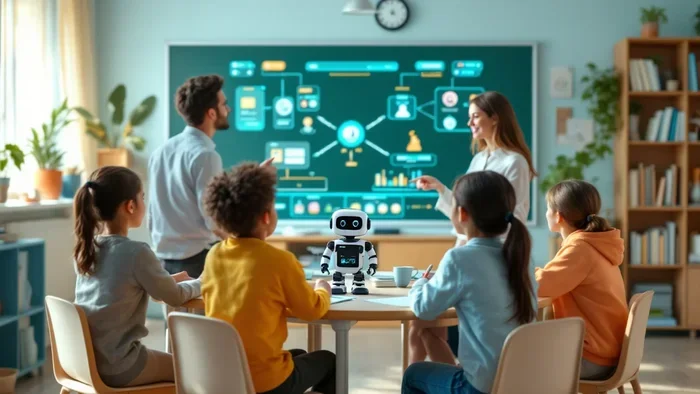
AI in education is changing how students learn and how teachers teach. From personalized lesson plans to smart tutoring systems, artificial intelligence makes classrooms more efficient and engaging. This guide covers the top ways AI helps in education and what it means for the future of learning.
Key Takeaways
- Personalized Learning: AI adapts lessons to each student’s pace and style, making education more effective.
- Teacher Support: AI handles grading, planning, and admin tasks so teachers can focus on teaching.
- Better Engagement: Smart tools and interactive content keep students motivated and involved.
- Instant Feedback: Students get real-time answers and corrections, speeding up the learning process.
- Future-Ready Skills: AI in education prepares students for a tech-driven world and future careers.
- Accessibility: AI tools make learning more inclusive for students with different needs.
📑 Table of Contents
- How Does AI Help in Education Change the Way We Learn
- How AI Personalizes Learning for Every Student
- AI Tools That Help Teachers Work Smarter
- How AI Improves Student Engagement
- AI and Language Learning: Making It Fun and Easy
- The Future of AI in Education
- Common Concerns About AI in Classrooms
- Key Takeaways
- Conclusion
How Does AI Help in Education Change the Way We Learn
Classrooms are not what they used to be. Chalkboards have given way to smart boards. Textbooks now come with digital versions. And at the center of this shift is AI in education. But what does this really mean for students and teachers? More than you might think.
AI in education is not about replacing teachers or making classrooms cold and robotic. It is about making learning smarter, faster, and more personal. Whether a student struggles with reading or a teacher needs help grading papers, AI tools step in to fill the gaps. The result is a better experience for everyone involved.
This article breaks down the many ways AI helps in education today. You will learn about personalized learning, smart tutoring, automated grading, and much more. By the end, you will see why AI in education is one of the most exciting developments in modern schooling.
Why AI in Education Matters Now
Schools around the world face big challenges. Class sizes are growing. Teachers are overworked. Students learn at different speeds. Traditional teaching methods struggle to keep up. This is where AI in education steps in with real solutions.
Artificial intelligence can analyze data, spot patterns, and respond in real time. These abilities make it a powerful tool for both learning and teaching. Schools that adopt AI-powered education tools report better student outcomes and higher teacher satisfaction. The technology is no longer a dream. It is here, and it is making a difference.
How AI Personalizes Learning for Every Student
Every student learns differently. Some grasp math quickly but struggle with reading. Others need more time but excel in science. Traditional classrooms try to teach everyone the same way. AI in education changes this by tailoring lessons to each individual.
Adaptive Learning Platforms
Adaptive learning platforms use machine learning for students to adjust content in real time. If a student gets a question wrong, the system offers easier questions or extra explanations. If they ace it, the system moves them forward. This creates a personalized learning path that fits each student perfectly.
These platforms track progress over time. They identify weak spots and reinforce them with targeted exercises. The result is a learning experience that feels built just for one person. And that is exactly what every student deserves.
Smart Content Delivery
AI in education also changes how content is delivered. Instead of one-size-fits-all lectures, smart systems offer videos, quizzes, and interactive exercises based on what works best for each learner. Visual learners get diagrams. Audio learners get podcasts. Hands-on learners get simulations.
Some platforms even use AI tutoring systems that act like personal coaches. They ask questions, give hints, and celebrate wins. This keeps students motivated and engaged throughout their learning journey.
AI Tools That Help Teachers Work Smarter
Teachers do more than just teach. They plan lessons, grade papers, track attendance, and handle paperwork. On top of that, they need to give each student individual attention. It is a lot. AI for teachers helps lighten this load in powerful ways.
Automated Grading and Feedback
One of the biggest time sinks for teachers is grading. AI in education tools can grade multiple-choice tests, fill-in-the-blank answers, and even written essays in seconds. The system checks for accuracy, spelling, and grammar. It then provides detailed feedback to each student.
This does not replace the teacher. It frees them up. Instead of spending hours on grading, teachers can focus on lesson planning and one-on-one student support. The automated grading feature is a game changer for busy educators.
Lesson Planning and Curriculum Design
Creating lesson plans takes time and creativity. AI tools can suggest activities, generate worksheets, and even draft lesson outlines based on curriculum standards. Teachers can then customize these ideas to fit their classroom. This saves hours of work every week.
Some AI curriculum design tools also suggest new teaching methods based on what works best for a particular class. If students struggle with a topic, the system recommends alternative approaches. This makes teaching more responsive and effective.
Tracking Student Progress
Intelligent education systems keep a close eye on how each student is doing. They flag students who are falling behind and alert teachers early. This allows for quick intervention before small problems become big ones.
Teachers can view dashboards that show class-wide trends and individual student performance. This data-driven approach helps educators make smarter decisions about instruction and support.
How AI Improves Student Engagement
Engagement is the key to learning. When students are interested and involved, they retain more information. AI in education boosts engagement in several powerful ways.
Interactive and Game-Based Learning
AI-powered platforms turn lessons into games. Students earn points, unlock levels, and compete with classmates. This student engagement tools approach makes learning fun. Kids who might zone out during a lecture stay focused when there is a game on the line.
Games also provide instant rewards. When a student answers correctly, they get immediate positive feedback. This reinforces learning and builds confidence. Over time, students develop a love for learning that goes beyond the classroom.
Virtual Learning Assistants
Imagine having a helper available 24 hours a day. Virtual learning assistants powered by AI can answer questions, explain concepts, and guide students through homework. They are patient, always available, and never tired.
These assistants use natural language processing to understand student questions. They respond in clear, simple language. For students who are shy about asking questions in class, this is a safe and private way to get help.
Collaborative Learning with AI
AI also supports group work. Smart systems can form balanced teams based on student strengths and weaknesses. They suggest discussion topics and track each member’s contribution. This makes collaboration more fair and productive.
When students work together with the help of AI, they build teamwork skills that matter in the real world. It is one of the many ways AI-powered education goes beyond just academics.
AI and Language Learning: Making It Fun and Easy
Language learning is one area where AI in education really shines. Whether students are learning English or a foreign language, AI tools make the process more interactive and effective.
Understanding Figurative Language
One challenge in language learning is understanding figurative expressions. AI tools can help students explore similes for education through interactive exercises and real-world examples. Students can practice identifying and using similes in context, making their writing more vivid and expressive.
Similarly, AI platforms can guide learners through metaphors for education with engaging activities that show how comparisons bring writing to life. These tools break down complex literary concepts into bite-sized lessons that are easy to understand.
For students building vocabulary, AI makes it simple to practice idioms for education through quizzes, flashcards, and contextual exercises. The technology adapts to each learner’s level, ensuring steady progress without frustration.
Pronunciation and Conversation Practice
AI speech recognition tools listen to students pronounce words and give instant feedback. They correct mispronunciations and suggest improvements. This kind of adaptive learning platform practice is invaluable for language learners who do not have access to native speakers.
Some platforms even simulate real conversations. Students can practice ordering food, asking for directions, or making small talk with an AI partner. It feels natural and removes the fear of making mistakes in front of others.
The Future of AI in Education
The role of AI in education is only going to grow. Schools and universities are investing heavily in smart technology. Here is what the future might look like.
AI-Powered Classrooms
In the near future, classrooms may be fully equipped with smart education technology. AI cameras could track student engagement and alert teachers when attention drops. Smart desks might adjust to individual learning preferences. The possibilities are exciting.
These digital transformation in education tools will make learning more seamless. Students will move through content at their own pace without feeling left behind or held back. Teachers will have more time to focus on what matters most: inspiring young minds.
Preparing Students for Tomorrow
One of the most important benefits of AI in education is preparing students for the future workforce. Jobs in technology, data science, and AI development are growing fast. By using AI tools in school, students build skills they will need in their careers.
Even if students do not become AI engineers, understanding how AI works gives them a competitive edge. Data-driven education teaches critical thinking, problem-solving, and digital literacy. These are skills that every profession values today.
Bridging the Education Gap
Not every student has access to great teachers or expensive tutors. AI-powered education can help bridge this gap. Students in rural areas or underserved communities can access high-quality learning tools through AI platforms. This levels the playing field and gives every student a fair chance to succeed.
As education technology trends continue to evolve, AI will play an even bigger role in making quality education available to all. This is one of the most promising aspects of the AI revolution in schools.
Common Concerns About AI in Classrooms
Not everyone is excited about AI in education. Some parents and teachers have valid concerns. Let us address the most common ones.
Does AI Replace Teachers?
No. AI is a tool, not a replacement. Teachers bring empathy, creativity, and human connection to the classroom. AI for teachers handles repetitive tasks so educators can focus on what they do best. The goal is to make teachers more effective, not to remove them.
Is Student Data Safe?
Data privacy is a real concern. Schools must choose AI tools that follow strict privacy laws and regulations. Reputable intelligent education systems use encryption and secure data storage. Parents should always ask how their child’s data is used before adopting any AI platform.
Does AI Create Too Much Screen Time?
Balance is key. While smart learning environments offer many benefits, students still need hands-on activities, social interaction, and time away from screens. The best approach combines AI tools with traditional teaching methods. This blended approach gives students the best of both worlds.
Will AI Widen the Inequality Gap?
This is a fair concern. Not all schools can afford the latest AI tools. However, many education technology trends are moving toward affordable and even free platforms. Governments and nonprofits are also working to bring these tools to underserved schools. The goal is to make AI-powered education accessible to everyone.
Key Takeaways
- Personalized Learning: AI in education adapts lessons to each student’s pace, making personalized learning a reality for every child.
- Teacher Support: Automated grading and lesson planning tools help teachers focus on what matters most: teaching and mentoring.
- Better Engagement: Student engagement tools and game-based learning keep students motivated and excited about school.
- Instant Feedback: AI tutoring systems provide real-time answers and corrections, speeding up the learning process.
- Future-Ready Skills: AI in education prepares students for a tech-driven world and future careers through data-driven education.
- Accessibility: Smart education technology makes learning more inclusive for students in all communities.
- Language Learning Boost: AI makes language learning fun with interactive tools that explore figurative language and pronunciation.
Conclusion
AI in education is transforming the way we learn and teach. From personalized learning paths to automated grading, the benefits are clear and powerful. Teachers get support. Students get engagement. And the classroom becomes a smarter, more inclusive place.
The future of AI-powered education is bright. As technology continues to evolve, schools will find even more creative ways to use AI for better outcomes. The key is to embrace these tools thoughtfully, keeping the human touch at the center of every classroom.
If you are a teacher, parent, or student, now is the time to explore what AI in education can do. The tools are ready. The opportunities are endless. All you need to do is take the first step.
Frequently Asked Questions
How does AI help students learn better?
AI in education creates personalized learning paths that adapt to each student’s pace and style. It provides instant feedback, identifies weak areas, and offers targeted exercises. This helps students learn more efficiently and retain information longer.
Can AI replace teachers in the classroom?
No. AI is a tool that supports teachers, not replaces them. It handles repetitive tasks like grading and lesson planning so teachers can focus on mentoring, creativity, and personal connections with students. The human element in teaching remains irreplaceable.
What are some examples of AI tools used in schools today?
Popular examples include adaptive learning platforms, virtual learning assistants, automated grading systems, and AI-powered tutoring tools. These smart education technology solutions help both students and teachers work more effectively and efficiently.
Is AI in education safe for children?
Yes, when schools choose reputable tools that follow strict privacy laws. Parents should review how their child’s data is collected and used. Most trusted intelligent education systems prioritize data security and transparency.
How does AI make learning more accessible?
AI-powered education breaks down barriers by offering affordable tools to students in all communities. It provides 24/7 tutoring support, language assistance, and customized content. This ensures every student has a fair chance to succeed regardless of their background.
What skills will students gain from using AI in school?
Students develop digital literacy, critical thinking, and problem-solving skills through AI in education. They also learn how to work with data-driven education tools, which prepares them for future careers in a technology-driven world.


